Dreaming of a Black Xmas

By my best reckoning, Thanksgiving has not yet taken place this year. Since Halloween, such as it was, is now over, we must still be in November. As I was exiting my office building last Wednesday, I noticed that the holiday tree was already going up in the lobby. A few blocks away and I heard the first Salvation Army bells of the season and shouts of holiday cheer. The great tree in Rockefeller Center was being erected. (I picture burly guys with a super-sized tree stand swearing in the cold air—”Left, nudge it to the left!”) Maybe it’s just a storm-weary city glad to be rid of Sandy, but it does seem to be a bit early to me. Holidays, in any modern sense of the word are about opening wallets and injecting cash into the system. The very corpuscles of capitalism. I enjoy holiday cheer as much as the next guy or gal, but I don’t mind waiting for it to arrive. Antici-

Holiday seasons are as old as holy days themselves. In our work-obsessed culture, however, convincing bosses of the regenerative utility of granting more than a single day off at a time is an uphill battle. Productivity is what we’re all about. And so we lengthen our public show of holidays instead. Thanksgiving’s not much of a banker except for grocers, and although turkeys may make great primary school decorations, they don’t really match the productivity and professionalism that corporate offices like to promote. The December holidays, however, give us Black Friday. Listening to the news over the last few days, it is clear that many people are biding their time, already ready to get those distant family members out the door, and let’s get those bargains! pation.

Holidays reflect what we hold sacred. I’m not one of those purists grinches who see gift-giving as some inherent evil—in fact, giving things away is one of the under-utilized tenets of most major religions—but I do wonder how much of it is an appeal to the ego. I feel good when I make someone else happy. Yet at some level, I’ve indebted them to me. I’ve made a business deal. The holy days have been infected with capitalism. Warm memories of not having to go to school for nearly two whole weeks, being with my family—the place I was unquestioningly accepted—and getting presents as well? What could be more sacred than that? But I’m getting ahead of myself. It is still mid-November. After all, Black Friday (and what’s that day before that called?) hasn’t even started yet.
A waif in a manger?
Puny Windstorm

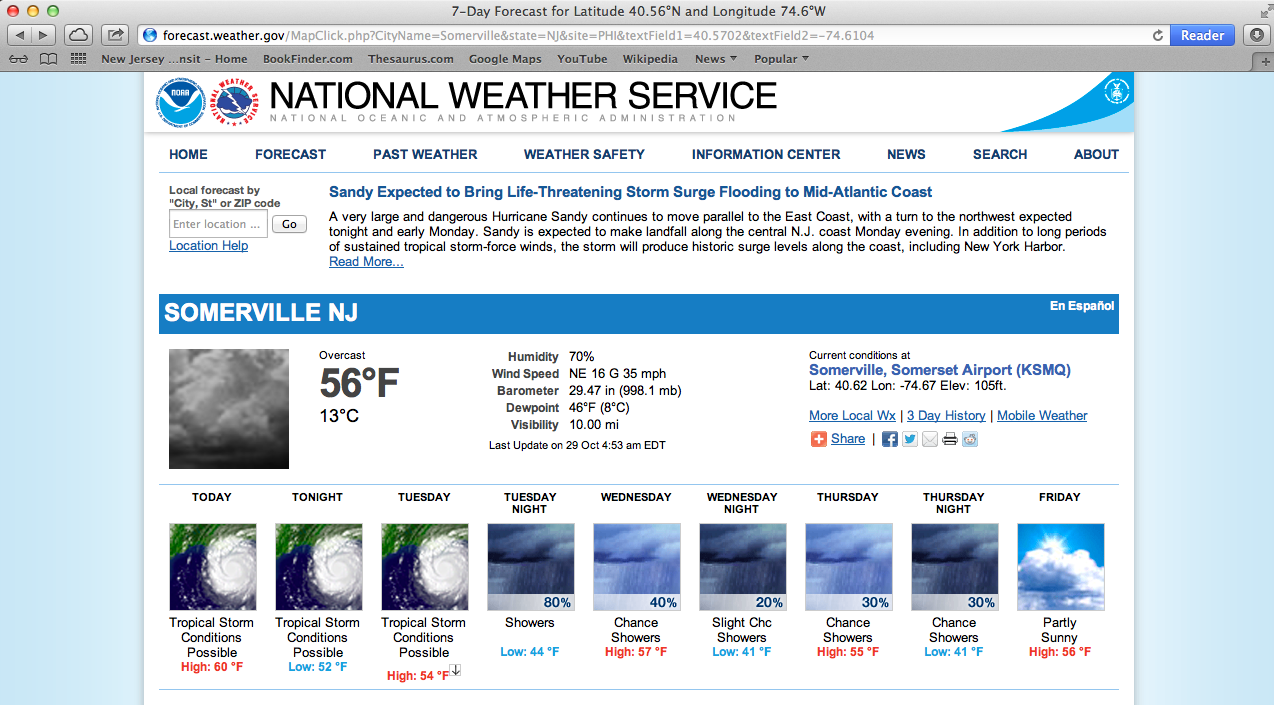
Nothing says wrath of God like a hurricane. Those of us along the Mid-Atlantic coast of the United States are hunkered down wondering what’s to become of daily life when the storm is over. Responses to the situation have been, well, religious. Store owners spraypaint prayer-like sentiments to Sandy on their plywood protection, urging the storm to be kind. Interviews are laced with language appropriately placating to a deity. The storm named after a mythical monster has become a god. Such responses are not limited to Hurricane Sandy, of course. In fact, when death is expected pleading with the powers that be is routinely recognized as Elizabeth Kübler-Ross’s bargaining stage of the dying process. We always hope that forces stronger than us might be willing to make a deal, cut us a bargain. The storm, given a human name, is personified as a deity. It is such a very human response to any phenomenon that forces us to realize just how small we are. Our egos may reach to the ends of the universe, but in reality we are fragile, scared children begging for the protection of a supernatural parent.

Last night as we were sitting here waiting to be hit, my family watched The Avengers. The juxtaposition of deities and heroes in the Marvel Universe fascinates me, and, of course, the movie has to explain that Thor and Loki are really only aliens perceived as gods. Compared with their human companions, they are immeasurably strong but they do not decide the outcome of the cosmic battle that devastates New York City. No, it is Tony Stark who flies the atomic bomb through the portal to the invading ice giants, saving humanity. Thor is too busy battling flying metal dino-whales. Humanity is responsible for its own salvation. The gods may help, but they alone cannot deliver. Against his protests of divinity, the Hulk bashes a protesting Loki into the floor of Stark Tower with the grunted huff, “puny god.” His only line in the movie. The portal, swirling hurricane-like over Midtown is forced closed and human technology, in the form of Iron Man’s admittedly cool armor, saves us all.

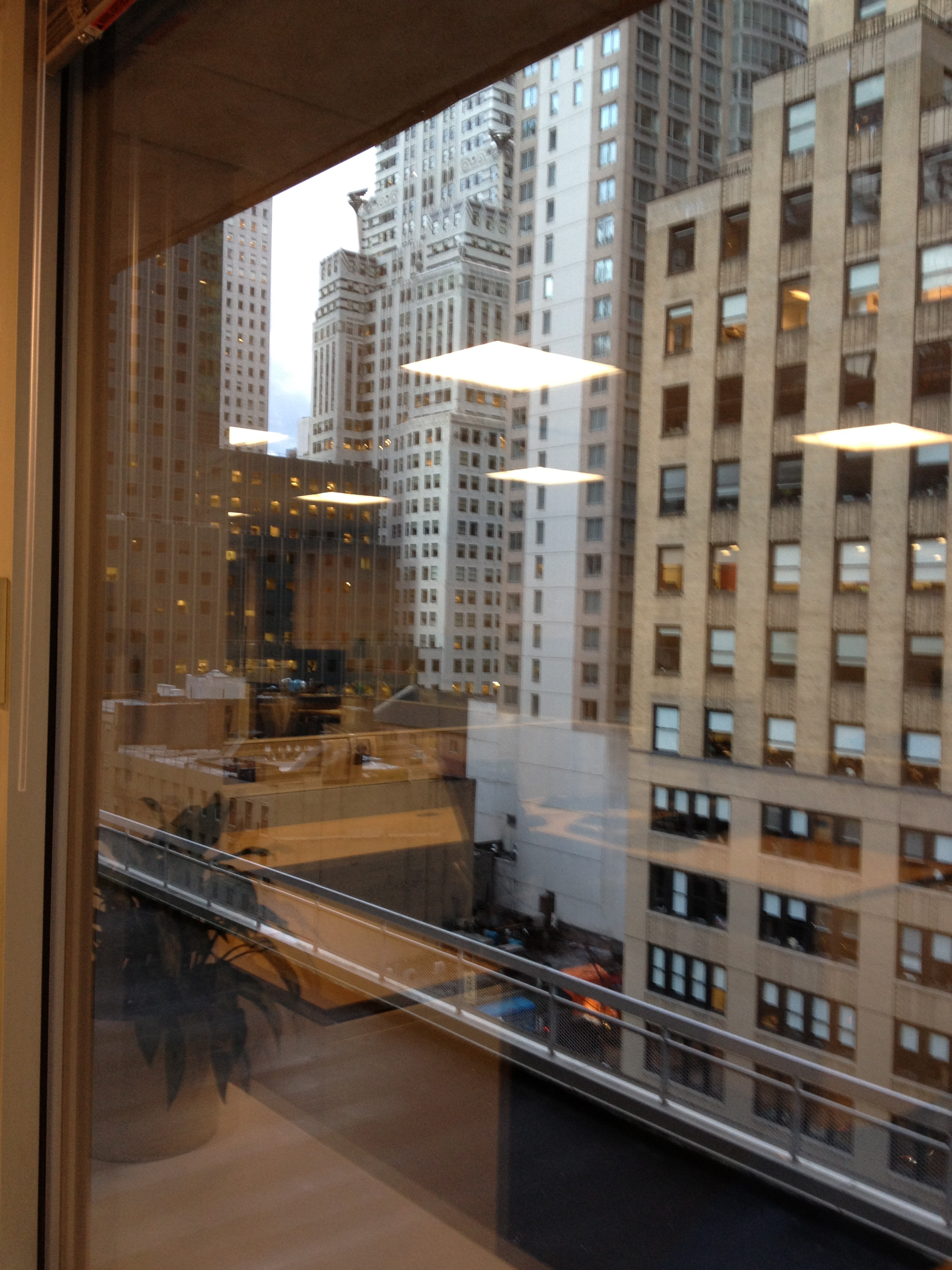
Hurricanes remind us that our technology can’t save us all. The advance warning may very well have spared many lives by the time this all blows over. As early as Thursday I was wondering if work would be called off or if I’d have to battle the rain and winds and storm surges to get to my office (which would have provided an awesome view of the final battle in The Avengers, facing, as I do, the Chrysler Tower and Grand Central). We have been warned. Our technology, however, can’t stop the force of the storm. Sandy may not be divine, but she is massive—much larger than any person who believes that there is some trace of divinity within him or her. As I sit here listening to the wind and the rain, I wonder what the weather is like in Asgard today.


Premature Transportation

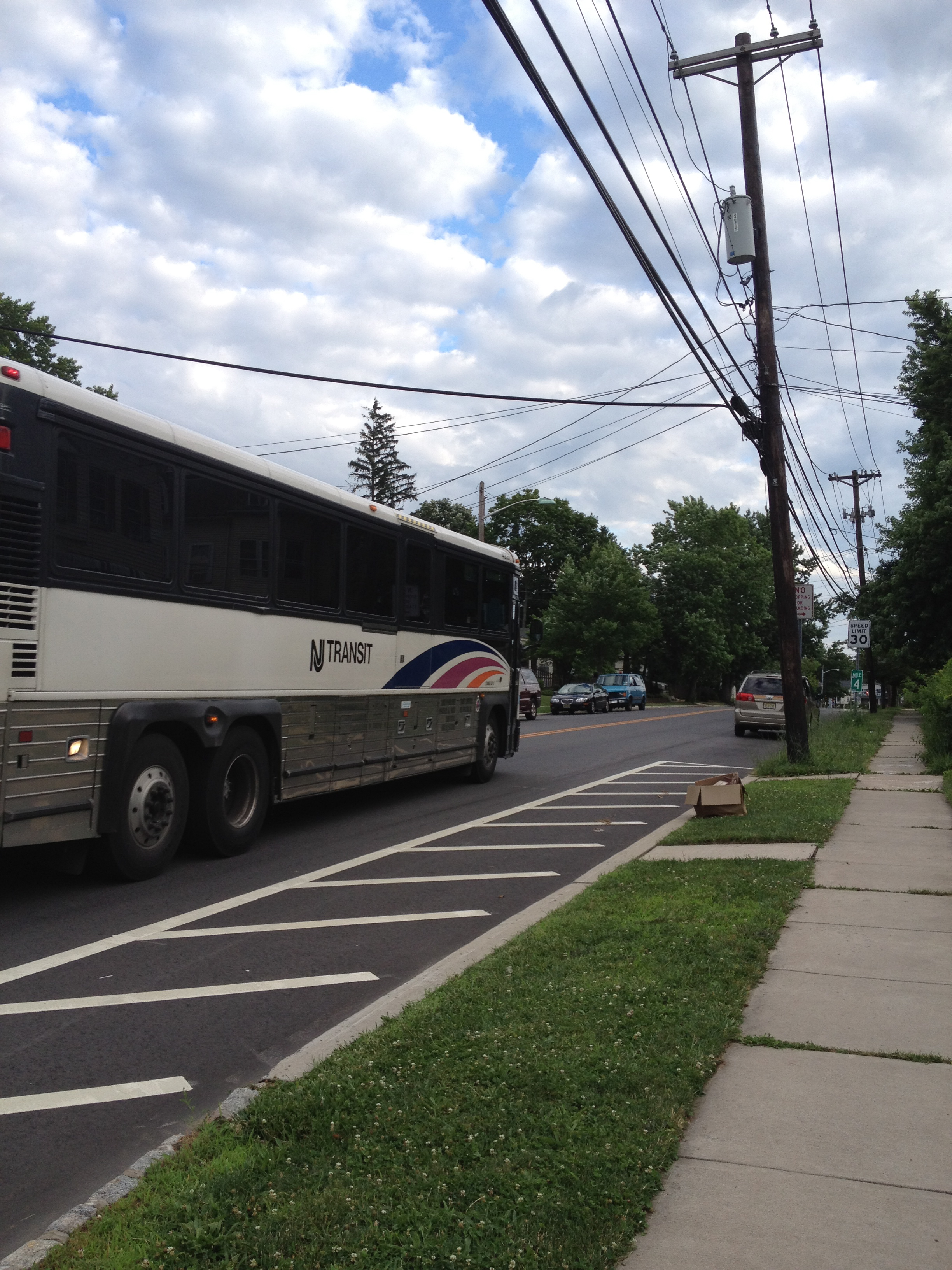
Few experiences encapsulate one’s lack of control like commuting by bus.  As my first year of a daily commute to Manhattan draws to a close, I have experienced many mornings of standing in cold or hot air while a bus leisurely makes its way toward my appointed stop twenty, thirty minutes late.  The commuter can’t head back home for a moment’s warmth/coolness, because the bus could come at any time.  The sense of utter helplessness as you know that you’ll be late for work, and that you got up at 3:30 a.m. for this, settles like an iron blanket over what might have begun as an optimistic day.  Then there are those who sit beside you, totally beyond your control.  I’m a small guy and I sit scrunched next to the window to get as much light for my reading as I can.  Very large people find the extra space next to me attractive, although sometimes they insist I squish even more against the window so they might fit.  Overall, however, the exchange of comfort for reading time makes the arrangement palatable.  It’s the loss of time that bothers me.
 
Without traffic, my bus can be at the Port Authority Bus Terminal in an hour. To manage this feat, it has to reach my stop before 6 a.m.  On rare occasions it comes perhaps five minutes early.  When you take a bus, subject to the vagaries of traffic, the only wise course of action is plan on being a few minutes early.  Drivers who watch the clock are dangerous.  So it always annoys me when passengers down the line complain if a bus is one minute early.  On those exceptional mornings I hear strident voices raised, “you’re two minutes early—I had to run!” or “I was sitting in my car; you came too early!”  The driver is scolded and the next day we’re all half an hour late for work.  It is the problem of premature transportation.  Time, to the best of our knowledge, is something you never get back.  I would rather be early rather than late.
 
I first conceived of wasted time as a religious problem when I was in seminary. There was always so much to do, and relinquishing time to pointless activities such as standing in line, or waiting for the subway, grew acute.  Now that I’m an adult anxious about holding down a job that requires a lengthy commute, the issue has arisen again. Clearly part of the difficulty lies in that time is frequently taken from us.  The nine-to-five feels like shackles to a former academic.  I had classes anywhere from 8 a.m. to 10:30 p.m. without considering the drain on my time.  It was largely, I believe, because pointless waiting was not very often involved. Time, like any limited resource, must be parceled out wisely. Time to bring my morning meditation to an end and get ready for the bus. And if it’s early I will consider it as a divine gift.


Anatomy of a Neurosis

I’m sitting in a building less than 10 blocks from where a shooter opened fire in New York City this morning outside the Empire State Building.  I can still hear the helicopters buzzing overhead as they’ve been doing since just after 9 a.m.  One week ago I walked with my daughter down that very block after an office outing.  This is the third public, multiple shooting since July in the United States. Twenty are dead, over sixty have physical scars, and the rest of us have psychological trauma.  Gun control?  Only a distant dream.  I have been reading quite a lot about embodiment lately.  The idea is both simple and complex at the same time: we are born with physical bodies and our minds spend our entire lives trying to make sense of them.  Guns have a way of radically interfering with the process.

Stop, children, what’s that sound?


Often I have heard the adage, “guns don’t kill people, people do.”  This may be true, but it is no more so than the fact that we are all embodied creatures and we have a right not to be shot by homicidal maniacs.  At least I think so. There are enough guns to wipe out the population of this nation, and I’m sitting at my desk in a subtle panic since nobody seems to know what happened yet. The beating of the helicopter rotors is loud, petulant, distracting.

As the morning wears on the reports begin to take some order. The shooter wasn’t acting indiscriminately. The nine of the ten (later revised to ten of the eleven) people shot were caught in the crossfire between police and the gunman. The helicopters leave. Perversely I find myself relieved. Natural disasters happen and the lives of countless thousands are taken. The difference is there no motive is involved. As much as some televangelists want to tell us that “God” is punishing mostly innocent people, the fact is tsunamis, hurricanes, wildfires, earthquakes, volcanoes, and tornados are completely natural events. Maybe firearmophilia is natural as well. I can hear the sirens as innocent bystanders are rushed to the hospital. My embodied psyche turns back to my computer. Work won’t wait, and no matter where we are, we are all potentially innocent bystanders in a world where trust in guns has eclipsed trust in gods.


Evil Living

Maybe it was just the lack of rationality that comes with driving 700 miles in two days, or just plain glaikitness, but I watched Evil Dead II a couple nights back. I had read on an Internet site (probably already a warning) that it was very scary, but I’ve been a slave to logic for many years. Supposing this to be a sequel, I was confused when the first few minutes replayed the plot from the first movie with just two characters instead of the original five. Budget cuts (literally, as I later learned) meant leaving out characters and supposing that the viewers would catch on. In the first Evil Dead, the catalyst of the evil spirits in the woods was “Sumerian” spells recorded by an ill-fated professor in the cabin in the forest. Playing the recording (still in the first film), the kids release the evil spirits and one-by-one become possessed until Ash has to kill off all his companions. The campiness in both films tends to ameliorate the over-the-top violence and blood, and you know that the film isn’t taking itself at all seriously.

Once I figured that out (it was, after all, a very long drive), I settled in to watch a familiar story unfold. New characters are added in the form of the professor’s daughter, and traveling company, who show up with more pages from the Book of the Dead that will help to dispel the evil. When the characters encounter a ghost of the dead professor, he says something that may be the point of this blog post. He urges his daughter to seek salvation in the pages of the book. So here was a distinctly Judeo-Christ-Islamic theme playing out: salvation comes through obeying a book. It is an example of what I would have called “the Bible as a magical book” back in my teaching days. Movies, both good and bad, tend to portray “Bibles” as books that have the ability to affect the world around them in beneficial ways. Demons are cast out, illnesses are healed, lives are restored.

My fondness for B movies, in the end, is all that redeemed this domestic cinematic experience. I have spent many nights in the woods and I have read and reread sacred books. The two, however, seem to be worlds apart. Nature often feels like a redemptive experience. After many weeks of experiencing the outdoors only in the guise of New York City, a truth that can only be called sacred occurs—people are creatures of nature and nature can still feel sacred to us. Here is a simple reason that environmental integrity must be maintained against those who would exploit the earth for fossil fuels, timber, or drainage of lakes for irrigation. Nature may be our last chance to find something truly sacred. Once one person, company, or government destroys it, it will be gone for a lifetime or more, for everyone. That, in my book, is evil.


Pack on the Back

One of the joys of corporate culture is receiving office memos. Of course, memos are now electronic and our environment hopefully benefits from that. A couple weeks back a memo announced Operation Backpack, a charitable cause. Fully employed for the first time in what feels like an eternity, I signed up to contribute. When I read the memo through, however, I was shocked. In New York City 11,000 children attend public schools from homeless shelters. Eleven thousand. The number is still large enough to boggle my blue-collar brain. That is over eleven times the size of the town in which I grew up. And that’s just the children. Urban culture has become the predominant paradigm of capitalism, but it comes with a considerable price tag. I see homeless people foraging through garbage for food—a more degrading example of picking berries and nuts in the woods, I suppose. What’s worse, nobody seems to think this is unusual or distressing.

A frequent visitor to university campuses, I am familiar with urban troubles. The low land values around tax-free campuses mean that many universities abut the harder neighborhoods in our cities. The city is considered the epitome of civilized living—humanity removed from the dirtiness and wildness of unpredictable nature. When did it become okay to forsake those who came to cities to make a living? How can one of the most affluent cities in the world let 11,000 children live in homeless shelters while others in the same city have far too much to satisfy any individual’s needs? We send troops to other countries to liberate them from oppressive regimes, mistaking free trade for freedom. We need to help those who cannot help themselves.

The biblical ideal of a just society is not one without wealth, but one where wealth comes only after everyone has enough. Yes, there will be some who take advantage of the system. I wonder, however, if not working is any different from taking advantage of the system on the other end—to “succeed” in a culture driven by the market, you must take advantage of the system. One kind of taking advantage means getting by with basic needs and services met, the other kind of taking advantage means living the life of royalty in a democracy. One we excoriate, the other we emulate. I don’t have the answer, but I do hope that a backpack of school supplies will make a difference in a young idealist’s life.

Still so far away…


Sweet Heaven

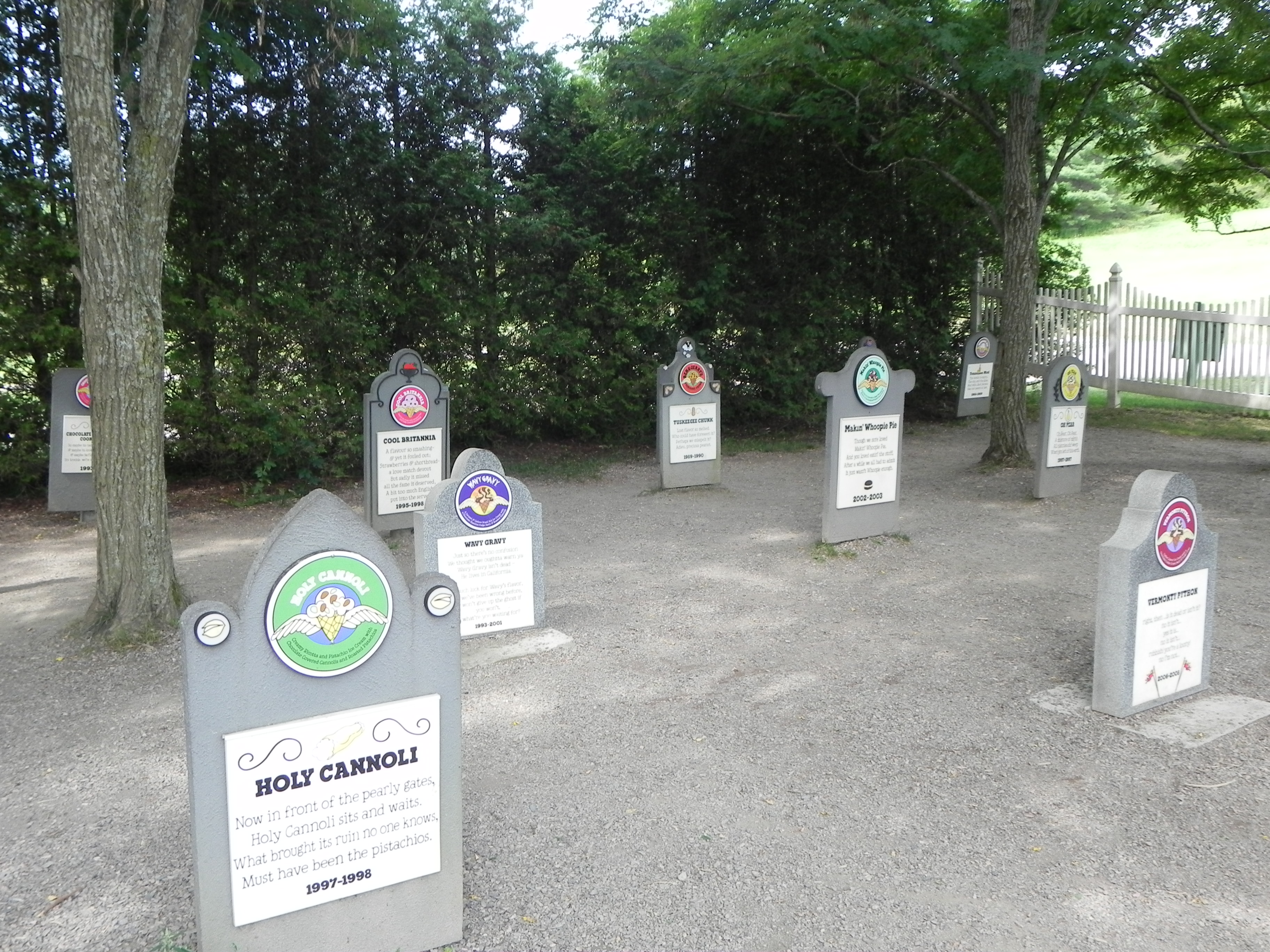
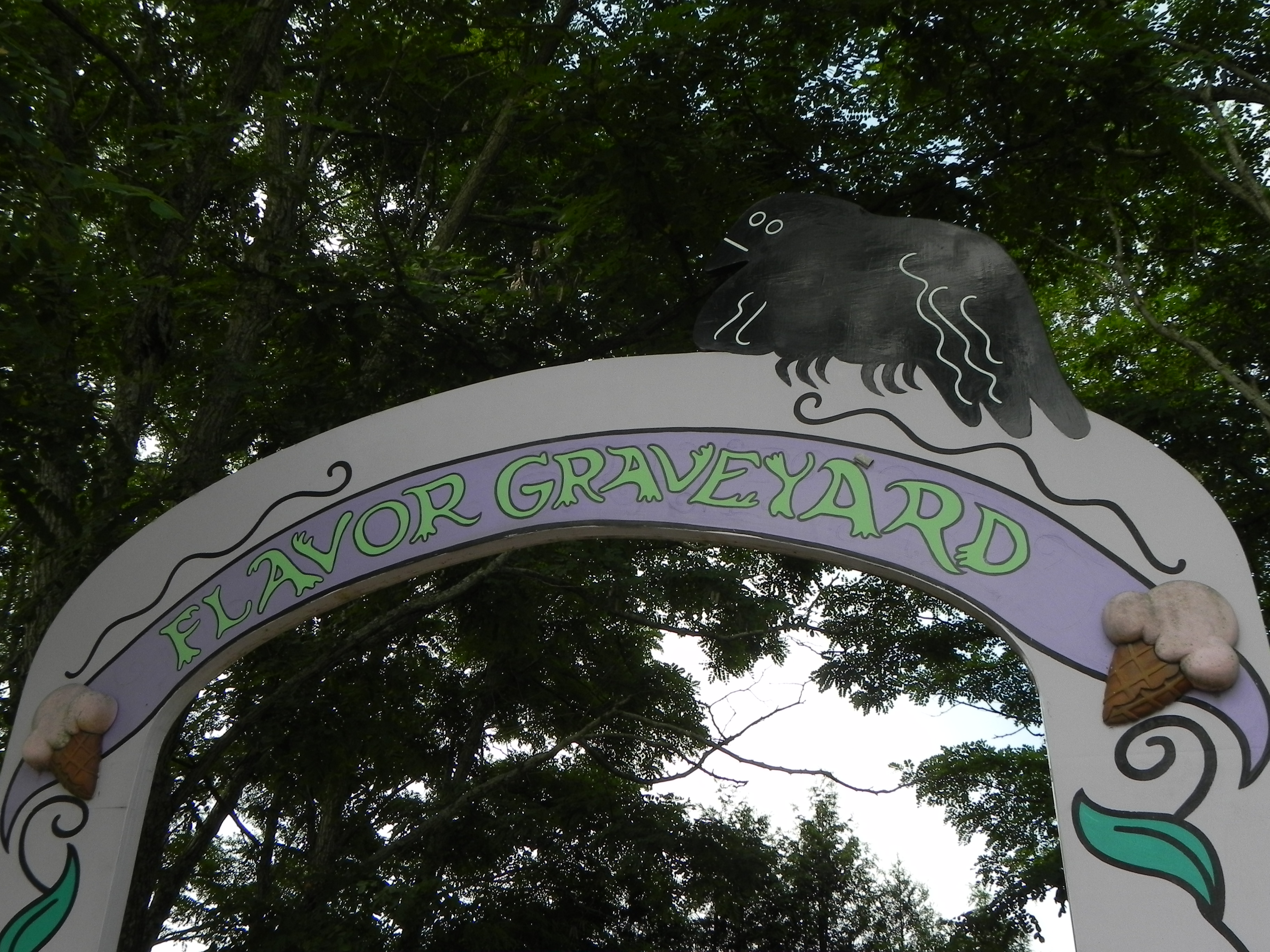
On a weekend trip to Waterbury, Vermont, I found the sweetest cemetery ever. Ben and Jerry’s ice cream factory features a Flavor Graveyard where tombstones to deceased flavors stand. The epitaphs are frequently witty and the experience is lighthearted for kids and adults alike. I wondered, as I stood there looking at the monument to Bovinity Divinity, at the persistence of the belief in an aftertaste—what I presume is a flavor’s version of an afterlife. We like to believe in something more, sometimes at the expense of the here and now. Nevertheless, Ben and Jerry stand for something more than quality ice cream. Theirs is a company with social consciousness, started by two young idealists who have managed to keep their integrity in spite of success. I couldn’t help but to feel impressed by the entire operation. Frozen dairy with a conscience.

The larger question, I suppose, is why success so frequently leads to a loss of concern for others. People possess differing levels of empathy, just as animals do, but it appears so starkly in the case of those who prefer their profit at the expense of others, sometimes even the entire remainder of the world. In a universe of one, no one is rich. And seeing a successful company that has managed to pull off relative equity in the world of business has proven that it is possible. Too many idealists let go too soon.

Perhaps it is the rarified air at higher elevation, or perhaps I’m being brushed with the wings of angels at this altitude closer to the celestial sphere, but this giddiness that I’m feeling is likely born of bonhomie. There is no necessary correlation between success and lack of concern for others. I am reminded of this as I walk to work in far away Manhattan. The sidewalks, even in posh business areas, host ambiguous stains and crushed cockroaches. Even the wealthy must step out of their limos sometimes. When they do, they will plant their feet on the same dirty sidewalks as the rest of us do. Their elevators may lift them to pristine heights, but the bottoms of their shoes are just as full of the remains of everyday lives as are mine. From now on, however, when I see Ben and Jerry wrappers among the detritus on the streets, I will be smiling, thinking about the aftertaste.


Holy Grand Central

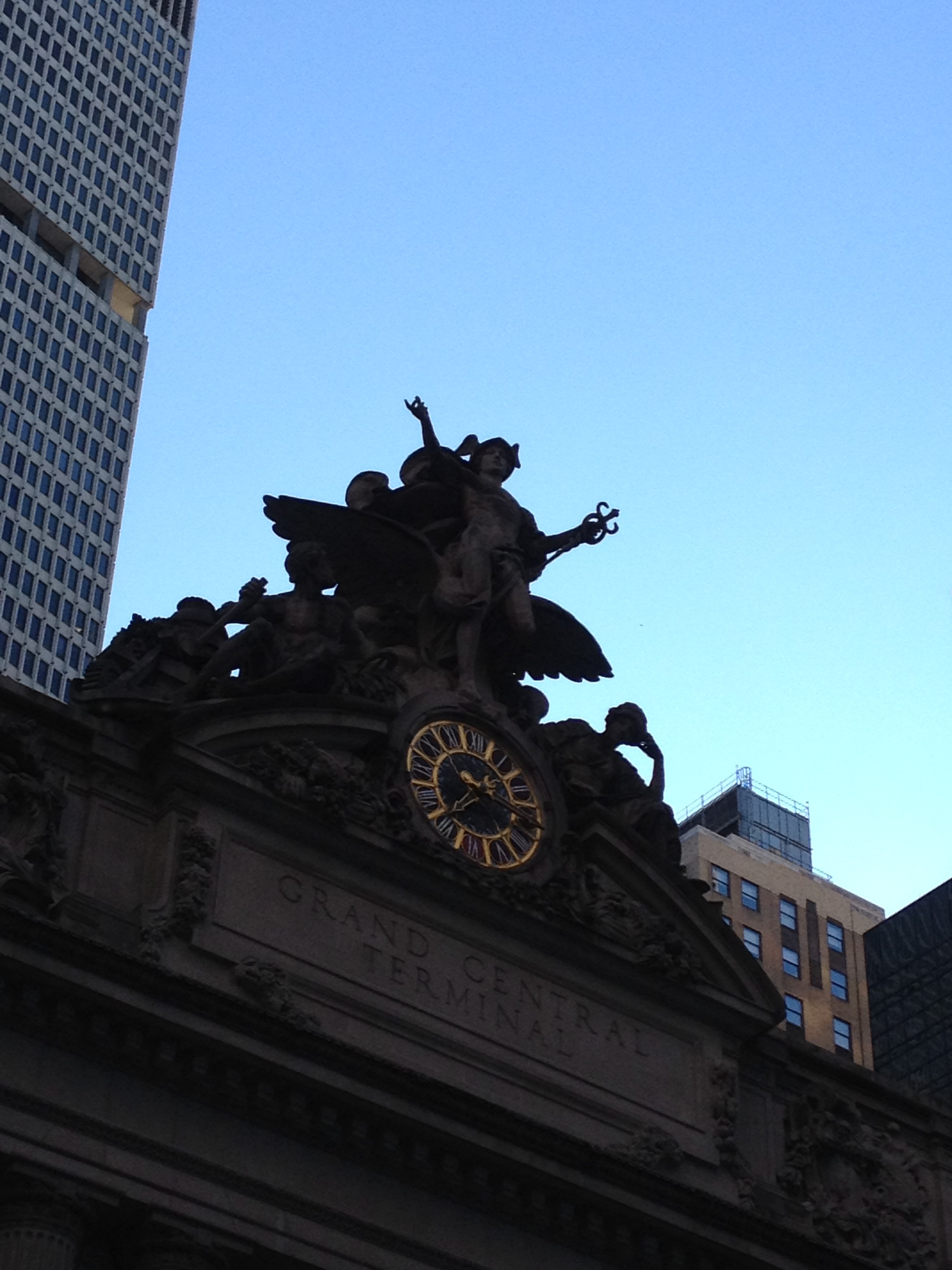
Staring out over 42nd Street is the massive triumvirate of Mercury, Minerva, and Hercules. Once the largest group sculpture in the world, the famous facade of Grand Central Terminal is photographed daily, and the number of tourists thronging the concourse make it perhaps the sixth most visited tourist destination in the world. While visitors’ shutters clatter away, photographing the statuary and starred ceiling, I wonder how many stop to consider the religious nature of much of this New York City icon. Mercury, of legendary speed, seems an appropriate mascot for a transportation hub. Along with the remainder of the Greco-Roman gods, however, he has been pigeon-holed as “mythology” and is considered a quaint, if picturesque, archaism. How easily we forget that the religions of the classical world were serious attempts to make sense of their universe. Mercury was borrowed from Hermes, a god who had the task of being a psychopomp—a guide to the underworld. (Somehow very appropriate for the immense subterranean world of Grand Central.) In our monotheistic supersessionism, we recast other faiths as myths, forgetting their gravity.

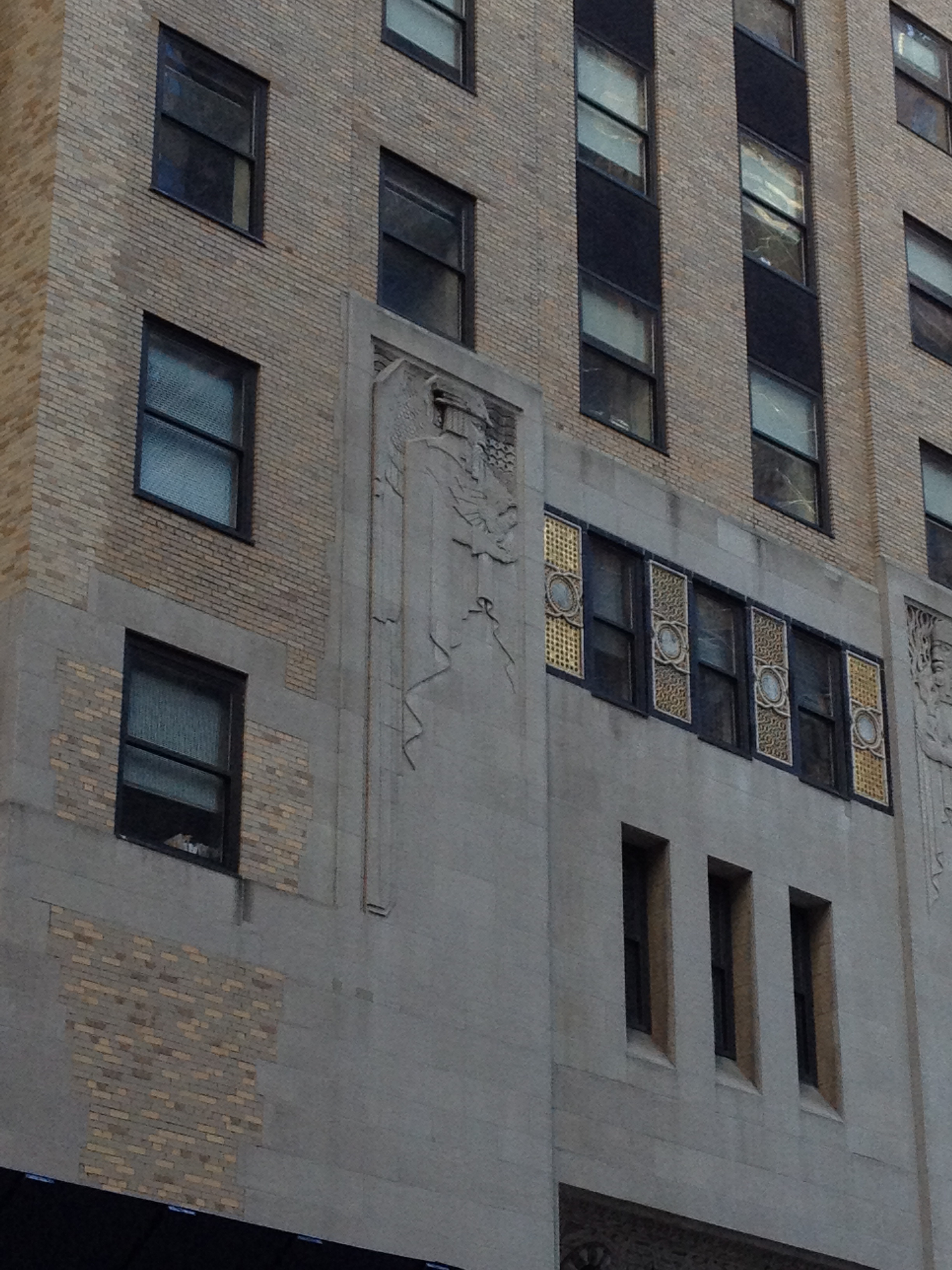
Over on the east side the terminal passageway leads through the Graybar Building onto Lexington Avenue. The external friezes are of art deco vintage and show what appear to be angels flanking two of the entrances. My limited architectural knowledge prevents me from finding an actual description of what the figures represent, but it is safe to say the wings upon the back generally qualify a character as somewhat more than human. Graybar eventually became Western Electric and the original company is on the Fortune 500 list (again, I tread in unfamiliar and somewhat scary territory here). Angels watching over the common person? If so, perhaps we need to seek an upgrade. William Henry Vanderbilt, president of Central Railroad, once famously declared, “the public be damned,” in a moment of unexpected candor, showing where the common person stands in the Weltanschauung of the wealthy.

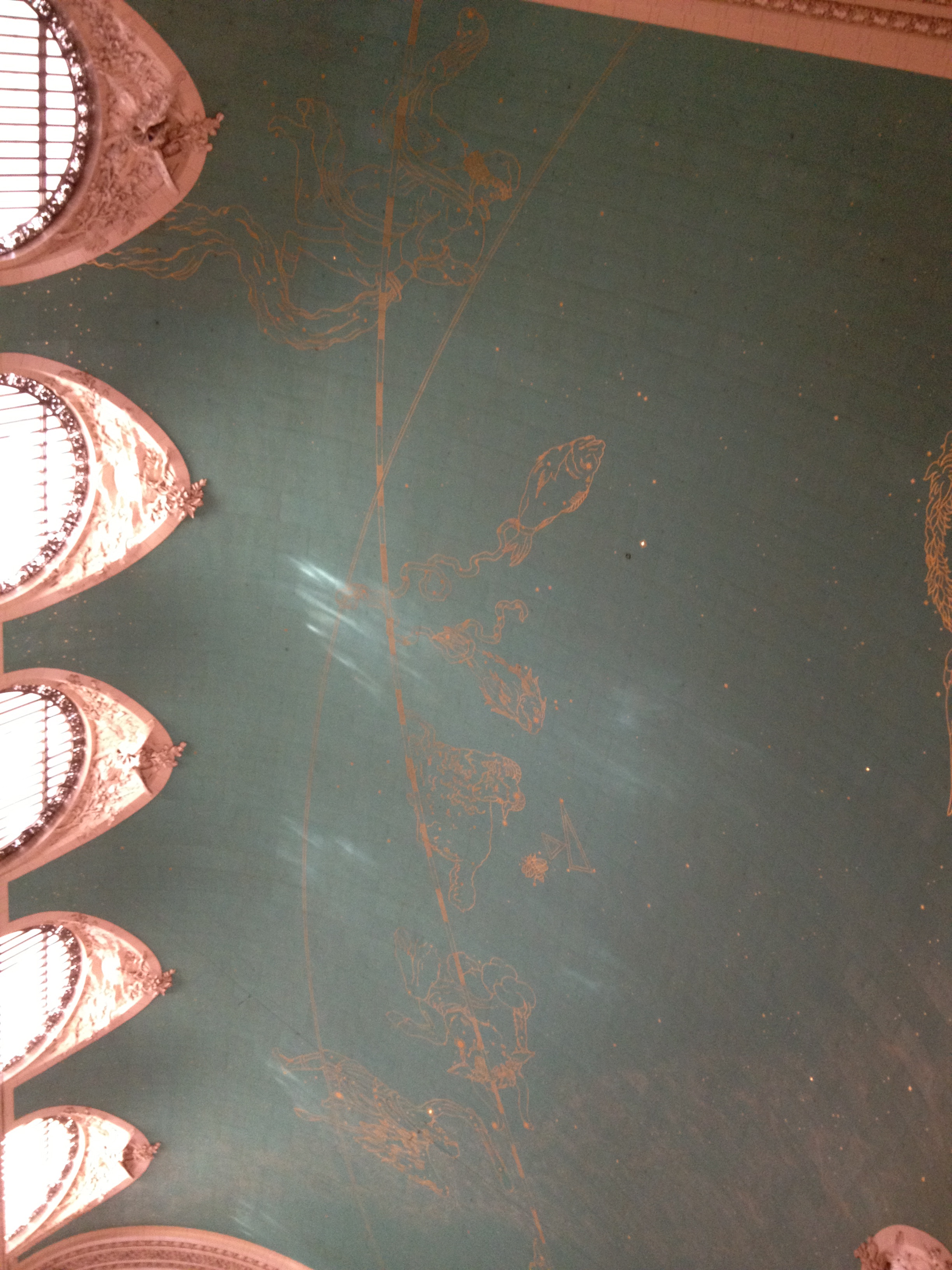
Back inside Grand Central, the famous celestial ceiling always draws considerable attention. Those who know the stars have noted that there is a backwards nature to the array—it does not match any actual outdoor sky. Explanations vary, but it is said to be a “God’s eye-view” of the stars. As we stand below, staring up, we gain a divine view on the celestial sphere. Many thousands of people pass through Grand Central every day. Few, I suspect, stop to consider its role as a monument to the influence religion has in the secular world. Certainly there was no religious motivation behind getting the working public to the city on time. We are the chattels of the wealthy, showing up to our jobs on time. As usual, we are unaware of the power of that which tends to carry on, unobserved. The mythologies of different peoples blend here, but perhaps the greatest myth of all is that the wealth from the gods will trickle down to the average human passing through this sacred edifice.


Another Dark Knight

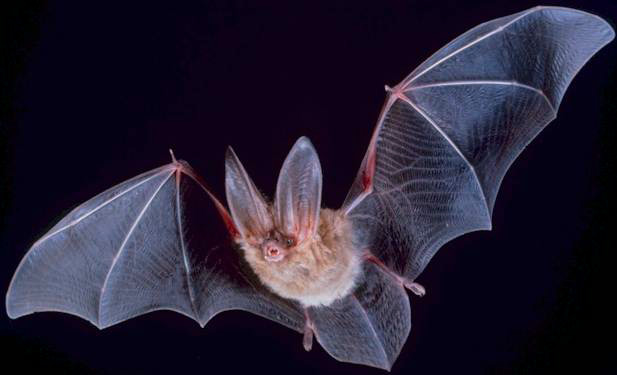
Batman was dreamed up in the late 1930s as an ambiguous character that fought crime and protected innocent civilians. The backstory emerged that he had witnessed his parents being shot down as a child, and eventually adopted the identity of a bat to frighten the perps. Batman never, in principle, used guns. Of course, the DC Comics character eventually scored a wonderfully campy television series that entertained many of us as children. It even spawned a movie. Then, fifty years after the original, Tim Burton gave us a darker, more serious Batman. The series of promising movies degenerated into the unforgivable Batman and Robin, and many assumed the flash in the pan was over. We didn’t need any super heroes. Christopher Nolan resurrected this bat in Batman Begins, and when I first saw The Dark Knight I was stunned. Good and evil danced a waltz so delicate that you were never sure who was leading. The frisson was palpable.

Thursday night the Nolan series’ final episode was released. I’ve not seen it yet, but from the moment I step out of the Port Authority Bus Terminal in Times Square until I arrive at work, I will have seen several multi-story Batmen looking down on the real life Gotham, explosions erupting and everyone wondering if Batman will survive this film. Yesterday morning the news opened with a horrifying story from real life in Aurora, Colorado. A gunman opened fire on a crowd of opening night movie viewers, killing at least twelve. Several children were shot. The gunman, like a real-life character from Arkham, was apprehended and claimed to have explosives in his house. I stared at the story and wondered what has become of humanity.

Facebook has turned into a venue for flying political banners. I’m always surprised to see how conservative people I knew in school have become—in those days no one had me beat for non-progressive thought. I’m truly amazed, at times, by the glorification of America’s gun culture that accompanies conservative causes. People want to shoot and want to glorify their right to shoot. I have, on rare occasions, shot rifles for sport—only at targets and only when others have asked me to. There is no denying the rush of power one feels, knowing that, like God, you can destroy the thing far distant from you with just a squeeze of the finger. I’m not sure I’m happy in a universe populated by such gods. I grew up a conservative, but also a pacifist. I grew up watching Batman defeat evil so clearly defined that no room remained for ambiguity. Yes, I grew up a conservative, but then I just grew up. I will watch The Dark Knight Rises and will not know what to expect.

Neither good nor bad.


The Times they are a’Chanin

Across from Grand Central Terminal in Midtown Manhattan rises the Chanin Building. Named for Irving S. Chanin, the tower is no longer easily picked out among Manhattan’s dizzying skyline, but the building is a monument to the humanistic spirit that was beginning to flower in the 1920s between the harsh realities of the world wars. Outside the building, above the ground floor shops, runs a bronze frieze that still catches the breath of visitors who stop to stare for a moment or two. Interestingly, the frieze is a monument to evolution, showing the development of “lower” life forms among the water flourishing into birds and fish. Although prosperity gospelers would object to its inherent Darwinian message, they would appreciate a huge monument to the triumph of capitalism in Chanin’s dream, as much of Manhattan reflects.

Antipodes are a fact of geography and human understanding. It would seem that they are also a paradigm for those who “want it all.” Perhaps it is ironic in coming from a Disney movie, but I’ve always found Mary Poppins’ maxim apt: “enough is as good as a feast.” Indeed, leaving the table after eating more than I need I feel miserable and disgusted. There is only so much that people can have, and this is a matter of physics as well as biology. If God wanted us to be wealthy, why didn’t he make us that way? (Surely the God who promotes personal wealth must be male.) Evolution and capitalism could be a dangerous mix should we forget that evolution is not goal-oriented. Natural selection works by trial-and-error, only the trial isn’t planned or intelligent.

This dialectic reminds me of that old chestnut, Beneath the Planet of the Apes. Ursus, the gorilla warlord, gives a jingoistic speech concerning the Forbidden Zone. “It is therefore our holy duty to put our feet upon it, to enter it, to put the marks of our guns and our wheels and our flags upon it.” Of course, this second, lesser installment of the Planet of the Apes movies raises the entire specter of nuclear war to a disturbingly sacred level, but that’s a topic for another post. What I notice is the full circle of evolution here—not just human to ape, but human to capitalist ape. Apes that wish to own and control their entire world, including that region where, in the original movie, both ape and human fear to go. It should not surprise me to see talking apes in Manhattan, but then again, it might just be the bright sun reflecting off the bronze of Irving Chanin’s monument to economic growth.


Think Again

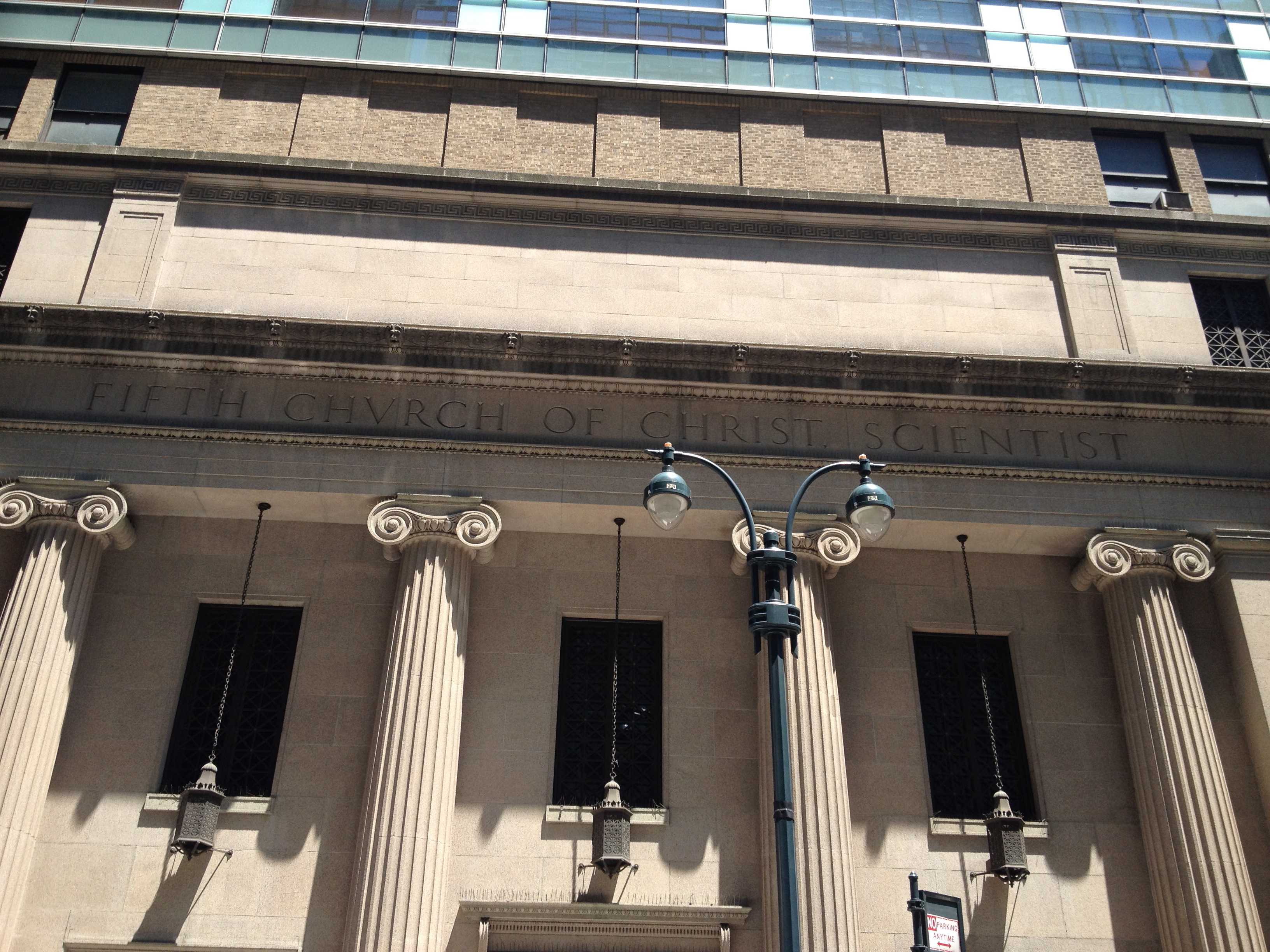
Within a few blocks of my office is Midtown are at least three temples related to the New Thought movement. New Thought has been variously interpreted, but generally it is considered a religious movement, challenging, as it does, the very perceptions of reality itself. New Thought is usually traced back to Phineas Parkhurst Quimby, a nineteenth century American philosopher and inventor. A watchmaker by trade, Quimby came to believe that mind had ultimate reality and New Thought opined that the divine is true human selfhood, and what we call God is ubiquitous. One of the corollaries of this outlook is that the mind is capable of healing the body. A woman who was a patient of Quimby took his ideas and developed them further. Mary Baker Eddy would eventually found the Christian Science movement. Although the Mother Church of Christian Science is in Boston (and is a somewhat imposing building), over on East 43rd Street in New York stands the First Church of Christ, Scientist.

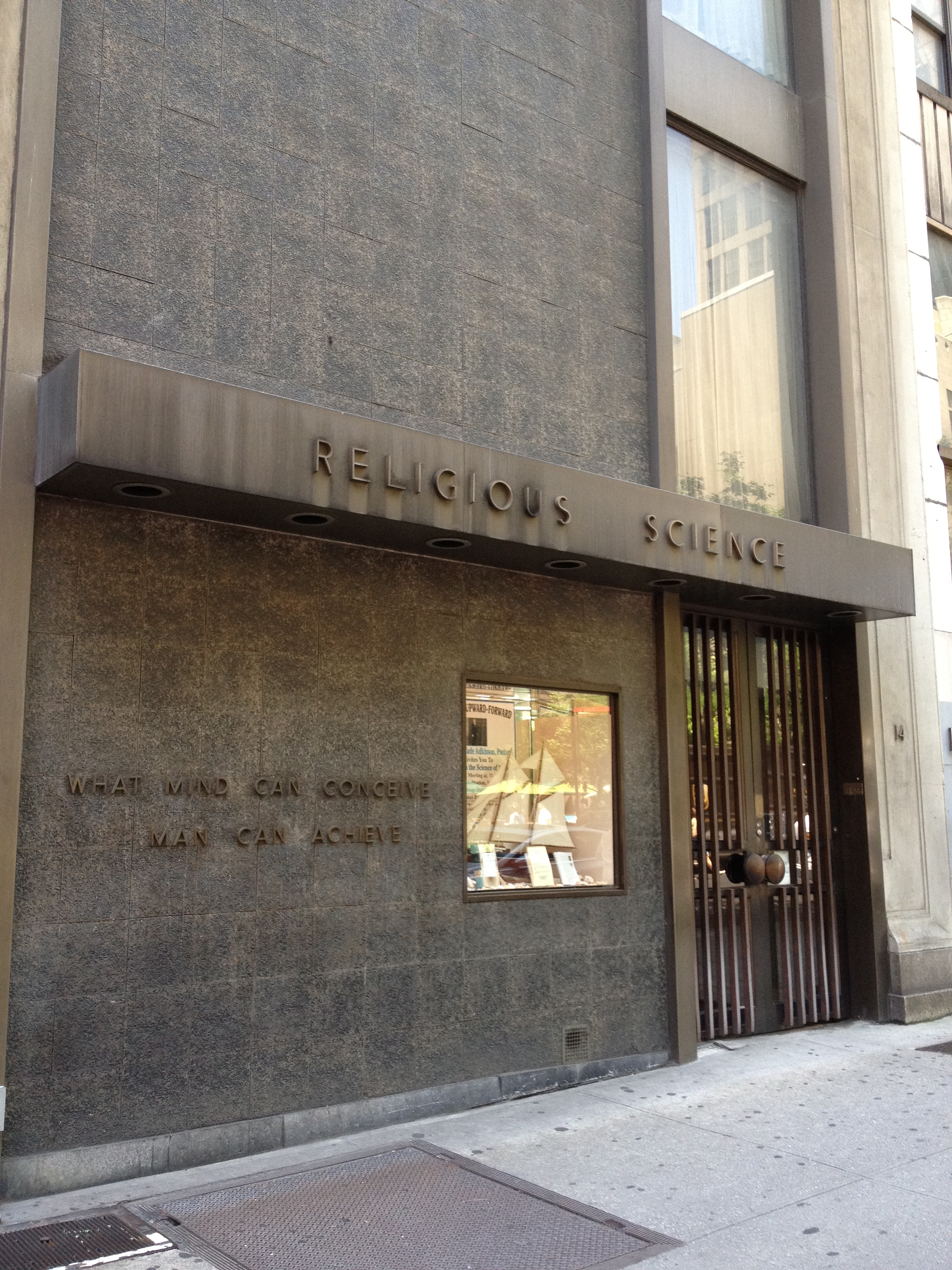
New Thought was noteworthy in that many of the leaders of the movement were women. Unburdened from traditional Judeo-Christi-Islamic ideas of paternal divinity, New Thought had no use for male-centeredness. One of the early leaders of the movement was Emma Curtis Hopkins. Originally a disciple of Mary Baker Eddy, Hopkins split off from Christian Science and began to organize the New Thought movement. One of her followers was Ernest Holmes, the founder of Religious Science. While based in Los Angeles, Religious Science had roots in New York where Holmes spent some of his younger years. Holmes would eventually write The Science of Mind and his followers would become recognized as another New Thought “church.” While on a lunchtime errand I came across the Religious Science center on East 58th Street, just a few blocks from its kin down by Grand Central.

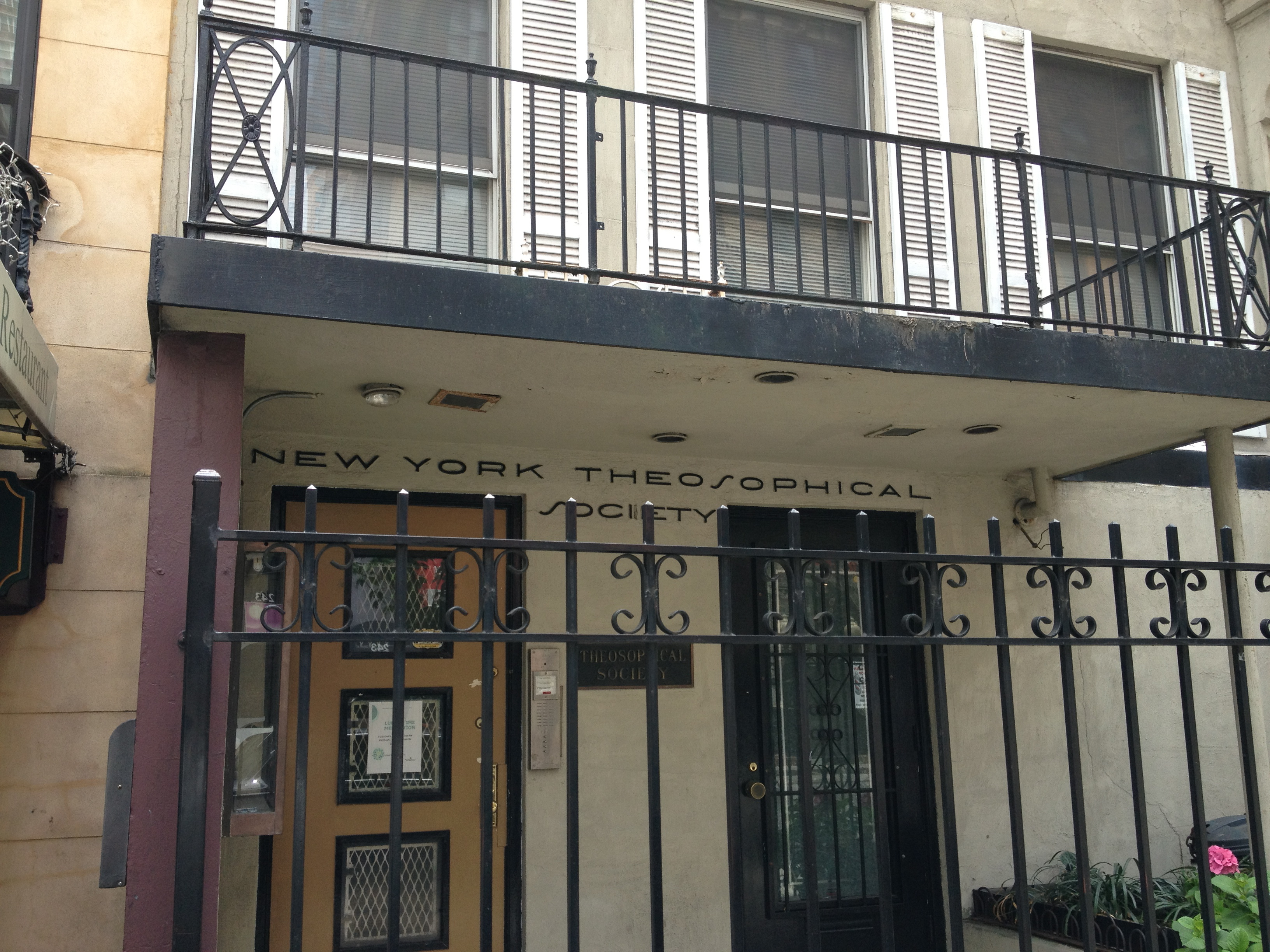
Theosophy is probably better classified as an esoteric religion rather than New Thought. What ties them together is their beginnings in the late nineteenth century in the Northeast. Helena Blavatsky and Henry Steel Olcott began meeting in New York City and the movement grew out of their mutual interest in the religions of antiquity and the far east. The Theosophical Society moved its headquarters to India with a main US office in Wheaton, Illinois. Nestled between the Church of Christ, Scientist and Religious Science, an office of The Theosophical Society sits quietly on East 53rd Street.

One brief lunch hour will take you past all three. These New Religious Movements attest to the vitality of religious thought. Some of them continue to try to combine science with the world of the mysterious, spiritual universe in which we find ourselves. The obituary for religion was written long ago, but a stroll through Midtown on lunch hour will show it was certainly premature.


Ms. Found in an Email

The other day I received a distressed message from a friend that I met in college. Marvin’s career somewhat parallels mine; he went on to get a PhD, taught for a few years in New Hampshire until the economy claimed his job, tried to make it as a fiction writer and adjunct instructor for awhile before moving to Boston to work with a publishing company. He’s never made any money for his writing, but that may be for his own good because the money that authors make goes to support the CEO of whatever corporation owns the publishing house. Still, I wish him luck. Yesterday he emailed me about a book he’s reading, The Last Professors, by Frank Donoghue. He’s convinced me that I should read it, but I thought his message would be appropriate for this blog. In Marvin’s words:

“If a more bleak preface has ever been written, I’m an illiterate ape who never reads. The writing has been on the wall for years, but those of use who are able to see it have been hopelessly myopic. In the preface he tells how industrialists since the end of the Civil War have been dead-set against liberal arts education as useless. People like the two of us who studied ‘useless’ fields, they would have as the cogs in their efficient machines, suppressing our thoughts. The only useful education they can deign to approve is one that earns them more money. There’s only one value system in the world, it seems.

“Don’t you feel like a sell-out, working in New York City, that cathedral of capitalism? Is NYU on anybody’s list of tourist stops for people down there in New York? Who goes to visit a university when there’s so much of commercial interest to see?

“And yet, corporate types are the ones who can afford tickets to shows written and put on by people educated in their ‘useless’ craft, but who are in reality their unwitting chattels. And who wants to be seen with authors and intellectuals to enhance his personal prestige, so that he will appear smart? Who are the dogs in the manger who keep everything they can’t possible use for themselves, for fear that others might enjoy it?

“We all play along with their game—we wear jeans on casual Friday and declare how good we have it. We speak their demeaning language, using humiliating phrases like ‘best practice,’ ‘core competency’ and ‘corporate values.’ In this dehumanized state we all live in cages that we’ve helped build. Corporate moguls hold their power over us because we let them. We, the workers, have the power to change it. They make the rules and we obey because we all want to be in their place.

“Education is the way out—that’s why they hate it. There’s an entire support industry built around it; those of us in the book business rely on educated readers. What happened to Borders looks prophetic to me. Time to close—I’ve just arrived at work.

“Sent from my iPhone”

Just another useless lay-about


Adult Reading

Book Expo America is porn for readers. I couldn’t believe how large a space was dedicated to literacy, even if only for a week. It is cheering to see what seem to be so many people flocking to the support of the written word, until one steps outside. The city is busy, fast-paced, and frenetic. Books have almost no place here—in fact, bookstores are increasingly difficult to find. This is the world of finance and action, not quiet, reflective thought. Stepping back into the Javits Center what do I find? As a long-time attendee of academic conferences, I am no stranger to book stalls. In religion conferences one expects to find hundreds of religion titles. Thousands even. One of the surprising aspects of the Book Expo, to my eyes, was the volume of religion titles there. To be sure, they were not the erudite, and recondite tomes that populate religion conferences, but there were many Bibles and many books on faith. The religious, it seems, have always loved their books.

Books offer a stability that is not unlike the ideal of religious teaching. One of the main reasons for the plague of fundamentalisms the world is experiencing is the obvious disconnect between the world of ancient books and a culture that refuses to stand still. Once words are laid down, they have a way of becoming stable, apparently written in stone. To borrow a phrase from those long nights playing hearts or gin rummy, a word laid is a word played. Thus Scriptures, with all their foibles, are born. Even in a world increasingly tied to electronic devices, the written word still voices an air of authority. They may be merely electrons projected onto a glowing screen, but words tell us what we need to know. Some of them may become future bibles.

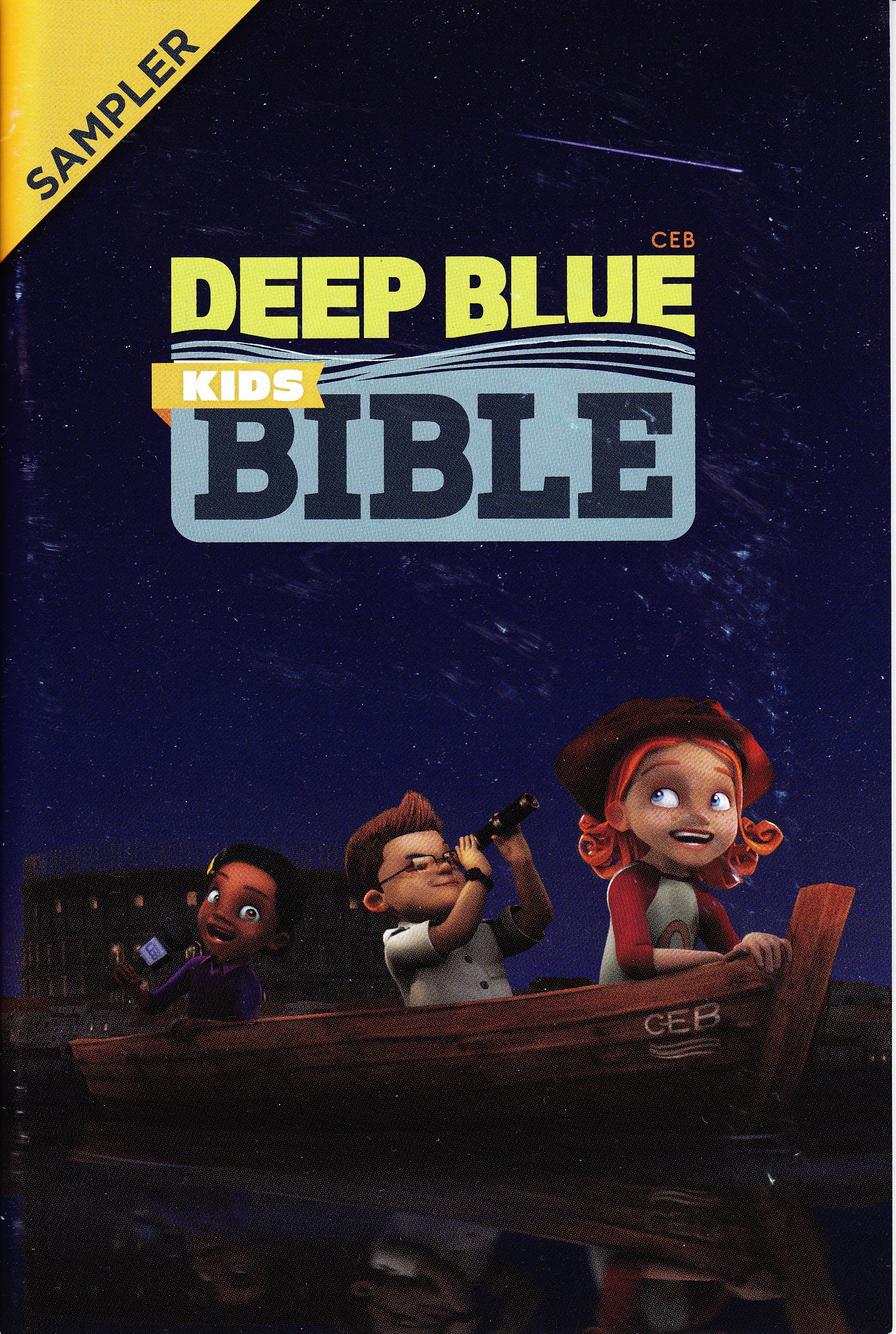
At Book Expo I found Bibles in child-friendly form. In a world where vegetables are the purveyors of the Gospel truth, and we can’t believe anything that hasn’t been animated by a major corporation, the Deep Blue Kids Bible caught my eye. Based on the Common English Bible, it is not the work of amateurs, but it did bring to mind a scary story I read long ago. (The story and this Deep Blue Kids Bible are only related in the labyrinth of my gray matter, not in any business sense whatsoever.) The story was in a children’s Christian magazine and it still evokes a shudder forty years later, when I recall it. An unthinking parent, it seems, decided to keep rat poison in a peanut butter jar. I really need recount no more of the story than that—as the child lay dying the moment of spiritual crisis came to make that decision for salvation upon his deathbed. I started reading the Bible (KJV, of course) before I was a teen. The Bible is not a children’s book. As I walk through BEA on weary feet, I am very glad for the books, but part of me is somewhere between the devil and the deep blue sea.


Lunchtime in Midtown

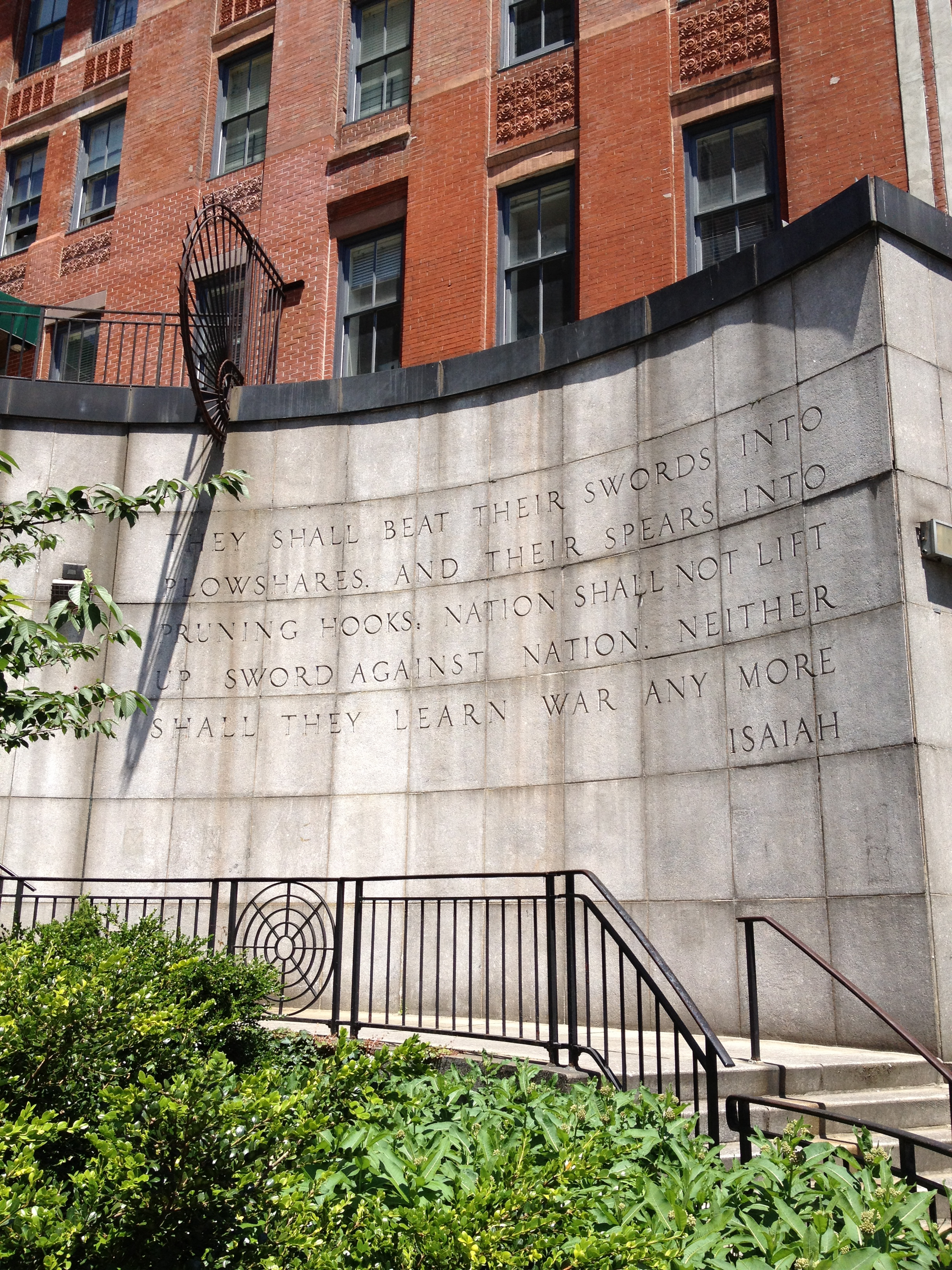
It was a brilliantly sunny day and there seemed to be rain nowhere in sight. It wasn’t even hot. Days like this have been rare this spring, so I went out for a lunchtime walk in my neighborhood. I’d been by the United Nations with some visiting family the day before, so I went down again and pondered the words attributed to Isaiah carved in the wall across from one of the largest intentional organs of peace in the world. I was reminded that a copy of the Edict of Cyrus resides in the UN; as a historical text it is often considered to be the first document promoting religious tolerance among lesser powers allowed by a greater power. The world could use a few more like old Cyrus the Great these days. I think Deutero-Isaiah would agree. So with biblical thoughts in my head, I strolled back toward Grand Central.

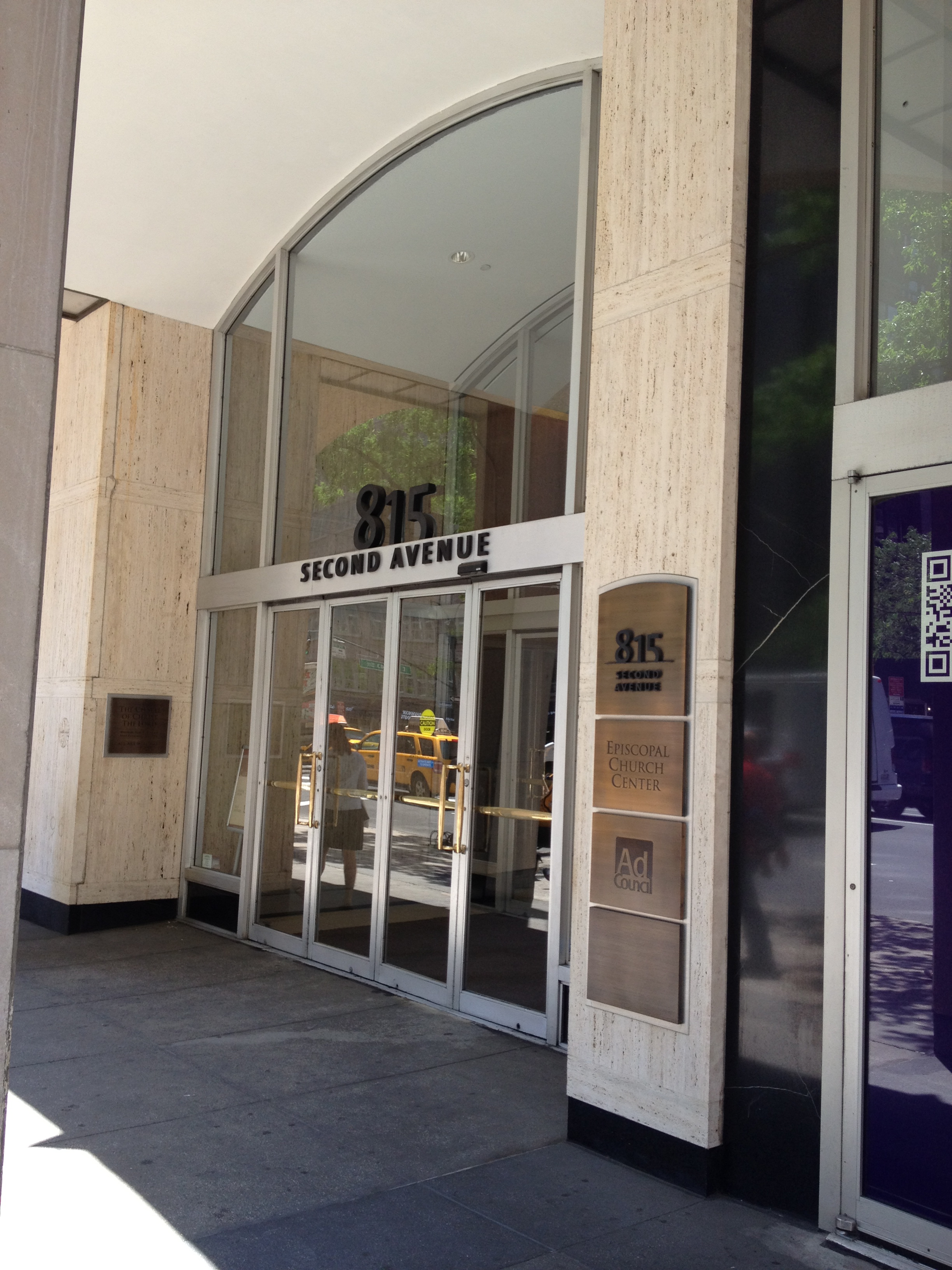
Along the way I saw a phrase from the Eucharistic Prayer on a building and it was like meeting someone from college that moved halfway around the world to disappear from your life. I saw that I was standing outside 815 Second Avenue. To the majority of the world—even the majority of Christians—this will mean nothing. At Nashotah House, however, “815” was regarded as the source of all evil. It is the headquarters of the Episcopal Church in America. It is hard, as a disowned son, to describe the feelings that assailed me there. Those good Christians who intended me such harm did not seem to realize all I had sacrificed to join them. Some of the clergy whose daggers remain in my back are well-paid priests right here in New York. Yon Cassius has a lean and hungry look, I thought.

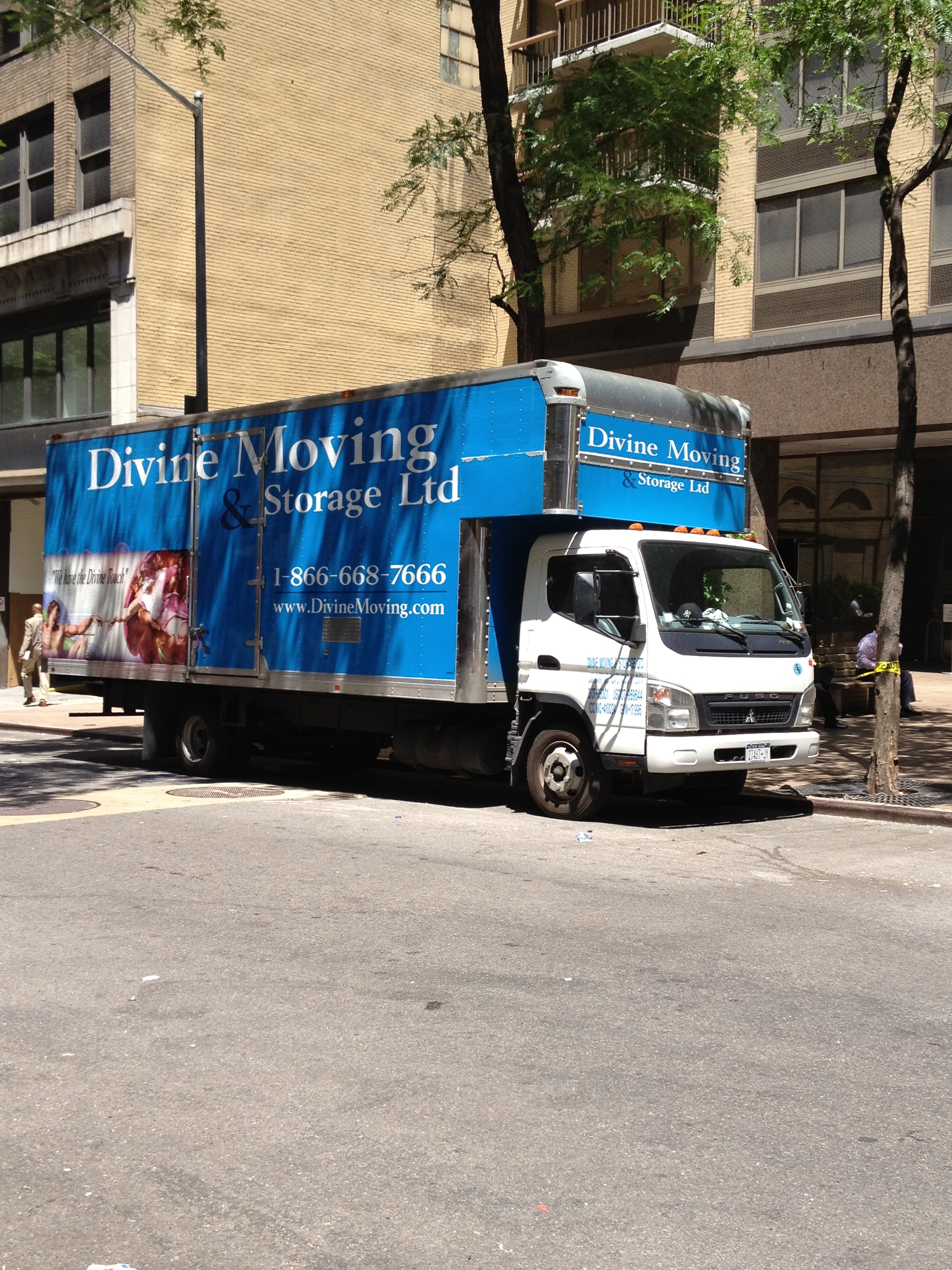
With that cloud in my sky, I turned the corner back to work. Parked in the street was a truck labeled “Divine Moving & Storage.” That sounded an awful lot like a trope for my life. The reproduction of Michelangelo’s God reaching to Adam contrasting with a phone number ending in 666, this bundle of contradictions might just have been a small sample of the human experience. Caught constantly between Heaven and Hell with doleful prophets and profit-loving dolers of sacramental grace living one next to the other. New York is a religious city in every sense of the word. Somewhere off in the shadows I think I hear Isaiah whispering, “I make weal and I create woe…” I love a sunny day in Manhattan.


Convergent Evolution

Back when my opinion mattered—in higher education, you must realize, a scholar’s outlook only matters when s/he has a teaching post, no matter how abysmal the school. Once that post is gone you just become another guy with an opinion—I was invited to a conference. This is quite an honor for someone consigned to the bargain basement of academia, and for my paper I read from a burgeoning book that died a sudden death along with my academic career. In that stillborn tome I argued that many aspects of ancient mythology—including some in the Bible—made better sense in the light of science. I suggested that some of the infelicities in ancient texts might be the signs of continuing evolution of the human brain. Ancient people were able to believe what we find troubling. By the end of the conference many respectable scholars were looking askance at me when I stepped into the room. Honestly. I heard the word “Wiggins” uttered as if it were an archaic curse. Shortly after that I found myself working out of some guy’s basement for a salary fit for a knave.

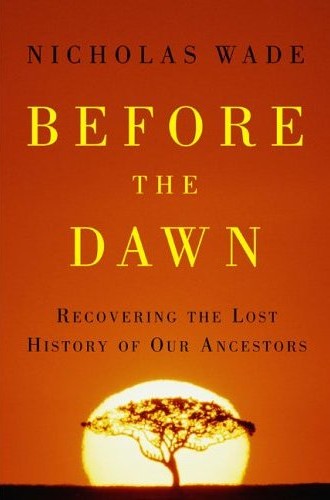
Imagine my delight, then, at finding a reputable scholar who argued that the human brain indeed continues to evolve. In fact, it has speeded up the pace as new challenges have emerged. Before the Dawn: Recovering the Lost History of Our Ancestors by Nicholas Wade was recommended to me by my brother-in-law. As I was updating myself this week on how we became human, I was surprised to see Wade suggesting what I had suggested in my paper—the patterns of human behavior (we both have an interest in religion, it seems) are tied to the evolutionary state of our brains. Sitting on a bus next to many other drones commuting like ants to New York City, I felt strangely vindicated. I had an idea scorned by my colleagues that is being suggested by science. Not that everyone will accept Wade’s conclusions. Many scholars of ancient religions will never even read them. When I explained my thesis to a colleague after losing my academic status, he said, “I don’t give much credibility to science.”

Convergence is the phenomenon of two species evolving an adaptation independently. Often it is difficult for people to believe that a trait shared by two populations is simply nature’s way of trial and error that happened to work twice, in different situations. Nicholas Wade and I experienced convergence on this point. He, of course, is a famous writer and I am nobody. Nevertheless, my unpublished idea was presented at a conference the year his book must have been in production. We had both been reading about evolution and wondering what its effect on religion might have been. I will comment more on Wade’s specific ideas about religion in the book in another post. He, of course, went on to write The Faith Instinct, which was widely acclaimed. At that time I was struggling to find work and it seemed that natural selection hadn’t selected me at all. I am glad, however, that my idea made it into print, even if it was evolved by someone else who is far more fit for survival.