Free Tea

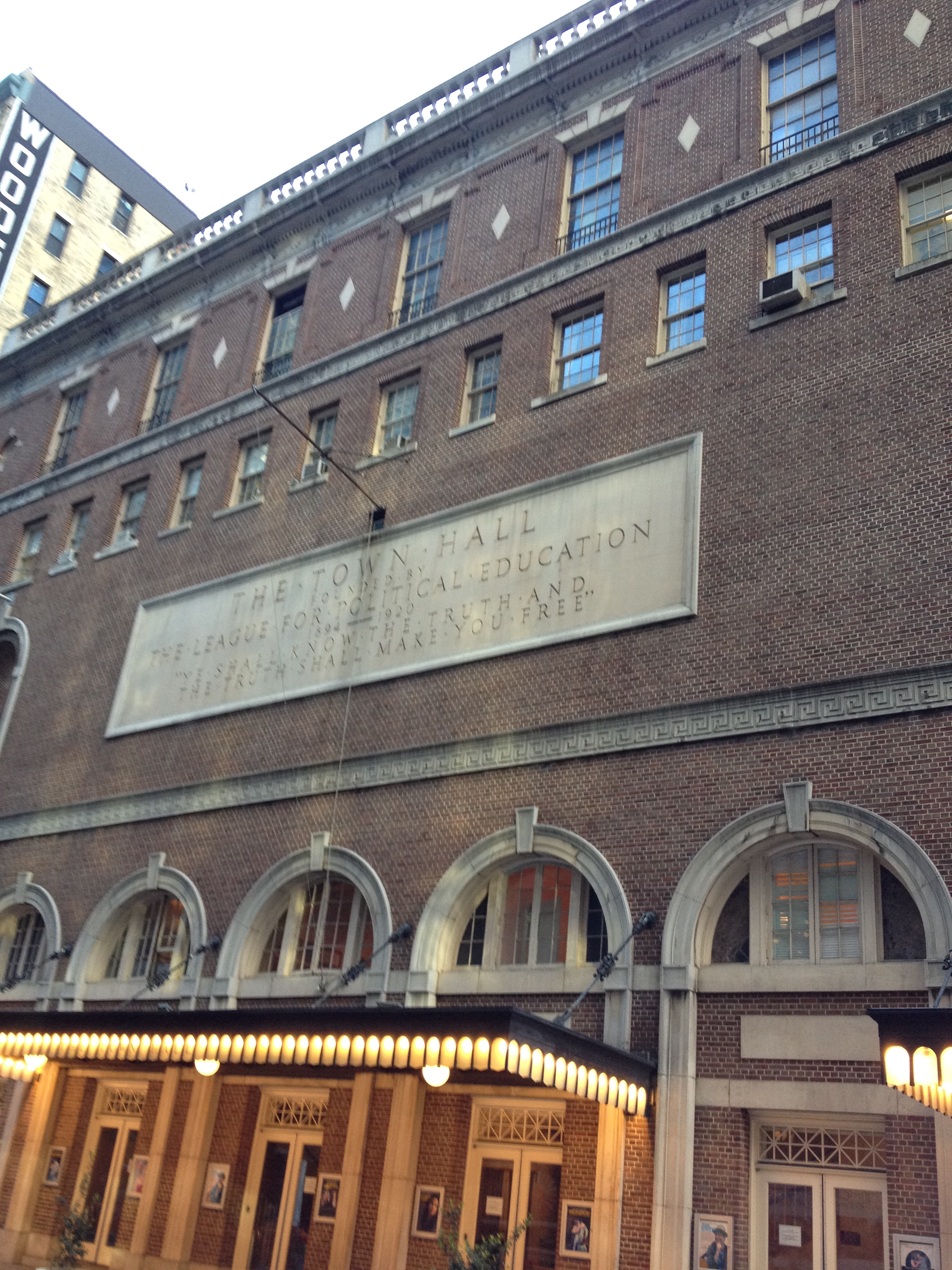
I first became aware of The Town Hall, I have to admit, through the Christopher Guest mockumentary A Mighty Wind. In the movie, three aging folk groups are brought together for a concert in Town Hall to honor the memory of one of their early promoters. When I began to walk past Town Hall on my way to work, I grew curious about its history. This curiosity was piqued by the scriptural quotation engraved on the façade: “Ye shall know the truth and the truth shall set you free.” New York City is an architect’s smorgasbord and I am often intrigued by the little gems I spy here and there. I discovered that The Town Hall was originally a political venue built by The League for Political Education, an organization sorely needed now. Built because of the need for a public space to discuss the Nineteenth Amendment (which the League supported), Town Hall was originally a venue to keep the public informed.

The Nineteenth Amendment—which the Tea Party seems to have overlooked, along with much of what we recognize as democracy—was drafted by Susan B. Anthony and Elizabeth Cady Stanton. It took congress only four decades to ratify it. Women were finally given the right to vote. Stanton was noted for her suffrage activities, including the production of The Woman’s Bible. The idea that an entire half of the human race should share the rights of the other half seems to have required a building erected to educate the public. Of course, there were moments when even The Town Hall couldn’t bear the words spoken on stage, as when Margaret Sanger was arrested for speaking about contraception there in 1921. I suspect there were Tea Partiers in the audience.

The same stage also provided a venue for Edna St. Vincent Millay to have her poetry reading breakthrough. Richard Strauss and Sergei Rachmaninoff performed there, as did any number of other greats. Truth may take many forms. Certainly human equality is as basic a truth as can be found. Art and poetry are equally as parsimonious, in the formal sense of the word. These things that we value are the very aspects of culture that the Tea Party would like to curtail. Thankfully there have been believers in the truth in the past who have been willing to construct monuments to sanity. And I can’t help but think that there would be even more of them if we still had a League for Political Education to help promote the truth. Without it, as it says in stone, we can never be truly free.

Battle Billboards

Perhaps the oddest intangible accompanying democracy is the concept that all things are negotiable. Add to that a capitalist sensibility that everything has its price and even truth itself feels like a matter of debate. We see this all the time with Creationists so desperately wanting the Bible to the “true” that they twist science into a fairy tale noose from which to hang their literalist god. The tendency, however, does not stop with them.

Surely one of the most tense stretches of pavement in the country is NJ 495 leading into the Lincoln Tunnel. The aorta pumping countless metallic cells into the heart of Manhattan, drivers and passengers often sit motionless in it for seemingly endless periods to crawl forward like an inchworm entering the Olympics. It is there that Battle Billboards takes place.

I have followed the Atheist billboard development with some interest. In my limited experience with the Lincoln Tunnel, I have noted the digital billboard on the Jersey side bears the message of atheist.org near the major Christian holidays, so as Easter approaches the newest one reads “Celebrate Living Without God” to promote a rally on the Mall in DC. Both religion and science make claims of how to know the truth. Truth with a capital T should be non-negotiable by definition. The problem is that nobody has the Truth. We’re still trying to figure it out. Atheist.org holds a firm conviction that life would be better without religion. Clearly not everyone agrees. Clarity, it seems, is the chimera of debates over Truth.

A few seconds after the atheist.org ad flashes off the big screen, an ad for Wrath of the Titans (coming soon to theaters) flashes on. Irony can be sweeter than honey and as bitter as the Dead Sea. The most recent Clash of the Titans (2010) borrowed little from classical mythology beyond the names and large plot lines. An atheistic Perseus just doesn’t fit the classical taste. In the new film, Zeus—surely one of the prototypes for modern conceptions of God—is captured by Hades and has to be rescued by his unbelieving son. Could any movie be a more thinly disguised Easter story? Atheists? Wrath of the Titans? Which way to jump? Fortunately for me, traffic going into the Lincoln Tunnel in these lanes is one way. That’s the kind of certainty we all can live with.

Light from above or hopeless ambiguity?


Attack of the 50-Foot Women

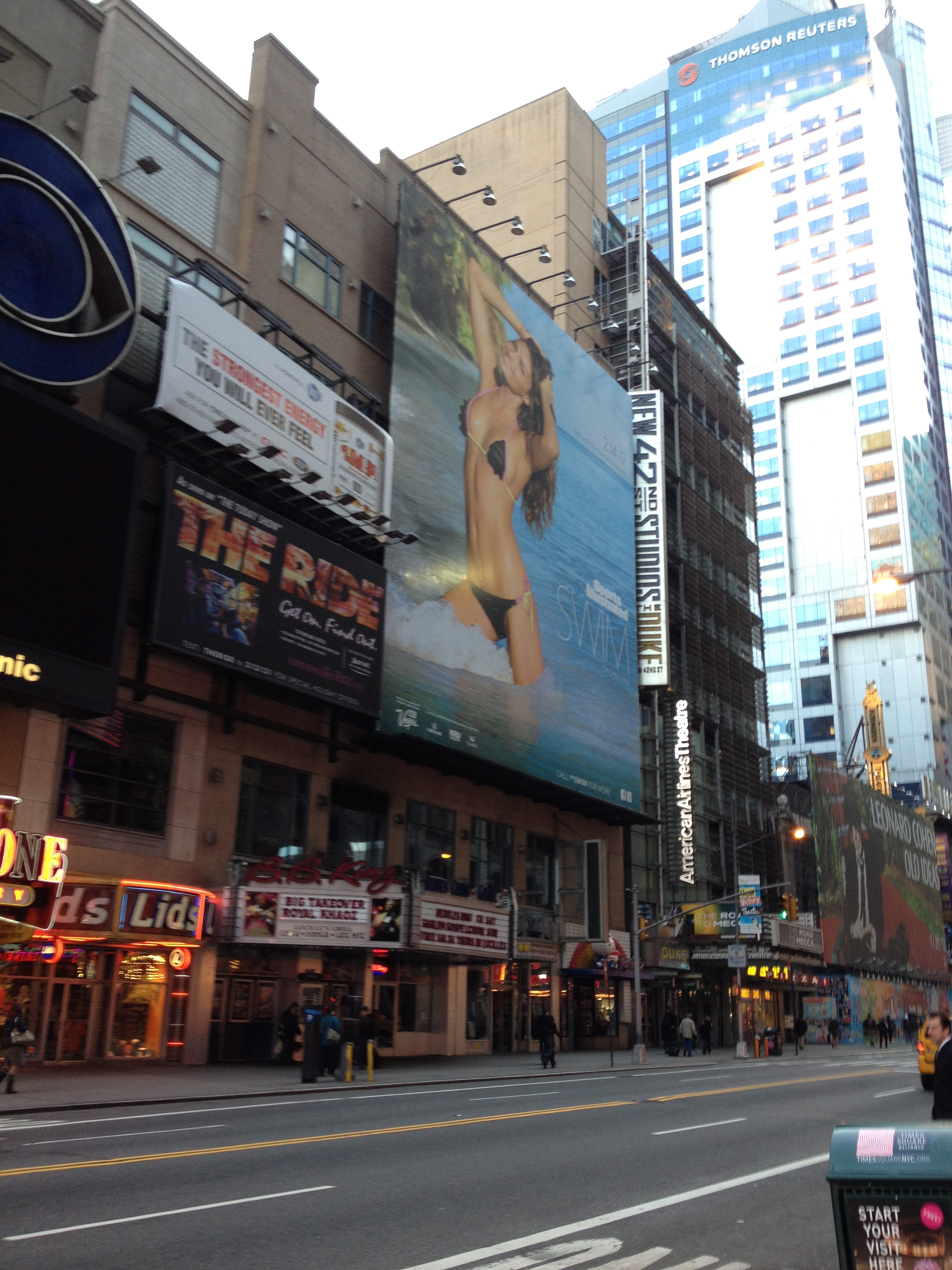
A society will be remembered by its lowest common denominator. At the mention of the Roman Empire many people immediately think of the decadence of that once mighty power in decline. Rome ruled the world at one time—or so it seemed—but Nero had his fiddle and Caligula favored his horse Incitatus as a senator (today we’re more accustomed to seeing asses in government than horses). The madness of Napoleon. The insanity of Hitler. Mighty powers crumbling under their own weight. Walking through Times Square is an education. Recently a fifty-foot woman appeared, looming over the heads of commuters, tourists, and the homeless. Unlike the classic 1958 sci-fi flick, this woman is apparently happy, smiling broadly, and nearly naked. She is an advertisement for Sports Illustrated’s soft porn swimsuit edition. Stories above us all, she pulls back her hair and, if she weren’t a fantasy, I’m sure she’d be chilly dressed like that in a New York winter.

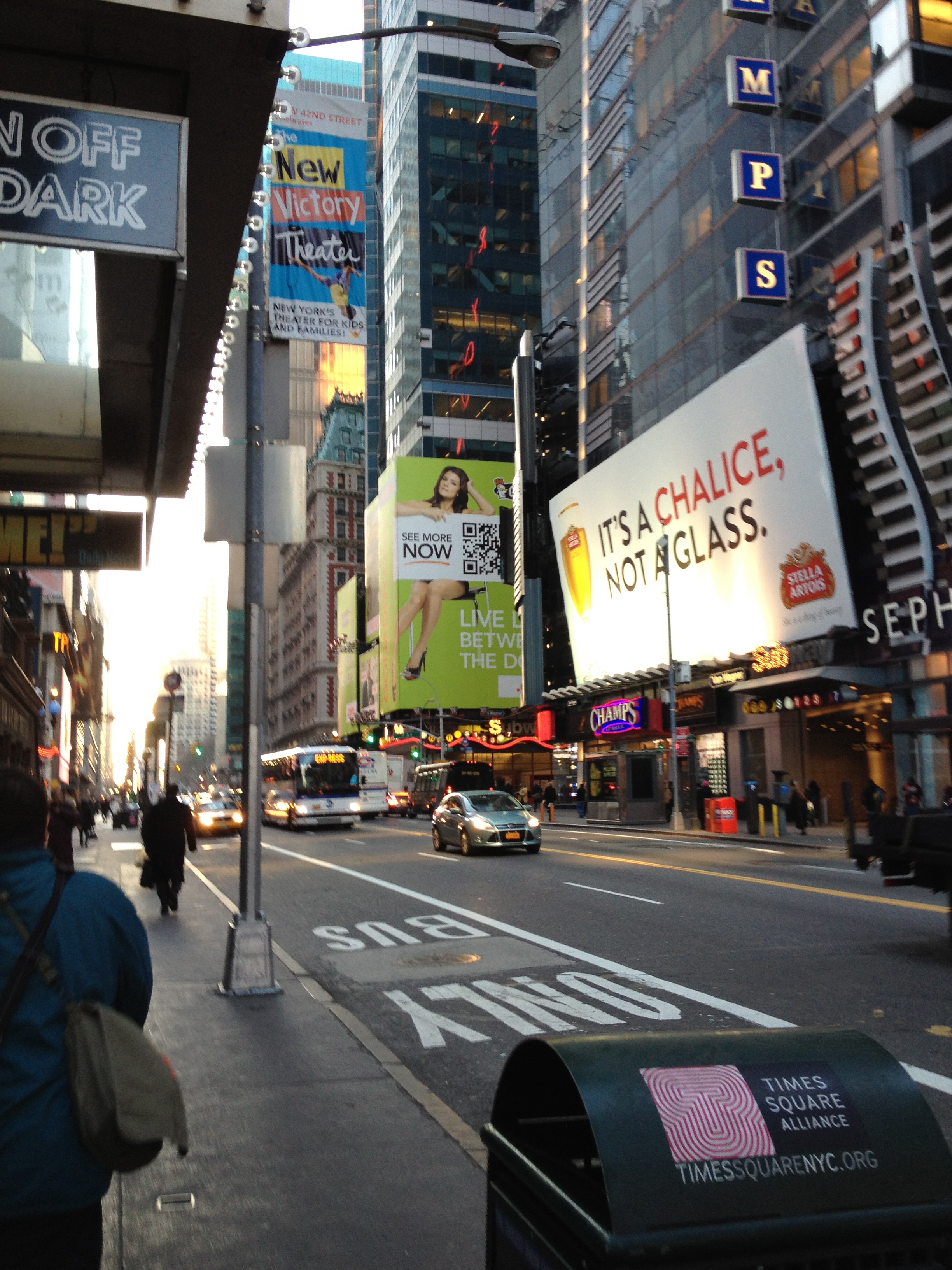
We’re talking lowest common denominator here. As I man I can’t help but to understand the appeal. Advertisers know it too. At the corner of 42nd and 7th, there is another fifty-foot woman, apparently nude, sitting in an office chair for Go Daddy with a QR card across her torso offering to those who would scan her, “See More Now!” It is difficult to be judgmental when advertisers are using basic psychology to sell their products, and studies have shown that men are very easily aroused by visual images—our juvenile imaginations never do grow up. But women this large? In 1958 Nancy Fowler Archer was salaciously considered a monster, but the producers knew teenage boys would watch in fascination. Such simple creatures.

There is a disturbing subtext here. Men are weaker than they pretend to be, but that doesn’t bother me much. Vulnerability is where humanity is most authentic. The problem with the fifty-foot women in Times Square is the message to American society that women are a commodity. They, like everything else in Times Square, can be purchased and owned. They exist solely for the pleasure of men. I am not a prude, but I do believe that such blatant shows of the female body for sale bear as a subtext “mene mene tekel upharsin.” A society that cheapens its women in such a forum is creating the standards by which a hopefully more advanced future will remember it. Standing beneath the open thighs of the fifty-foot woman on my way to work, I am profoundly sad. This is Rush Limbaugh’s American Dream writ large.


And Then There Were None

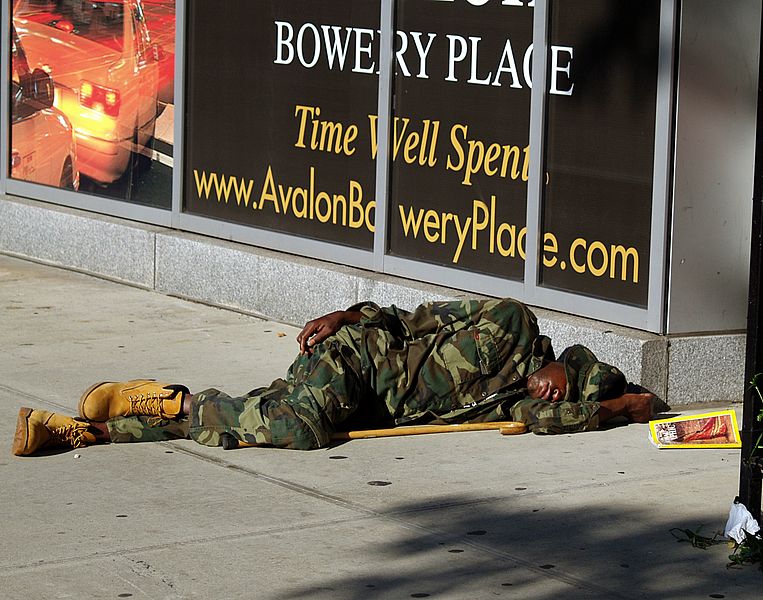
Whatever happened to evil? There was a time—when I was being reared in a conservative, evangelical, Republican household—that certain kinds of behavior were considered evil. And not all of them took place in the bedroom. Some of the most blatant acts of evil included using others for your own advantage, putting yourself first, and valuing things above people. Somewhere in the decades that I’ve been alive, all of that has changed—from a politician’s eye-view, anyway. Now that we’re in what’s passing for winter, some days are decidedly chilly. Seeing the homeless hunkered down in the Port Authority Bus Terminal (where there is even an organized, charitable group that tries to help them out), or sitting on subway vents to catch some of the warm air, or shivering on a street corner day after day, I wonder where the evil has gone.

In the neo-evangelical world of cheap prosperity and cheap family values, the name of Jesus gets bandied about like an over-inflated beach-ball. Many who utter his name obviously don’t read his life story. According to the Gospels, Jesus spent his adult life as a homeless wanderer who was particularly sympathetic to the poor. He doesn’t refer to them as evil, but he does have very harsh words for the privileged establishment. Such words harsh the euphoria built upon our own self-importance. As I see the homeless in the winter’s chill, it occurs to me that their lifestyle is much closer to that of Jesus than is the that of the executive who works 33 floors above them. Their demands on life are minimal. Their stares should make us uncomfortable.

And yet, look at those running for office. The amount of money they spend to make each other look bad is obscene. They try to make themselves look righteous for the Tea Party crowd, but their assets weigh them down. I shiver for the homeless. I shiver when I see the news about the ultra-wealthy bragging about who can dig up the most mud. Most of them would have no idea which end of the shovel to use. I’m afraid that having grown up in a modest setting has forever biased me against posers and average guy wannabes. I’ve had jobs that have involved shovels, sledgehammers, and hard scrubbing. The average person struggles and shivers sometimes. The average person spends some time on his or her knees and sometimes ends up on the ground. And even though the average person falls down more than our shining leaders, we never get quite so dirty. Politicians don’t sling the mud at us. To be honest, I think they don’t even see us.

The son of man has no place to lay his head


Paradise Re-Lost

It is through the astute eye of my colleague Deane Galbraith that I came to know of my most recent reading project, Paradise Lust: Searching for the Garden of Eden by Brook Wilensky-Lanford. BWL (since the author’s name is a mouthful and since it took me four hours to get home tonight (at a distance of less than 30 miles) I’ll abbreviate her title. Being a fellow New Jerseyan, I’m sure BWL will understand) surveys various attempts that have been made over the past century-and-change to try to locate the Garden of Eden. Spurred on by the discovery that her own educated, rational great-uncle had also wondered about the mythical location of our mythical ancestors, she sketches various attempts to find Eden. Tracing a course that often crosses paths with my own academic background, BWL notes the pervasive—one might say undying—belief that once upon a time in a land far away there was a garden paradise.

Quite apart from the obviously folkloristic, and Mesopotamian, origin of the creation story, BWL demonstrates that the unifying factor behind the search for Eden is the four rivers mentioned in Genesis. The Tigris and Euphrates should be no-brainers, and no-brainer is a word that frequently comes to mind when otherwise intelligent people sincerely suggest Eden lies beneath the North Pole, or in Ohio, or Florida. Clearly this story left only psychological traces on the impressionable. Far more mysterious are the Pishon and the Gihon. The fact that these rivers have never been found (never existed) has fueled the economy of adventurers and bibliophiles for well over a century. The fact that people buy BWL’s book underscores the point. The end result is that any confluence of four rivers could potentially be Eden. What is lost is the biblical worldview.

The four rivers of Genesis 2 flow to the four points of the compass to water the entire earth since all ancient people seemed to have believed they lived in the middle of everything. The Genesis writer takes for granted that we’ve heard of them, and who, among the sophisticated, wants to admit otherwise? Since the story never happened, no physical evidence should be expected. And that’s what all of BWL’s explorers find. Nothing. Of course, if you want to run for President you’d better claim to believe in Eden, for plenty of Americans, despite our educational system, do. Many an ape is wiser. So if you want to find Eden, locate the center of the world. Given the traffic tonight, it surely must be New York City. If you’re going to look for it, you’ll want to take a book to read while the rivers of cars stop flowing. I’d suggest Brook Wilensky-Lanford’s Paradise Lust.


Bookless in Manhattan

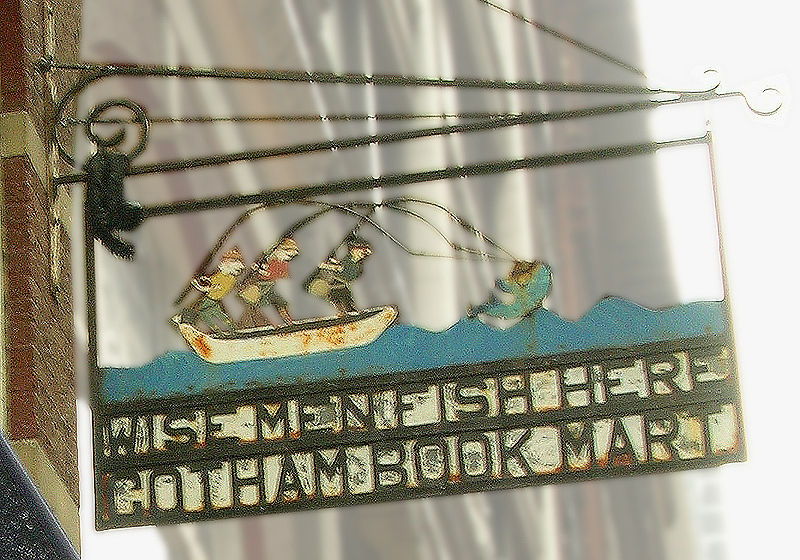
I suppose the fact that I still harbor an inordinate love of dinosaurs, geology, ancient civilizations, and liberal politics should prepare me for the demise of books. The short road to extinction lies along the path of my interests. Except, of course, Bible. There must be a portrait of a very old, decrepit scroll somewhere in someone’s attic. The culture of books, apart from the library, is a fairly recent one in human history. Even the concept of stores dedicated to books is one that has had a very tenuous lifespan. Now that Borders is gone, I’m sometimes reduced to skulking about Barnes and Noble to find my quarry. So on my lunchtime yesterday I decided to visit the Barnes and Noble on Fifth Avenue and then swing by the Gotham Book Mart. I had heard of the Book Mart before—the store that hosted visits by Truman Capote, James Joyce, Arthur Miller and many, many more luminaries. I thought it would be a good antidote to B&N, and besides, the address is just blocks from my office.

Barnes and Noble is the last resort of a reading man. I don’t have much time for holiday shopping these days, so I figured I’d nip in with my list (nothing too obscure; in fact, I’d seen the titles in an indie bookstore over the weekend, but my family was with me) and be back out in a jiff. Fifth Avenue. Midtown Manhattan. The choice of books was atrocious. Purely lowest common denominator selection. It is symptomatic of America’s love affair with the ordinary, the lower-quality-if-higher-quantity mentality. Cosco of the intellect. Barnes and Noble is the only show in town and they don’t have the selection or panache of many a much smaller Borders. I had to walk out empty handed. Well, at least there was the Gotham Book Mart to look forward to!

I suppose my first clue should’ve been the fact that the photo on Google maps showed a storefront reading “Food World” at the address which still maintained the bookstore name. I thought maybe the Book Mart was behind it or something. No Gotham Book Mart. Back at the office, chewing a dry peanut butter sandwich, I stared crestfallen at the computer screen. Wikipedia informed me that the famed Gotham Book Mart closed four years ago. Rising rents in Manhattan and the very Barnes and Noble I’d just visited drove it out of business. e e cummings, George Gerschwin, Jacqueline Kennedy Onassis, and J. D. Salinger passed their hours here. Katharine Hepburn, Woody Allen, and Charlie Chaplin were no strangers here. When the remaining stock—valued at 3 million dollars—came up for auction, it was purchased for $400,000. By the landlords. So ended an era.

From monks hunched over their vellum by the sallow light of candles to the modern dreamer in the glow of her or his laptop screen, we have brought writing an unimaginable distance. Unfortunately, many of the landmarks along the way have vanished without the blink of an entrepreneurial eye.


Christian Window Cleaners

In the city, with all the traffic, windows sure can get dirty. I often arrive in Manhattan around 7 in the morning, before the crowds grow too intense. It is a favored time with street-level window washers. There’s a lot of glass in the city, and when doing tall windows they need to use long poles, and that can be tricky with hundreds of people trying to get around you. So when I saw a window washer yesterday, I thought nothing of it. Then I noticed the red cross embroidered on his jacket. The back read “Christian Window Cleaners.” I tried to get a picture, but I didn’t want to be obvious. Even New York has its limits. The poor guy’s jacket already made him a target for stares, but I was intrigued. Long I had suspected my windows to have been cleaned by pagans, on account of the smears.

Businesses have been using the Christian cache to drum up the drachmas for decades, but for some reason, this particular business struck me as transparent. Are non-Christians going to peep in the windows while they’re cleaning? Try to steal your stuff when you step out to Starbucks? What does it say about those of us who never clean our windows at all? The implications suddenly seemed to grow enormous. I see window washers every day. Most of them seem like descent, upstanding citizens. If you’re going to go for a business where people are concerned with fairness, why not Christian cabbies? That’d be a big hit in New York. The prices, however, would remain extortionate. Such is the way of religion.

The eyes, they say, are the window to the soul. If so, window washers are given a unique privilege of looking inside. We all tend to be cautious about what we leave in front of windows, that which we want the world to see about our lives. At dusk we pull the shades. Perhaps it really does matter who stands close to our glass. But as C. S. Lewis once noted, a Christian and a pagan boil an egg the same way. Of course, C. S. Lewis is big business now among the evangelical crowd. His more sensible words are generally overlooked as he is stuffed into a coffin-shaped wardrobe of conservative dimensions. I suspect that his smoke-smeared windows were cleaned by people after whose faith he never inquired. But then, I am only looking through a glass darkly.


Imagine Thanksgiving

Although mildly jetlagged and slightly incoherent, a promise is a promise, so I took my family to Manhattan to see (the upper half of) the Macy’s Thanksgiving Day Parade. Commercial and flashy, it is difficult to conceive of a more American expression of holiday wonder. It kicks off the secular Christmas season and the parade forms the background noise to many a feast preparation in the United States. Not living in the city proper, there are limits to how early public transportation can get one into town, so by the time we reached the Upper West Side, the crowds were pretty intense. We met our friends at West 72nd Street and tried to see the floats and balloons over the heads of a sea of humanity; if you could glimpse the flashing tip of a tuba, we counted that as seeing a marching band. The weather was cool but nice and in the dense crowd I kept my hands shoved in pockets, not always sure they were my own pockets, and waited for the next tall or hovering parade feature. In-between times I stared at the building to our left until a friend informed me that it was the Dakota. The site of John Lennon’s slaying and the exterior used in Rosemary’s Baby, where, presciently, a murder victim was laid out on the sidewalk not far from where Lennon fell. Suddenly the parade took on a profundity that betrayed the levity of the gas-filled characters floating by.

Mark David Chapman, a delusional, born again Christian, had spent many hours waiting about where we were suspended in the crowd. Thinking himself Holden Caulfield of the Catcher in the Rye, he murdered Lennon creating a saint and a demon simultaneously. Perhaps John Lennon’s ashes are still floating about Central Park, and as we walked through, the exterior of the Teutonic Dakota took on a haunting quality. Lennon was a lover and a protestor and an experimenter, and scenes from Rosemary’s Baby of Satanists smoking cigars also hung in the air. The shop window displays on Fifth Avenue drew great crowds, but as we drifted toward 51st Street, we decided to stop into Saint Patrick’s Cathedral, along with the surging mass of the faithful.

Cathedrals are best enjoyed in quiet solitude. Nevertheless, we followed the pilgrims through the long nave, stopping to glance at the numerous chapels with statues along the way, each with a collection box, securely locked, asking for donations. And people say Christmas is commercial! Want to pray through your favorite saint? Please deposit a quarter. Preferably two. Or more. Their budget in candles alone would support many a smaller church throughout the nation. Advent begins this weekend, so the crèche was set up at the front with life-sized figures of the usual players: holy family, shepherds, wise men. And collection box. There was no baby Jesus and when my daughter asked why I said, pointing to the collection box, apparently they were saving up to purchase one. Keeping Christ in Christmas? Indeed. All those bronze, life-size Pope head statues can’t be cheap. John Lennon was cremated and his ashes scattered, leaving no trace. Popes are cast in bronze. Yes, John Lennon was wealthy, and once quipped that the Beatles were more popular than Jesus. What is the truth of the matter? Looking at the façade of the Dakota, I know where I would rather light a candle.


Twin Towers

The newly opened World Trade Center memorial in Manhattan is truly a solemn place. Staring into the seemingly endless holes into which the water forever pours, one feels the emptiness of loss like a thousand graveyards. Like watching the Titanic sink from a lifeboat. In the chilly late October morning hundreds were huddled about, looking at those reflecting pools with an undefined sadness in their eyes and a sense of frustration in their souls. So much loss. And for what? The American way of life has its towering foibles as well as its nobility. The protesters of Occupy Wall Street are mere blocks away in Zuccotti Park, reminding the nation that we have forgotten the principles of human decency even while we honor the fallen dead. It seems an appropriate epitaph for All Hallows Eve—a peaceful park where hundreds died just blocks from where hundreds camp in the cold. It is not too late to stop this ship from striking the iceberg.

Ground Zero

The symbol of peace, given to us by the Bible, is the olive branch. Actually the olive branch comes from the story of the flood; it is less a sign of peace than it is a sign that some of us have survived the wrath of God. Read into that what you will. The olive branch only comes after all but eight people pay the ultimate sacrifice. It is peace on the terms of a vengeful deity. Near the center of the memorial, one tree stands out. It is not an olive tree. After the devastating attacks of 9/11, workers found a living Calleri pear tree among the rubble. The scorched and battered plant was taken to a nursery where it recovered. It stands now in the midst of the peaceful reflecting pools, bearing not olives, but pears. The tree was saved by human effort, a symbol of peace, survival, and endurance.

A different kind of tower

I spoke with one of the protestors in Occupy Wall Street, and gave him encouragement. I suffered unemployment for long years when the weight of the flood crushed me to my own ocean floor. Loss and more loss. I was moved to tears in the World Trade Center memorial. The decision not to build again on the site where the Twin Towers stood is a symbolic statement to those who believe that evil triumphs in the end. The god of those who destroy others in the name of their faith is the god who destroys innocent and guilty alike in worldwide floods. This is a god who offers people with no knowledge tempting fruit that they are not permitted to eat. Nowhere in the Bible does it state the species of the tree of knowledge. Is there anyone left innocent enough to tell? Artists like to use an apple, an idea based on the similarity between the Latin words for evil and apple. I believe that loss of innocence was the price of maturity, and I believe the tree of knowledge might just have been a Calleri pear.

Peace


Preoccupied

I wonder if I’m the only one who feels uncomfortable with the proliferation of armed military guards in public places. I know the rhetoric that “freedom is not free” (what is it then?), but when the coffee hasn’t really kicked in yet and I walk by guys young enough to be my kids holding machine guns in the bus terminals and train stations of New York, I really don’t feel safer. Sometimes I might look like a radical. Sometimes I don’t get my hair cut as often as convention dictates I should. Sometimes I forget to trim my beard. Some days I throw on my denim jacket as I head out the door in the predawn hours. Some days no one sits next to me on the bus. Am I the enemy here? I don’t like the idea of strangers seeing me naked in airports—even if only electronically. I do like the freedom of expression, but it is no longer really free.

I suppose that’s why I’ve noticed the other peacetime occupation going on in New York: Occupy Wall Street. It is time that people say “enough!” The religious leaders with the loudest voices declare this a dangerous thing, “class warfare” they say. The wealth that lines the very upper crust, however, is simply obscene. Was a day when wealth came with a healthy dose of social responsibility. They just don’t make Andrew Carnegies any more. A few Octobers ago my family visited Sleepy Hollow, New York. The cemetery made famous by Washington Irving (who is buried there) also houses William Rockefeller and Andrew Carnegie. On the top of the most prominent hill is a classical style, opulent mausoleum for the Rockefellers, overlooking all others. Down at the base of the hill, hidden away in a humble, quiet corner is the modest tombstone of Andrew Carnegie. I am certain that Carnegie was no saint, but he did not let his wealth go without doing some good for his fellow citizens.

Freedom is not free, but excessive wealth is tax-free. And Jesus was a venture capitalist, I’m told. We are a nation occupied in peacetime. We are occupied by our own military and their commanding officers in the towers of Wall Street. The GOP can’t support Occupy Wall Street, for it will alienate the moneyed vote it so craves. Call it “class warfare” instead. Those uppity middle and lower class bums! When the select few human beings climb too high in their towers to see the suffering of those down below, images of Babel come to mind. Babel is code for Babylonia in the Bible—the wealthy, powerful oppressor of the poor and displaced. If wealth breeds superiority, we are all in very deep trouble; the battle is already lost. In the meanwhile, I suspect Jesus might secretly be on the side of those camped out in sleeping bags, waiting for the sign of Jonah. And it has nothing to do with being swallowed by a whale.

Or maybe it does.


A Peculiar Resurrection

Although it is not my regular practice to splash melodrama across my blog, my recent experience with losing the Internet for four days prompts me to consider resurrection. After consulting with three technical agents and giving my laptop a kind of electronic enema, I am now once more able to access that mysterious nirvana called the world-wide web (and even the www2, whatever that is). This experience has taught me something about the human craving for resurrection. I began this blog in July of 2009. Since then I’ve added new entries almost daily. Even in places as remote as the northwoods of Idaho, if my laptop receives a signal, I can post my unorthodox thoughts for the world to read (at least the very small cross-section of the world that stumbles upon my pages). Being forced to go without Internet connectivity in New York City, of all places!, was itself a surreal experience. I literally wept in frustration. No one could help. This morning the Verizon tech assistant had me connect via an Ethernet cable and with his omnipotent hand remotely guiding my cursor, brought these dry bones back to life. Praise the landline!

The writers of the Hebrew Bible did not believe in resurrection. The book of Daniel, written just before the death of Antiochus IV Epiphanes (“the manifestation” as he humbly called himself) in 164 BCE, is the earliest hint that Jewish thinkers were beginning to consider the resurrection concept. The Egyptians had, many centuries earlier, played with the idea. They eventually developed it into a national pastime—building pyramids to ensure the king got to live again—but other ancient people were more pragmatic. Death was the end, so live this life to the fullest. As far as we can tell, Jesus taught his followers about the possibility of life beyond life. Some take that to mean a literal reconstituting of life after death while others understand it metaphorically. Both ideas can be, broadly speaking, labeled “Christian.” Some Jewish thinkers accept resurrection, others do not. Other religions, as mentioned earlier this week, go for the cyclical approach of reincarnation.

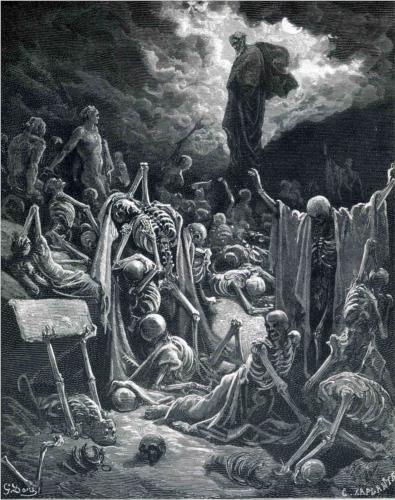
Ezekiel, according to chapter 37 of his surreal book, saw a valley of dry bones. These people were, as the Munchkin coroner croons, “really most sincerely dead.” Ezekiel did not believe in resurrection. If he had the miracle would have been lost on him. Reviving the dead was considered the most extreme, impossible feat in his entire (if limited) universe. The people of Judah, defeated by Babylonia, carried into exile, their temple—God in their midst—destroyed, believed it was all over. There was nothing to bring home into such a desolate landscape. Some suggest Ezekiel was schizophrenic or perhaps addicted to psychedelic mushrooms. In reality, I believe, he owned a MacBook that could not connect to the Internet. Once that divine signal from on high penetrated the arid air of exilic lassitude, he rebooted and without the aid of any drugs, saw God in all his/her glory. (Ezekiel refuses to give God a gender, but that is a topic for another post.)


Unanswered Questions

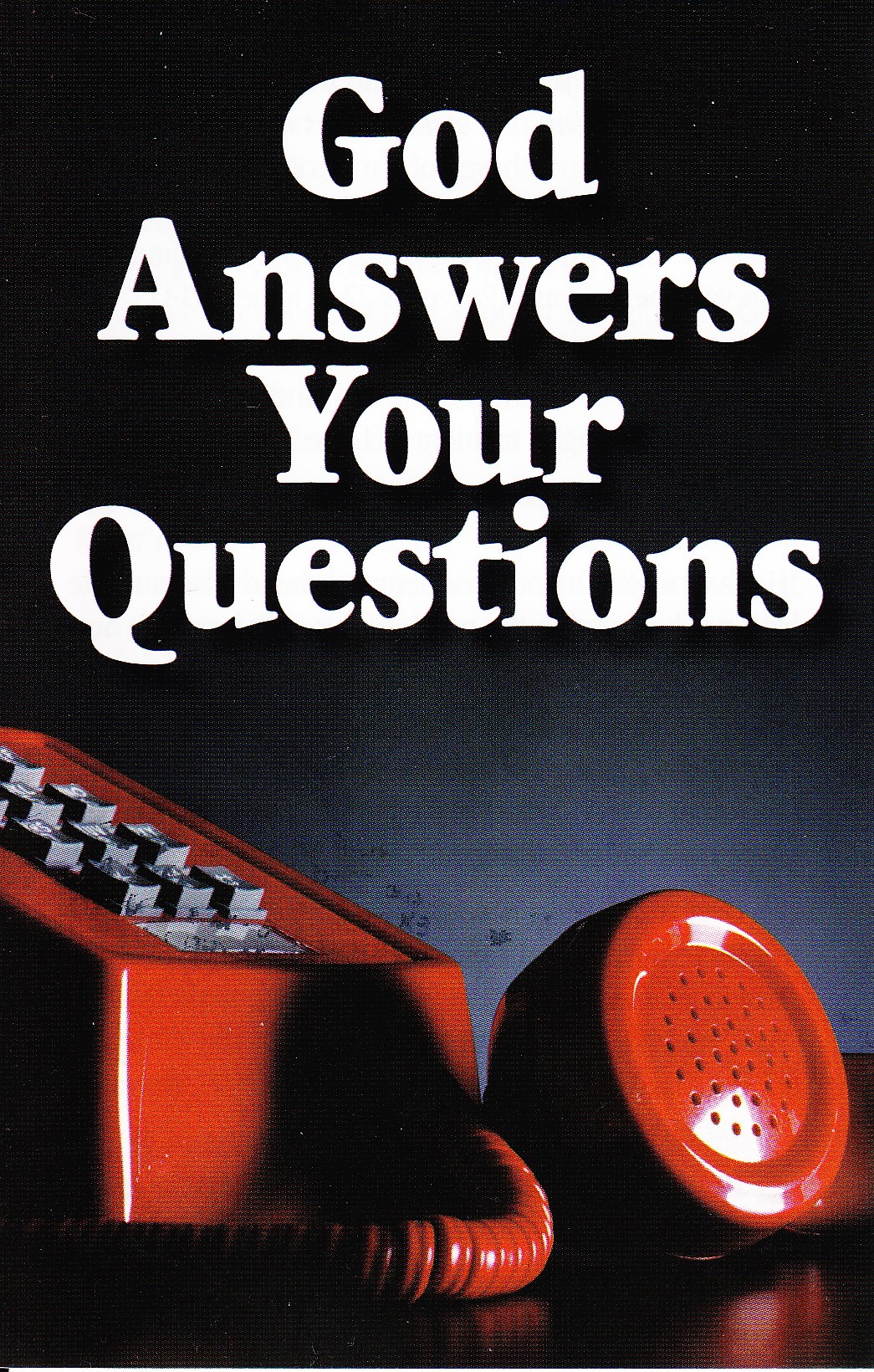
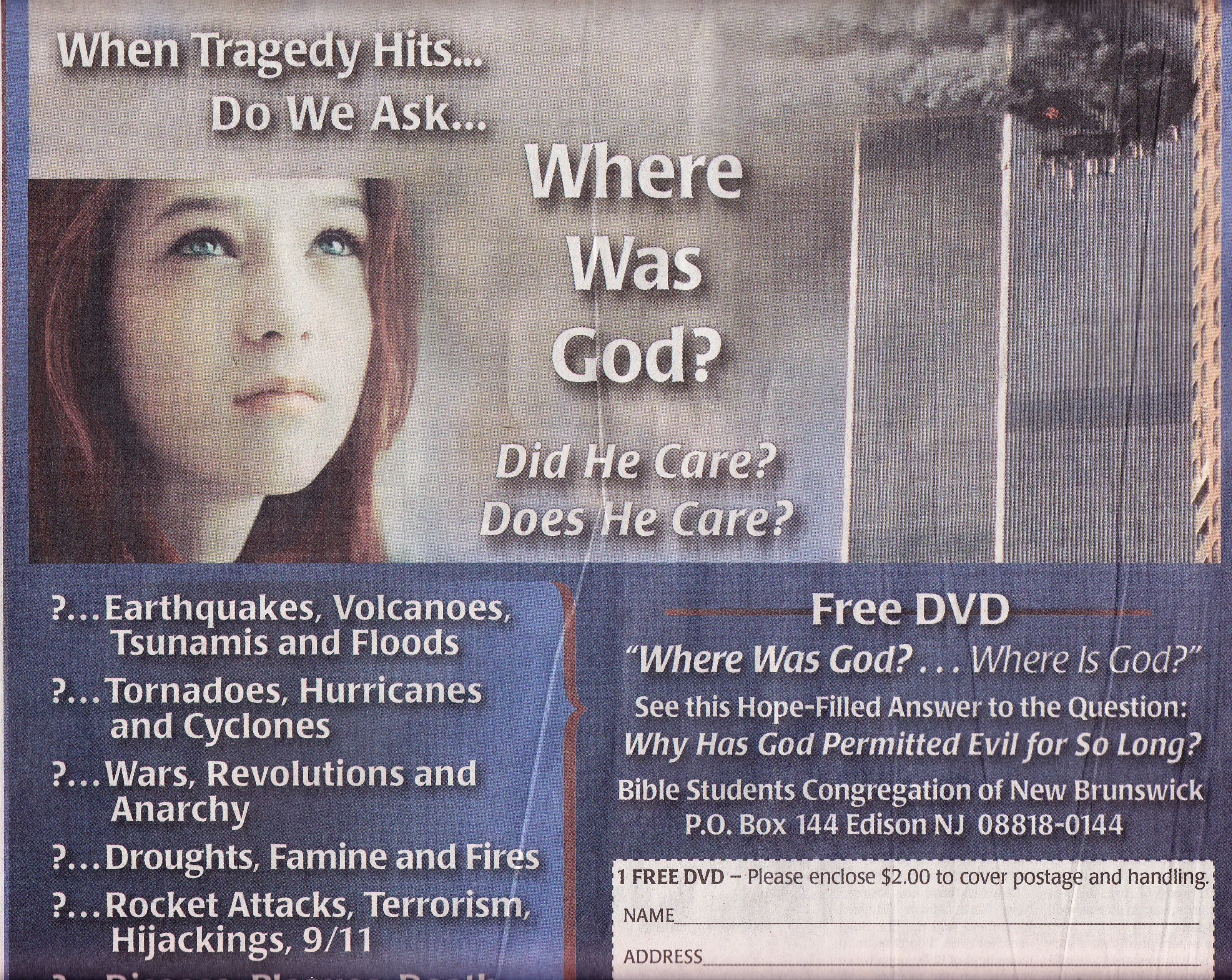
Attempting to write a blog post everyday on the single subject of religion can be a challenge when you don’t share the freedom of the Internet with most faculty. Once in a while a topic just drops in your lap like a gift from God. It helps that New York City is such a religious place. Despite the many critics who claim New York is godless and completely secular, it my experience there are a goodly number of the godly in it. It is not uncommon to see street preachers on a sunny day (apparently God has less need of saving on rainy days). On my way home from work today I was presented with a tract in which “God Answers Your Questions.” It was a little odd that the acolyte with the tracts knew what my questions were, but since the leaflet quotes extensively from the Bible it must be true. From this pamphlet I learned what my hidden question were.

The first question, rather flatteringly, states, “I am young yet, and likely to live for a long time.” Once I’ve been buttered up, the other shoe drops: “Why should I think of eternal things now?” Rather than the Bazooka Joe Bible verse, I thought I might field that one myself. I grew up thinking about eternal things on a nearly daily basis. By the time I was in high school I was somewhat creepy about it. In a college course on the psychology of death and dying, we were asked how often we thought of death. My honest answer was, “every day.” Now, a person with that kind of background may be overthinking this a bit. Death is a relatively simple matter: you need do nothing to achieve it eventually. I had been taught that if you worked to make sure you were honest and true, it would be rewarded. I was fired from my first job for being true to what I’d learned with intellectual honesty. I thought about death a lot.

Death, given its finality, is a universal religious concern. Some religions offer an afterlife—generally it is not an option—while others do not. The life well-lived is its own reward. Others suggest what seems to me a more insidious option: reincarnation. Those religions that take this approach are generally honest up front, stating outright that life is suffering. Reincarnation is goal-directed: break the cycle and achieve Nirvana. And there is no reason to flatter people with the long life yet ahead of them. The evangelist ignored my white whiskers and gave me an anonymous tip for salvation. Perhaps all I really needed was a sip of cold water. Having spent the better part of one life thinking about its end, reincarnation could be a cruel reprisal indeed. I don’t need to worry, however, because I’ve got the answers—along with the questions—right here in my pocket.


Remembrance Day

September 11, 2001 is on America’s collective consciousness. A decade ago thousands lost their lives in a religiously motivated and misguided attack on what some see as a wicked culture. Those who hate America have never come to know it. What a sad commentary it is that religious belief lends its strength of conviction to those whom it has convinced that evil is righteousness and that terror is divine. It is somber to experience this tenth anniversary so close to New York City. When I ride in to work now every day I see the new World Trade Center rising, literally, from the ashes. It is a monument to what America tries to embody.

Twin towers, 13 years old.

Our nation is not perfect. None is. Too easily we accept the casual relegation of various minority groups to poverty. Too easily we allow the obscenely wealthy to escape all sense of social obligation. Too easily we focus on our selves rather than our community. No, we cannot claim to be perfect. Nevertheless, we strive for an ideal that will not die.

Some have boldly claimed twentieth century notables as “the greatest generation.” I believe that praise, although deserved in a sense, to be misplaced. The greatest generation was that rag-tag group of colonial citizens who’d fled from cesspools of oppression to find freedom in a new world. They were not perfect. They oppressed and displaced Native Americans who still suffer under repressive policies that ensure the great embarrassment of their treatment will remain out of sight. The greatest generation I envision is those who, at the risk of their own lives, decreed that the world should, must contain a haven for those who cannot live without a free conscience. A place where religion, or even the very words you say or write, cannot be dictated by the government. A place where people could go on to become the putative “greatest generation”s of the future.

When I first heard about the attacks on 9/11 I was at Nashotah House. Those first moments of confusion were terrifying—our daughter had just started school and was not close enough to hold. My wife and I watched the television in sheer unbelief, tears on our faces, our lives being forever wrenched and twisted in new directions. In was a day that sobered up an entire country.

(Please read the remainder at Full Essays.)


Tomorrow Ever After

Last night as we said goodnight to Irene, my family decided to watch The Day After Tomorrow. Beyond The Perfect Storm and Twister we didn’t have any other weather-related disaster movies on hand. I became convinced long ago that weather was somehow key in the conception of divinity. Working at a seminary that required attendance at chapel twice daily where we would lugubriously and laboriously recite every verse of every Psalm according to the unforgiving schedule of the Book of Common Prayer, I began to notice the weather. Among the more common images used in the “hymnal of the second temple,” weather was seen as an essential aspect of divinity. Religions with celestial orientations frequently view the sky with a sacred aura. I began to compile all the Psalm references to the weather and eventually brought them together into a book, still unpublished. What became clear at the end of this exercise was that ancient people had no way to interpret the weather other than as a divine phenomenon. Listening to all the hype about Irene, it still seems to be the case.

In The Day After Tomorrow, our ill-fated teenagers are trapped in the New York Public Library as a super-chilled tropospheric wind freezes New York City. They build a fire and when you’re in a library, naturally, you burn books. I kept looking at all the furniture they spared as they consigned the books to the flame. A minor character called Jeremy is shown clutching a Bible. A girl named Elsa asks if he thinks God will save him. Replying that he is an atheist, Jeremy says that this is a Gutenberg Bible, “This Bible is the first book ever printed. It represents the dawn of the Age of Reason. As far as I’m concerned, the written word is mankind’s greatest achievement. You can laugh, but if Western Civilization is finished I’m gonna save at least one little piece of it.” This little dialogue represents the full circle of the celestial god. Jeremy doesn’t believe in this god, and the Bible requires human protection. Instead of being the instrument of war and political badgering and tea parties, it is seen as a symbol of enlightenment. It represents the first steps toward reason.

As Hurricane Irene still gusts outside my window, dropping rain as if New Jersey were a desert receiving its first drink in a century, the Tea Party is busy crafting ways of getting the Bible back in the White House. Their Bible is the antithesis to the Age of Reason. It is the symbol of superstition and prejudice and authoritarianism. It is the means of political power. The god of the Tea Party is a white-bearded man living in the sky, sending his fury against the liberal cities of the East Coast in a mighty wind. He is the punishing god of the Psalms. As the helicopter lifts off over a frozen Manhattan, the teenagers saved by a flawed father who walked from Philadelphia to New York to find his son, the camera pans across Jeremy as he hugs the Bible to his chest. I was in Boston for Hurricane Gloria back in 1985. Watching the waves crash on the beach at Winthrop I felt the power of fierce nature at the beginning of my own journey to, I hope, enlightenment. When it was over, however, there was not yet a Tea Party threatening an even worse, unnatural disaster to follow.

Irene, the early days


Kings and Lions

Most parents come to know the Disney Empire intimately. Apart from cheap knock-offs, it is the main entertainment industry for children in a world of leisure. When weighed in the scales of intellectual achievement, Disney productions often end up in the lighter pan. Even some of the more serious stories, such as The Lion King, strive for a gravitas that eludes them. That doesn’t mean they can’t be fun to watch, however. Yesterday, in a celebration of two closely spaced birthdays, we went to see The Lion King on Broadway. Being in Times Square reminded me that New York City is where many adults go to play, the Disneyland for grown-ups. Even with the rain for which this April has been an overachiever, hundreds of tourists were about, flocking to the famous chapels of the temple to American consumerism.

Having sat through many decent productions of high school, college, and touring company musicals and plays, I never really appreciated how a long-term professional show could raise the standards to a nearly unattainable level. The Lion King story-line has many mythological – Christian, even – themes, but the immediate sense of awe in being in a Broadway theater was underscored mostly by the professionalism of the actors and singers. The play does try to raise the level of awareness of African culture, a heritage nearly wiped out in many locations by overzealous missionaries, albeit in Disney-approved fashion. It is very easy to comprehend why those who frequent Broadway find other productions lacking. In short, the show was spectacular.

As today is the official start of Holy Week, and as Easter is about self-sacrifice and rebirth, The Lion King was an appropriate choice to experience (it was selected by my daughter). The death of Mufasa in the salvation of Simba is played out in a resurrection of sorts when Simba realizes that his father still lives in him. The character of Rafiki also makes for an excellent example of a shaman. Glancing through the playbill, it was evident that many Broadway shows are keyed to religious culture: Jerusalem, Sister Act, Rock of Ages, The Book of Mormon, and even Mary Poppins has a magical being descending from the skies to set a minor injustice to right. Now as millions lift their palms on this Sunday the drama will carry on and art will continue to draw its inspiration from religion.

Broadway 1986