Giving a Hand

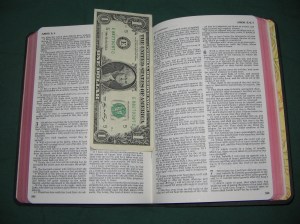
A friend sent me a news story that really spoke to me.  A bookstore in England, forced to move because of rent, asked for volunteers to help move their stock to a new storefront.  The response?  They had to start turning people away after 250.  A human chain was formed to pass books down by hand to their new home.  Book people, it seems to me, are like that.  I spent a recent weekend looking at downtown Easton—one of the triplet cities that make up “the Valley” (Allentown and Bethlehem being the other two).  Surprisingly, I found two used book stores within blocks of each other.  The proprietors (especially of the first) were friendly and helpful.  They were book people.

I mentioned to said first proprietor that two of the books I was buying were to replace copies ruined during our move.  The look of alarm and sympathy on her face was genuine.  Book people know that look.  They can feel each other’s pain.  They will freely give of their time to hold knowledge in their hands, if only briefly, to pass it along to others.  Now, like most bookish people, I’m aware that I’m considered odd by the average guy who enjoys sports, mechanical stuff, and money.  I’m content with a book, either reading or writing, and the occasional foray out among the more active and boisterous.  I like to think that if I lived in Southampton I’d have given up a vacation day to help out.  Saving books is saving civilization.

Book people know there’s more to life than themselves.  Ironically, such readers are often quiet and sometimes thought to be stuck up.  If you go to help move books by hand, I suspect that gives the lie to feeling above other people.  Reading is thought of as a passive activity, but it makes the mind more active.  There’s a reason our species have large brains.  It’s not that all books are for everyone—I’ve had plenty of disappointments in my reading life—but the unread book is full of potential energy.  And often that already read rewards us when we turn back to it.  Books, you see, are the ultimate givers.  Those who sell them may make a profit, but the return on investment tends to be quite high for the buyer.  If you have to move and you hire a moving company chances are they’ll complain about your books.  You’re better off asking book people for an unstinting hand.

Faithism

Religion, in general, has come upon hard times. Many proponents of science and secularism point disparagingly toward what is, in all likelihood, one of religion’s strengths: its utter diversity. The fact is all people are believers. No amount of denial will change that. Whether the belief is in science or magic, we all take things as true, based on our outlook. My wife recently forwarded me a story about Faithism from the New York Times. A religion built around the Oahspe Bible, written about the same time as the Book of Mormon, Faithism very nearly went extinct before undergoing a modest revival in the present day. Instead of casting aspersions on it, a far better approach is to consider the basic, underlying human element to the movement.

Faithism was based on a book written by a dentist, a one John Ballou Newbrough. Although I’d never hear of Newbrough before, I can make a safe assumption about him—he was struggling with trying to understand a supernatural that can’t be measured or tested. This same element applies to scientists. Measurables have to leave at least a physical trace. Millennia ago, religions were already claiming that outside this mortal coil there was an entire realm that we could experience with our feelings but which would never offer any physical confirmation. There’s a pretty obvious difference between the living and the dead (at least to most people). Since nothing measurable changes at human death, it must be something incorporeal. Scientists begin to shake their heads here, but even they must face it some day.

The other takeaway from Faithism is that spiritual writings, like tiny particulate matter in clouds, can lead to the coalescence of something larger. Orally based religions, such as Zoroastrianism, seldom survive long. (Zoroastrianism, however, had very compelling ideas.) Written texts, once believed to be inspired, will naturally grow like a pearl over a grit of sand. The factuality of the text doesn’t matter, as long as it is the object of belief. When it rains, it pours. Some architects of new religious movements, such as L. Ron Hubbard, perhaps implicitly know that. While his science fiction may not have been inspired, his religious texts were. Unlike Scientology, science requires objective measures of what it considers reality. The title of Faithism, however, makes a trenchant point—it is belief in faith, like fear of fear itself, that makes religion. While historically few have believed in Faithism, even atheists have faith in what they don’t believe.


Ancient Perspectives

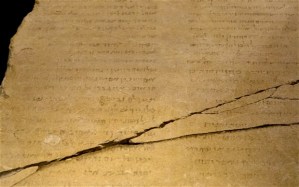
Around the holiday season, on social media, stories relating to the Bible tend to pop up. When my wife mentioned a New York Times story about “Gabriel’s Revelation” on the second day of Christmas, I was suspicious. The story, which was nearly a decade old—the internet keeps things in circulation far longer than those old library tomes consisting of physical newspapers bound together—describes the unprovenanced inscription as predicting a messiah will rise after being dead for three days. I assumed this meant evangelicals would be overjoyed, but it turns out that the artifact, if authentic, predates the New Testament. That means that it can’t be traditionally ascribed as a prophecy, since it’s not in the Bible, and therefore it becomes a threat because it suggests Jesus’ story isn’t unique.

Image credit: The Telegraph, from Wikimedia Commons

This is an interesting dynamic. A potentially important ancient artifact can only have value if it’s in the Bible or proves the Bible “true.” When that happens the faithful crow about how the evangelical position was right all along. If such a document implies that the gospels were borrowing from widespread cultural assumptions, however, it becomes just another unimportant bit of junk from days gone by. Confirmation bias, of course, is something in which we all indulge. Nobody likes being wrong. The difference is that the scholar is obliged to admit when the evidence overthrows his or her position. New options have to be considered.

Since I was between jobs in 2008 when the inscription was announced, it escaped my notice. Now that nine years have settled the dust a bit, there seems to be no sustained case for declaring Gabriel’s Revelation a forgery. Neither does it appear to have changed Christianity at all. The period known as that of Second Temple Judaism has shown itself to have been rich in messianic expectations. We know little, historically speaking, of Jesus of Nazareth. We know from the Dead Sea Scrolls that some were expecting a messiah along the lines of what Jesus was said to have been. But those documents aren’t part of the magical book that contains the truth, the whole truth, and nothing but the truth. In as far as they back the Bible up, they are celebrated. When they call the Good Book into question, they are rejected. I have no idea whether Gabriel’s Revelation is authentic or not. It seems pretty clear, however, that a faith that’s based on one unquestioned source might be more fragile than even other artifacts that have managed to survive, somehow, from ancient times.


Birth of a Notion

Childhood is an impressionable time. Our phobias begin then. Children are vulnerable. (Of course our current government is intent on making us all afraid of bullies again.) This theme of childhood keeps coming up in interviews with directors of horror movies. A friend recently sent me a New York Times article by Erik Piepenburg about Annabelle: Creation. The piece includes some horror auteurs discussing what frightened them as children. We all experienced fear at a young age. For some of us it hung around awhile longer. Horror movies have, despite their low brow reputation, been reliable revenue streams from the beginning. People will pay to be scared, for a little while.

I have to confess to having fallen behind on The Conjuring diegesis. Since I’m the only one in the family who really likes to watch horror, I don’t see these movies in theaters and, well, there’s a lot to do besides watching movies these days. And finding DVDs is getting harder as well. Streaming scares me. Anyway, I missed The Conjuring 2 and the original Annabelle. I’ve read accounts of what supposedly happened in real life—Annabelle is one of the cases investigated by Ed and Lorraine Warren—and it has been written about a number of times. The Warren’s take on it was that a doll can’t actually be possessed. (Sorry Chuckie.) They suggested that it could act as a conduit that would’ve eventually allowed a demon to possess the two young women who kept the original Annabelle in their apartment. The doll showed up in The Conjuring, although it wasn’t part of the main story. The haunted doll trope is scary enough that the second knock-off in this universe focused on it.

Interviews with older horror directors reveal that they often grew up without fathers. Despite the gender profiling, for kids fathers are generally thought to represent protection. A child without a father often feels insecure. Even today when people talk of their fathers I have to remind myself that they can be a good thing. I often wonder if those of us who like horror films had childhood parental issues as a regular part of our pasts. I’m generalizing, of course. Growing up into Trump’s America has given us all plenty of things to fear in the present. Since January a number of high profile horror films have gotten notice in the press. Sometimes a real bully can cause as much fear as a possessed doll. That’s especially the case when our government wants us to submit like a bunch of frightened children. Childhood fears may, in some cases, serve us well.


Meaning What?

An occasional reader will contact me to say that something I’ve been writing about for years has appeared in a major media source. Not the story I wrote, mind you, but in an episode of convergent explication somebody better connected has drawn the same conclusions I’ve been muddling over since the 1980s. So it goes. One such story appeared recently in the New York Times. Despite the title “Don’t Believe in God? Maybe You’ll Try U.F.O.s,” the piece is really about finding meaning. According to the Times, and I’ve been saying this for years, meaning is something that the facts don’t always give. Religion gives purpose to life. Most academics, naturally, ignore it.

The use of UFOs in this story is clearly an attempt at demonstrating the irrational. Those who see such things are the laughingstocks of the “sophisticated” crowd. Anyone who’s attended an editorial board meeting where a book mentioning UFOs is raised will know immediately what I mean. Laughter all around, no matter how serious the treatment may be. After all, only crazy people see them, right? That having been said, the Times article is quite correct that UFO religions are on the rise. Increasing numbers of earthlings are looking offsite for meaning. And who can blame them? Traditional religions often suggest that the beyond, however defined, is much more interesting than the mundane we find laying around all over here. Ironically, this can be a one way street.

What is that?

“Believers” in UFOs often resist the association with religion. After all, isn’t it the religious who are really crazy? As long as people see things in the sky they can’t explain (and this has happened for millennia) there have been Unidentified Flying Objects. Despite Project Blue Book they’ve never been studied in a serious way by science. The few bona fide scientists who’ve dared admit an interest have put their academic or industry jobs at risk. If you wonder why all you have to do is attend an editorial board meeting. We like to laugh at those more gullible than ourselves. As someone once said, indignation feels good. Nothing raises indignation like feeling superior to others. And we feel superior when their intellects are obviously so feeble as to believe in things like religion. Oh, I’m sorry! Were you expecting me to write “UFOs”? Well, go ahead and make the substitution. I won’t be offended. After all, I’ve been saying this stuff for years.


Trusting Truth

How do we know what’s true? For many the answer is what your experience reveals. If that experience involves being raised as a Bible-believer, that complicates things. A friend recently sent me a New York Times piece entitled “The Evangelical Roots of Our Post-Truth Society,” by Molly Worthen. For those of us raised in Fundamentalist conditions, this isn’t news. Then again, those raised Fundamentalist assume that everyone knows the truth but others have blatantly decided to reject it. It’s a strange idea, inerrancy. It’s clearly a form of idolatry and its roots can be traced if anyone wishes to take the time to do it. Inerrancy is the belief that the Bible is correct, tout court. It’s right about everything. If it contains one error, so the thinking goes, it topples like a house of cards. (Cards are sinful by the way, so get your hands off that deck!) If that’s your starting point, then the rest of the facts have to fall into place.

As much as I wish I could say that this simplistic outlook may be corrected by education, that’s not always the case. Many children of inerrantists are raised to question what they learn in school. Worse, many are home schooled so that they never have to be exposed to the sinful machinations of others until they try to enter the job market and are utterly perplexed by the fact that they don’t even speak a common language with the rest of society. Key code words don’t mean the same things outside that safe, withdrawn community where everyone knows the Bible and understands that to know it is to love it. Science doesn’t love the Bible, they’re taught. So science is wrong. It’s quite simple really. You already have all the information you need in one book. If science disagrees, then, well, you already have all the information you need.

There’s an internal logic to all of this, and dismissing the heartfelt beliefs of Fundamentalists only gets their backs up. It’s not about logic, but the emotion of belief. Some neuroscientists have been suggesting that we reason not only by logic but also with emotion. That complicates things, for sure, but it also explains a lot. For example, in a world where religion drives nearly all the major issues facing society, logic would dictate that universities would build up religion departments to try to understand this very real danger. Instead we find the exact opposite. Withdrawing into your own little world occurs on both ends of the spectrum. Dr. Worthen is to be applauded for bringing this out into the light. If society wants to benefit from this knowledge, it will need to stop and think about what it really means to be human. Fundamentalists, for all their foibles, illustrate that nicely.


Publish or Perish

Working in publishing, I’m well aware of the stresses of the information industry. Jobs frequently evaporate as new, less formal ways of spreading ideas develop. To the typical academic what a university press offers is the secret knowledge of where to send their monograph to get it printed and bound. As if a printer and spiral binder weren’t available at the local Kinko’s. Oh, wait. Kinko’s doesn’t exist any more. You can do most of this at your own university anyway. With 3-D printers you might even be able to print a reader. No, what academic presses have to offer is credibility. If we’re honest we’ll admit that some presses are known for publishing just about anything sent to them while others are selective. The selective presses are often considered the more reliable since they set up the highest hurdles and accept only materials that come as close to being true facts as information can. Self publishing, as might be expected, has muddied the waters.

The same is true in book publishing’s cousin, the newspaper industry. As analysts point out, you can get whatever “news” you want from social media. With varying levels of truth. Stop and think about the people you knew in high school. Those who tend to friend you on Facebook. Would you trust them for accurate news? This has become all the more important because our government is now in the business of fabricating facts. Fact checking is too much work and besides, who has time? It’s easier just to believe lies than it is to buy a copy of the New York Times. Newspapers, you see, used to offer the same thing as the academic press—credibility. The New York Times and the National Enquirer are two different things—you could tell at a glance. Now it’s hard to tell where the news originates.

img_3186-copy

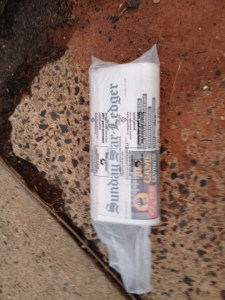
This point was made by Deborah Lev in a recent editorial in the New Jersey Star-Ledger. The real problem is our nation’s founders presumed that democracy would work for informed voters. Yes, there were difficulties with the way the system was set up. It was based on privilege and convention. We’ve finally, in theory, gotten to the point that any citizen of a certain age can vote, but we have no requirements for ability to discern the issues. That would be elitist. And we have eroded the traditional sources of attaining quality information—publishers of all sorts are struggling. For some topics self-published books outstrip traditionally published tomes by a fair margin. You can’t believe everything you read. Don’t take my word for it. I’m open to fact-checking. Just be careful where you reap your facts, because not all facts are created equal.


Dead Sea, Live See

501px-1qisa_b

Nothing fascinates quite like the Dead Sea Scrolls. That is, unless you’re a disgruntled Ugaritologist. Mention the Dead Sea Scrolls and the journalists will form a queue. Never mind the relative importance of Ugarit. But I digress. There is something quite dramatic about the discovery and recovery of the scrolls. It involves science and sculduggery and that utterly captivating name “Dead Sea.” This past week the scrolls were in the news again as a new technology was used to read an illegible roll. The New York Times story by Nicholas Wade describes how something like a CT scan can be used to find the ink on an unrolled scroll and software can be devised that associates the ink to its nearest surface. A little virtual unrolling and you have a legible document that has no visible letters that the naked eye can see. Turns out this one happens to come from Leviticus. Figures.

You might think this would lead to joyful leaping on the part of someone who used to make a living reading ancient documents, but such are the times in which we live that even silver linings turn to lead. Years ago I learned about Van Eck phreaking from Neal Stephenson. I thought it was sci-fi, but in fact it is a legitimate—or illegitimate—method of reading a person’s electronic device without being able to see the screen. Since so few people are eager to read my blog, I can’t think anyone would be wanting to spy on my laptop. Nevertheless, with the advent of new technology that can—think about it—read a closed book, I have to wonder about the implications. Reading some dead scribe’s Dead Sea Scroll is one thing. Your sister’s locked diary can be quite another.

Being more of a clay-and-stick man, I was pleased when it was discovered that rapid flashes of light around the circumference of a clay tablet could lead to a virtual computer model that could be rotated 360 degrees with illumination from any angle. The technology had other applications as well, of course. (It certainly wasn’t developed to read forgettable texts.) With a clay tablet we can be reasonably certain that nothing too private was being impressed. But then that’s what you’d expect an Ugaritologist to say. It seems that my days of reading ancient documents are a closed book anyway. But that’s just the problem. Not even a closed book is safe any more. If I were in any danger, I’m sure it would show in my stats before anyone bothered to park a nondescript van outside my door and scan through all the countless tomes with which I surround myself daily. But I do wonder.


Simply Complex

What does it mean to be a man? Or a woman? Or intersex? As a society we seem to spend quite a lot of political time thinking about this. We want to regulate something we don’t even understand. An opinion piece by Rabbi Mark Sameth in the New York Times raises this question to a new level. “Is God Transgender?” the title asks. The Bible, which most of the belligerents in this battle claim to follow, doesn’t present as hard and fast a rule on sex as it might seem. As Sameth points out, the language of a number of passages seems “gender confused” and even the gods of olden times could slip from female to male and back. The Ugaritic deity of Athtar could be called Athtart, depending on her or his gender at the time. We human beings prefer our genders to be fixed, but nature doesn’t always agree.

IMG_2578

Not only gender identity, but gender itself occurs on a spectrum. In cases of “ambiguous” gender doctors often make the decision at birth. Gender is assigned, and sometimes made surgically. And lawmakers will use an outdated binary system to assign bathrooms. We make industrial, multi-occupant bathrooms because they’re cheaper. At the same time we raise our children telling them that bathroom use is a private function. Of course, when money’s involved the story changes. We thought we understood what gender was. Like most aspects of life, however, our understanding is only partial. Some species have such complex reproductive techniques that the term “gender” just doesn’t apply. Some species naturally change gender in the course of their lives. Which bathroom should they use? Nature doesn’t support our laws here.

For human beings the experience of gender is no doubt important. More important, it might seem, would be the acceptance of difference. A rainbow doesn’t have sharp divisions of color. Light blurs from one hue to another and we say it’s beautiful. When it comes to sexes we only want two. Black and white. As the rabbi points out, however, nature prefers the rainbow. The acceptance of difference in the face of the evidence would appear to be prudent. But many people read the Bible only on the surface (although even here it’s not as straightforward as it might appear at first). The biblical writers probably thought of gender in binary terms. In those days congenital “defects”—at least those visible to the naked eye—were cruelly set aside as a divine curse. We’re at last learning to see this “curse” as a blessing of diversity. As long as we don’t have to share bathrooms.


Excuse Me, Mammon

An article in the New York Times back in December explored the use of God in adverting. The piece, by Michael McCarthy, suggests that religious viewers are not very forgiving of commercials using God, unless they are respectfully done. The occasional spot will score points for being funny, but overall the issue is whether the deity is treated well or not. I always find it interesting when the media seems surprised that people don’t like to have their religious beliefs belittled. When I was growing up it was common sense that you didn’t talk about religion or politics in polite company. Now, of course, both topics are open for constant debate in the media, and few ever treat religion as one that deserves respect. That’s odd since most people in the world claim to be be committed to their religious traditions. It’s almost as if someone personally isn’t religious they can’t understand why anyone else would be.

Amos5

Quite apart from that, I wonder about the larger question of the purposes of advertisements. Ads are intended, as we well know, to make money. They are a marketing ploy. We appreciate the extra effort for a funny commercial on nearly any topic. Religion may be an exception. And one might wonder, is there a natural objection to using a religion to earn money for a non-religious cause? Maybe mammon and religion simply don’t mix. It may be difficult to convince marketers, however, that there are issues that lie outside the purview of the purse.

This past week I found myself in the waiting room of a local clinic for a while. Such places always make me uncomfortable in the best of circumstances. I was waiting in a room where the commercials for all the things that could possibly go wrong with me edged my blood-pressure up a bit, I’m sure. It occurred to me, however, that medical ads have the same intention as religious ones, namely, getting more business. If you can’t be made aware that something is “wrong,” how can you know to ask your doctor for their product? Is there anything mammon can’t buy? Our physical health is up for bids, it seems. Why not throw in the spiritual as well? But that will have to wait; I’ve got to talk to a doctor about a new condition I’m just sure I’ve developed here. I’m sure money can fix it.


Northern Ghosts

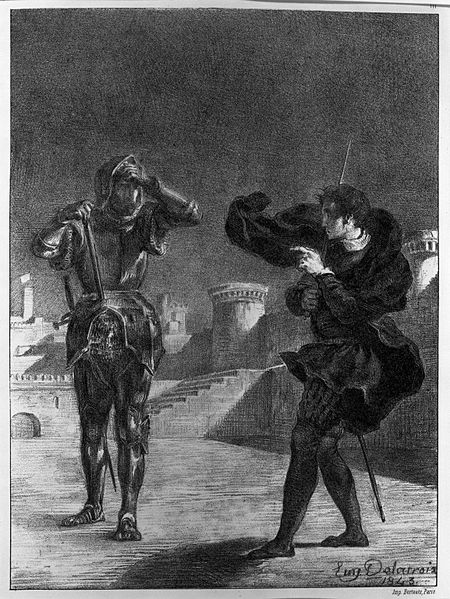
It is the time of year when respectable publications can, in a half-serious way, address the unconventional. The New York Times, for example, recently ran a story on ghost hunting in Norway. Andrew Higgins points out that Norway, among the most secular nations in the world, has come under the spell of ghosts. In a country where church attendance and religious belief seem to be endangered, there is a growing belief that people might somehow survive this mortal coil. Since such a story has to come off as bemused, we don’t get any indication that people have good reason for believing in ghosts—as one of the officials in the story says, they represent something that isn’t “generally accepted as existing at all.” But I wonder if that’s true. Scientifically, in our heads, there just doesn’t seem to be any room in this godless world for ghosts. Skeptics ask questions like “why do they wear clothes?” or “how can a soul remain behind if we have no souls?” Who told you that you have no souls?

Even with the constant materialist discourse of only physical reality, some ghosts cases have been very well documented. So have some hoaxes. People have the spirit of being tricksters, and that doesn’t always help when it comes to understanding the unseen. The point that the article is making, however, is that ghosts seem to be filling a need that the church hasn’t. Church has long been understood as being trapped in the past—concerned with issues deemed irrelevant by people who are just trying to get by in the world. I’ve heard hundreds of sermons in my life and remember less than ten. What is it that we’re trying to do?

Eugène_Delacroix._The_Phantom_on_the_Terrace,_Hamlet

I don’t know if ghosts exist. Many days I’m not sure what reality is, because if it is simply crawling out of a warm bed into a cold apartment before 4 a.m. so that I can go to work, I’m not sure this isn’t some kind of afterlife already. And maybe not the best kind. I know that as soon as people began to record their thoughts in writing, ghosts have been assumed to exist. Despite Ghost Hunters and other popularizers, vague traces are caught by enough people that we can legitimately wonder about the narrative we’ve been fed that says if it can’t be measured it can’t exist. There isn’t a nation in the world where people don’t see ghosts of some kind. Why should Norway be any different? And we wouldn’t even be asking this question if Halloween didn’t provide us with a buffer that makes forbidden topics chic.


One Flew Over Cthulhu’s Nest

Pluto is a metaphor for the ultimate of outer limits. Just one of many largish objects in the Kuiper Belt, Pluto for a while held the status of the final planet in the solar system. With the photos from New Horizons coming in, we’re discovering a world more complex than most have imagined. It’s not just a snowball after all. With discovery, of course, comes naming. The planets are all named after Roman gods, just as our weekdays are named after Germanic deities. The features on our celestial neighbors often bear more prosaic names, such as those of astronomers or decidedly non-mythological human beings. As the rules of nomenclature go, the first to find claims the privilege to christen. What shall the new features of Pluto be called?

I was gratified when the New York Times photos displayed the informal names by the New Horizons’ team. There is a large area called “the Heart,” but lurking to the lower left there’s a feature being called “the Whale,” or, more appropriately, “Cthulhu.” The internet breathed new life into H. P. Lovecraft’s literary fame. Like most writers, he remained obscure for his entire life, finding really only one publisher who favored his work. Genre fiction has always been considered the bargain basement of literary artists, and Lovecraft wrote in the lowest part of that basement, horror. (Okay, well, romance might be further down, on purely literary grounds.) Only within the last few years has horror literature begun to be recognized by academics as worthy of serious exploration. Nevertheless, it was as the Monster Boomers grew up—or failed to—that Lovecraft reemerged. The world-wide web has become the lair of Cthulhu and of his minions.

Far out in the most remote reaches of our solar system, Cthulhu awaits. Lovecraft fans know Cthulhu is one of the Old Gods, but that he is also a being from the stars. His murky, dark presence has thrived on the underworld of the internet, and now has fired imagination on the darkest planet of an obscure solar system. What more could a writer dream? A fictional creation being suggested as the name of a planetary feature. H. P. Lovecraft lies decomposing under the loam of Providence, Rhode Island. His imagination, however, has reached as far as, at least to date, humanity can possibly go and find some kind of land beneath our feet. And that land, appropriately enough, is peopled with monsters. The Old Gods lie dead but dreaming, and they will rise again.

15-152


Doubt No Alleles

Image credit: Zephyris, Wikimedia Commons

Image credit: Zephyris, Wikimedia Commons

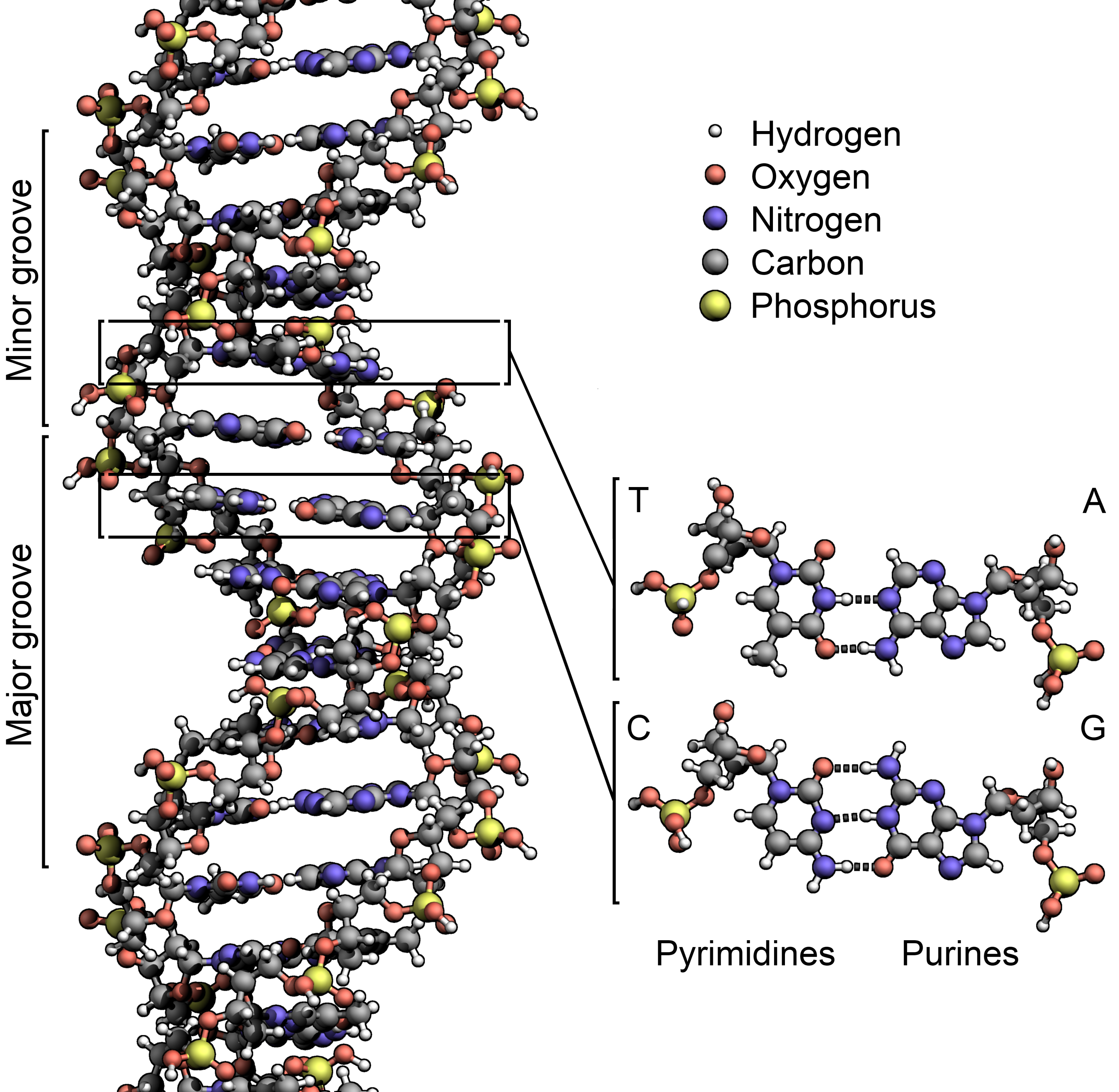
DNA. Is there anything it can’t do? For many decades anthropologists have built painstaking methods to trace developments in human culture. Those of us who’ve studied linguistics in any fashion remember well the many times instructors corrected our false cognates and pointed out family trees of languages that showed who came from whom, based on subtle shifts of orthography or some other aspect of philology. Entire careers could be made in ancient Near Eastern studies by shuffling around the way words were formed and speculating about how they influenced one another. Then DNA. A recent story in the New York Times demonstrates that DNA studies now tell us whence came the Europeans. Among the three groups that eventually settled in Europe were agriculturalists from the Near East, coming along at just about the same time as the Sumerians show up in southern Iraq. They joined the hunter-gatherers already in situ. Their languages, however, did not dominate as a third group, from western Russia showed up and gave (according to DNA) many of the groups their base languages. And here I thought Latin and Greek and Anglo-Saxon had something to do with it.

No doubt we’ve benefitted much from learning about DNA. We can fight diseases that were mysterious, if not divine, in previous centuries. We can learn how closely we’re related to other animal species, or even the neighbor next door. Sneaky fathers can be determined with a precision that sometimes puzzles, such as the recent story of twins who had different biological fathers. Without DNA such a thing could only have been a myth. I wonder, however, what we’re losing in terms of humanity. I suppose we’ll still need a few archaeologists to dig up the remains for scientists to date. And many traditional cultures will still insist that the human remains uncovered be reinterred and not probed and prodded, even after death. We’ll call them backward and superstitious. We’ll consult the genome and decide who to marry.

Meanwhile some hopeless romantic will insist on sitting off in a corner and composing sonnets to the woman he irrationally loves. Looking at the nighttime sky, he may compare her to the beauty of the moon. We know it is a lifeless rock trapped in our own gravity, mechanically reflecting the light of a burning ball of hydrogen and helium 93 million miles away. And if she’ll run this cotton swab across the inside of her cheek we might well be able to tell if she’s a good choice for mating purposes. We’ll also be able to determine the origins of her ancestors and remove a great deal of the mystery about her—there! Won’t that be better than having to woo her and find all that out for yourself? And when your children grow up you’ll point them to the STEM disciplines, since that is the only direction in which there is any human future. And the anthropologists can join scholars of religion as we wait for someone to put the soup in our bowls.


Biblical Art

Although the United States is a religious nation, according to all polls, not many Americans know about the American Bible Society. This organization, based in New York City, has been vastly influential in the history of the nation. Even more influential, however, has been the Bible itself. It pervades every aspect of life in America, whether acknowledged or not. It is an integral part of the fabric out of which the nation is cut. I used to ask my Rutgers students: if there were some unseen force that impacted your life every day in ways that you couldn’t imagine, wouldn’t you like to know about it? Of course they would! But our society has very little tolerance for actually learning about the Bible. As a story in the New York Times states, the American Bible Society had to sell its historical Manhattan property recently. I visited the site on my first trip to New York as a seminary student. Here amid the towering secular concerns of money and greed, was a building dedicated to Sacred Writ.

IMG_1272

The New York Times piece, however, is pointing to the fact that the selling of the building has led to the closing of the Museum of Biblical Art. As Randy Kennedy makes clear in his piece, the Museum was (technically will have been) dedicated to showing the impact of the Bible in secular contexts. The American Bible Society is an evangelistic organization. They arrange for the distribution of Bibles not for secular reasons, but for good, old fashioned conversion of the heathen. This set the Museum a little bit at odds with its host. The Museum, critically acclaimed according to Kennedy, is (was) generally secular in outlook. It recognized that the Bible has influenced us in ways far less than obvious, pervading into our artistic sensibilities.

Although I’ve worked in Manhattan for about four years now, I never had occasion to nip into the Museum of Biblical Art on a lunch break. (Lunch break? What’s that? Money takes no breaks.) This is unfortunate. It seems that the message I had been trying to pass along to my temporary charges was being openly displayed here for New York society to see. Little do people realize, I suspect, that the principles of capitalism—the very system that transfuses the lifeblood into the city—developed out of biblical outlooks on private property. Not that the Bible itself is capitalistic, but it gave a society the basis to develop a form of thought that is, honestly, quite foreign to the biblical outlooks themselves. And ironically, the American Bible Society will continue, even though its intent may be less in keeping the spirit of the very book whose impact the Museum attempted to display.


Hot Pants

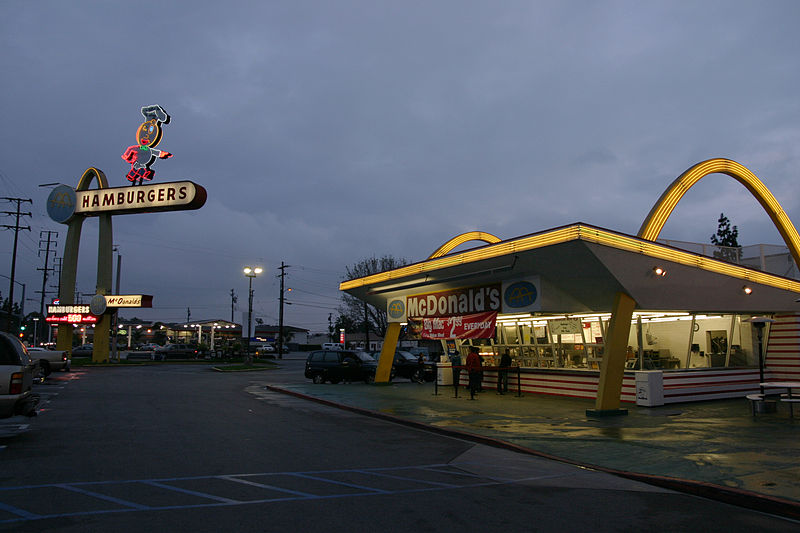
Over a decade ago now, the populace was buzzing about Stella Liebeck’s suit against McDonald’s. You may remember the case. Liebeck was handed very hot coffee through a drive-up window in one of those flimsy cups, and suffered second-degree burns when it spilled in her lap. The incident spawned a documentary movie and even a New York Times retro report a couple of years ago. No doubt the injury was serious enough to cause medical treatment including skin grafts, and McDonald’s does, as we all know, process its customers just like it processes everything; you can’t serve over 100 billion burgers and be the world’s second largest private employer without process. Food injuries in a world of business feeding can be serious. “Eating out” is a way of life for many and when people eat out they take their religion with them. That’s why Hiram Jimenez’s case is so interesting.

According to the New Jersey Star-Ledger, Jimenez decided to bow in prayer over a plate of sizzling steak fajitas at Appleby’s. For those who’ve never witnessed fajitas being served, they are an attention-demanding dish, served loudly steaming and popping with smoke rising up forever and heads being turned. I suspect that’s part of the appeal. According to the paper, Jimenez bowed over his food and the grease popped, burning his face, causing him to knock the plate of food onto his lap. None of the burns left scars, and a Superior Court here in New Jersey found the restaurant not negligent as the danger was “open and obvious.” What makes this story so interesting is not the injury but the cause behind it. Food being hot is somewhat universal. Praying in restaurants, however, is an evangelical cultural practice.

Growing up with evangelical friends, I learned to pray in restaurants. (My family was of rather humble circumstances and we didn’t eat at restaurants.) Partly it was in actual thankfulness, but clearly it was partly also in show. We were witnessing by invoking our gustatory gratitude. For being literalists, we didn’t take Jesus’ injunction to go into the closet and shut the door before praying too seriously. The culture around public prayer involves bowing. The bow is a mammalian display of submission. Thy will be done. In the biblical world being thrown into a blazing furnace for public displays of faith didn’t lead to lawsuits. Everyone knows infernos are hot. I can’t help but wonder whether a martyr complex is at play here. A praying customer is doing what his religion demands and gets burned for it. Yeah, I know what that feels like. And, I suspect, so do countless others who find no hearing in courts at all.

Photo credit: Bryan Hong (Brybry26), Wikipedia Commons

Photo credit: Bryan Hong (Brybry26), Wikipedia Commons