Wag the Tail

Among the most respected of intellectual endeavors is political science. Analysts who read and reason beyond national borders, finding implications in countries many of us have never heard of, they can be an intimidating lot. Experts in economy and psychology, they tell us what the big picture looks like—why we do what we do. And almost universally they disdain religion. We’re talking politics here, why don’t you go sit at the kid’s table? Religion is the stuff and nonsense of make-believe. What politics is about is who has the biggest bombs and bank accounts. Those who impact the world in real ways. And yet.

I would never claim to be up-to-date on current events. I don’t have time to read newspapers and if my friends didn’t send me pertinent articles now and again I might still believe that social justice is more important than the color of an anonymous dress. When no less than an authority than the New York Times speaks, however, I do have to pause a minute or two to consider the implications. Frank Bruni has recently been writing on the Opinion Pages about those ultimate strange bedfellows, religion and politics. I may have got the order wrong, but that’s for political scientists to determine.

Many people don’t consider that religion can be, in some respects, scientifically analyzed. As a deeply divided nation, one factor that even political scientists should note is that yes, religion does count. No matter how naively conceived, people vote with their faith behind that polling curtain. The Republican Party realized this in the 1980s. If you take just one or two religious issues and make them the platform on which you stand, you can garner a disproportionate amount of the conservative evangelical vote. A new study from the Public Religion Research Institute, according to Bruni, demonstrates just how disproportionate the outcome can be. Surveys may not be precise, but less than 20 percent of Americans are white evangelical Protestants. Yet their issues are the ones that make or break elections.

Life has a way of making one cynical. I grew up a white evangelical Protestant. Although my viewpoint has evolved with my education, I can’t shake two of those qualifiers even if I want to. I read political scientists dismissing religion as a bogus topic, mere twaddle to fill the daub of inert minds walled in by primitive thinking. And I read the occasional news story that demonstrates that the facts don’t fit the premise. Do we need to understand religion? Absolutely not, I’m told. But in the end, even the analysts of the political beast will have to realize that tails wag dogs just as surely as raising hackles will make any mammal appear larger than it really is.
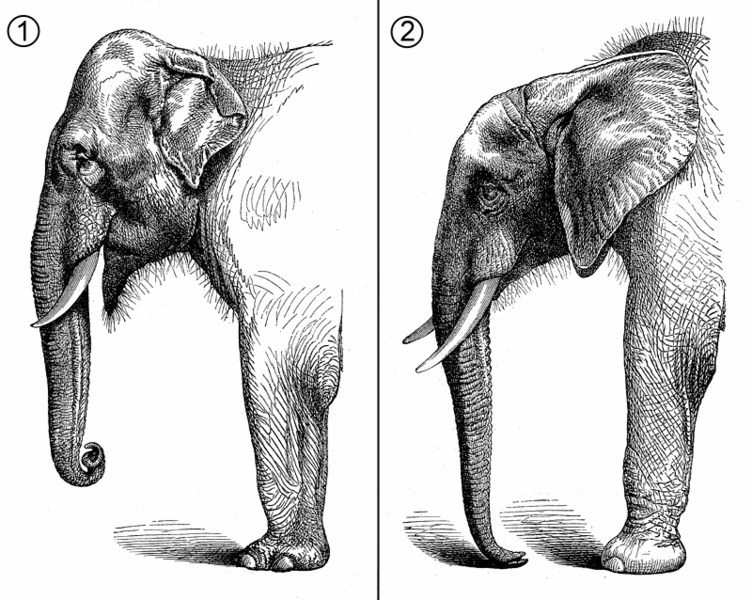
Not a tail to be seen...

Not a tail to be seen…


Incitatus Redux

What more is there to say about God and politics? Far too much, I fear. In a Sunday Review in the New York Times, Frank Bruni lays out a catalogue of what, in a rational universe, would be considered violations of the United States constitution by politicians who insist their (conservative) Christianity is the faith of the nation. This is, however, one of the philosophical conundrums of religious freedom. Religious believers are free to use their faith to try to change the system from within. And the fact that the media is telling us that religion has become irrelevant doesn’t help. Who should be afraid of what’s irrelevant? Can irrelevant substances harm you? Can irrelevant bullets kill you? Why, yes, they can! And so being told repeatedly by the media that religion is something we can safely lock into a box marked “Medievalisms Outdated” we step out the door to see politicians using a religion poorly understood to gain power. A recipe for an apocalypse, it sounds like to me.

Academics too readily fall prey to the media hype. University presidents and deans suppose that religion really is dead and shouldn’t be studied. Who’s going to help us through the morass of the upcoming election if people who understand religion are made indigent and put out on the streets? Good luck to the rest of society! We must, if we are to survive, understand religion. Its death, following shortly on that of God, was proclaimed early last century. And yet it’s showing no signs of dying. In fact, it’s just waking up. Who are we going to ask? Scientists? Accountants? Economists? What will you really learn about our laws being God’s laws in the minds of the wealthy and powerful? Don’t ask me—I’ve only spent some thirty-five years studying religion. What do I know?

I sometimes wonder what it must’ve been like to live in Rome as Alaric was whetting his sword among his Visigothic horde. Insane—literally insane—emperors wielded unchallenged power and lived lives of opulence amid the slaves and poor. Religion was front and center on the agenda, of course, because emperors were gods. You don’t have to listen too deeply to hear the same message even today. Those who proclaim God as the justification for their political ambitions know that God is the ultimate malleable deity. In fact, God can even be in the Oval Office. Lead can line your aqueducts and your horse can be made a senator. Lord knows an ass can be. And all the while let’s shut down the voices of those who’ve looked at religion, beginning in the Stone Age and up to now. If we want to grab power it’s vital that we keep it from public view that self-deification is as old as kingship and in a post-religious world, we have only to pretend.

Photo credit: Louis le Grand, Wikimedia Commons

Photo credit: Louis le Grand, Wikimedia Commons


Poet Tree

Perspective often determines reality. Among those animals that can potentially live what seems to us a long time, humans measure centuries and millennia, looking for evidence of progress. An article reviewing Rachel Sussman’s The Oldest Living Things in the World, on a recent New York Times page, suggests reassessment might be helpful. When it comes to longevity, plants tend to have the advantage over animals. Although the Times article is only a sampling, here we find fungi and plants that have survived for thousands of years. Sometimes as collectives, sometimes as individuals, trees especially have proven themselves to be particularly vital. I was reminded of this as we recently went through the annual ritual of taking down the Christmas tree. We have, since returning to the United States after my doctoral program, visited tree farms where we select a still-living tree each December. Although they are grown to die, the Christmas tree becomes very poignant as it stands naked, ready to be dragged outside and dumped on the curb. The anticipation, the joy involved in welcoming it as a new member of the household, seems lost in the grayness of January. We have killed and now we abandon.

The Christmas tree is, of course, symbolic. Predating Christian solstice remembrances, the evergreen ironically reminds us that life has not ceased, despite the cold and snow. This particular tree has paid the ultimate price to bring another species joy for a few weeks. Can we so heartlessly throw it away? Of course, the community mulches the trees to give new growth to future generations, so there is a kind of sad resurrection here. Life dwells deeply with trees. Some of those highlighted by Sussman have survived since the Sumerians first learned to write on clay, to this very day. Some have survived even 8,000 years.

DSCN0869

Life is tenacious. Our tree by the curb still looks green and healthy to me. It has given life to a holiday season that always seems too brief, with its carefree days and sense of togetherness. We now have another year to survive until we might take a few days and ponder if there is indeed more to life than work. Without moving from its spot, simply being grounded in the earth that brought it forth, a tree can survive millennia as human civilization emerges with its frenetic madness and insistence that there is so much more to do and earn. I do wonder, however, if perhaps our long-lived forest dwelling companions might have some deeper wisdom for us. We can be born, grow old, and die in the shadow of a tree that was planted by generations past, or simply found its own way into the world. And after we’re gone there will be some who will look to trees and find an answer.


Get Out of Town

If the Bible were to be written today, it would be more graphic. Those who’ve read it know that it is a graphic book already, but with no literal illustrations. Somewhat surprisingly for a post-Christian society where the Bible generally gets bad press, this year has seen the release of at least two major movies based, loosely, on scripture. Noah came with a flood of hype this summer, and even then we were told to keep an eye out for a movie on the exodus later in the year. The New York Times heralds the imminent arrival of Exodus: Gods and Kings with a movie preview. Like Noah the new movie will take liberties with the biblical accounts of the exodus. (The Bible itself is not consistent on the story in any case. The “Song of the Sea” in Exodus 15 differs considerably from the prior prose account.) Ridley Scott, who gave us Alien, has cast the iconic Batman, Christian Bale, as Moses. When I first read about this during the summer, I wondered how Bale would take the meek role of the humblest man on earth. With considerable chutzpah seems to be the answer.

The review by Michael Cieply and Brooks Barnes, however, make the most not of Moses but of his mentor, Yahweh. Using an eleven-year old, Isaac Andrews, as the deity, the movie “preserves the awful severity of the Old Testament God.” In this it touches on one of the sore-spots among biblical scholars and theologians both—the characterization of a bifurcated deity. God in the New Testament is frequently said to be loving and kind (except for the iron-clad rule that makes him (as he is male) sacrifice his own child), while the deity of the Hebrew Bible is said to be angry, mean, and vindictive. Others say he’s simply just just. We like to see a divinity who is swayed by mercy and is deeply aware of the human condition. The Bible presents, it seems, a conflicted God who is sometimes just as confused as we are.

800px-Lamentations_over_the_Death_of_the_First-Born_of_Egypt_by_Charles_Sprague_Pearce

Casting a deity who is forever young, however, may be a stroke of genius. In the Bible, in as far as there is a coherent storyline, God does seem to evolve. Sure, there are those who claim God always remains the same, but any deity whose first recorded words to Adam and Eve, after laying down the rules, take the form of an interrogative certainly must be able to learn and grow. Of course, it is very much like a human to suppose that the world could not have existed before we got here to see it. We who are so fascinated by the idea that the world could have carried on without us for the generations before we were born. What was God doing in those eons, besides playing with dinosaurs, like a child? I don’t suppose Exodus will delve into those questions, busy as it will be with battle scenes and other adult situations. At least if it’s true to the Bible, which, despite popular opinion is so graphic that would have a hard time retaining an R rating, if taken literally.


The Force Re-Awakens

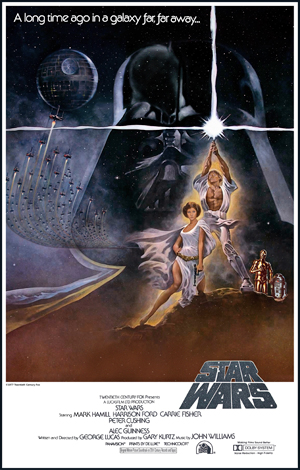
StarWarsMoviePoster1977In a galaxy long ago, in a galaxy far, far away… The year was 1977 and the Joseph Campbell-inspired Star Wars was like nothing we’d ever seen before. The film captured the essence of good versus evil in what, for the time, were realistic scenes in space. Many of us were in awe. Some worshipped. In fact, some six films later, an only quasi-ironic Star Wars religion does exist (Jediism) and its adherents must be buzzing after yesterday’s announcement that a new Star Wars movie will be released next year. What particularly caught my attention was the New York Times article on the event. Peppered with religious language, the trailer review (have we come to this?) by Dave Itzkoff plays on the fact that fans are nothing less than religious about the movies. I have to admit to falling a few movies behind. I’m a lapsed Jediist, I guess.

The new movie, The Force Awakens, will be directed by J. J. Abrams, and that seems to be a prophecy for a positive outcome. It also provides me with a goal; I need to see the episodes I, II, and III that I somehow missed early in the new millennium. Some see, to borrow Itzkoff’s language, the original trilogy as being canonical. The original novelizations—all of which I read as a teenager—were written by various guest writers with names like Glut and Kahn (the latter somewhat prescient for the upcoming Star Trek movies of the time), recording the sacred texts of the nascent religion. Rituals developed, light-sabers were purchased, and imagination became the vehicle for theology.

Behind it all, of course, is the force. This is a deity for a rationalist world. Even today we know that things don’t always turn out the way they should. Juries make the wrong decisions, computers still crash, even even two space shuttles—highly sophisticated though they were—failed and exploded during routine operations. Many find the white-bearded God untenable, but somewhere out there amid the comets and stars, there seems to be a moral force guiding us in the constant struggle of good versus evil. Heaven is still over our heads, although lost in the darkness of space. Less than 90 seconds of film footage have lit up the web with speculation, critique, and yes, reverence. We may have become the consummate secular society, but there is still always room for the force. Indeed, The Force Awakens may contain a not-so-subtle message for those who have ceased to believe that its personified form still exists.


Literally Biology

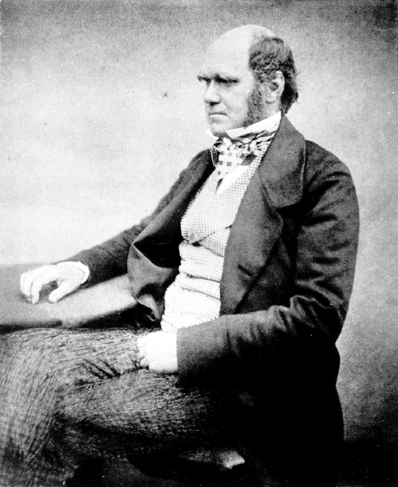
In a New York Times opinion piece on a recent Sunday (ironically, always on a Sunday), college biology professor David P. Barash submitted an article entitled “God, Darwin and My College Biology Class.” Barash notes that increasingly students come to his class thinking evolution is more or less optional. I found the same thing teaching religion classes. When student presentations at state universities addressed Genesis it was fairly common to have a large number of undergraduates suggesting that evolution is “just a theory” and “intelligent” design was a viable option. I tried to show them in class that the Bible does not support the shenanigans that creationists impose upon it, but the message rolled off like rain from an evolved waterfowl. Still, I do have to take exception to some of Barash’s broad strokes. He feels that religion and science cannot coexist. I wonder, however, what he means by religion.

Religion is an ill-defined word. One of the most pragmatic usages I’ve heard is that religion is what people use to give meaning to their lives. Religions may be theistic or a. Religions may be anti-science or pro. Religion, per se, is no threat to science. Fundamentalism is not religion. Fundamentalists use religion to further their ends, which are often political. Since many religions grew up around sacred writings the urge was there from the beginning to take these holy words literally. They gave meaning in a pre-scientific era. Newton, Galileo, Darwin—and even before them Plato and Aristotle—simply shifted the angle of illumination. The problem is that many religious believers feel they have the answers already. New facts only confuse the issue. Left to their own devices such beliefs quietly go extinct.

Charles_Darwin_aged_51

It is only when a conscious decision is made to champion archaic writ against empirical evidence that science and religion join combat. Most religious people in scientifically advanced societies have no problems with evolution or particle physics. They simply show the way the world is. The vastness of the universe should give us all pause, but it does make you wonder which way to point your telescope to spy the almighty. I sympathize with Barash. It is not easy to find many of your students, in either science or religion classes, with their minds already made up. Still, it might help to realize that religion is not the culprit here. Literalism is a kind of mental problem. Until it is rightfully separated from religion we will all be left wasting valuable class time trying to convince students of the facts of life.


Waking Up in Galilee

One voice can’t be heard. Unless, of course, it has a publicist. For years, it seems, I have been suggesting in my obscure corner of the internet that we’re not quite ready for the death of religion yet. I’ve never really doubted science, but I have noticed that science frequently draws the same conclusions as religion. Evolutionary biologists and neuroscientists exclaim, with some surprise, that religion has a survival advantage. Of course, big men with white beards sitting on thrones in the sky just won’t do, but the underlying concept has utility. So we’re told. Now Sam Harris, author of The End of Faith, one of the four horsemen of the new atheists, tells us that it’s okay to experience what has been known as, conventionally, a religious experience. Call it transcendent (I always do), but no matter what the chemical mix you concoct in the brain, it will feel good. Perhaps better than anything merely biological ever will. You’ll sell a million books. If you’ve got a publicist.

To me it seems that the religion question is a no-brainer. It wouldn’t persist if we had no need of it. Unlike the appendix, which seems not to have taken the hint that it is entirely vestigial, religion helps people (and perhaps some animals) survive. It doesn’t have to be sitting on an uncomfortable pew on a Sunday morning. It might be in the giddy heights of the Rocky Mountains where you can see to eternity and beyond and the rarity of the oxygen makes you lightheaded with a hologram of immortality. It might be the piercing peace that comes with light refracted through a glass so blue that superlatives fail you. It might be in imaginary vistas of an ice-bound Arctic where, you’re just certain, Nordic gods linger just out of sight. Transcendence can even come from traditional religious experiences, or so the stories of the saints proclaim. Anyone can participate. Those who have never forget.

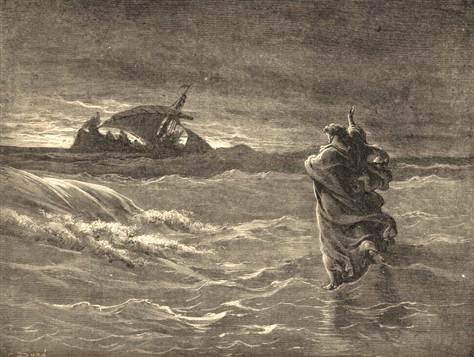
The New York Times, in the Sunday Review piece by Frank Brunl (Between Godliness and Godlessness) introduces Sam Harris’s new book, Waking Up. I know I’ll read it. According to the article, Harris discusses his own experience of transcendence. When Harris has such a revelation, it is a best seller. Or it will be. For those of us who quietly suggest moderation between bombastic religion and bombastic science, it is merely another day in the life of the quiet ones who observe without being heard. True, it takes courage in this culture to dole religion a knock on the head. It is not, however, going to send faith to a premature grave. We still need our religion. We might not call it that any more. Name it spirituality, or transcendence, or mystic mumbo-jumbo, but when it hits you it’s like an atheist in Galilee. Some call it a electrochemical reaction in the brain. Others call it walking on water.

Dore Walk on Water


Lobby Hobby

I can recall a time when hobbies seemed less than threatening. Indeed, the idea was to relax, not to lobby. My hobbies—collecting just about anything you could get without money—didn’t involve going to a store. Stamps (because everybody used them back then), coins (ditto), fossils from the local river bank, bottle caps that we collected while Mom was doing the wash at the laundromat, all kinds of handouts from society’s detritus made for many hours’ entertainment. I also collected Bibles. That was when I was old enough to earn some money and spend it on books. And I read those Bibles until I’d run out of versions, then I’d start over again. Now my hobby has come back to haunt me.

According to the New York Times, the Hobby Lobby family is planning to build a Bible Museum in Washington, DC, prompting fears of evangelization. Right there in the nation’s capital, not far from the Mall, a museum showing the importance of the Bible would indeed send a message. But is it really a threat? We live under the judicial decisions of a Supreme Court weighted towards the literal already. It might not hurt to have a museum dedicated to finding out what’s going through our justices’ minds. Clearly it’s not women’s rights. If we wander those proposed halls, we might see that museums are indeed dedicated to outdated stuff that has some importance. Rare are the contemporary museums that show right where we are at the moment. Rarer still, those that show the future that remains undecided. In many senses, Washington is already a museum.

The secular world seems to fear the Bible. It is, however, not going to go away. Although I left literalism decades ago, I’m still pleasantly surprised how much the Bible has to offer by way of insight into human nature and contemplation. You might even find some workable ethics if you can get away from the non-issues of birth control, stem cells, or same-sex marriage. The Bible doesn’t need to be a threatening book. In the wrong hands, it may at times seem like The Book of Eli had its eyes right on the target, but those who would use the Bible to harm others are those who read without understanding the words. No, I don’t think the Green family’s plans for such a museum are innocent. Neither can I believe that hobbies are a $3 billion industry. Reading books and picking up other people’s cast-offs may be the only hobbies you need.

Engraven images?

Engraven images?


Back to School

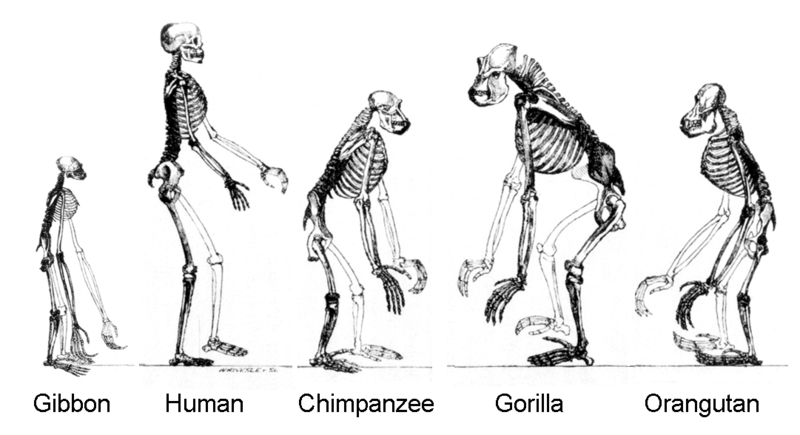
“We want to make certain that we view culture through the eyes of faith, that we don’t view our faith through the eyes of culture.” The words are those of Stephen Livesay, president of Bryan College, according to a recent New York Times article. Bryan College in Dayton, Tennessee, already famous as the school that evolved out of the Scopes Monkey Trial, has been toying with adding a more specifically fundamentalist statement to its panoply of faith. Instead of stating simply that humans (more precisely, “man”) were (was) created by God, Livesay wants to clarify that this means by special creation, no evolution involved. Hey, we’re all thinking it. Why not just say it?

800px-Ape_skeletons

With the characteristic, journalistic eye-rolling that inevitably accompanies stories about creationism, I frequently wonder why there aren’t more calls to try to understand this viewpoint. It’s easier to condemn and say that narrow minds can’t widen out, but some of us who had believed in Bryan’s hypothesis at one time have managed by dint of reading and reason to climb our way out of the slime. If we understood what made literalism so appealing, we might be able to figure out why only America lags behind the developed world in accepting what is otherwise universally regarded as a fact. Instead, faculty members nationwide willing to call this into question are summarily fired and nobody bothers to do a thing to support them. Collateral damage of the culture wars. Perhaps we should add a statement about not letting the door hit you on your way out.

Evolution through natural selection stabs very deeply into the heart of human self-worth. We still refer to other animals as “lower” than us, and we exploit them in any way we see fit. Then we don’t wonder why being told you’re just like them isn’t disturbing. This is trench warfare. Lines in the sand dug deeper and deeper. Those who believe in creationism aren’t simple. Even with all our space telescopes and Mars rovers, we’re told the most complex thing known to humanity is still its own brain. And that brain makes people with Ph.D.s think that they’re special—either a separate creation by an invisible god, or because they can recognize how irrational our own brains make us. No intelligent being would want to understand why this is so by studying it rationally. That would make far too much sense.


Religious Education

The elephant in the room is exposed in a New York Times op-ed piece last week. “Indoctrinating Religious Warriors,” by Charles M. Blow, puts a finger squarely on the pulse of the ailing science stance of American religious believers. Noting that the Republican party has made no secret of its attempt to capture conservative votes by touting the religious intolerance of the theological right, Blow points out that more Republicans now believe that humans were created separately from animals than accept the scientific fact of evolution. And not just human origins suffer—our future will as well. The same mentality attends denial of global warming and advocating against fair treatment of committed, loving couples (depending solely on the visible sexual equipment). It is all of a piece. Blow points out that white, evangelical Protestants make up only 18 percent of the US population, but 43 percent of the Republicans who are classified as staunchly conservative. This imbalance leads to one of the world’s wealthiest nations being sidetracked from serious global issues while we continue to debate whether the Bible in inerrant or not.

I would add a further note of concern to what Blow says: higher education refuses to take religion seriously. As a life-long sideliner who has never been permitted fully into the halls of academe, I have watched as business schools have grown from the rubble of religion departments that have at best stagnated—when they have not been actively dismantled. In the worst case scenarios, universities have closed such departments down. With the exception of evangelical institutions. Very large departments of confessionally indoctrinated religionists thrive across the country. I am not the only religion scholar to have been kicked out of the academy for an intellectually honest approach. The wider society, with eyes wide shut, has decided that religion is a passing fancy while statistics indicate the exact opposite. We as a society will continue to be manipulated by religions as long as we continue to pretend they don’t pose a real concern.

Religion serves a purpose.

Religion serves a purpose.

Nor does castigating all religion, as Richard Dawkins, Sam Harris, and the late Christopher Hitchens do/did, solve any problems. Science itself appears to indicate that religion is part of the human condition, as surely a product of evolution as our opposable thumbs. Basic psychology would dictate that such direct challenges to religion will only result in retaliation. In fact, this is something that I recall learning from kindergarten. Until our society learns to go back to school and study the four R’s—yes, religion has to be there among the basics—we will continue to suffer from those who have vested interest in using religion for their own ends while those who could educate us on the subject continue to suffer the cut jobs of those who might be part of the solution. Charles Blow wonders if he is being too cynical. I suggest that he’s not nearly cynical enough.


Piece on Earth

The New York Times recently ran a story about the academic boycott of Israel by the American Studies Association. For those unfamiliar with the ways of academics, many who teach in higher education participate in professional organizations. In my line of work it is usually either the American Academy of Religion or the Society of Biblical Literature. These organizations take on personalities of their own, often representing the character of the strongest voices within them. For example, a few years ago the American Academy of Religion decided it didn’t like the Society of Biblical Literature any more, and decided on a trial separation from their joint annual meeting. Like in most divorce cases, the children suffered. Eventually the two got back together and the study of religion could move ahead apace. The American Studies Association is an organization that has run out of patience with the Palestinian issue in Israel. The academic society is boycotting scholarship from Israel, as if professors agree with and support the policies of the government. A rare scenario indeed.

Growing up as a middle child, I often find myself in the role of peacemaker. Like AAR and SBL children, I know the lifelong insecurities caused in kids by divorce, and I know that it is important for people to talk to each other. The situation between Israel and Palestine is fraught. It is so much easier to make a decision about who is right when you don’t have as both sides populations that have been historically victimized. Like most people I have my personal opinions about who is in the wrong here, but I also realize the situation is far more complex than this small-minded biblical student’s ability to declare anything ex cathedra. It seems surprising that any academic organization would be willing to take such a stand. In most instances I’ve read of, it is politicians, not professors, who are the problem.

Of course, at the very root of the situation lies, like a snake curled, ready to strike, religion. It seems that mixed messages have been received from on high. Bethlehem, much in people’s minds this time of year, represents the issues coldly. Two groups claim the same land, broadly speaking, claimed by three major religions. Despite their common ancestry, the three major monotheistic faiths differ vastly from one another. The problem is, there is only so much habitable land. Historic ties going back hundreds, and in some cases, thousands of years, are not easily severed. Divorce hardly seems an option when both parties continue to live in the same house. Academic societies have minimal influence on public policy. They, however, can show public faces. Perhaps the best way forward does not involve silencing the voices of any who wish to speak. After all, we are told, even angels sang over the lowly town of Bethlehem in a time of deep political turmoil.

Ich habe einen Traum.

Ich habe einen Traum.


Almost Human?

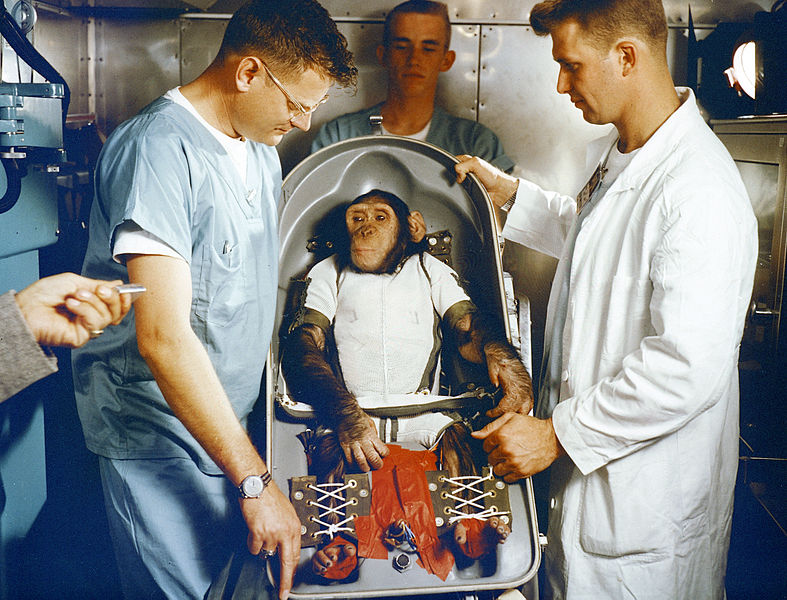
Last week the New York Times ran a story on the efforts of the Nonhuman Rights Project to have chimpanzees declared “legal persons.” Naturally this has set many legal persons at arms, given the unstated, biblical origin of the concept of human superiority. Without the biblical mandate we simply have to admit that we rule over animals on the basis of “might makes right,” a philosophical concept that never makes it far either in the classroom or the courtroom. We hold animals captive and experiment on them because we can. They can’t speak, can’t register protest, so we assume their silence as complicity and carry on. Research over the past several years, however, has pushed the human-separatists harder and harder. Animals are more like us than we are willing to admit. We acknowledge that we’ve evolved from them, but we suppose that at some point—probably the vocal cords—we surpassed them and therefore if they can’t speak they can’t think and they can’t feel. Even today many people still hold to the biblical orthodoxy that animals are merely here for our enjoyment and exploitation.

Considering how we treat other human beings, this is probably, sadly, no great surprise. In a world where many nations still allow women to be treated as property, putting a chimp in a cage and labeling it “mine” doesn’t appear so odd. Only the most crass of chauvinists would dare say that women are not human, but far too many, based mostly on religious biases, have no problem stating that women are inferior humans. Again, “the Bible tells me so.” This kind of thinking, prevalent even up until the 1950s in “civilized” countries like the United States, has yet to die out fully. What is it about the male psyche that insists on its own superiority? The Bible, it seems, has much for which to answer when found in the hands of men.

What makes us think that we are all evolving toward the “high point” of white males? Some of us in that class know that it is long past time that this glass “ceiling” should have been irreparably shattered. Nonsense, however, has staying power. Some of us even feel inferior just knowing such distinctions were ever made. Not that long ago Africans were said, by some, to be closer to apes than Caucasians. Women were said to be closer to snakes than men. What has been lacking is a sense of balance. Common sense. Genders and races equal but variable. Until that minimum bar is reached, how can it be hoped that fair treatment of nonhuman persons can ever be achieved? Some animals have been taught to read, at least in basic, symbolic ways. They understand that certain symbols stand in for defined rewards. Given time it might even be that this most human of inventions could be shared among nonhuman persons. If they do not learn to read the Bible with more sense than some human persons, however, we face a future of many other layers of distressing oppression.

787px-Chimpanzee_Ham_in_Biopack_Couch_for_MR-2_flight_MSFC-6100114


A Dog’s (Inner) Life

Last week’s Sunday Review in the New York Times included a piece tucked under Opinion entitled “Dogs Are People, Too.” Gregory Berns, the article’s author, a professor at Emory University, describes how he trained his dog to enter and remain still inside an MRI machine long enough to scan brain activity. The results, repeated on other trained dogs, indicated that dogs share the same level of sentience as a human child. Berns’ conclusion: dogs are persons. I tend to agree. Although I’m no longer a pet “owner,” I grew up with dogs (and cats, birds, reptiles, and hamsters). There was never any question in my mind that our dogs could think. The also shared emotions with people—as Holmes would say, it’s elementary. Obvious. Staring at you with puppy-dog-brown-eyes-right-in-the-face obvious. Science, however, has always had an uneasy relationship with consciousness, the ghost in the machine. Dogs, many declare, are just machines. They salivate at the sound of a bell, for goodness sake!

Berns, however, has found the holy grail of scientific proof. The brain scan is accepted as a measure of human conscious activity. It is difficult enough to lure a human into an MRI and have her or him hold still. Dogs, however, are smart. They can be trained to do this too. Berns has succeeded and now has evidence that the emotional centers in dogs’ brains respond much like human brains. If they are emotional beings, as many of us knew all along, they are persons. Berns points out that this has legal implications. We make laws about unborn humans, but we treat fully alive canines like, well, dogs. Consciousness is part of the animal, and perhaps even the plant world. That stands to reason, if not scientific proof.

Christianity is largely responsible for advocating the concept of human superiority. We are, after all, made in the image of God. The Bible tells me so. Although scientists tend to abandon the Bible, they retain the myth of human superiority. Some concepts are just too convenient to relinquish, even in a rational world. We assume, since animals don’t talk the way that people do, that they are not thinking creatures. Even scientists appear afraid, at times, to take on the immaterial concept of thought. If the materialistic view is correct, thoughts are only electrochemical signals. Only this, and nothing more. As time nears to get dressed for work, I’d like to send my electrochemical signals out to get the paper. If I do the paper will still be on the lawn when I get home at the end of the day. I’ll have to fetch my own slippers, I guess.

Need I say more?

Need I say more?


By Jove!

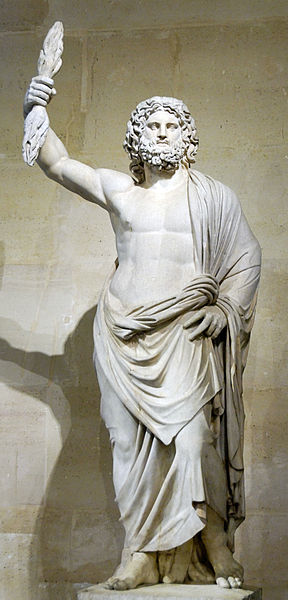
When Zeus is taken seriously in the New York Times, even the open minded scratch their heads. It’s not because any of us really believe Zeus is up their hurling thunderbolts, but because anyone would even dare raise the question. Yes, Gary Gutting’s Opinionator article is lighthearted and perhaps even a little cynical, but it does raise serious questions. Did our ancestors believe in the gods with no “proof”? I can’t help but think of the phenomenally expensive video, I Still Worship Zeus. There are, in this day of high technology and low tolerance for non-scientific outlooks, people who continue to believe in Zeus. Well, his name does come from the same root as the old Indo-European word that gives us the Latin Deus, or “God.” And, let’s face it, the stories of the Greek gods can be pretty cool (despite sub-par big screen renditions). But to take any of this seriously…Seriously?

Jupiter_Smyrna_Louvre_Ma13

As Gutting points out, some of the great minds of Greek science didn’t question the existence of Zeus. I certainly wouldn’t care to pit my puny wit against that of Plato. Those scientifically minded Greeks, apparently, believed in the gods because of their explanatory value. Too many coincidences and synchronicities and epiphanies suggest something more than meets the eye. We don’t see gods today, so Gutting asks how we know the world hasn’t changed. Now, I take uniformitarianism seriously. It is the basis for geology and much of evolution. Our old, old earth shows no evidence of a sudden change in the way things happen. What is malleable is human interpretation. As recently as a century ago, belief in some kind of divine world was very pervasive. Only in the past few decades—since World War Two, I would guess—has the premise of the Judeo-Christian god become suspect. The daily experience of living in a world where theodicy just can’t explain all the suffering has led us to a kind of stalemate with the gods.

I once had a scholarly exchange with a colleague over the nature of the word “evidence.” Our little tiff was published in the Journal for the Study of the Old Testament. My colleague had suggested that Yahweh—the god of Israel—was considered a solar deity. I averred that evidence did not exist. With rejoinder and riposte, we had to agree to disagree. The evidence I was seeking was stringent, but as we all know, absence of evidence is not evidence of absence. And that is the point that Gutting makes, whether seriously or not. The question is not “Is Zeus there?” but “Was Zeus there?”. I decline to offer an opinion. I do applaud the New York Times, however, for attempting to get us thinking about serious issues once again. If Zeus did exist, then it behooves us to consider all the implications. And perhaps to reconsider home-owners’ insurance in a world where gods may roam at large.


Sacked!

Higher education has made the headlines of the New York Times, page one. Of course, it has nothing to do with education, but with sex and sports and money—a kind of Trinity that has come to embody what truly drives education in the United States. Sports have long been associated with fitness, and fitness has a role to play in mental acuity. Games like those of the ancient Olympiad, however, were not part of the symposium as much as they were a deterrent to warfare. Representatives from towns all over Greece could see where the best martial skills resided (the games were modeled after behaviors of utility on the battlefield) and those who made the best showing were likely not wise to quarrel against. I suspect some vigorous sex followed the heroes of the sports field after the games. They were Greeks, after all, and laurel leaves are fine and good, but not so tangible as a reward.

I’m not a sports fan. I know very little about sports figures and even less about statistics. It was, however, impossible to grow up in Pennsylvania and not know the name of Joe Paterno. He made the news so often that no matter which college you attended he felt like your coach. (I am guessing here.) Even as an undergrad, asked to name one faculty member at Penn State, I would have fumbled. I could tell you the head coach of their football program, however, without having ever watched a game. As a society we decide by our accolades where our values will reside. There can be no question that sports prowess is highly regarded. Those who supposedly teach guys to do it better are like gods. When was the last time academic achievement at a university made front page of the New York Times?

Back in my ill-fated days at Nashotah House, believe it or not, I was on the seminary football team. Our season was one game long; we played the rival, “liberal,” and now disbanded, seminary, Seabury-Western. I was recruited because our student body was so small and I was relatively fit for a faculty member. If I am to be honest, a strange transformation took me over on the field. Those who don’t know me will have to take my word for it that I am a pacifist, a gentle and very shy person. Although the game was flag football, I earned more respect with the one flying tackle I perpetrated than I ever did by my teaching acumen. Where your treasure lies, there will be your heart also. So Paterno has been sacked. Join the club. If there were any cosmic justice we’d next see his god-like face at Occupy Wall Street. Instead, I imagine his consultant and endorsement fees will more than make up for a paltry lost job in higher education. Go Nitanny Loins!