Upstate Goddesses

Goddesses give you connections. Here in Ithaca, all kinds of specialty shops abound. University towns are like that. This one had lots of goddesses. Ever since writing my dissertation on Asherah I’ve been interested in female divinities. Part of the reason for this is that I fail to understand how many men don’t see the power of women in their lives and insist that men should rule. Goddesses remind us that women have as much to contribute as do men, and they should be honored and respected just the same. Deities, after all, are projections of humanity. In any case, I found myself in a shop with many goddesses. The proprietor noticed my interest and struck up a conversation. This was ironic because where I live no one asks about my academic background; I have to travel to find interested takers, I guess.
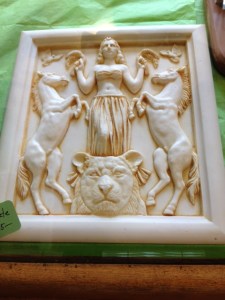
She told me of an upcoming conference that would like to hear my thoughts on the topic of Asherah. Since my book on the goddess has been plagued with high prices, it remains hidden down three or four pages on Amazon, while lower priced dissertations easily float above it. My conversation with this stranger brought out that I had planned to write on other goddesses. A friend had done his dissertation on Anat, so I began working on book on Shapshu, the Ugaritic goddess associated with the sun. Some cultures made the sun male, the people of Ugarit, however, knew the true nature of brightness. I was going to make an academic career of goddesses.

Every great once in a while an academic will ask me about Asherah. Chances are their book or article will fail to cite my work, but they do seem to know to make queries. In my hopes to get a job beyond Nashotah House I followed the advice of colleagues to write a biblical book before finishing another book on “pagan” deities. In the career vicissitudes that followed, goddesses had to fall by the wayside. Although there can be money in deities, as this shop in which I stood proved, they aren’t really a marketable commodity in the realm of making an academic living. Now that I’ve found my way back to writing books again, perhaps I’ll return to my goddesses. That brief encounter in an Ithaca store resurrected some of the fascination of learning about the inner lives of divine women. The need to remind the world, it appears, has only become greater since I first wrote about Asherah decades ago.
Ithaca Musings

Ithaca may be the ultimate hippie town. Open and accepting of diversity, it’s a place where anyone can speak out against what’s going on in the government and not worry about finding any objectors. Yesterday when I was in Buffalo Street Books, customers openly vented their frustrations with the way Washington’s handling things, and others joined in. There’s a sense of righteous anger here that hasn’t been fashionable since the days of the biblical prophets. You have heard it was said Watergate was a bad thing, but verily I say unto thee something much worse than Watergate is here. And although winter is still holding on in upstate New York, nobody doubts global warming is real.

From my first visit here, I knew that I wanted to live in Ithaca, but it is one of those places you can’t afford to live. Amazing how the liberal cities are the places people want to reside. Places where you can’t just turn off the realities of a diverse world just because some things make you uncomfortable. Places where if you notice that other people are different you are reminded that you, in their eyes, are the different one. There is no static, monochrome, cookie-cutter American. Why is this an idea so hard to sell? Capitalism leads to and fuels the desire to own. And owning leads to the desire to own more. I’ve often noticed this since being out of higher education—even within your own company others want what you have. The basic civility of the socialist is missing. That’s where the “me first” attitude leads.

In upstate New York, as in many parts of the nation, the very names remind us that others “owned” the land before Europeans arrived. Native American concepts of ownership were so different from the capitalist ones that forcefully landed on these shores that those views were forced, under firearms and steel, to assimilate to the foreigners’ ways. Capitalism takes no prisoners. Turnabout, they used to say, is fair play. We no longer feel that way as a nation. The interlopers have taken over. We’ve made the country in our own image. And it certainly isn’t any more noble for it. Being in a place like Ithaca always makes my spirits ebullient. The very concept of ownership is an odd one, I realize. Mere mortals can never really own anything. We can pretend to, or perhaps we can take a more enlightened view. We are all borrowing things here. And I would love to borrow a piece of real estate here in Ithaca.


Holiday Season

It was just after dark and the red and blue lights were shredding the night in Wallkill, New York. We’d driven past this mall just over an hour ago to take our daughter home after a too brief Thanksgiving break. Now there were police cars lined up along the length of the Orange Country Galleria Mall, and my wife said, “I hope it’s not a shooting.” Life in America’s that way. About two hours later we were home and yes, it had been a shooting incident. For reasons nobody knows, a man discharged a handgun into the floor at the crowded shopping center, injuring two. Police had not located the shooter, and no motive was known. The mall was evacuated and holiday shoppers feared for their lives.

Just a few months ago I was in Penn Station, New York when a similar panic ensued. Rail police had used a taser gun on a passenger who’d gotten out of hand. As we were entering the station to catch our train, scores of people were running out in a panic. It had sounded like a gunshot. Clothes and personal effects littered the floor of the station once we got inside. This is the world in which we live. A world enamored of weapons. A world where we hate and distrust the stranger. A world where our government receives support from gun lobbies and refuses to put controls on the sale and ownership of firearms. A world where a peaceful Sunday night on the busiest shopping weekend of the year ends in panic and tears.

Wallkill, New York, is not exactly a metropolitan area. Upstate, as we’ve been learning for the last several years, is pretty big. Small population centers dot an impressive landscape of Catskills, Finger Lakes, and beautifully wooded hills. The people are generally friendly, less brusk than they tend to be in New York City. It seems that where two or three are gathered together there’s a handgun in their midst, however. Trusting ourselves to be good people, we want to arm ourselves to shoot the “bad guy.” Meanwhile Congress still tries to pass legislation to reduce health care since, I guess, too many people are getting shot. It can be a real drain on the economy if the wealthy have to chip in. It’s upstate New York. We have about two hours to go before we can rest at home. Galleria Mall is in lockdown. The rest of the nation is too.


Amityville

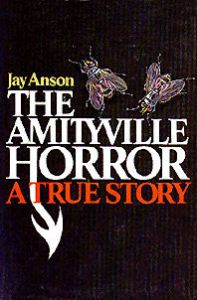
Surely one of the most controversial haunting stories of my own lifetime was that which came to be known as The Amityville Horror. After the tragic deaths of the DeFeo family in 1974, the next occupants of the fatal house, the Lutz family, claimed to have experienced 28 days of terror before moving out in the middle of winter and taking no belongings with them. Their story, written by Jay Anson, became a sensational bestseller. Published just four years after the unexpected cinematic success of The Exorcist, a movie was quickly signed and it was all the talk of my high school before I was quite at the stage of watching real horror films. By the time I got around to seeing the DVD, the tropes were so well known that it wasn’t really that scary. I realized that I had never read the book.

Whether you find Anson’s account scary or not probably depends on your level of belief in demons. Although he concludes his book with the suggestion that a combination of ghosts and a demon plagued the Lutzes and their priest, the focus of the narrative is clearly on the demonic. Fr. Mancuso suffers because the demon wants to keep him out of the house. The multiplication of flies, the constant waking up just after 3:00 a.m., and the smell of excrement all point to demonic activity. The book does have its share of historical inaccuracies and embellishments. It has been declared a complete hoax by some while others claim that at least some of what was described in the book happened to the blended family that called it home for less than a month. If you don’t accept demons, there’s little here to frighten you beyond a couple of benign ghosts.

As with any story claiming supernatural activity, we’ll never really know what happened. The Amityville Horror is often classified as a novel now. Our minds are conditioned to reject anything so terribly out of the ordinary that it is difficult to accept what you’re reading. The DeFeo family was undoubtedly murdered in the house by one of their own. The Lutz family did buy and then abandon the house in fairly short order for such an expensive purchase. There was a priest involved. The question marks hover about the supernatural elements, as they generally do. These are the ghosts and demons of the rational world which we inhabit. We safely confine them to fiction. Then we sleep at night with the lights left on.


An Odyssey

Once again in Ithaca, I find myself thinking of the classics. Although it’s difficult to believe these days, even rural Americans used to value a classic education. Take upstate New York. Not only is there an Ithaca, but also a Rome, Syracuse, and Homer, among other locations. This speaks of a time when the non-urbanites wanted to be considered sophisticated rather than gun-toting, bigoted rubes who actively hate higher education and all that it stands for. My maternal line of ancestors came from this region, and although they were simple farmers, they still named my grandfather Homer. And his sister was Helen. They knew the Bible, yes, but they may also have know the Iliad.

In a recent, flattering online game, Oxford Dictionaries offered a quiz to help you identify which classical hero you were. This is flattering because most of us aren’t heroes, but instead work-a-day types just trying to survive in a Republican world. I had to confess being pleased to find the result suggested I identified with Odysseus. Odysseus was king of Ithaca, you see, and considered one of the heroes more inclined to use his brain than his brawn (although he could use that too, if push came to shove). Perhaps it felt right to me since my own life feels like an odyssey. And my grandfather was Homer. I was first exposed to classical mythology in fifth grade, and I have loved it ever since. Besides, I’m more of an upstate mentality than a downtown one. The thing about an odyssey is that you’re not always in control of where you end up.

Sitting here in Ithaca I wonder how Americans came to despise the notion of classical education. The standard of living is higher in college towns like this. People treat each other well and there’s a strong sense of community spirit. On the way here yesterday we had to drive through rural New Jersey. We stopped in the decidedly non-classically named Buttzville for gas. The car in front of us had “Blue Lives Matter” and pro-Trump bumper stickers all over it. Yet the guy who limped out and made his way into the vehicle looked like he had probably benefitted from government largesse over the years. Proud of a president who brags about not reading. Who wants to bomb a country he can’t find on a map just because it’s different. I think to myself, I’m glad I’m on my odyssey to Ithaca.


Heresy Collection

Geology isn’t a great avocation for those of us with an unsettled existence. Having grown up with a fondness for fossils—maybe because they were so transgressive—my initial collection was tossed out because of a family move. Rocks are too heavy to take with you. I made the mistake of thinking, back in my Nashotah House days, that I was settled enough to let my rock-hounding sensibilities loose. Not that fossils were common, but Wisconsin has some great geological formations and I joined the Wisconsin Geological Society and even dragged my family along on some field trips. By the time Nashotah informed me my talents were no longer required, I’d amassed a few boxes that I was embarrassed to admit to the movers that, yes, contained rocks. New Jersey also has some great locations for rock-hounding, but my sense of being subjected to sudden, geologic career shifts has kept me from picking up nearly as many stones as I’d like to bring home.

The Museum of the Earth, here in Ithaca, is a dangerous place for someone like me to visit. I thought I had my fossil-collecting habit under control. The gorges in this region are famous for their fossils. Wandering through the museum, reflecting, as it does, the immense stretch of prehistoric time, it was obvious how arrogant humans are for assuming “control” of the planet. We’re so terribly late as to be classified as invaders on this planet. The world got by just fine billions of years without us. Perhaps that’s why I experienced transgressive fossils so captivating as a child. Ironically I found them in the creek bed right behind the Fundamentalist church we attended and where we were taught that evolution never occurred. I was fascinated by what I’d now call the juxtaposition of evidence and faith. We never questioned the reality of fossils. It was their interpretation that was the problem.

You can hold in your hand the most solid evidence that life evolved and call it heresy. Those delicate impressions of creatures dead for millions of years argue eloquently against Genesis and its mere 600 decades of world history. For me the fossils always won. On trips home from the seminary I would gather more fossils to add to the growing museum of time I’d been amassing in my basement. Then a Fundamentalist administration took the same approach as my exasperated mother trying to pack to move. Jettison the fossils. They’re heavy and they kind of make us uncomfortable anyway. Maybe the idea of too much time is something the biblically constrained simply can’t face. And when I see a fossil right there on the surface in one of Ithaca’s many gorges, perhaps I need to learn simply to let it lie.


Classical Education

Andrew Dickson White famously wanted Cornell University, unlike what would become known as the other Ivy League schools, to be non-sectarian. Most Ivy League universities were founded as seminaries or with the strong influence of churches. On farmland gifted by Ezra Cornell, in Ithaca, New York, the school became one of the first truly secular world-class universities. As I approached Ithaca over the weekend, my wife told me that the town had once been briefly known by the name of Sodom because the remote location’s reputed notoriety for sabbath breaking, horse racing, and profanity. It is now considered one of the most enlightened towns in the country. Famous for its waterfalls and gorges, one of the cascades is still rejects the biblical slur with the sobriquet “Lucifer Falls.”

Many place names—indeed, much of American culture in general—reflect(s) the Bible. Ours is a culture in denial of just how formative religion has been for who we are. Because of our willful blindness on this point we sometimes run the risk of being entrapped by our heritage. Despite how much we’ve educated ourselves we still see what we want to see. Our religious heritage is often considered an embarrassing family secret rather than the path by which we came to be a civil society. Religion is so frequently portrayed as an evil force that it’s easy to forget just how much we owe it for our evolution. Even education itself had a religious motivation since teaching students to read was often done with the intent that they should read the Bible.

Like nearby Binghamton, Ithaca has a statue dedicated to Martin Luther King, Jr. It bears a biblical quotation from Amos without embarrassment. Ithaca today is a livable, socially conscious community. Recycling is strongly encouraged while cars are not. Hardly a hotbed of immorality, it is one of the great examples of an American college town. Ideas are welcome here. Befitting its classical heritage of education, the city is named after the island ruled by Odysseus, according to Homer. Indeed, Ulysses lies just down the road. Homer (and yet another town in the area bears that name) presented Odysseus as among the smartest of the Greek kings. Like most classical Greeks, Odysseus was only too conscious of how the gods could interfere with one’s life. Instead of denying the obvious, however, religion was recognized as a necessary source of culture. Not that it always has to be taken too seriously. Maybe it shouldn’t be completely ignored either.


A Kind of Contact

I find myself in Ithaca, New York. Places have a resonance with people, and this is one of those places I feel like I belong. The feeling may not be mutual, but that makes it no less real. At least on my part. Dominated by the presence of Cornell University, this town of waterfalls and free spirits represents everything I value. Education, creativity, and an easy familiarity with nature all have a place here. And Carl Sagan. No doubt astrophysics is far more sexy than religious studies. I didn’t watch Cosmos when it aired, but I knew of Sagan as its driving force. Before being daunted by the math, I had considered astronomy as a career; Denied tenure at Harvard, Sagan came to be associated with Cornell, to Ithaca’s enduring benefit. His house above Ithaca Falls is still pointed out by the locals.

Star status for academics, so I’m informed, is a mixed blessing. Accusations of being a popularizer are flung somewhat liberally at those who know how to explain things to non-specialists. Part of the ivory tower mystique is to remain inaccessible and impenetrable. Teaching, at the same time, is expected to open lost worlds to the curious. Sagan, like Bill Nye—another Cornell star—wasn’t afraid to take his knowledge to the streets. And such receptive streets there are in Ithaca. It’s a place a child of the sixties can feel at home. Looking for fossils in the many gorges, I’m reminded that the old and new are not so different in a universe billions of years old.

The sense of place, while scientifically dubious, is nevertheless real. Part of my ancestral heritage lies in upstate New York. My grandfather, while not a college man, took a couple of courses at what was then Cornell College to launch his teaching career. Following in grand-dad’s footsteps, my own teaching career (which, however, never included Cornell) didn’t last long. Yet somehow we both ended up passing through Ithaca. People on the street. Waiting to be enlightened by stars that shine brighter than my own. Life is a series of places. All, it turns out, are temporary. Rod Serling once said, ”Everyone has to have a hometown, Binghamton’s mine.” He left the nearby town, but he has remained there ever since. Places are that way. I’m in Ithaca right now, but the stark reality of New Jersey awaits at the end of the day.


A Glimpse at the Future

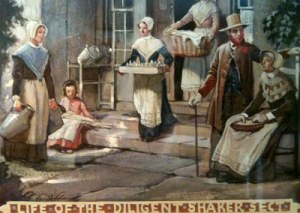
Last month one of the three remaining Shakers died. In this era of religion unawareness, not many Americans, I expect, could identify this dying religion. The Shakers aren’t the Quakers—we like to give religions we don’t understand pejorative monikers—they are a group that grew out of the Friends but that had important differences. Shakers believe, especially, in celibacy. It had to grow through conversion since Shakers could not reproduce biologically. At their height there were about 6000 of them—the number of Twitter followers of a fairly successful humanities professor, I suspect. They were hard-working and their brand of furniture endures beyond the life of the sect. The official count of Shakers worldwide now stands at two.

This little bit of news saddened me. Not that I’ve ever been tempted to join the Shakers—it would be a bit of a stretch for a family man—but I’ve always admired countercultural groups. Like many religious sects of the late eighteenth century, the Shakers were millenarians. That is, they believed in the imminent second coming of Christ. Given this belief, biological reproduction wasn’t really necessary. In fact, it was counter-productive. Like so many of the slumberers of the Great Awakening, the Shakers eventually settled in upstate New York. Since their lifestyle was different, they had to form their own communities. The last community is in Maine. When the last two Shakers go to their reward, barring a miracle, the denomination will be extinct.

life_of_the_diligent_shaker

The Shakers were distinctive for yet another reason as well. They were open to, and often defined by, female leadership. This might be expected in a world where men have difficulty controlling themselves in mixed company. Catholic monasteries locked men in without women. To agree to live in a mixed gendered community but without mixed gendered relations took a dose of will power that borders on the saintly. The Shakers won’t be the only religion to have gone extinct, when that happens. Religions, like organisms, grow, thrive, and die. This little group had a disproportionate impact on society. Those who watched Michael Flatley throwing his body across the stage to the haunting joyfulness of the Shaker Hymn “Simple Gifts” likely had no idea that the world owed one of its most beautiful melodies to a group of people living celibate lives in the woods of Maine. The Shakers’ unique contributions to the weird and wonderful world of religion will be missed by at least one.


Alas, Binghamton

“Store Closing” the signs veritably shout. “Everything Must Go.” It’s something I hate to see in an economically depressed town. The tragedy is redoubled when it’s an independent bookstore. While undergoing the ritual of returning our daughter to college after the holiday break, we were driving through Binghamton, appropriately enough, at twilight. In that first, lonely freshman year we’d discovered River Read books in downtown. Like many indies, it was small. Intimate even. I never walked out, however, without some treasure that I wouldn’t have found in a larger store. River Read eventually became an irregular habit based on parents’ weekends and academic breaks, and I’ve come to depend on it after a long drive across three state lines. Once again, however, the lack of concern regarding reading takes another victim.

img_2947

In the ancient world there was a poetic genre scholars now call the lament for a fallen city. I’m that way about bookstores. Amazon has proven wonderfully capable of getting things to me quickly. Obscure tomes, sometimes. Since our nearest independent is a 25-minute drive, this is often a necessity—I can spare 25 minutes only on a weekend, and then, only select ones. Ironically, just on the way to Binghamton we stopped at the Bookworm in Bernardsville, New Jersey. We try to help them survive. My mind goes back to fond occasions outside the home and how often they involve bookstores. Finding a new one. Returning to one already well loved. Even, back in the day, Borders. In a pique of nostalgia I starting searching the web pages of past favorites. Books & Company in Oconomowoc, Wisconsin. Farley’s in New Hope, Pennsylvania. Pages for All Ages in Savoy, Illinois. Ah, alas, the latter has also closed its doors forever. The store I’d visit after a long commute to Nashotah House and back, looking for something I really want to read.

The neon after dark is like an alien invader in my car. River Read is closing. The liquor stores and “gentlemen’s clubs” seem to be fine. The cars up here sure weave around on the road a lot after 9 p.m. on a Saturday. It’s not just here, I’m sure. I’m seldom out this late any more. Perhaps, even likely, this has been a long time coming. Civilization unable to support its foundation. Literacy, after all, spread the common ideals we used to share. Presidents united us and we were eager to read and every town wore its own bookstore like a badge of honor. I’ve seen the signs and I lament the fall of yet another fondly recalled city.


Personal Heroes

I’m not inclined toward hero worship. Sometimes I think it must be a personality flaw on my part. The cult of celebrity is so pervasive that I feel desperately behind the times when I read what web-savvy authors write. Or maybe the truth is that my heroes live closer to home. Or lived. I grew up in a small town as the child of a working-class couple, both of whose sets of parents were not educated beyond high school. We were simple folk. We didn’t have much money and we didn’t have elaborate demands. My mother put up with an alcoholic and then absentee father, raising three children largely on her own for the better part of a decade. (She eventually remarried and the three became four, but I want to focus on the early part of the story today.) She had a rough life. Her hero, not surprising for an only girl with four brothers, was her father. Her admiration for him, whether genetic or via learning, passed on to me. I can’t claim to remember him since my grandfather died just before I turned two and just before he turned 75. As I grew up, however, he became my hero.

HomerSitterley

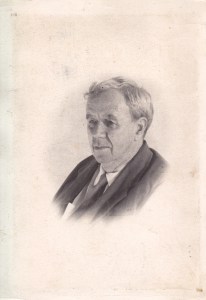
Today would have been his birthday, and I’m thinking about Homer Sitterley, my hero. He grew up on a farm in upstate New York and tried to better his circumstances. He taught in a one-room schoolhouse, which you could do in those days without a college degree. He also met my grandmother in that schoolhouse, which you could also do in those days. He had to change careers and became a civil engineer—still with no degree. He started and supported a family of five and moved around the country trying to keep his spouse happy. Back in the 1920s and ‘30s they moved from Virginia to Montana and back to the east, eventually settling in New Jersey, where my mother was born. They finally moved to Pennsylvania where my three brothers and I were born. He died there in August of 1964.

Homer Sitterley may have never worn a cape like one of his silly grandsons did in college. He didn’t have any super powers beyond the strong will to survive in a hostile and thankless world. He never grew rich despite hard work and few outside his family knew his name. He is a hero nevertheless. His kids were upstanding people: religious, polite, and kind. Their children—my many cousins—are good people. In a world where superheroes are shown increasingly as flawed, the real heroes are simply human. And my personal hero, although he never knew he was—and is—was a man who cared for his family to the very end. He was only human. And all the more heroic for being so.


Holy Girdles

Religions, it seems, come in belts. Or at least elements of religions do. Although we may not all agree on what constitutes the “Bible Belt” we all have a pretty good idea that it includes several southern states, and parts of the Midwest. It doesn’t really resemble a belt that I can tell, but its convenience and assonance keep the phrase alive. Over this past weekend I was in the “Borscht Belt.” I’d heard the term before, but had no idea where this supposed belt was, or, indeed, why it was called this. Historically, three counties in the southern Catskills, so I learned, were attractive locations for summer homes for Jewish families from New York City. All within a easy day’s drive of Gotham, they provided the low mountain, resort feel of much of New York State and Pennsylvania. According to Wikipedia (surprisingly, I had no books on the Borscht Belt in my library) this designation is less descriptive now than it had been, back in the day.

BorschtBelt2

One of the immediately obvious features of the region, at least as recently as last weekend, were the number of orthodox Jews walking beside the roadways throughout these counties. I’m using “orthodox” here not as a technical term since I have difficulty identifying the different brands of conservative Jewish belief (there I go again!). Another obvious indicator was the number of billboards written in Hebrew. Just a hundred miles down the road west and these markers tend to disappear. By the time you reach the central part of “the southern tier” you come back to what was once called “the Burnt Over District” from the “Second Great Awakening.” Distinctively Christian in orientation. Religion is endemic in these hills.

The internet tells me that the Borscht Belt began to unbuckle with the relative ease of air travel. I have many Jewish colleagues who pop over to Israel on a fairly frequent basis. I suppose the Catskills just don’t compare with the Holy Land. Further south, along this same rocky spine, you come to the Poconos. I grew up hearing about this vacation paradise in my own state, but, like the Catskills, the region has been largely abandoned for higher mountains, bigger thrills. Having grown up in the foothills to the Appalachians, I learned in school that these are ancient mountains. Old ways are naturally preserved here. The religion I grew up in was old-time, for sure. There’s an agelessness to these weathered hills that seems to invite those with old religions to form enclaves and imagine that little has changed, despite what Wikipedia might say. And maybe it’s time to get a bigger belt, since conservative religion seems to be growing rather than shrinking.


Things Remembered

IMG_2839 copy

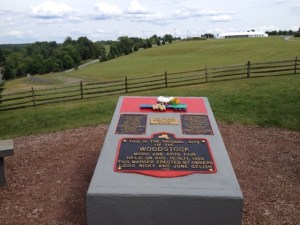
Freedom. Independence Day is our celebration of liberty. Yesterday I happened to find myself at Bethel Woods, the out-of-the-way location in New York where Woodstock was held. Probably no one in 1969 realized just how formative Woodstock and its message of peace, love, and music would become for American culture. Those of us who came of age in the ‘70s learned about it as recent history (I was only seven at the time and, I’m sure, would’ve found the whole thing somewhat unChristian had I been here then). Much has changed in the intervening years. Not many peaceful events get so much airtime any more. Upwards of 400,000, basically unpoliced, youth, gathered in Bethel, New York, for three days of music, chaos, and peace. The Vietnam War was still draining our nation of its youth and murdering its idealism. Fear of the other, racial inequality, and male superiority were part of the context that led to the need for Woodstock. Freedom was free.

Often on this blog I reflect on the sacredness of place. Events that take place in a location leave their impression on the land. Bethel Woods Center for the Arts, the current administrators of the property, have left the field largely intact. As my wife and I stood at the top of the hill and tried to imagine almost half-a-million people here, it was strangely quiet. The nearby museum had plenty of music playing, but standing where it actually happened, there were only ghosts of an event studied in school and which, even today, kids can generally identify. I couldn’t have named every act that played the concert and, although the music was clearly important, it was the gathering that is most remembered. Self-governing youth getting along in an area so remote that still today you have to drive a couple miles to find even basic necessities, sent a powerful message. It was an event that, I fear, can never be replicated. The snake has spoken.

Nearing fifty years later, we’ve become so paranoid that anyone who looks Middle Eastern is under suspicion. Guns, which children of the sixties shunned, have proliferated and may now be carried, wild-west style, in many states. A fear-mongering candidate bellows fascism before the Grand Old Party. Remember, Nixon was president during Woodstock. I may have lived hundreds of miles from here, occupying myself with the matters that seven-year-olds find so pressing. But Woodstock happened. By the time I got to Woodstock, everybody else had gone. I see others milling about the museum, slightly older than me. Perhaps some of them were here for the event itself. We all seem to be searching for something here. The festival had its problems, for sure, but with a sincere belief in freedom, it makes the pre-seventies United States feel like a strangely foreign county. How do we get back to the garden?


Measuring Religion

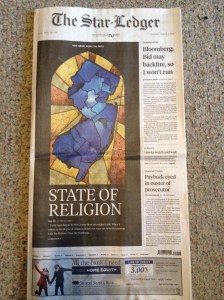
How do you measure the religiosity of a people? While the boundaries of the United States are somewhat porous, internally, we nevertheless still consist of somewhat self-governing states. One measure of religious belief is to take your metrics by state. Of course, some people—perhaps many—owe their state of residence to their work and not their natural choice. You’re judged by the company you keep, regardless. So when the New Jersey Star-Ledger ran a front page piece about religion in the Garden State last week, I was intrigued. I do spend quite a few of my waking hours in the neighboring New York, but for statistical purposes (and taxes and tuition) I’m considered a New Jerseyan. So what’s the damage?

IMG_2702

The story is actually about a Pew survey undertaken last year. New Jersey, it seems, ranks 19th from the top when it comes to religious states. Ranging from Alabama as the most religious to New Hampshire as the least, the measures of devotion are four: do you attend worship, do you pray frequently, do you believe in God, and do you profess yourself religious? Each of these questions provides its own set of problems when it comes to being an actual measure of someone’s commitment to religion. I maintain, as I often declare on this blog, that religion is one of those non-quantifiable aspects of life. It cannot be measured accurately because the tangibles are immeasurable. Deep commitment may be found among those who don’t frequently attend worship. What if your religion is a very private affair? And besides, doesn’t all of this measuring sound like a locker room contest?

As a nation, we spend a lot of time worrying about how religious we are or aren’t. Since such events as presidential elections have hinged on candidates’ piety since I’ve been old enough to vote, that’s understandable, I suppose. Nevertheless, such surveys are about surface belief. I recall in college being told that if your living space didn’t have enough evidence to convict you, you weren’t really religious at all. I know I’ve got quite a few Bibles laying around, and although we rent, we do have some religious artwork on our walls and mantle. I blog about religion daily. Still, I wonder where I might fall on some survey designed to tell me how religious I am. Such things can’t be measured with surveys, but in situations where the stakes are so high, we will do what we can to understand the imponderable.


Holy Seer

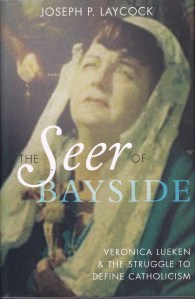
SeerOfBaysideHands up, all who’ve heard of Veronica Lueken. Maybe one of you in the back? I have to confess to having been in the “Veronica who?” crowd until reading Joseph P. Laycock’s The Seer of Bayside. The subtitle would have made the difference: Veronica Lueken and the Struggle to Define Catholicism. It’s a fascinating story. Lueken, a Catholic laywoman in Bayside, Queens, began to have visions of the Virgin Mary. This was in the days of Vatican II. Lueken was a traditionalist who felt the reforms were misguided, and found Mary to be on her side. She grew a large following during her outdoor vigils, eventually becoming so popular that people bussed down from Canada and in from other states to join her. The neighborhood association complained, and, some say, planned to assassinate the seer. The movement, known as Baysiders, eventually moved their vigils to Flushing Meadows Corona Park, where it—or they—continue to meet.

Critics of religion tend to claim believers credulous. The Catholic Church, however, has been notably reluctant to approve of Marian apparitions. Lueken’s visions and her movement were condemned by the authorities, but now, even two decades after her death, two groups of her followers continue to meet. I’ve read quite a bit about Marian apparitions over the past couple of years. As Laycock points out, Marian apparitions are frequently classed with the paranormal since anomalous events often accompany them. It is no different with Baysiders. They claim healings and other unexplained events associated with their devotions, including mysterious lights on Polaroid photographs taken during services.

How are rational people, especially non-Catholics to make sense of this? Obviously one can say that the thousands who’ve claimed to witness such miracles throughout history were simply mistaken. Or deceived. Or one could suggest that there may be more to this old world than we’re generally willing to admit. Laycock takes his book in a different direction by asking the salient question of who gets to decide who Catholicism is. Protestants have no single center like the Holy See, and fractions do what fractions do. They divide. Hierarchy hath its privileges, of course. Rome declares the Baysiders in error. Each side, as is to be expected with religions, claims that it is correct. It seems that only Mary knows the real answer.