Jericho

Those who think walls actually keep people out have never ridden the train through North Philadelphia. Or into Newark. I have to admit that I’ve always found rail-side graffiti aesthetically pleasing. Some of these vandals are real artists on a scale that is truly impressive. Speeding trains are, of course, dangerous. And in urban areas they are fenced off to keep people out. Thing is, walls don’t work. Riding to Washington DC for the Women’s March a couple weekends ago, I was watching the graffiti on the way into Philly. Vast, colorful, and with a flair for design, it makes the usual visual fare for railway riders much more interesting. Buildings, we know, have facades to be public facing. If you go around to the back of the strip mall, things look a lot more spartan indeed. I’ve spent my fair share of time in employee break rooms. Executive washrooms they’re not.

The thing about facades is that they’re fake. Like in those old westerns where we see them jutting up higher than the actual roof of the store or saloon, making them look bigger than they really are. Or even a small town boy who works in Manhattan can see it. Walk down the avenues of Midtown and the glitz is never-ending. Once you get to the minor cross-streets you see the service entrances and smelly trash bags stacked in the alleys. Would you want to enter that store if you knew what was coming out the back? We prefer our self-deception. We prefer to call our lies alternative facts. We can sleep better at night that way, knowing that our heads of state are so so brutally honest. Just don’t wander behind the cameraman. Things aren’t what they seem.

img_3171

To get to New York City from where I live, you have to change trains in Newark. The graffiti along the way is intense. Long ago I noticed a signal hidden in the noise. “Paint the Revolution” it reads. Or read. I don’t know if it’s still there. Graffiti’s often the bare truth. The thing is, it’s difficult to photograph. Trains move fast and phones focus slowly. Things look blurry and those in power can tell us the words of hoi polloi are ugly and defacement of property. Have they ever walked behind the building to where the workers come out? It’s easy to find. If you smell the piles of garbage you’re getting close. Executive washrooms they’re not. But the back door is far more honest than any facade.


Take a PAAS

Like so much of life, PAAS Easter Egg coloring kits were the result of an accident. To be more specific, a chemical accident in New Jersey, something which is far from rare. This particular accident, however, had a fortuitous side-effect: the brightly colored (but not radioactive) Easter Egg dye that many of us associate with childhood. Around 1880 Newark druggist William Townley spilled colored dye onto his suit, leading him to individually package holiday colors, according to a story in the New Jersey Star-Ledger. That individual packaging allowed for a full set of egg colors to be sold together and the PAAS brand was soon launched.

The idea of coloring Easter Eggs, like so many Christian traditions, likely has pagan roots. Eggs were a sign of new life with the coming of spring in many cultures (although boiling the poor things rather defeats the purpose). Christians adopted the egg as a resurrection symbol—the chick pecking out of its shell was like the resurrected Jesus bursting from the tomb, albeit somewhat less dramatically. Watching a newborn chick hatch is an emotional experience. At the 4-H Fair, standing around the incubator in the chicken tent, you can see wobbly, uncertain, tiny birds tentatively trying to assess this strange new world that is colder and somehow more compelling than life in the shell had ever been. The mighty son of God they’re not, but they are much more like us, looking for answers and taking small steps until they’re more certain of what they face.

DSCN4483

The coloring of eggs has origins lost in antiquity. Nobody’s quite sure why it was done beyond the fact that they look nice. Romans ate eggs as part of their spring celebrations, and Christians came up with a story to explain colored eggs. The legend claims that Mary Magdalene, in trying to convince the emperor of the truth of the resurrection, turned eggs from white (or brown, as they likely were in those days) to red in her open hands. This proof, however, failed to convince the Caesar. What seems certain is that pagans liked coloring eggs so this provided a new source of evangelism to the Christians who assimilated the practice. Like Christmas, the Easter Egg has become a thoroughly cultural symbol—since Easter comes on a Sunday employers aren’t obligated to give the day off, so everyone can celebrate. Children hunt eggs on the White House lawn and we can still expect everyone to be in the office on Monday morning. Resurrection, after all, can only reach so far.


Who’s Got the Keys?

Having grown up Protestant, I assumed that was normal. Adults, who have the benefit of years of negotiating with other adults in ways that may seem unsavory to children, have the definite advantage here. Children believe what their parents tell them, and should the matter come down to eternal life or everlasting damnation, you sure want them to have your back. Sunday’s New Jersey Star-Ledger has a perspective piece by Tom Moran, whose parents raised him Catholic. Catholics and Protestants are Christians divided by a common religion. As I have studied the teachings of each over the years, it has sometimes felt impossible to fit the two together in any meaningful way. They both think Jesus is cool, but beyond that, the disagreements almost immediately begin. Moran notes that in the US fewer than one in four adults identifies as Catholic although one in three was raised in that tradition. His article goes on to outline how Catholicism has frequently aligned itself with law at the sacrifice of compassion. Sounds like religion to me.

Religionists place great, perhaps even eternal, stock in being right. The Catholic Church has traditionally considered itself expert in issues of reproduction, a conceit that is only more bold when it is regulated by celibate men. And the source can’t really be the Bible since there are plenty of places where the good book is a little naughty. The biblical understanding of reproduction was a conclusively unscientific postulate. When microscopes, not telescopes, revealed what was going on at the microscopic level, theology should’ve blushed and excused itself from the room. Instead, the church proclaimed that it knew better than any bespectacled intellectual; after all, unwavering tradition must count for something. This bears the imprint of a system with little left but theological bluster. And it’s losing its thinking members.

Moran interviewed Newark Archbishop John Myers, a man concerned with the sanctity of marriage and who has a questionable record of reporting abuses, for his story. As Moran pointed out, Myers has not been the outspoken advocate of the poor, but he does back the candidate with sacred underwear. I’m not sure when the last time was that the good Archbishop took a drive around Newark. It is hardly a little piece of heaven on earth. Even waiting for a train in the station can fill a customer with a sense of despair. God’s will, apparently, is somewhat more narrowly focused on what consenting adults do behind closed doors. The level of disjunction is enough to throw the Popemobile out of alignment. Of course, I write all this from the sidelines. I was raised Protestant, and no matter what the Mormons or the Catholics say, I was taught from my youngest years that they’re just plain wrong.

Those are some big keys…


Tuesday Mourning

A mourning dove sat on my front steps today. I weep for Shaunakaye Williams, although I never met her. The death of the young is tragedy defined. I did not know Shaunakaye, but I know that she was a young woman of great potential. She had discovered FIRST Robotics in Newark and died while in California at a FIRST competition. If it weren’t for the FIRST connection, her death might of remained unknown to me, but it would have been a grave loss nevertheless. Becoming a parent has been the most wonderful and terrifying event in my insignificant life. Since it has happened, I have mourned every death of a child of which I’ve heard. The words of comfort fail. FIRST is the most optimistic group with which I’ve ever been affiliated, recognizing and rewarding the potential of bright young minds. Shaunakaye was part of that family, and her loss is deeply felt.

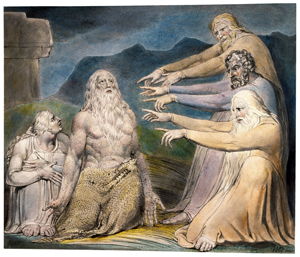
In the field of religious studies, those who would justify the actions of God in a world full of suffering are faced with a daunting task. Theodicy is the most unenviable and unsatisfying aspect of the theological endeavor. Even the stalwart author of the book of Job dared not ask the great unanswerable “why?” – there is no justification for the death of the young. Often the answer is there is no answer. Job’s friends cannot accept this truth and fabricate excuses to show that God is just. God himself affirms, however, that life is just not fair.

As a race, as a species, our children are our greatest assets. Bully governors and pedophiles notwithstanding, any society that does not promote or encourage its children has already cut off its entire future. I mourn for Shaunakaye Williams, and for all those who have not been given the chance to reach their full potential. I mourn for all parents who have had to face this most terrible of afflictions. And I will never be counted among the friends of Job.