The Printed Word

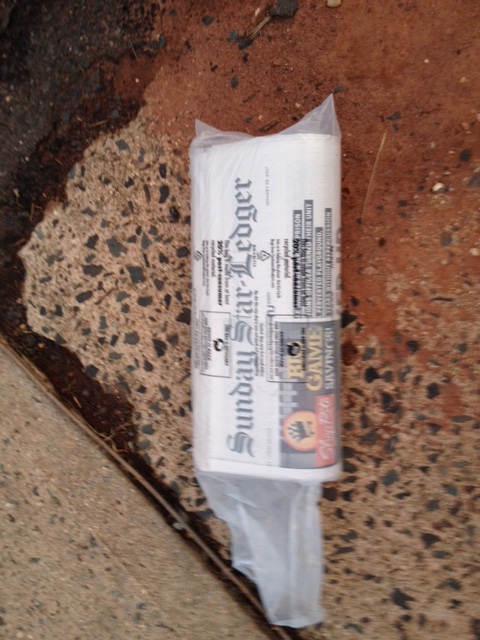
I miss them, newspapers.  Now, I’ve never been a great newspaper reader—I tend to live in my own little world, I guess, and I really have no taste for politics.  I still glance over the New York Times headlines daily (mostly) but that’s not what I’m talking about.  I’m talking about physical newspapers.  The other day we had a family creativity session.  This generally involves painting in some form or other and I realized with chagrin that we had no newspapers to lay down.  Nothing to protect the table top.  The same is true when we carve pumpkins, or do other activities that make you think that you want to protect your furniture.  Newspapers were always there.  We used to line our birdcage with them.  Made papier-mâché out of them.  They were handy to have around.

Josef Danhauser, Newspaper Readers, public domain. Image credit: Österreichische Galerie Belvedere, via Wikimedia Commons

We live fairly close to our means, so we don’t have lots of drop cloths lying about.  (Plastic is so much less feeling than paper.)  We don’t have rolls of butcher paper in our kitchen.  We even use cloth bags for groceries, so grocery bags are at a premium.  Our electronic mania has meant that physical creativity suffers.  I do applaud the saving of trees, but you sometimes just need the disposable broadsheet to catch the drips.  (And when I paint, believe me, there are drips.)  But perhaps this is a symptom of this insipid internet life into which we’ve slipped.  The other day I was searching for an electronic services store.  I’m not even sure what to call them anymore.  I had to go to the physical store (yes, they still make them) to have something looked at.

The website kept telling me a store with a different name was what I was looking for.  All I wanted to know was whether this was an actual store or some knockoff.  If you’ve purchased what are being called “dups” now you know that companies blatantly use other companies ads to sell cheap knockoffs that don’t resemble the product you wanted at all.  This all seems to be perfectly legal.  I guess I’m just nostalgic for the days when you had to have patience and doing things slowly was a sign of good quality.  The 24-hour news cycle has hardly been a benefit, and Trump could’ve never been elected without it.  And if you wanted to paint something, you’d just go to the stack of newspapers that every house seemed to have, and paint over any headlines you wished you hadn’t seen.
Clippings

Weren’t newspaper clippings more fun than bookmarks?  For one thing, bookmarks are hidden away in your browser where they proliferate like bunnies in April.  Clippings were always limited in number, to the level of your interest.  Or physical storage capacity.  I once decided to organize all my bookmarks into “folders.”  I’m still not finished and some websites don’t seem to fit any category.  Still, the exercise is an eye-opening one.  I’ve been on thousands of webpages, hundreds of which I want to remember.  With newspaper clippings, there were a limited supply and they felt—let’s face it—real.  These words and images were printed on tangible paper.  Kept in a file (or in old movies, tacked to a bulletin board that inevitably contained clues), they were visible reminders of something that caught your attention.

I’ve seen movies made where research is being done on the internet.  They involve people who know they have to go beyond the top page of a Google search.  They may even go to the third page or further!  Such thrills.  Compare that to a scene where someone pulls open a desk drawer and finds a clipping.  Isn’t there real drama there?  No doubt the internet has made finding information easier.  It has also proliferated it so that we no longer have time to read it all.  I recall reading how Isaac Asimov read the entire encyclopedia when he grew up.  Who could read all of Wikipedia?  It changes every single day.  The clipping file, depending on the papers and magazines to which you had access, might be pretty slim but it helped to inform opinions and outlooks.  There were occasional hoaxes but nobody worried about fake news back then.  After all, reputations still meant something in those days.

There was a real thrill, growing up in a small town, to being mentioned in the newspaper.  In my case it was generally about being in the Cub Scouts, or, interestingly, being baptized in a river.  (This was a small town.)  Ironically I didn’t have a clipping of the baptism story; I found it online.  The Franklin News-Herald wasn’t a large circulation broadsheet, but it was paper closest to where the incident took place.  Perhaps it struck a locals as odd seeing a bunch of people wading into the river fully clothed, even though it was 1970.  It’s an event I remember well.  But most of my clippings have flowed away over time, like those sins that were washed downstream that day.  I must remember to bookmark that site.


Who Can You Call?

They’re scratching their heads. The media, I mean. In this distorted world of Trumpism, newspapers have rediscovered religion. Some say Trump is the altar boy of the evangelical right with people like Franklin Graham wetting himself over the president. Others say evangelicals want to change their name to distance themselves from Trump. Everybody seems to want to know who evangelicals are, but they’re afraid to ask. The weird, or perhaps expected, thing is universities decline to help. For years now they’ve been cutting positions in religion, a topic no longer relevant or of any interest. Academics aren’t always good at seeing what’s right in front of them, of course. So it is that the media’s scratching its collective head. Is he or isn’t he? What can you say about a man who’s so clearly heathen and yet a sparkling example of Christ-like compassion and values?

It’s doubtful whether any university administrator or televangelist could finger Jesus of Nazareth in a police line-up. They have no idea of who he was or what he taught. All that matters is he was God and he protects unborn babies so that he can arm them with automatic rifles when they’re of age. Oh, and he’s definitely not a woman. Or gay. Is that about it? Just in the past week major media outlets have run stories about the evangelical relationship to the commander-in-thief who’s told more lies in his first year than all other presidents combined. Who said Jesus of Nazareth was honest? He just stood for the right causes.

Having grown up evangelical, studied religion with evangelicals, and having been fired by evangelicals, I know them well. They have a mental capacity for biblicism that’s nearly incomprehensible. The Bible is so sacred that no other book should be placed atop it. It should never be set on the floor. Memorizing chapter and verse is more important than knowing what they might mean or how to live by them. This is old-school blind faith. And proudly so. Trump doesn’t know the Bible but he says he does. His actions resemble the carpenter from Nazareth’s about as much as Joseph Stalin’s. He was a good Christian, too, wasn’t he? After all, the Bible says Russia is our ally. Reagan—another evangelical—may’ve said they were our worst enemy, but one thing we know for sure about the Good Book: it never lies. For that it takes evangelicals and politicians.


Publish or Perish

Working in publishing, I’m well aware of the stresses of the information industry. Jobs frequently evaporate as new, less formal ways of spreading ideas develop. To the typical academic what a university press offers is the secret knowledge of where to send their monograph to get it printed and bound. As if a printer and spiral binder weren’t available at the local Kinko’s. Oh, wait. Kinko’s doesn’t exist any more. You can do most of this at your own university anyway. With 3-D printers you might even be able to print a reader. No, what academic presses have to offer is credibility. If we’re honest we’ll admit that some presses are known for publishing just about anything sent to them while others are selective. The selective presses are often considered the more reliable since they set up the highest hurdles and accept only materials that come as close to being true facts as information can. Self publishing, as might be expected, has muddied the waters.

The same is true in book publishing’s cousin, the newspaper industry. As analysts point out, you can get whatever “news” you want from social media. With varying levels of truth. Stop and think about the people you knew in high school. Those who tend to friend you on Facebook. Would you trust them for accurate news? This has become all the more important because our government is now in the business of fabricating facts. Fact checking is too much work and besides, who has time? It’s easier just to believe lies than it is to buy a copy of the New York Times. Newspapers, you see, used to offer the same thing as the academic press—credibility. The New York Times and the National Enquirer are two different things—you could tell at a glance. Now it’s hard to tell where the news originates.

img_3186-copy

This point was made by Deborah Lev in a recent editorial in the New Jersey Star-Ledger. The real problem is our nation’s founders presumed that democracy would work for informed voters. Yes, there were difficulties with the way the system was set up. It was based on privilege and convention. We’ve finally, in theory, gotten to the point that any citizen of a certain age can vote, but we have no requirements for ability to discern the issues. That would be elitist. And we have eroded the traditional sources of attaining quality information—publishers of all sorts are struggling. For some topics self-published books outstrip traditionally published tomes by a fair margin. You can’t believe everything you read. Don’t take my word for it. I’m open to fact-checking. Just be careful where you reap your facts, because not all facts are created equal.


They Might Be

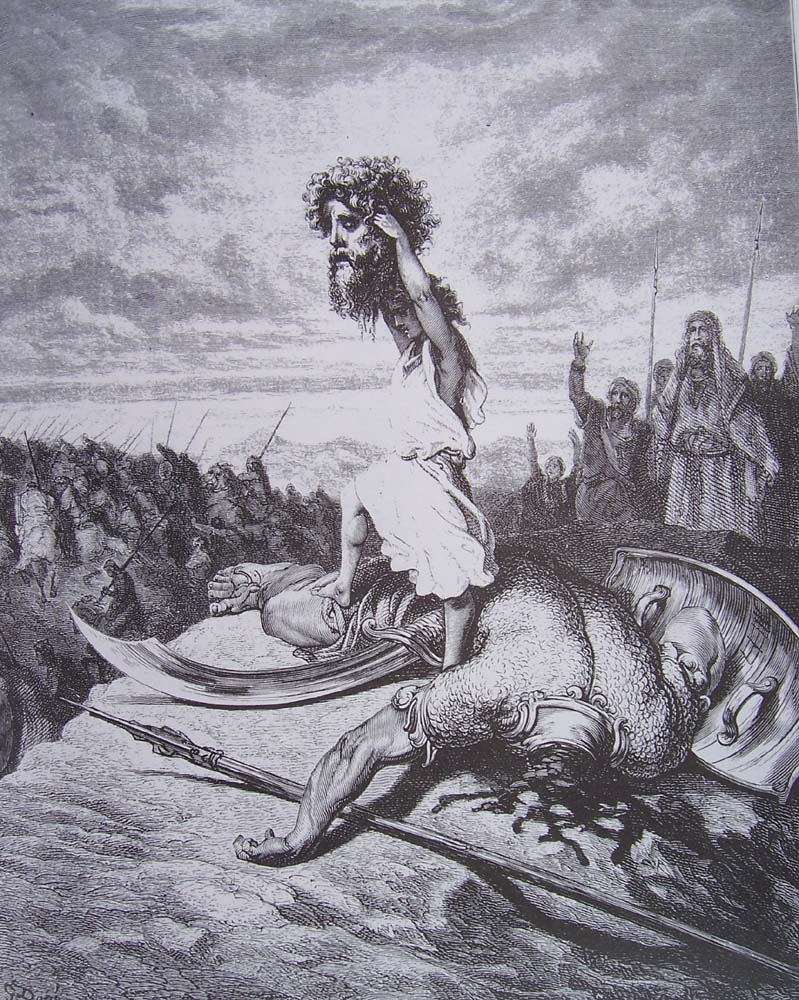
Last week I mentioned that a letter-writing friend had sent me two articles from the 1868 Prescott Journal newspaper. Some time ago I did some research into the history of newspapers since many of the stories from the early days of the medium seem difficult to accept. Perhaps it was a more credulous time, or perhaps newspapers were a form of entertainment as well as information, but the occasional hoax made its way into the pages of even reputable papers. I’m always surprised how many tales involve a kind of biblical literalism, whether stated or not. The second story from the aforementioned Wisconsin newspaper has to do with a giant skeleton unearthed at the Sauk Rapids. At ten-foot-nine, this veritable Goliath was estimated to have weighed some 900 pounds when alive. This prodigy sparked some piety in the writer, who concludes by stating, “We hope ‘642’ [the article doesn’t hint at the referent here] may learn humility from this dispensation of Providence, and that a view of the ‘femur’ and ‘fibula’ of this deceased stranger, may teach him the futility of all attempts at fleshy greatness in these degenerate days.”

Quite apart from the pious closing, the idea that giants once inhabited the earth is indeed biblical. Studies have been undertaken that speculate on why people of antiquity believed in giants, and one of the more plausible explanations has to do with the discovery of megafauna bones. Not having a conceptual world wherein dinosaurs or mammoths might fit, giant leg-bones and ribs, for example, look pretty much like those of people. Only much larger. Whatever the reason, people all over the ancient Mediterranean believed in an era of giants, and that belief made its way into the Bible as well as into Greek mythology. Only, if the Bible says it, it must be true, no? And so, finding giants in the earth is not to be unexpected.

Goliath_Bible

Interestingly enough, this craze of finding giants has not ceased. The internet keeps bogus photos of unearthed giant skeletons alive and the explanations we’re given amount to proof of the flood. After all, the Bible says giants came before the flood, and if Noah wasn’t a giant, well, they had to have been wiped out, right? But then they show up again later in the form of the Anakim or Goliath and his kin. The question of whence the giants 2.0 came is not answered, but if it’s literally true then there should be no surprise if one should turn up in Wisconsin. After all, other oddities have turned up in that same state, some of which still defy explanation in the rational world of the twenty-first century.