God’s Country Club?

Heaven is a sparsely populated place. Considering its vast celestial real estate, vis-a-vis the earth, it must be downright lonely. Maybe that’s the way the elect like it.

Official teaching, as it is often called, for many churches is downright brutal for those who dare explore. This past week the sin of Rob Morris, a Lutheran Pastor (Missouri Synod) who had the audacity to pray for the children slaughtered in Newtown, Connecticut in the same room as—gasp—Jews and Muslims, has been in the news. You see, Missouri Synod pastors aren’t allowed to worship with those outside their brand, and the president of the Synod, Matthew Harrison, insisted on an apology from Morris. Never mind the twenty-six coffins in the room. This is about doctrine!

Exclusion is part of what gives religion a bad name. Yes, there are some people who appear evil—I’m glad I’m not often put in the place of judging that. For some Christian sects, however, the gate is very narrow indeed, and the path exceptionally difficult. More than one Christian denomination, presumably those not so good with arithmetic, officially teaches that only 144,000 will be saved. A thousand gross, and not one more. These poor sinners keep hoping they’ll get in without adding up the hundreds of generations standing in line before them. I get the sense that their heaven wouldn’t exactly be paradise for any of the rest of us who happened to slip in. If the world were full of people like me, I think I’d be on the first space shuttle off to parts unknown.

Overlooking the gross insensitivity to the fact that Morris was trying to heal his community after a tragedy where children—children! To whom most religions give a free pass into heaven—were being mourned, we must wonder what the paradise of Missouri Synod Lutherans looks like. A heaven without diversity. Smiles must be rare indeed. And long, long, long naps very common.

For those of us committed to the common good, heaven on those terms is no ideal place. In fact, I doubt that God would be tempted to spend much time there. I think that God was present at the interfaith prayer vigil, and that Rev. Harrison has yet to receive an apology postmarked “Heaven.”
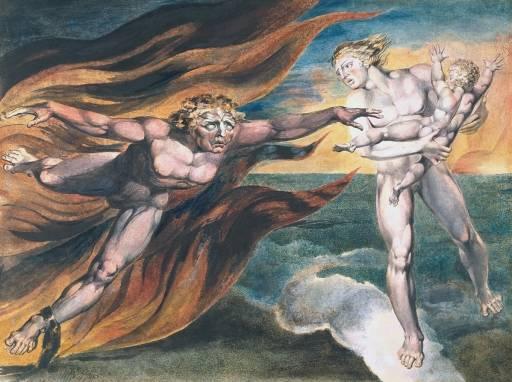
Rules is rules.
Rules is rules.


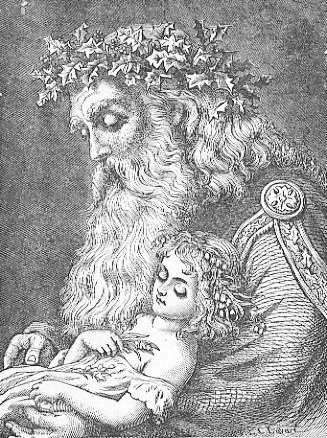
Out with the Old

It’s become a time-honored tradition, as an old, secular year ends and a new one, brimming with potential commences, for various pundits to sum up the past twelve months for us. And since there hasn’t been a year without religion since Adam and Eve were created, it stands to reason that the religious year in review is yet another perspective to take on this mid-winter’s day. The New Jersey Star-Ledger, my state’s answer to the New York Times, ran a 2012 top stories in religion feature on Sunday, the one day that anyone might be tempted to pay attention to things spiritual. The list reflects the view of A. James Rudin and it features several stories, most of which tend to show the embarrassing side of belief. Rudin begins his list with an amorphous Islam as reflected at unrest in the Middle East. One of the misfortunes I often deal with in my editorial role is this association of Islam with violence. There are deep roots to the trouble in the Middle East, many of them planted and watered by Christians. Religious extremists, however, are the more sexy side of the story and they always abscond with the headlines.

I should take care with my word choice, however, because yet another of the stories—dominated as they are by Christians—concerns the Catholic Church’s continuing troubles with hiding away child molesters (number five). The number two story, also about Christians, is also about sex as well. That story highlights the chagrin of the Religious Right at the recognition, long overdue, of same-sex marriages in three states. Gender plays a role in story four, the succession of Rowan Williams as Archbishop of Canterbury, but also the related story of how the Church of England still refuses to recognize women as bishops. A deity who can’t see past genitalia should be troubling to any believer. Yet a full quarter of one commentator’s top religious stories are concerned with sex. That’s how the world sees the issue.

The remaining stories Rudin points out have to do with Jewish-Christian relations, aging pontiffs, and the growth of Nones in the US religious marketplace. Anyone who spends time reading contemporary accounts of religion will be familiar with the Nones—that increasing number of people who declare no religious affiliation. Ironically, those involved in such scandals as we often see in the headlines are troubled by the number of people opting out of traditional religions. I almost wrote “opting out of faith” there, but that’s not really the issue. The Nones I know, and there are many, don’t necessarily not have faith. They have lost confidence (if they ever had it) in religious institutions. Interestingly, Rudin concludes his list with the tragedy in Newtown, Connecticut, along with the death of Sun Myung Moon and a few others. The Newtown tragedy remains the least and most religious event in the past year. And unless those of us who survive do something about it, these dead will have died in vain. Let’s hope 2013 has something better on offer.

Father_time


Rachel Weeping

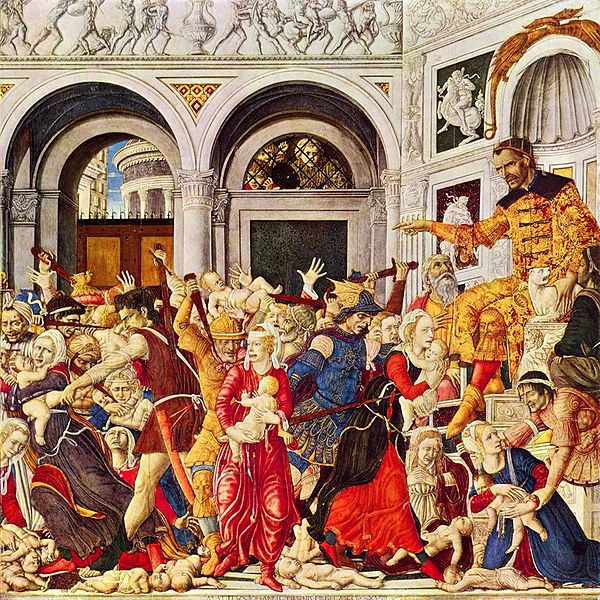
“In Rama was there a voice heard, lamentation, and weeping, and great mourning, Rachel weeping for her children, and would not be comforted, because they are not.” I just can’t get it out of my head. The tragedy of Newtown, Connecticut is the madness of Herod repeated over and over again. I stand outside my daughter’s room and weep as she sleeps, terrified of what we’ve become. For the right of one person to own guns, twenty-eight are dead. The balance of power is way off-kilter, like a fishing vessel in a perfect storm. Those who protest are those who are unarmed who wish to remain that way. The bravado of the NRA says, “I would protect them, if I were there.” If I were there. I would feel no safer. Where was the NRA in Stockton, California, Iowa City, Iowa, Jonesboro, Arkansas, Littleton, Colorado, Red Lake, Minnesota, Nickel Mines, Pennsylvania, Blacksburg, Virginia, DeKalb, Illinois, Oakland, California, or Newtown, Connecticut? Polishing their rifles in readiness, no doubt.

The time has come to put an end to easy access to guns. Life was more civilized in the days of the flintlock and musket—at least people had time to react or flee before another shot was loaded. Instead we tell people they will be safer if they can squeeze off forty-one shots before that crazy idiot shoots another. Drop to your knees and beg for mercy, you’ll be safer. While you’re down there, say one for a nation that loves its firearms more than its children.

Days like this it feels like God has us in his sights. The longer I ponder this the blacker my thoughts grow. We may blame the madman, but it is society that allows this to happen. Herod was king, and even the mother of God fled. But what of those left behind in Bethlehem? They paid the price for a man in love with power. I see a man in a cage, being sprayed by an upright ape holding a firehose. The man is one of the most vocal supporters of the NRA, but now he is the inferior being. “It’s a madhouse!” he cries. Yes, Mr. Heston, it is a madhouse indeed. Only those aren’t apes outside the cage, and those are firehoses in their hands. On further reflection, perhaps they are truly apes. Rachel is weeping for her children, while Herod reloads.

Slaughter of the innocents, 2.0

Slaughter of the innocents, 2.0


Impossible Kingdom

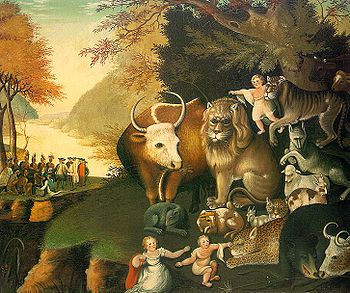
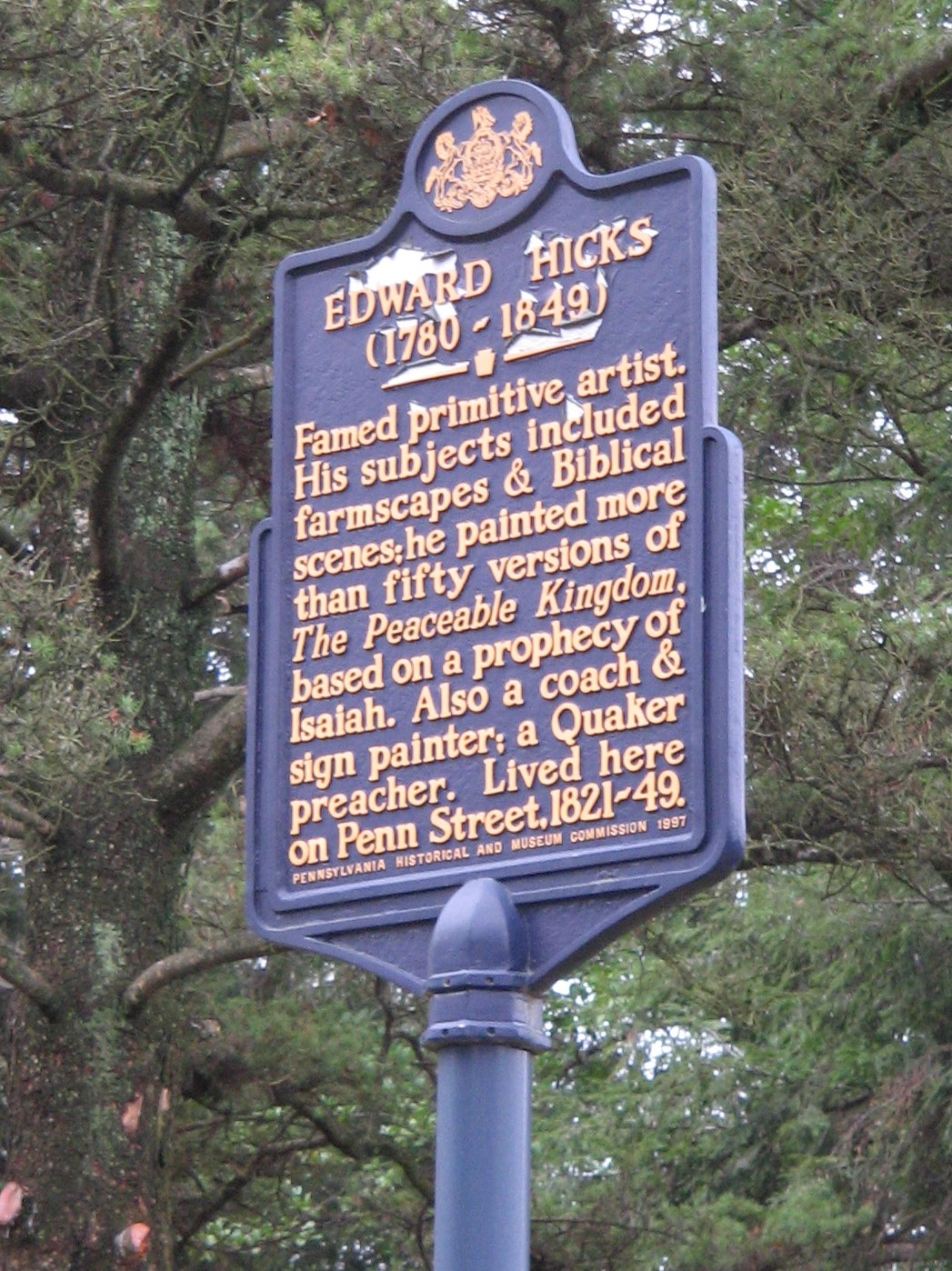
Over Thanksgiving we visited friends in Newtown, Pennsylvania. Newtown was the home of the Quaker painter Edward Hicks, famous for his many renditions of The Peaceable Kingdom. On a chilly Black Friday we walked to his former home, visited his Meeting House, and stopped by his grave. The Quakers, whose presence is much more palpable in the eastern part of the state, were the original Pennsylvanians. Their pacifism defined them, and the peaceable kingdom was their ideal world. A world without strife, without greed, without televangelists and politicians. It is a compelling vision.

A peaceable kingdom

The Society of Friends recognized no human leader to their movement that sought direct experience of the divine. In the Bible such a vision pervades early Israel where the rule of God was expected to be enough; no king was needed for this kingdom. The ideal world, however, was plagued by human ambition and selfishness. Before the first judge hung up his hat they knew that they’d need a king. A monarchy, as they were warned, that would bring about its own set of intractable problems. Leadership inherently creates inequalities. Just ask any accountant who keeps track of a governor’s expenses. Kinglets are just as bad as godlets.

We read about the excesses and abuses our leaders stockpile in the name of public servanthood. Yet, for all that, the world is not at peace. An increasing number of nations are joining the nuclear club, poising their missiles over populations of innumerable people in need. The peaceable kingdom has no king, and the visions of the prophets are cloudy and uncertain. Visiting the quaint, affluent hamlet of Newtown, it is possible to believe in the vision of one of their defining personalities. Just don’t open the newspaper or turn on the television. Because, like the Israelites, we have many eager kings lined up outside the door.

Is the peaceable kingdom dead?