Woodwork

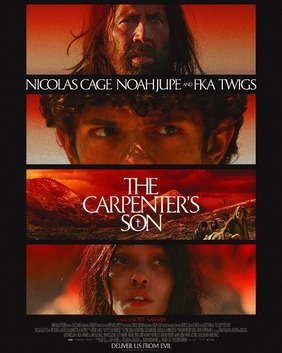
It’s not often that I get to see a new horror movie on opening day, but I managed to swing The Carpenter’s Son with a screener, courtesy of Horror Homeroom.  I’m not going to say much about the movie here, because you should go there to read my response—I’ll let you know when it appears.  But I should try to whet your appetite a bit.  Among those of us who read and write about horror and religion this was a much anticipated movie.  A horror movie about Jesus.  Such things have been done before, but this one is played straight with an interesting premise.  It’s based, loosely, on the Infancy Gospel of Thomas.  This isn’t to be confused with the Gospel of Thomas.  Early Christians, it seems, favored the doubter’s point of view.  The Infancy Gospel is the story of Jesus’ miracles between the ages of five and twelve.  Even among early Christians these accounts weren’t taken as gospel truth.  They make for an interesting movie, however.
I think about horror and religion quite a lot.  Since the late sixties the two appear together frequently and, according to many surveys, make for the scariest movies.  Religion deals with, not to sound too Tillichian, ultimate concerns.  In the human psyche you can’t get much larger than death and eternity.  These are the home turf of religion.  Of course, death can be handled in an entirely secular way, but there’s a reasons hospitals almost always have chapels in them.  Eternity may be slotted in cosmology, but what it means comes from religion.  Forever seems pretty ultimate to me.

One thing I didn’t give in my Horror Homeroom piece about The Carpenter’s Son is my thoughts as to whether it’s a good movie or not.  Did I like it?  To a certain degree, yes.  Although I’ve been impressed with Nicolas Cage in horror movies lately—he can really rise to the occasion—sometimes, as in The Wicker Man, he just becomes, well, Cagey.  This happens once in a while in The Carpenter’s Son too.  When he’s questioning Mary about where “the boy” came from, his voice gets the wheedling, whining, kind of mocking tone that doesn’t set him as his best.  Likewise, when he tries to instruct young Jesus in various ways, it seems far too modern to fit the palette of a period drama.  I watched it a couple of times to write the article and I have my doubts that I’ll watch it again.  I did think the portrayal of Satan was good, and appreciated some of the dialogue about evil.  It wasn’t my favorite horror movie in recent weeks, however, even though I saw it before it opened.

Colorful Space

Lovecraftian horror translates to film unevenly.  Even when it’s successful, as in Color Out of Space, it really isn’t that close to reading Lovecraft.  “The Colour Out of Space” is among my favorite Lovecraft stories.  To me, it feels perhaps his closest to Poe, and Poe is my personal muse.  I knew that it couldn’t be made cinematic without changing things a bit, and that it would be pretty gnarly.  I was correct on both counts.  In very broad brush strokes, the movie follows the story: a colorful meteorite on an isolated farm begins changing the crops and the people who live there.  Instead of crumbling, however, they are struck by the color and become other.  The mother and her youngest son, for example, are fused together creating one of the most cringe-worthy scenes I’ve watched in a long while.  The movie emphasizes family, even when things go horribly awry.

Defying Lovecraft’s well-known avoidance of focus on female characters, the movie’s focal point in Lavinia accords with Poe’s concern for threats against beautiful women.  She’s the teenage daughter of the family and the film opens with a scene where she uses Wicca to try to heal her mother of cancer.  The love between Nathan (Nicolas Cage) and his wife is movingly shown.  The movie was recommended to me during a conversation about Nicolas Cage in horror.  Maybe it’s because he’s in so many movies in total, I’d never really considered him a scream king, but he’s nailed the role quite capably, with the notable exception of The Wicker ManColor Out of Space is pretty extreme body horror but the movie is artistically done.  You almost don’t mind feeling violated in that way because of the visual appeal of the non-horror focused parts.

The acting is uniformly strong.  In a nod to Lovecraftian fans, Lavinia uses the Necronomicon as the basis for her Wiccan rites.  Some of the scenes seem to reference Evolution and others eXistenZ.  Transforming the action from Lovecraft’s setting in the early twentieth century to the early twenty-first is done pretty well.  The family is isolated when the meteorite prevents electronics, including cars, from working.  The movie does offer some alien creatures, unlike Lovecraft’s basic story.  And these creatures point to a planet with tentacly beings that naturally tie this story into the Cthulhu mythos.  Lovecraft’s own story doesn’t make this move, but of course, the Cthulhu mythos only really developed among his fans.  In all, Color Out of Space exceeded my expectations, even though it was a box office flop. 


Step Far

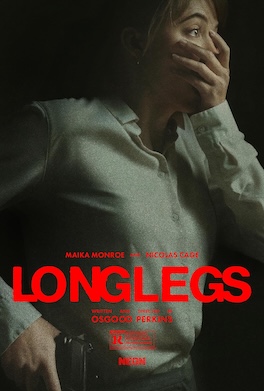
It made a bit of a splash when it came out, Longlegs did.  It took a while to get to a streaming service I can access, but I can say that it’s a movie with considerable thought behind it.  And religion through and through it.  I would’ve been able to have used it in Holy Horror, and it is one of the very few movies where a character corrects another, saying “Revelations” is singular, not plural.  Somebody did their homework.  Although the plot revolves around Satanism, you won’t be spoon-fed anything.  The connection’s not entirely clear, but it does seem to involve some form of possession.  The plot involves ESP and a literal deal with the Devil.  Things start off with a future FBI agent encountering Longlegs just before her ninth birthday.

As an adult, she’s forgotten the childhood encounter but a set of murders with a similar MO indicates that a serial killer, called Longlegs, is on the loose.  The murders are all inside jobs, and it turns out that a doll with some kind of possessing ability is responsible for inspiring fathers to murder their families.  No details of the connection between the dolls, Satan, and the reason for the killings ever emerges.  The movie unnerves by its consistent mood of threat and menace.  Satan, the guy “downstairs,” appears more properly to be chaos rather than a kind of literal Devil.  Satanic symbols are used and there are plenty of triple sixes throughout.  The Bible has a role in breaking the killer’s code, but talk of prayer and protection also find their way in the dialogue.  Longlegs uses a ruse of a church to get the dolls into his victims’ houses.

I’ll need to see it again to try to piece more of the story together, but Longlegs is another example of religion-based horror tout court.  Serial killers are scary enough on their own, but when their motivation is religious they become even more so.  Nicholas Cage plays Longlegs in a convincingly disturbing way, but there’s definitely some diegetic supernatural goings on here.  The art-house trappings make the plot a little difficult to follow, particularly early on.  Religion, however, shines through clearly.  The FBI agent, although psychic, has ceased believing in religion while trusting the supernatural.  Even as the credits rolled I had the feeling that I’d missed some important clues.  And those clues would be important, particularly if I ever do decide to write a follow-up to Holy Horror.


Not Alice’s

Sometimes I forget that movies are entertainment.  I mean, they’re big business and make some people obscene amounts of money.  In that respect they’re serious.  And also, they literally get into our heads and become part of our life’s experience.  Horror films, whatever that means, are often intelligent and thought-provoking.  I’ve been focusing on genre for a while now and when a friend recommended Willy’s Wonderland, and it was on one of my streaming services, I said “why not?”  This is entertainment, but the genre is all over the place.  Comedy, yes.  Fantasy, check.  Thriller, okay.  Action, definitely.  Horror, I’ll buy as well.  Nicolas Cage movie?  Well, he doesn’t look like he’s in his mid-fifties, and he doesn’t say a word in the whole thing.  The movie has possessed animatronic animals.  Satanists.  Small-town conspiracy.  Teens getting themselves killed.  And “one tough hombre.”

So what’s it about?  Hayesville has made a deal with the Devil.  A serial killer started an entertainment restaurant for kids’ birthdays, but along with his associates, began, well, killing.  Before the police could get them, they committed ritual suicide in a satanic pact, and they were permitted to inhabit the animatronic creatures.  When they weren’t fed, the machines started preying on townsfolk, so now they trap passersby and trick them into spending a night in Willy’s Wonderland so the machines can feed.  Cage’s unnamed character shows up and spends the night cleaning, killing machines, and playing pinball.  A young woman whose family had been killed tries to burn the place down, but, with her friends dead, and Cage leaving town after the carnage, she goes along for the ride.  It’s one of those movies that defies genre conventions.

As with many films released early in this pandemic, this one had a tough time at the box office.  I’d never even heard of it until the friend’s recommendation.  Lots of movies just disappear, but this one has at least the beginnings of a cult following.  It’s not difficult to see why.  If you can put up with the slasher aspect, it has quite a lot going for it.  Creepy kids’ stuff, children’s songs, and tawdry attractions are something we all experience in our own lives.  And a guy who goes around doing good—cleaning up other people’s messes, is something I think we tend to appreciate.  As a former janitor myself, I like the idea that the cleaning crew is the one who, well, cleans the clocks of the mechanical villains.  It’s a wonderland worth visiting.


Enabling Vampires

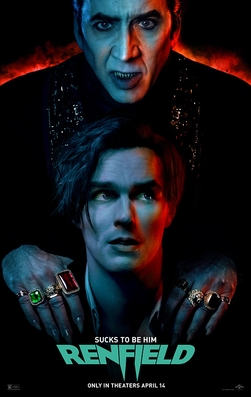
I was skeptical at first.  Nicolas Cage as Dracula?  How could this possibly work?  Nevertheless, Renfield works.  A box office flop, I suspect that audiences may not be ready for a comedic treatment of Dracula, but this is a smart, savvy take on a classic, combining superhero films with vampire lore.  Let me take a step back here.  Renfield is a bit of a slippery character, shifting places with Jonathan Harker in Bram Stoker’s original.  He is Dracula’s servant, but here he’s presented as becoming aware that he’s a codependent enabler.  In his seeking victims from the narcissists who cause pain in the lives of a church support group, Renfield comes to realize that he’s also a victim.  He teams up with the one honest New Orleans cop who’s not on the payroll of the local mob, and together they rid the Big Easy of both vampires and organized crime.

Overly ambitious?  Yes.  But the comedy actually works here.  This is a funny movie with several laugh out loud moments.  Maybe it’s CGI, but in several shots Cage actually looks like Bela Lugosi.  Nicholas Hoult does a wonderful interpretation of Renfield, the madman of the original movie, as well as factotum to the dark prince.  Those who know and appreciate vampire lore will find many subtle insider jokes here.  And Cage undertakes a campy, yet compelling version of Dracula.  Endlessly self-referential, the movie is a skillful blend of vampires, self-help wisdom, and even social commentary.  I’d heard that my expectations shouldn’t be too high here, so I was pleased when they were exceeded on almost very point.  

Horror comedy is difficult to pull off so that viewers feel satisfied that they haven’t wasted their time.  Renfield manages to do this with style, action, and even a bit of drama.  I have an inkling that over time this will become one of those movies that appreciates with age.  The story is convoluted, but this is in service of the comedy.  Everything is so wildly improbable—from eating bugs to gain super powers to Dracula’s blood bringing the dead back to life—and hilariously overblown that it overcomes the difficulties attending such a mashup.  It’s as if Cage knows viewers don’t always take him seriously, and yet he rises to the occasion.  With nods to The Matrix and Pirates of the Caribbean, as well as the vast library of Dracula films, Renfield is the result of homework done and boundaries crossed.