Can You Recall?

While recently in touch with a colleague I’ve never met, I agreed to send along a filmography of my two horror movie books, Holy Horror and Nightmares with the Bible.  I tend not to read my own books after sending them to the printer.  Defensively it might be that I can say, “I know what I wrote,” but in reality it’s probably more a lack of self-assurance.  Writers often experience self-doubt and although you’ve convinced an editor and an editorial board you may still have your harshest critic to please.  Even though you’ve read the book many times through—at least fifteen each for these two books—you fear you might’ve overlooked something.  So it was strange trying to recall which films I’d actually discussed.  Or how many.

The latter point became clear in a recent review on Reading Religion.  Knowing how I went about piecing together Holy Horror, I’d forgotten just how many movies I watched and rewatched for it.  While it was never intended to be a comprehensive treatment of the Bible in horror (I haven’t seen all horror films), it nevertheless ranges widely.  After having submitted it I continued to watch horror and I continue to find various Bibles in it.  The amazing thing is just how truly widespread the Good Book is as an iconic symbol.  Indeed, I’d been reading about the Bible as an iconic book and that idea took hold in the early days of putting words down for the book.  As an editor I help authors figure out these kinds of issues all the time.  Physician heal thyself.
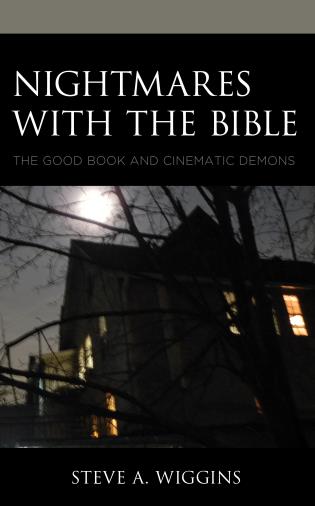
Even though Nightmares with the Bible just came out over a year ago I couldn’t list all the films off the top of my head.  Sometimes you need reminders.  My books are never discussed at work.  The people I interact with on a daily basis have no interest in them.  In other words, unless I’m having an interview or reading a review, I don’t have much opportunity to think about them.  I’ve moved on to my next projects.  The draft of The Wicker Man has been submitted and I have three promised articles to work on.  Still, I’m trying to settle on the next book.  I seem to have found some acceptance among the horror crowd.  Biblical meteorologists and researchers on Ugaritic goddesses are much less seldom in touch.  Monsters are often mixed forms.  I should know that after watching all these movies.

Nightmares with Poe

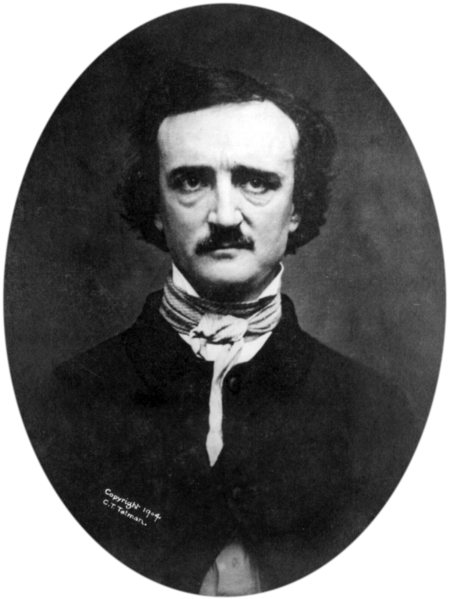
A review of Nightmares with the Bible recently appeared in which the reviewer said he didn’t get the Poe references.  Indeed, the anonymous reviewer said the same thing.  What neither of them understood is that Edgar Allan Poe has been formative for my life and that book was a tribute to him.  Did Poe write about demons?  Not really.  Did he once claim that the death of a beautiful woman was the most poetic theme?  Yes.  I saw the opportunity, in discussing possession movies, to draw Poe’s observation into the conversation.  Could the book have been written without it?  Yes and no.  Yes, I could’ve written a book on demons without mentioning Poe.  No, I would likely not be writing books at all were it not for Poe.

Today is Poe’s birthday.  What is this strange attraction I have for him?  It began, as most things do for me, with growing up poor.  We couldn’t afford bookstore prices, and that’s even assuming there was a bookstore nearby (there wasn’t).  I found the majority of my reading material at Goodwill in Seneca, Pennsylvania.  The shop had a book bin or two with prices I could afford (books were a quarter, if I recall).  I found a copy of Poe’s Tales of Mystery and Terror there.  I probably heard about Poe from my big brother—he’s a good source for scary information.  Reading Poe, I wanted to read more.  We couldn’t afford Scholastic school fare rates, but I did find a four-or-five volume collection of Poe’s writings at Goodwill.  Foolishly, I bought only two—those with his stories.

By high school I was checking out biographies of Poe from the library.  Perhaps as the child of an alcoholic I identified with a man who seemed so tormented.  I count his stories still among my favorites.  My favorite short story is, I believe, “The Fall of the House of Usher.”  It has come back to me at several points in my life and I find myself thinking about that gloomy house.  Particularly the narrator’s arrival there.  So full of possibilities.  So much potential fear.  Those of us who consume horror have a gateway to it—some event, or influence, or person who introduced the aesthetic of fear to us.  For me it was Edgar A. Poe.  Nightmares with the Bible is of a piece with Holy Horror.  To leave Poe out of it would’ve been the worst kind of sacrilege.


EBF

The third annual Easton Book Festival is underway.  As part of it Eric Ziolkowski, the chair of the Religious Studies department at Lafayette College, interviewed me about Nightmares with the Bible.  You can watch the interview here.  And be sure to check out the other offerings of the EBF—it’s hybrid this year so much of it is online for those who can’t make their way to Easton.  We’re all looking forward to the day when the festival can be in person again, as it was in 2019.  As part of tomorrow’s program I’ll be interviewing my friend Robert Repino about several of his novels.  That event will be live and outdoors, but I suspect it will be posted on the festival website later.

The EBF is a shining example of what books can do for a community.  People have been turning back to books with the pandemic.  Those of us in the publishing industry are keeping an eye on this.  While academic usage has shifted to electronic, the wider market has been favoring print books because, well, people like books.  Andy Laties, one of the proprietors of The Book and Puppet Company, has spearheaded efforts to continue this celebration of books even as a pandemic has changed the way we do everything.  Easton isn’t a huge city, but the Lehigh Valley is a book-friendly place.  When the will to organize book lovers exists, wonderful things can happen.  Books can build a community as well as be a community.

A friend recently said that the problem with writing books is that too many people do it.  I don’t see this as a problem.  Many self-published books do far better than those I’ve sent through more traditional channels.  They may put pressure on traditional models, but pressure isn’t always bad.  The route to publication is actually full of roadblocks—some accidental but many intentional.  One of the largest barricades is the fact that the publishing industry is a rather small one.  Major publishers have been monopolizing for years, bigger companies buying out successful smaller ones, so that the highway to publication now has many toll booths that require exact change.  There have always been those who can find their way through by an alternate route.  There’s nothing wrong with wanting to be part of the conversation.  If you’re near Easton come on out in person—bring a mask—and see what’s happening tomorrow.  If you’re not in the area take a look at the free content online.  I’m sure you’ll find something you like.


Interview Two

October turns the northern hemisphere mind toward Halloween.  It must be strange to receive northern media while living in the global south—Halloween occurs just as spring is getting underway.  I guess that’s what May Day’s for.  In any case, in the United States Halloween thinking is in nearly full swing.  My last two books, while not Halloween themed, look at horror films which, in keeping with October, are on everyone’s mind this season.  And it’s been quite a week for interviews.  The second half of my podcast interview on The Incarcerated Christian was posted yesterday.  If you want to hear more fun Q & A with Robin and Debra, click here.  I’ll post more about this Friday, but tomorrow my interview with Eric Ziolkowski of Lafayette College will air as part of the Easton Book Festival.  The festival’s going on right now, so be sure to check out the offerings online.

One bit of advice that I give as an editor: if you want to make it as an author you need to promote your own work.  Some of us were reared to believe that it’s in poor taste to do this, but in the internetted world it’s pretty much a requirement.  Something I learned from political activism is that every election is local.  Getting noticed also has to start in your own backyard.  I love doing interviews.  It’s always flattering to know that someone’s read your book and wants to know more about it.  I’ve started to explore the newish area of religion and horror.  From what we see in the news, it seems like it’s an area that’s likely to take off.  But only if those who work in it get their stuff out there where it can be seen.  (Or heard.)

Neither Holy Horror nor Nightmares with the Bible have sold very well.  They’re expensive, and academics, who will spend money on books, are still trying to decide if this area’s worth exploring.  I admit that there’s a puerile kind of naughtiness to taking monsters and “low brow” entertainment as a subject of study.  Horror, however, has lots of fans.  Perhaps not in the academy, but in the real world.  I like to think such marginal areas bring people together.  Horror, like demons, isn’t going away any time soon.  Instead of running away from what you fear, why not try embracing it?  If not even that, please consider the free content available on The Incarcerated Christian and the Easton Book Festival.  After all, Halloween’s just about here…


Taking Part

It’s always a pleasure to be invited, even if not as a proper guest.  To an academic conference, I mean.  Most of us sit around feeling pretty obscure most of the time, even if we do write books.  I am literally genuinely surprised when sometime contacts me to tell me they’ve read my work.  It was, therefore, a complete surprise to be asked to attend the “Ancient and Modern Ideas of Possession” conference hosted by the University of Innsbruck.  I wasn’t an official participant, but the organizers, somewhat surprisingly, knew of Nightmares with the Bible and thought I might be interested in, well, possession.  Because I work “nine-to-five” and because Austria is several hours ahead of the Eastern Time Zone, I couldn’t Zoom in for all of it, but what I did hear I really appreciated.

One of my suspicions was confirmed, and that is that the idea of possession remains an outlier in academia.  The sixteen or so presenters represented several academic fields, none of which boasts of being interested in such things.  What surprised me, but then really didn’t, was that a comment or question came up several times: do any of us believe in the ontological reality of demons?  At least for the time I was able to sign in the question was never fully discussed but I had the sense that one or two of these academics were willing to lean in that direction.  We all know that individual observation is often faulty and subject to biased interpretations.  We may, however, know that many such accounts have been written by highly reputable individuals with nothing to gain by making spurious claims.  Academics should remain curious.

I learned that at least two of the presenters had written books that it would’ve been useful to have read for my own book.  Books are part of a conversation.  Seldom is any single volume the last word on a subject.  It was a privilege to be among other academics, if I may classify myself as one, even if erstwhile, that had come to a similar place in their explorations of the world of spirits.  Women and men who were willing to ask that most shunned of questions, “what if?”  Human experience moves ahead and some ideas are left behind.  That doesn’t mean those ideas should never be revisited.  Nobody at the conference mentioned my book, but at least one person in the room was aware that it was, in some form, part of the discussion.


Clash of the Titles

Well, it seems I may be stuck in publishing for a while.  At least it’s a place to learn.  The inside story, it turns out, would be very helpful for authors to know.  Let’s take titles for example.  An editor sees a basic misunderstanding on the part of many academic authors.  Hey, I’ve even done it myself.  To correct this misunderstanding it’s important to see that academic publishers see different basic kinds of books.  One of them is the academic monograph.  No matter what the author thinks (I know the feeling of working on a book for years and supposing everyone else will be interested in the topic) academic books are of limited appeal.  Their main buyers are academic libraries and academic librarians want to know at a glance what the book is about.  The title has to say this, even before reaching the subtitle.

We’re all used to the idea of seeing books with clever titles in the bookstore.  (Remember bookstores?)  These are trade books.  Some of them are from academic presses, but these are books that have often been worked over by editors and marketers and publicists to make them more appealing.  The title can be clever, with an explanatory subtitle, because the target buyer is a bookstore rather than a library.  It’s difficult for an author to admit that this tome that has consumed your waking life for years, and maybe even decades, is primarily something a couple hundred libraries only will buy.  And family and friends who feel they need to support your efforts.  It’s a hard reality to face, but it often comes down to title.

What are you going to call your book?  My own most recent effort, Nightmares with the Bible, was written for a trade readership.  The publisher, however, had the library market in mind.  For success in the library market, the title works against the book.  No matter how accessibly your book is written, no mere mortal will pay $100 for it.  (Some of us will feel compelled to dish out that kind of cash for a title we really must read, but we are the exception rather than the rule.)  I like my title, but it was a mistake.  It should’ve probably gone by its subtitle, slightly modified, The Bible and Cinematic Demons.  In my mind as I wrote it, I had an educated but popular readership.  The publisher had different ideas, unclear to me when the book was put under contract.  Now it’s time to give this post a popular title so that it will be read. And hopefully taken to heart.


Discount Nightmares

Now that we’re past the equinox it’s officially okay to obsess with monsters, right?  (Any excuse will do.)  Nightmares with the Bible was officially a pandemic book.  Academic publishers (especially) found out that books released in 2020 tended to flop.  People weren’t thinking about much other than the pandemic (or crying about losing an election fair and square).  Books, of course, take a long time to write and a long time to produce—it’s not as simple as it looks.  And if your production schedule falls during a pandemic, well, be prepared.  In the case of Nightmares there was the added burden of price point.  When all you’re thinking about is survival, cashing out a Franklin to read about demons seems hardly wise.

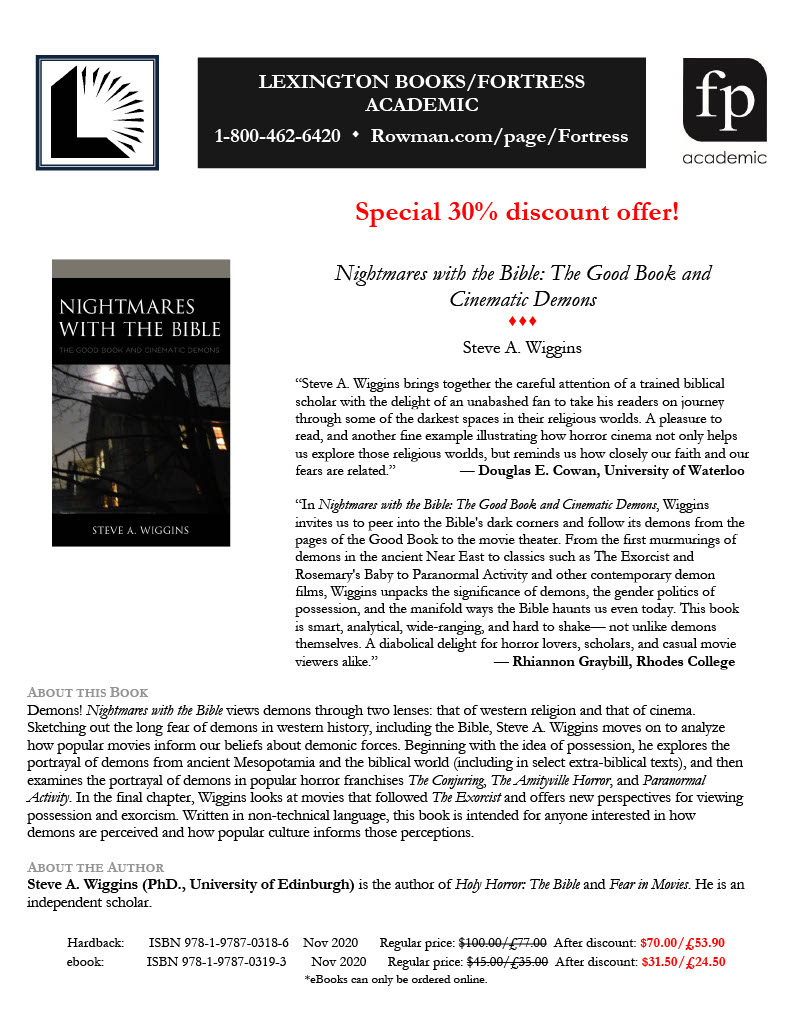
Just yesterday I received a flyer, that I’m passing along to you, for the book.  It has a discount code on it (look at part 2 below) so that the book is merely expensive rather than very expensive. Nightmares is part of a series titled Horror and Scripture.  The series, published by Fortress Academic and Lexington Books, is now coming out with its third volume.  The publisher, starting to recover from the pandemic, is promoting all the books in the series.  You see, Nightmares was not only a pandemic book, it also missed that highly sought-after pre-Halloween release.  Books that deal with horror get a boost during the holiday season.  Ironically the same thing happened with Holy Horror.  Both books came out in December when nobody but Charles Dickens is thinking about scary things.

Academic book pricing is based on a model that’s beginning to crumble.  It’s that capitalistic trope of what the market will bear.  The market is academic libraries, and it has been demonstrating lately that even they aren’t made of money.  I don’t know if libraries get to use discount codes or not—it can’t hurt to ask your librarian.  Fully employed academics, however, will sometimes pay a hefty price for a book they really want or need.  My shelves upstairs are filled with books that were overpriced but were required for the books and articles I wrote when it was an expectation of my job.  My next book, which is now in the negotiation stage with the publisher, will be more reasonably priced.  It will likely have a smaller appeal, but you’ve got to start somewhere.  I sincerely hope I’m through writing hundred-dollar books.  Please pass the flyer along to all your rich friends—it’s just in time for the haunting month of October.


Al’s Rhythm

Algorithms.  Who can understand them?  I’ve been having some trouble with searches lately.  Not on the internet in general, but on specific websites (including this one).  While Sects and Violence in the Ancient World isn’t a particularly media-heavy site, I find it difficult to find images by searching.  For some reason, even when I put the title of the image in the WordPress search bar, it doesn’t always come up with the answer.  Well, given the time of morning I suppose I might’ve misspelled something.  Then I went to Amazon.  I’ve been working on my author page and wanted to update something.  I tried typing the distinctive title of my most recent book (Nightmares with the Bible—it is apparently the only actual book with that title [and titles can’t be copyrighted, in case you’re interested]) and found that it didn’t show up on the first three pages.  They were filled with books with other titles.  Algorithms.

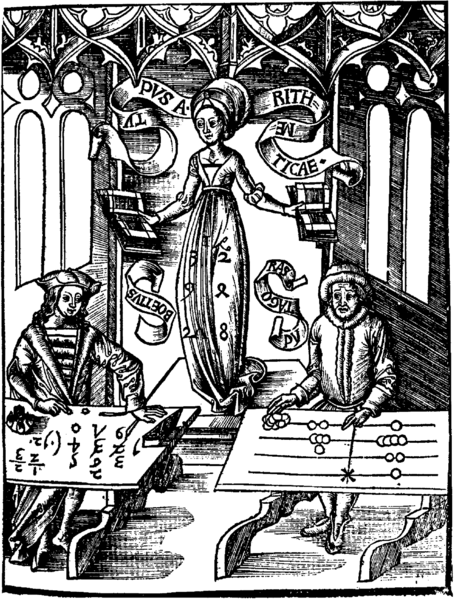
Now granted not a lot of people seek the book on Amazon (I’m a realist), but if you type an exact, and unique title in the search bar and it doesn’t come up, isn’t something wrong with your algorithm?  (By the way, algorithm is one of the many words English borrows from Arabic.  It’s named after a ninth-century mathematician, al-Khwārizmī.  You could do worse than to have something so useful named after you!)  I’m not so naive as to think Amazon isn’t thinking to throw better selling books at you first—if you’re like others you’ll buy those before you’d consider shelling out a Franklin for mine.  But still, isn’t searching made easier when what you enter is what you want to find?

The internet’s primarily about selling you stuff.  Some of us look up sites for information or entertainment, but then someone tries to sell you something.  (I’m not trying to sell you my book here, by the way—it’s not priced for individuals, or even mortals—I’m not even putting a link to it on Amazon here.)  I’m just wondering why, if you tell websites exactly what you’re looking for they can’t find it.  You have to wonder if we’ve reached the level of too much stuff.  There’s a lot of sorting to be done and new webpages are added every day.  Even though I’ve been writing here a dozen years now, there are far older blogs and many more newer ones.  Finding things is an important exercise, and maybe if we sit down with al-Khwārizmī for a while, we’ll be able to figure something out.

Image credit: Gregor Reisch via Wikimedia Commons

Conjuring an Exorcist

In both Holy Horror and Nightmares with the Bible I discuss The Conjuring.  In the latter I actually go through the universe that the films spin around the investigations of Ed and Lorraine Warren.  Like most series where the writers and directors shift, the story line isn’t always consistent.  I suppose that one of the features of the series that appeals to those of us who love monsters is the fact that many of the movies have more than one.  The main threat, however, always seems to be demonic.  I enjoyed exploring this in both my book and in my recent piece on Horror Homeroom—check it out here.  

This series, in financial terms, has been highly successful.  There is little that attracts attention in any media more than money.  The Conjuring universe also shows that people are very interested in the topic.  A materialistic worldview doesn’t work for everyone.  We sense that there’s more going on that what the laboratory reveals.  I’ve often wondered why we can’t consider the world “both and” rather than “either or.”  We seem to think knowledge is some kind of zero-sum game.  I suppose that’s because the spiritual interferes with the material.  If there are outside forces working against the “laws” of physics then all that hard work is open to question.  It’s far easier to suggest that human beings (and other animals) who experience something “supernatural” are deluded.  Or superstitious.  Demons are a good case in point.  If they exist it would complicate the world of science.  And yet people pay good money to see movies based on them.

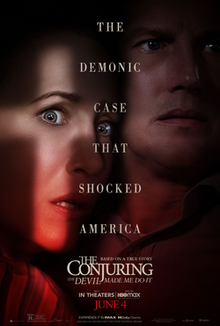
The Conjuring franchise pays off most of the time.  Some of the stories—those of the main series especially—are based on cases that the Warrens actually investigated.  There’s sometimes an element of the sideshow (the amazing Warrens!) to some of their work, but that doesn’t necessarily detract from the experience of real people.  Experience is an important way to navigate this strange world in which we find ourselves.  I’m not the only one who finds horror films to be a reasonable guide through this territory.  The Warrens’ case files leave lots of opportunities to explore this strange world of demons, and there are further movies in the franchise currently under development.  The most recent film, The Conjuring: The Devil Made Me Do It, changed basic concepts from its early days.  It was delayed by the pandemic.  And yet, it made money.  There must be a lesson to be learned here.


Highgate Cemetery Again

Vampires can distort your thinking.  For example, whenever I hear of Highgate Cemetery in London, my mind immediately goes to the Highgate Vampire.  (There was somewhat of a comment kerfuffle on that topic right here on this blog some years back that resulted in several comments being removed.)  Highgate is the amazing final resting place of a remarkable number of famous people.  Still, when I visited a few years back I couldn’t get the vampire out of my mind.  (A friend of mine lives a short walk from the cemetery and that made the visit possible.)  This all came rushing back when I saw a book on Highgate Cemetery up for review on Reading Religion.  (And hey, Nightmares with the Bible has been available there for free, for any interested takers!)

Given my current vocation, writing actual book reviews is considered conflict of interest.  More’s the pity, since that’s how I often managed to get ahold of expensive books back in the day.  I’m pretty sure the book advertised (edited by Marie-Therese Mader, Alberto Saviello, and Baldassare Scolari) has nothing to do with the vampire, but I can think of it no other way.  Highgate is an architectural marvel for a necropolis.  It is spooky, inspiring, and impressive.  When something happens in a place, even if the facts are in dispute, it takes on an atmosphere that reflects such happenings.  At least that’s the way it feels for Highgate.  I’d heard about the vampire incident before visiting, but didn’t have the details.  Besides, you’re only permitted in on guided tours and the docents don’t point out such things.

Nevertheless, having been there I still have an interest in the cemetery itself.  It’s odd in a way.  Nobody I know personally is buried there.  No ancestors, as far as I know.  It’s the sense of place.  I’ve written about this many times before—there are numinous spaces in the world.  Science may deny it, but even scientists feel it.  Some places transport you somewhere beyond just the physical dimensions of where your body happens to be at the moment.  Cemeteries are filled with the memories of lives past.  They remind us that our time is limited, and that we too will cross that numinous threshold some day.  We all contribute.  Well, I can’t review the Highgate book and I can’t afford to buy it.  I nevertheless suspect that there’s nothing about the vampire in it.  I’m sure it’s my thinking that has been distorted by vampires.


More Conjuring

It was an almost surreal experience.  First of all, it’s been well over a year since I’ve been in a movie theater.  Secondly, I’ve never been to this particular theater before.  And in the third place, I’m absolutely alone in here.  I didn’t rent the theater out or anything, but I’ve been wanting to see The Conjuring: The Devil Made Me Do It since June 4.  Actually, since September when it’s initial release was delayed due to the pandemic.  Everyone else around here must’ve seen it already.   I knew the story of Arne Johnson and the Warrens, having found and read Gerald Brittle’s book, The Devil in Connecticut.  Loosely based on that event, this story focuses on the actual fact that this was the first time not guilty by reason of demonic possession was proffered in a US courtroom.  The story is a strange one and the movie, as movies do, makes it even stranger.

I’ve been anticipating The Conjuring: The Devil Made Me Do It, despite the title, for a few years now.  If you’re familiar with Nightmares with the Bible you’ll know that an entire chapter is devoted to The Conjuring franchise.  You may also know that it is the most lucrative horror series of all time, apart from Godzilla in its many, many iterations.  One of the points in Nightmares was to try to make sense of the demonic world presented in the Conjuring universe.  The franchise, for the most part, deals with actual case files from Ed and Lorraine Warren.  Some of the episodes are pure fiction, however, and the explanations given in the films are all, well, conjured for the big screen.  The movies call attention to the Warrens’ work, but in a way that requires an entire chapter to untangle.

My initial impression is that this isn’t the best movie in the series.  I can’t replicate my previous work here, and I’ve only seen the movie once, so there are details I certainly missed.  The demon isn’t named this time.  Indeed, the backstory proposed is drawn from the spin-off film Annabelle.  A fictional satanic group called Disciples of the Ram is posited as causing the trouble.  Like the demon behind Annabelle, they’ve placed a curse on the Glatzel family for some unknown reason.  During the opening exorcism Arne, in an Exorcist move, asks the demon to take him instead of the young David, the brother of his girlfriend.  The movie leaves the Warrens to find out who put the curse on the Glatzels in the first place, and break it.  With some time for pondering I’ll likely come back to this movie again.  I do have to say that the book was probably scarier, although sitting in a theater alone to watch a horror movie is not something I hope to make a habit of doing.


Unconventional Demon

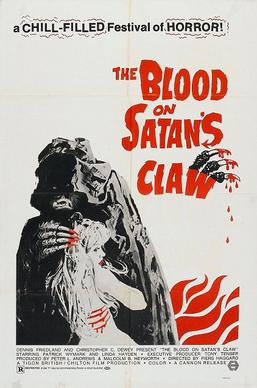
In my book Holy Horror I limited my discussion to fairly widely available and well-known films.  Part of the reason for this is that nobody can watch all horror movies and for those of us who work, there’s just limited time.  All of the films are at least American co-produced, most of them American productions.  The one exception to that is The Wicker Man.  I couldn’t bear to leave that particular movie out.  I didn’t realize at the time that it was classified as the newly coined “folk horror.”  Another film, released two years earlier was the strangely titled The Blood on Satan’s Claw.  It’s a strange but competent British horror film that has an eighteenth-century village falling prey to a demon that is accidentally plowed up in a field.

It is a film that could’ve been included in Holy Horror.  Indeed, the Bible appears in it and one of the adult characters is the local curate.  As the children are succumbing to a Satanism that’s raising a demon, he tries to teach them their Bible lessons.  Like Village of the Damned, the horror here centers on the children.  Flaunting the reverend’s rules, they play in the woods, raising the Devil.  Almost literally.  The demon they summon is called Behemoth.  Perhaps surprisingly, the judge actually saves the day in this one.  At first he’s convinced that the age of superstition is over and insists that it not be brought back.  He learns, however, that the demon is real and deals with it by rather physical means.  Who is Behemoth?

The word translates rather literally to “beasts.”  In the book of Job Behemoth is the land-bound companion to Leviathan, the two monsters that God cites to demonstrate his superiority over mere mortals.  As time wore on into the middle ages Behemoth and Leviathan were recast as demons, although it’s pretty clear that the book of Job doesn’t present them that way.  One of the points I make in Nightmares with the Bible is that demons aren’t fully formed beings in the ancient imagination.  Since the Bible says so little about them, ideas were drawn from folklore and other sources to flesh out these somewhat amorphous entities.  Descriptions of The Blood on Satan’s Claw quite often state that the children of the village are possessed.  If so, it is quite a different form of possession than will become standard two years later with the release of The Exorcist.  It is fitting, I suppose, for folk horror to have a folk demon for its antagonist.


You Have the Right to Remain

It’s strange sitting in a meeting where you’ve written a book on the topic under discussion and nobody knows about it.  This is one of the problems of publishing with an academic press.  Books get lost and buried.  Maybe the other way around.  A problem we academic editors frequently run into is that authors tend to think a book is a book.  Publishers recognize several different kinds of books, well represented among them those that are destined for the “library market.”  You can tell them by the way they’re priced.  Now I must confess that I’m behind the times in this regard.  I still tend to think twenty dollars is a lot to pay for a book.  I say this even though my job, day after day, includes pouring over book budgets to see how an academic book can be made not to lose money.

It costs a lot of money—most of it overhead—to produce a book.  In order not to run a publisher bankrupt, it needs to sell enough copies to cover its costs.  Library market books are priced that way because they are expected to sell only to libraries.  Certainly, if they were priced lower some academics would buy them, but the truth is not many academics do.  I realize I was an outlier when I was in the academy.  Without a research budget I would spend my own money on a book priced a hundred dollars if I really needed it for my research.  I was aware, even at that time, that others seldom did this.  As an academic colleague once told me, “I like to buy shoes.”  And let’s face it, there are just too many books out there to buy.  “Publish or perish” has more than one meaning.

So I’m sitting in a meeting where the topic of discussion is something on which I’ve written a book.  My opinion is not asked—my book is priced for the library market and I know it—so I don’t really expect it to be.  The question is whether general readers will find the subject compelling.  Speaking strictly for me I’m pretty sure they will.  I signed my contract for Nightmares with the Bible before I knew the series would be priced for the library market.  That designation also indicates minimal marketing.  What publisher is going to try to push a book that costs that much when they know individuals can’t afford it?  So I sit in the meeting and keep my mouth shut.


Reviewing Nightmares

If you’ve wanted a copy of Nightmares with the Bible but the cost is a little dear, I might recommend you look on the Reading Religion website where, as of my last look, a free review copy is available.  The catch is you have to write a review.  This is, of course, first come, first served service.  I tried, more than once, to get Holy Horror listed on their website for review, so I’m glad to see one of my books finally made it.  The idea of the horror hermeneutic seems to be catching on.  Technically speaking, however, what I’m doing is more history of religions than hermeneutics.  History of religions, at least part of it, examines whence ideas arise.  Nightmares asks that question specifically about demons.

The specific focus on horror in religion is a fairly new field of study.  Biblical scholars—indeed, those who specialize in very old fields of study in general—must keep looking for new angles.  Unlike any other piece of literature, the Good Book has been the target of scholarly interest from the very beginning of the western academic tradition.  It’s easy to forget, when looking at many secular powerhouse schools, that the very idea of higher education arose from what is now the discipline of the lowest paid of academic posts.  Being so old, religious studies, known at the time as theology, is hardly a venerated field.  I tend to think it’ll come back.  If you look at what’s happening in politics in this country, it’s bound too.  And yes, there will be horror.

Horror studies in the field operates by recognizing that horror and religion share common ground.  Like religion, horror is considered backward and uninformed.  Neither is really true of either horror or religion, but perception becomes reality for most people.  Finding themselves in remedial class together religion and horror have begun to speak to one another.  Horror has quite a following, even if those who like it keep mostly quiet about it.  The same is true of religion.  Many of the most effective horror films bring religion directly into the mix, often making it the actual basis of the horror.  The first books that I know of that brought the two explicitly together only began appearing at the turn of the millennium.  At first there were very few.  Now an increasing number of tomes have begun to appear.  For better or worse, two of mine are in the mix.  If you’d like to review the most recent one, you might check out Reading Religion, and maybe spare a kind word or two for what are, after all, baby steps.


More about Nightmares

I became aware of TheoFantastique many years ago.  Being new to social media myself, I was impressed at how professional and intelligent the site was.  Eventually I decided to introduce myself to John Morehead, the creator behind it.  (It is possible to be shy on the internet, so this took a few years.)  When Holy Horror came out I asked if TheoFantastique would post a review of it and got an even better response with an interview.  Now that Nightmares with the Bible is out the tradition has been kept going.  If you’d like to see an interview on the book take a look here.  One of the topics that comes up in discussion is how popular culture—TheoFantastique is cleverly named in that regard—influences the way we think about religion.

Religious studies was, not so long ago, a growing field.  Many of us have been trying to understand why interest began to sag, somewhat abruptly, and came to the point that it now feels like an endangered species.  Two of the consequences of this are important: one is that we don’t invest in studying what motivates just about everything in American politics and society, and the second is that the average person gets her or his information about religion from popular culture.  Movies, for example, are impactful, brief, and entertaining.  Humans are visual learners and although books punch above their weight in the learning division, having someone show you something is faster and requires less commitment than reading.  Academics, most of whom love reading, have been very slow to cotton onto this fact.  Society learns by looking.

That observation stands behind both Holy Horror and Nightmares with the Bible.  Both of these explorations look at how people come to understand two aspects of religion: the Bible and demons.  Instead of attempting to tackle all of religious studies (nobody can) or all of cinema (ditto), these books look at the horror genre to see how fans come to understand the Good Book.  As the interview explores, other scholars—mostly younger ones—are beginning to realize this is where people live.  It’s rare to find someone who commits to reading an academic monograph unless they’re in the academy.  Even academics, however, watch movies.  When the locus of information shifts to popular culture we need to start taking seriously what popular culture says.  More people will watch The Exorcist than will ever read an academic monograph about demons.  If we want to understand how people understand religion—what religion is—we need to pay attention.  And TheoFantastique is a great place to start.