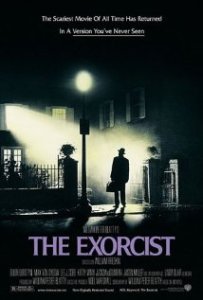
Behind the Exorcist

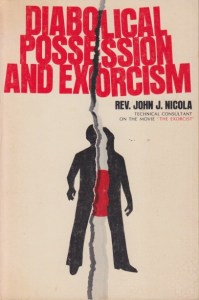
Some books from the 1970s are difficult to locate.  Since that was some half-century ago I suppose that’s not at all unusual.  One of those that I had been anxious to read since working on Nightmares with the Bible was Diabolical Possession and Exorcism, by John J. Nicola.  The main reason for my desire was that many people involved in the narrative about demons in the modern world are difficult to document, at least on the internet.  For academics, or even journalists, with budgets and release or research time, there’s the possibility of travel and interviews and archive searching.  I have none of those things, and I was curious about Nicola’s book since he wrote a forward to The Amityville Horror, vouching for its authenticity, and he was also technical advisor for The Exorcist.

I didn’t locate a copy of his book until after Nightmares was well into production, but research, even as I conduct it, is never-ending.  The book is kind of a memoir and kind of a “you should listen to your priest” lecture.  What’s fascinating about it is Nicola has no difficulty accepting both the paranormal and the standard Catholic teaching in matters of faith.  He does come across as somewhat credulous, and somewhat academic in this book.  His chapter on his role in The Exorcist is quite informative.  One of my main questions regarding both the man and his book was what his particular expertise is/was (even finding out if he’s still alive, via the web, is difficult; he is on the 2017 honor roll of giving for a Catholic charity).  The book provides a partial answer, but it also raises many questions.

This book is rare enough to have given rise to its own kind of mythology.  I would classify that in the same category as the various stories about The Exorcist production being plagued with curses and strange phenomena.  They’re all part of a culture of creating a belief structure that allows the supernatural back into an overly materialist worldview.  Kind of like Einstein’s “spooky action at a distance,” it causes pleasant shivers because it doesn’t really explain anything.  The book itself is though-provoking, but like the books of Gabriele Amorth, expends pages on the wonders of the Virgin Mary and building up a Catholic outlook on the spiritual world as the basis for combatting evil.  Nicola, correctly in my opinion, points to the (then impending) influence of The Exorcist movie.  This is a topic that I take up in Nightmares, for those interested in knowing more.

Large Projects

Now, where was I?  I suspect it’s the same with you.  We’ve got so many things going that it’s difficult to keep up with them all.  When one big project comes along—say reading book proofs for a deadline—everything else gets displaced.  After a week of intense concentration you emerge from a daze and try to remember where you left off with other projects.  What was so dreadfully important before the large project began?  I’m used to deadlines at work, but there aren’t too many in my personal life.  I have goals and targets, to be sure, but due dates slip and slide with the slings and arrows.  When the big project’s done there’s relief, but also a kind of reboot that has to take place.  I’m afraid to look at the news.

The corrected proofs of Nightmares with the Bible have been submitted, along with the index, and now all I can do on that front is wait.  Which of my many other projects, neglected for an entire week, should I take up now?  Part of the difficulty is knowing whether to work on fiction or non.  Given my work-life commitments, fiction is easier.  I enjoy writing it, but I have trouble getting published.  Nonfiction, on the other hand, is simpler to get published but brings in very little remuneration.  I know as an editor that we distinguish between academics (who already have a good paying job) and, say, journalists, who write nonfiction trying to earn a living.  What about an editor who isn’t paid like an academic, but has a regular job nevertheless?  (When talking to an independent, nonfiction publisher a few years back, I heard him respond to the question of if he was non-profit with, “Well, that’s not how I intended it…”)

I have two nonfiction books well along at this point.  I also have several fiction projects, including an eighth novel and a short story collection.  I also have some essays underway for sites beyond my own blog.  A week seems like a long time to put all these things aside and then to pick them up again.  That week wasn’t vacation either.  Nor did it suggest topics for me to address on my blog because if you want to know about Nightmares with the Bible you’ll read the book.  The evening I finished the proofs I had a dream that seemed to stretch through the entire night that I had come up with a complete college curriculum all by myself.  As much as my weary mind wanted to go on to other things it was fixated at that stage.  I awoke to wonder where I’d left off on real life projects, none of which are very near the finish line.  Now, where was I? 


Index Fingers

I’ve occasionally written about how authors obsess over indices, or indexes, for their books.  These days most things are looked up electronically, but this entire week my reading, writing, and relaxing time have been taken up with the index for Nightmares with the Bible.  Creating an index is an odious yet perversely enjoyable task.  Most publishers (at least among the academic crowd) foist this duty onto the author since a freelancer can easily add $4,000 or $5,000 to the book’s budget.  After preparing an index you can understand why.  At least I get to work with searchable PDFs, but I remember doing indexes on paper and having to sort through printed proofs and hoping that you’d catch every instance or a word or phrase.  The searchable PDF helps, but it depends on the material you’ve got to work with.

The Bible, for instance.  Not only are many book names short—Job, John, Mark, James—they are also common.  People have named their kids after biblical characters, or with biblical names, for millennia.  Not only that, but Job can be job.  Unless you put the quotes around it “Eve” will show up on just about every page, believe it or not.  The real strain on the eyes comes from those terms that are important and show up throughout the book.  Words like “Israel,” or “monster,” or “priest.”  I’m not one of those people who writes a book about demons and puts “demons” in the index, though.  Hey, if you know that’s what the book is about, why look in the index?  Just read it!

Meanwhile, the cover copy came this week for my approval.  I haven’t seen the cover proof yet, but last time I actually had time to check (several days ago now) other media outlets had picked up on the imminent arrival of a new book.  It wasn’t on Goodreads the last time I looked, but there’s time for that.  Right now there’s no time for anything, however, other than indexing.  It actually takes longer to do this than it does to read the proofs for the book.  And indexing helped me discover a spelling error that had gone past both me and the copyeditor.  So this is a valuable exercise, but there are many other things to do as the weather turns cooler and other projects are aching for attention.  Four days of intensive indexing and I’m only up to the “p”s.  I’ve been away from it too long, so I’d better mind my “q”s as well.


Proof in the PDF

The proofs of Nightmares with the Bible are sitting right here on this laptop.  If I’ve seemed distracted, now you know why.  My life is unaccountably busy for a mere editor, and I’m afraid my September is being consumed by proofreading and index-making.  I had some fiction I wanted to submit this month, but proofs are a necessary part of writing and for those who take nobody’s word for it, reading them is important.  I have books on my shelves from very reputable publishers literally littered with typos.  I fear that.  I try to read proofs with as much concentration as a busy life will allow.  And yes, proofs come with hard and fast deadlines.  I only wish they’d been here in July.  Or June.  But still, Nightmares are on their way.

Since this was a “Halloween season” book, the goal was to have it out in September or October.  That won’t happen now, but there were a couple of things that transpired along the way: one was a pandemic.  The other was another paper shortage.  Strange as it may seem, both of my last two books came out in a time of paper shortages.  In 2018, the industry had supposed ebooks would wipe out print.  That didn’t happen, and when Michelle Obama’s Becoming took off, well, let’s just say academic books weren’t a priority.  Printing schedules across the industry got bumped and books from small publishers targeted for a specific date just didn’t match the demand.  This year the paper shortage is due to the Covid-19 outbreak.  Paper suppliers shut down for a while and, guess what?  Print came back!

In any case, hoping against hope that we can make the November publication date, I’m trying to read the proofs with record speed (and care).  That means other daily activities may suffer for a little bit.  Those of us who write think of our books as something like our children (not quite literally that high, but not far from it).  We want them to be launched into a world that will be receptive to them.  And so my morning writing (and reading) time has been dedicated to Nightmares with the Bible.  And indexing said book.  I’m not good at many things, but one talent I do have is concentration.  Until these proofs are submitted (hopefully ahead of deadline) there won’t be much else to which I can pay attention.  I’ll continue to post my daily thoughts, of course, and if you can click that “share” button on Amazon’s book page it’d be much appreciated.


Preorder Alert

Although you can buy most anything from Amazon, the book industry is particularly under its hegemony.  I have to admit that I enjoy browsing there, and often dream of the books on my wishlist.  I suppose that’s why I was pleased to see that Nightmares with the Bible is now available for preorder on Amazon.  I like to give updates for those interested, and the proofs have just arrived.  There’s kind of an inevitability to seeing your book on Amazon, a prophecy almost.  It now exists out there somewhere on the internet.  I do hope that it might stir some interest in Holy Horror, but like that book it will miss its sweet spot of a release before Halloween.  That means it also misses the fall catalogue.  The next one comes in spring, and who’s thinking of horror then?  Something all publishers of horror-themed books know is that minds turn toward these topics in September and October.  Just look at the seasonal sections of stores.

Horror films come out all year long, of course.  Halloween, however, serves as an economic lynch pin.  People spend money on being afraid in the early fall.  By mid-November thoughts have moved on to the holiday season and the bright cheer of Christmas.  Holy Horror arrived days after Christmas two years ago, and although I was delighted to see it, I knew we’d missed the boat for promotion and by the time it was nearing the backlist at the next Halloween it was old news.  That doesn’t dampen my enthusiasm for the books, of course.  It just means they won’t get the attention they might have had.

Nightmares with the Bible is about demons.  Primarily demons in movies, but also a bit of a history of how they develop.  There’s a lot of academic interest in the topic at this point in time, so hopefully it will get checked out of academic libraries that will make up its primary home.  According to Amazon you get five dollars off the exorbitant price if you order it there.  Although it’s standard practice in the industry, I’ve always disagreed with “library pricing.”  It comes from presses publishing too many books, I suspect.  Since few of them are pay dirt they have to recoup their costs by overcharging for the rest.  Nightmares with the Bible is reader friendly.  It’s non-technical and, I hope, fun to read.  Amazon seems excited about it (it’s an illusion, I know, but one for which those of us who do this kind of thing live), and is happy to take preorders.  Have your library order one, and if you do, be sure to check it out.


Nightmares’ Progress

Ironically for someone who works in academic publishing, I have my own issues of how books are priced.  I understand why, however, because I can see sales trends.  When it comes to authoring my own books I’ve learned how to write for general readers.  Not all publishers know how to price for that.  Already I’ve had one friend blanch at the price of Nightmares with the Bible and the hope is that it does well enough in the library market to earn a paperback.  I also know paperback sales seldom reach the level of hardcover sales from academic presses.  Much of it is driven by demand.  If people know about the book and ask their libraries to buy it, and this is key—check it out—that has a way of sometimes snowballing enough to convince a publisher that there’s an individual market.

Since I’m plotting the progress on Nightmares here on this blog, I’ll point out that the book has its own page on my website (located here).  Actually, all my books have their own page, but since my website is in the low-rent district of the internet not many readers venture here.  Yesterday I added the back-cover blurbs to the page.  I did so with fear and trembling.  Life has taught me not to take well to compliments.  They make me uncomfortable, like strangers entering my house without masks on.  Since I have no institution backing me, however, I need the praise of colleagues to convince others to buy this book.  In my long-term thinking on the topic, I’m hoping Nightmares gets reviewed and people will get interested in Holy Horror, which didn’t get reviews but which is half the price.

In the biz we call this “platform building.”  Those with healthier egos than mine hire their own publicists who boost their number of Twitter followers and get their names out there on the internet.  My own platform building has been of the budget kind.  I’m active on Goodreads to get followers.  I’ll engage with any comments I get on social media.  But I’m also a working stiff hoping desperately not to lose my job during this pandemic.  The blurbs on Nightmares are very nice, and they note that I write for non-specialists.  This blog is open to all comers, after all.  Likes, shares, and comments all help.  My thanks to my endorsers—you know who you are!—you made my day with your kind words.


The Birth of Nightmares

It’s often said that it takes a village to raise a child.  A similar idea lies behind the writing of a book.  Sure, the lion’s share of the research and writing are done by the author—the person who gets credit for the work—but publishing is an industry.  That means other people’s livelihoods are based on the end result as well.  The author often doesn’t know what’s going on when the book is in production.  It was a pleasant surprise, then, to find the publisher’s website for my book is up.  You can see it here.  My own site for the book has been up for months (here; go ahead and take a look, there’s not much traffic).  Those who only read these posts on Facebook, Goodreads, or Twitter may not realize there’s a whole website out here that addresses things like books and articles.  (I think the CV part requires updating, though.)

In a writer’s experience, seeing a book’s website—receiving an ISBN—is like the quickening of a baby.  You’ve known for some time that it’s there, but the proof is in knowing that other people can find out.  I only learned of this because a friend wanted a link to the book page.  If you google the title without quotation marks you’ll find lots of websites about Christians and nightmares.  (Who knew?)  People of my generation still often don’t realize that, much of the time, searches with quotations marks are increasing necessary on a very, very full internet.  I’m still not sure of a publication date for Nightmares with the Bible, but you can preorder it.  (Sorry about the price.)

Once a friend asked me why we do it.  Writers, I mean.  Unless you’re one of the few who are very successful you don’t make much money off the project that has taken years of your life to complete.  I’ve never earned enough in royalties even to pay for the books I had to purchase to research the topics on which I write.  It’s not an earning thing, although that would be nice.  For some it’s an expectation of their job.  For some of us where it’s not, writing books is perhaps best thought of as monument building, a long and intensive “Kilroy was here.”  You notice something you think other people might find interesting, and so you write it down.  Chances are the number of other interested people will be small.  Family (maybe) and a few dedicated friends will lay down the cash for an academic book.  But still, there’s a village behind it, and I need to thank them here.


The Birth of Horror

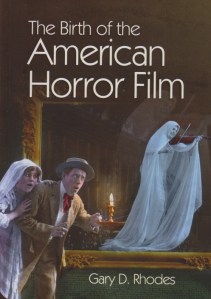
In both Holy Horror and Nightmares with the Bible I concern myself with horror films that have appeared since 1960.  I’m not enough of a cinema studies type to argue eloquently about the various stages of the horror genre on celluloid, but the many histories I’ve read settle on 1931, the year Universal’s Dracula and Frankenstein both appeared.  Dealing with more contemporary fare, I often use that as a mental benchmark.  Gary D. Rhodes has changed  that perspective, however.  The Birth of the American Horror Film is a somewhat sprawling treatment of a subject that’s more involved than I had supposed.  Early films didn’t suddenly appear, of course, and Rhodes spends some time surveying what came before the film that eventually produced what we recognize as cinema.  One of the things he notices is that which we call “horror” was pretty much there from the beginning.

Call it morbid curiosity.  While not everyone admits it, it is a pretty widespread human condition.  After surveying literature, theater, and visual culture, Rhodes moves on to consider many different genres of pre-1915 horror.  Some of them don’t strike every reader as horror today, but that’s a point I tried to make in Holy Horror.  The definition depends on the viewer.  Rhodes suggests throughout that American viewers tended to prefer non-supernatural horror.  While statistically this may be true, he devotes several chapters to genres that fall into the supernatural category.  These were, in the opinion of this reader, the best in the book.  One of the reasons is that horror and the supernatural naturally go together.  Many of us working in this field have noticed, some with embarrassment, that the two are closely related.

What might strike other readers as starkly as it did me, is just how terribly prevalent “horror” films were before there was a proper genre.  Rhodes makes the point that even if we like to think otherwise of ourselves, if there hadn’t been a substantial market for such movies they wouldn’t have thrived.  Some of them, like murder mysteries and other dramas, we might cast more as “thrillers” today.  I included a few of them in Holy Horror.  The real terror, however, often arises from subjects that were somewhat taboo in the late eighteenth and early nineteenth centuries.  Religion was handled with all seriousness.  I wonder if this might be one of the reasons that the supernatural didn’t appear, in the early days, as much as it would later.  This is one of those books that raises many questions such as this, and that makes me glad that the author is working on a sequel.


Creation of Horror

I recently read the article “The Christian Worldview of Annabelle: Creation” by Neil Gravino on Horror Homeroom.  I’m pleased to see that the complex world of religion and horror is being addressed by other scholars.  (I know that many actually work in this area, but if you don’t have access to an academic library finding their articles can be impossible.  Also, did I ever think I would miss Religion Index One and Two so much?)  Since I have a piece that is scheduled to appear on Horror Homeroom concerning the 1976 movie Burnt Offerings, I’m glad for the company.  As in my article, Gravino makes the case that the relationship between horror and religion (the Christianity of Annabelle: Creation and its need to be a horror film) is fraught.  This is something I describe in some detail in Nightmares with the Bible.

Back when I was writing Holy Horror I realized that putting individual horror films into a series creates continuity issues.  Annabelle: Creation is part of the wildly successful Conjuring franchise, the latest installment of which has been delayed by the pandemic.  Depending on how you count it, there are already seven films in that particular universe and the shifting of the story is the focus of an entire chapter in Nightmares.  The reason it requires such sustained attention is that, apart from being the most successful horror franchise after Godzilla, these movies are squarely based on Christianity.  Lacking the unrelenting gravitas of The Exorcist, they feature (in the main branch of the diegesis) the Catholics Ed and Lorraine Warren.  In an almost Dantesque view of Heaven and Hell, the characters struggle with monsters that hover between ghosts and demons.  They’re closer to the latter.

Many horror films—but by no means all—are based on fears associated with religion.  That religion isn’t always Christianity, as both The Wicker Man and Midsommar show, but the warnings against extremism apply equally to belief systems across the board.  Another thing I miss, being outside the academy, is the funding to do some in-depth research on this.  It’s good to know that others are seeing what I’m seeing as well, as is appropriate when you encounter something unexpected.  Our religion haunts us.  The reasons we believe are often tied to the self-same fear that the religions themselves generate.  And like religions, horror movies hold the possibility of earning quite a lot of money.  The parallels should not, I believe, be overlooked.


Update on Nightmares

Progress continues on Nightmares with the Bible.  Despite pandemic conditions, I received a happy email last week telling me that the manuscript had been transmitted to production.  If you don’t work in publishing that probably sounds like a pretty simple step, but in reality it’s immensely complicated.  The job of many editorial assistants is often just making sure books get through the transition from author to publishing engines safely.  Since Lexington/Fortress Academic is short-staffed at the moment (publishing is a “non-essential” business), they ask authors to take on additional responsibilities.  One that they passed on to me was to find people to endorse my book.  Fortunately I’ve got star series editors who agreed to take on the task, sparing me from going to someone and saying, “Um, hi.  Would you like to say nice things about my book?”  I’m shy that way.

That doesn’t mean that I’m not excited about the book.  It came about in an odd way, but like any parent an author loves her or his books, even if they aren’t quite what you expected.  Getting a fourth book published is kind of a hallmark for me, especially since I spend a lot of time on the websites of successful academic colleagues older than me that haven’t reached that benchmark.  Publishing books, for me, is a kind of validation.  The original ideas of editors aren’t much valued, either in publishing or in society at large.  Who cares what an editor thinks?  Put that same person in a college and s/he’s a superstar, eh, Qohelet?  So I sit here like an expectant parent, wondering what the book will look like although I already know what I’ve put into it.

Nightmares was never meant to be a research book.  Indeed, Holy Horror was written with an eye toward trade publication.  I’ve been working on my next book project (which I’m keeping under wraps at the moment for fear that someone with more time might get to it first, since there’s no getting the genie back in the bottle).  Before too many weeks have passed I’ll need to brush off my indexing skills (in as far as I have any), and get proofs submitted.  I’m afraid I’ll miss the coveted Halloween launch yet again with this book.  “Scary topic” books always sell best in September/October, but if you miss it, the next year you’re old news.  Like an anxious parent I sit here and wait because at this point things are literally out of my hands.


Too Close?

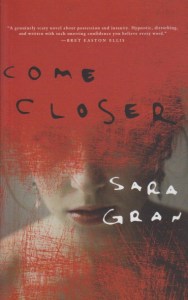
Some time back I did a Google search on something like “best novels about possession,” like one does.  I was in the midst of writing Nightmares with the Bible at the time.  One of the titles that came up was Sara Gran’s Come Closer.  I hadn’t heard of it before, but I started to look out for it.  I finally found and read a copy.  It is a page-turner.  A first-person narrative, it is a story about how a woman became possessed and how her life changed because of it.  Creepy and moody, it isn’t your typical Exorcist-type story.  What it highlighted for me (I don’t want to give too many spoilers) is the dilemma of those who a) live in an era when such things are routinely dismissed, and b) who have no religious background on which to fall.

While there are some quasi-religious characters in the story, there are no priests.  There’s no Catholic Church with its reassuring, if disturbing ritual.  Nobody seems to know how to handle a powerful demon.  One of the features that fuels exorcism movies (and presumably many novels on the subject) is the uncertainty of success.  Will there be deliverance or not?  I’m not going to tell you the answer here for Gran’s novel, in keeping with the spirit of the genre, but the dilemma of where to turn is believably laid out.  Amanda, a well-employed professional, lives without religion.  She acknowledges that strange things happen, but when she gets an inkling that a demon is after her, she doesn’t know where to turn.  As the story builds the loss of personal control is convincingly portrayed.  What do you do without the church?

I often ponder the particular power of The Exorcist narrative.  The threat to a young woman (as I discuss in Nightmares) is part of the key.  Another is the knowledge that the Catholic Church has packed away a powerful ritual that is only brought out in what are clearly extreme circumstances.  Like Amanda, the MacNeils aren’t church-going individuals.  The difference is that they live near Georgetown University where help may be found.  Unveiling this ancient rite was perhaps the greatest brilliance behind the story.  We live in a different age, however.  Simultaneously both more religious and more secular.  With the old certainties now under question, people wonder what they are to do when the impossible happens.  That is the driving pathos behind Come Closer.  It is a scary story on many levels.


Nightmares with Nightmares

Although some staff members are furloughed, Nightmares with the Bible is still going to press.  Unlike many authors, I realize that Covid-19 has had a stifling effect on publishing, starting with bottlenecking books at printing houses.  Printers (along with publishers) were non-essential businesses and since you have to be physically present to run a printing press, the virus literally, well, stopped the presses.  Many publishers could work remotely, so the projects began piling up before printing houses reopened.  All of this is preamble to saying I am gratified that work with Nightmares is continuing.  Yesterday, however, it led to a nightmare of its own.

One of the reasons I don’t fight awaking early is that it is uninterrupted writing time.  Most of the rest of your time zone is asleep at three a.m., so I can write in peace.  Yesterday, however, I had to divide my manuscript into chapter files and resend it to the publisher.  No problem, right?  Technology, however, has made this once simple task a burden.  I use a Mac, and so my word processor is Pages.  Not only that, but the constant systems upgrades require me to empty space on my hard drive—really, the only stuff I keep on here are my writings and those pictures I snap with my phone.  Still, I had to load my external drive to access the final file sent to the publisher two months back.  With Pages you can’t select material from page-to-page in the thumbnails.  No, you must “physically” go to the start of the chapter, click, scroll to the end of the chapter, and shift-click to highlight and then copy it.  Then you have to open a new file, select a template, and paste.  Save and export as a Word document.  The process took about two hours.


Now, I get up this early to write and do a little reading.  Yesterday I could do neither.  Instead I was cutting and pasting like a manic kindergartener, trying to get my manuscript printed before the second wave comes and shuts everything down again.  Talk about your nightmares!  Technology has made the industry much swifter, no doubt.  When I first began publishing articles you had to send physical printouts through the postal services and await either a rejection, or acceptance, through the mail.  Book manuscripts required large print jobs and keeping duplicates (at least we didn’t have to use carbon paper!).  All I lost was a morning of writing before the work bell rang.  Still, nightmares come in all sizes, some of them quite small.


Eternal Returns

Nightmares with the Bible has been submitted.  Those of you who read this blog regularly know that it is my fourth book and that it is a kind of sequel to Holy Horror.  Nightmares looks specifically at demons.  I was inspired—if that’s the right word to use for it—to write the book because the chapter on possession movies in Holy Horror was clearly overflowing.  Not only that, but at the time I started writing the book not many resources were out there on demons.  Almost nothing, certainly, that asked the big question of what they are.  To answer that we need to go to the movies.  People get their information from popular culture, especially when it comes to trying to understand the arcane and even esoteric field of theology.

Movies, studies have shown, often participate in the reality our brains conjure.  Back when Reagan was president—is it even possible to believe those seem like halcyon days compared to these?—he was caught occasionally citing events from movies as historical realities.  We all do it from time to time, but then, most of us, if pressed, can tease movies apart from facts.  Church attendance has been going down for some time (and on Zoom you can tune in and tune out without having to “stay in the room”), and so people have to get their information on demons somewhere else.  Reality television and the internet also play into this as well, of course, but Nightmares sticks with movies because I’ve only got so much time.  The message is pretty straightforward though, we must consider where people get their information.

After you submit a large project, if you’re anything like me, you’re mentally exhausted for a while.  I’ve been working on this book for nearly five years—I started it before Holy Horror was submitted to McFarland.  I had already begun work on my next book, but I yet have to decide which one it will be.  I have several going at any one time.  Hopefully this next one won’t be coming out with an academic publisher.  I’d like it to be priced in the realm where individual buyers might consider it worth the investment.  I know from experience that even books just over twenty dollars are a stretch for most people, especially if they’re on academic topics.  Nightmares will come back, I know.  There will be proofs and indexing and all kinds of further work to be done.  I’m hoping that by that point I will have the next book nearly done.  If only I could decide which one it will be.


Reading Connections

It’s flattering to have someone notice your work.  The other day I had the very first email from someone who’d read Holy Horror and wanted to discuss it.  It was from an undergraduate, no less, who was doing a report on religion and horror.  She’d read my book (and yes, it’s undergrad friendly) and wondered if I’d be willing to talk about it.  I can’t express how surprised I was (and still am).  You see, I have emailed authors after reading their books.  Many of them show no interest in carrying on a conversation with someone they’ve “met” through email.  I’ve had so many single-sentence responses with no enthusiasm whatsoever that I’ve begun to think of those employed in academia as hopelessly stuck in tunnel vision.  If you write a book you’re wanting conversation with those who read it, I should think.  At least I am.

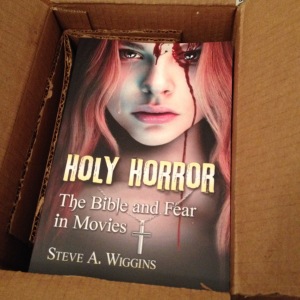
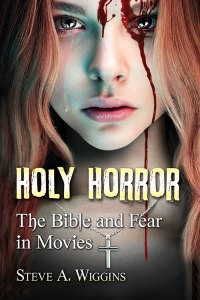
Those of us outside academe don’t have tenure committees to please or effectiveness committees to placate.  We write books to try to engage readers.  Unfortunately Holy Horror is priced for the library market.  During our phone interview, my interlocutor asked about the cover.  She said something publishers should hear: when walking around with Holy Horror her friends asked what the book was about because the cover is intriguing.  (It’s actually based on Chloë Grace Moretz from the reboot of Carrie, discussed in the book.)  In the midst of a pandemic, this first show of interest made my day, like seeing the first crocuses after a long, hard winter.  I do welcome conversation about my book.  I don’t have a classroom of students to force to buy and read it.  It’s out there for discussion.

Nightmares with the Bible is nearly finished.  Of course, publishers have hit a bit of a slow patch with many of their business partners shutting down.  Some publishers have gone into hibernation during the pandemic.  Books, though, will get us through.  A colleague of mine said the industry reports are showing that novels continue to sell while nonfiction is suffering.  Well, I’m no expert, but I do wonder if nonfiction might do better if authors would be willing to respond to this who express an interest in their work.  I know it’s a radical idea.  I also know that my books reach nowhere near what most publishers consider a viable readership.  What people are looking for during enforced isolation is a sense of connection.  Reaching out to find someone reaching back.  Books can do this, even if we never physically meet.


Coincidentally

I hope I never become too sensible not to pay attention to coincidences.  With the death of Max von Sydow falling the same week as the time change, the full moon, and Friday the thirteenth, I’m left feeling a little vulnerable.  I mean, what do we do now that the Exorcist is gone?  A couple days ago, when the moon was full—the last full moon before the vernal equinox—I awoke before 3:00 a.m.  Thinking Daylight Saving Time would have me groping for a few extra minutes abed, instead I found myself wide awake at the hour when monsters are thought to be afoot.  As I put my feet to the floor I saw the brilliant lunar light beating through the blinds like midday.  It was remarkable how very light it was.

A bipartisan bill has been introduced in congress to make Daylight Saving Time permanent.  Of course, getting any law passed without numerous riders and bickering is unlikely, but I do wish they’d get on with it.  That having been written, the time shift has been remarkably easy on me so far this year.  Perhaps those of us regularly awake in the dead of night adjust a little more quickly.  Keeping out of New York with the coronavirus lurking, I’d rather deal with my own monsters anyway.  I remember my amazement at seeing Max von Sydow unchanged from Fr. Merrin to Dr. Naehring.  Then I looked up just how much makeup the Exorcist had to have to age himself several decades.  He was a young man when The Exorcist was filmed.  At this time of day anything is believable.

Friday the thirteenth is a bit of lore grown from Christianity.  Friday was inauspicious because of Good Friday and the thirteenth lot fell on Judas, who, along with the others, made thirteen.  It was as if some demon were afoot on such Fridays.  These bits of Christian lore made their way into popular culture and then crept into horror films.  A good deal of Nightmares with the Bible revolves around The Exorcist.  So I sit here before sunrise with a bit of just-past full moon shining in, not too tired from losing an hour on Sunday.  It’s not difficult to think of scary things at this time of night.  Of course, demons traditionally come out around 3:00 a.m.  This week has been like that.  And without Max von Sydow, we want to be very cautious around demons.