No FOMO

Some fringe websites (of course I do!) present the case for reincarnation via past lives memories, particularly of children.  You see, adults hear/read/see a lot of things as the years weigh down and we might misremember something we encountered somewhere else.  Children have less exposure and therefore make more credible witnesses.  I know perfectly rational adults who believe in past lives as well.  I must confess, however, that this is one of the scariest things I can imagine.  I’m glad to have lived, most of the time, and I’m not in a hurry to end it prematurely, but the thought of doing it all over again is terrifying.  Even if it’s a different and better life.  You see, I entered life with a lot of questions and I have to say, over six decades later, I’m still uncertain about many of the answers.

If reincarnation means starting from scratch all over again, that scares me.  I’ve spent much of my life building walls to protect myself from the things that hurt me.  I avoid overly risky activities.  I handle sharp objects with great care.  I spend quite a bit of time by myself.  I don’t like being hurt.  That may be one reason that I watch horror movies.  They help to desensitize that particular phobia.  Still, I have to think of all the hard lessons I’ve learned in this life and have to think about how I might improve upon it all with another go-round.  In religions of East and Southeast Asia, where belief in reincarnation is common, the idea is often that you want to break out at the end.  Nirvana.  The place were you don’t have to queue up again.  Even Plato thought reincarnation might explain a lot.  But the very thought makes me feel weary.

If you could be rebooted with the knowledge of your previous life intact, that’d be one thing.  The idea of one day finding myself in another mother’s arms, not knowing anything, learning each microsecond, well, it’s frightening.  My parents weren’t educated people.  They taught me the blue-collar hard knocks of life (which I don’t want to have to learn again).  The white-collar hard knocks are sometimes even worse.  I tried to live this life as a clergyman, but that never really panned out.  I sometimes wonder if the Abrahamic religions/monotheistic traditions, didn’t develop Heaven and Hell out of fear of reincarnation.  The idea certainly makes sense, in some contexts.  And it’s one of the scariest things I can imagine.

Mere Monsters

While my colleagues and I wait to hear if our monster session will be approved, my thoughts naturally turn to the taxonomy of monsters. One of the perennial problems in the study of monsters is that definitions vary widely. We might all agree that a werewolf is a monster, but what of Cthulhu? Or of a horribly deformed, but completely natural animal? What about demons? Should we all agree that we know what a monster is, how do we divide them into categories for easy study? One way of doing this might be to rely on binaries. For example: natural monsters versus unnatural monsters, living monsters versus undead monsters, monsters from earth versus monsters not from earth, monsters created by humans versus naturally occurring monsters, fictional monsters versus monsters reported in nature. It soon becomes obvious that monsters are a widely divergent group of creatures.

Monsters have won an enduring place in popular culture. I think of The X-Files. Apart from the “mythology” of the series, many episodes featured a weekly scary monster. The same is true of Sleepy Hollow, now in its third season. Monster movies, although perhaps taking a back seat to super heroes of late, are regulars on the silver screen. We just can’t seem to live without our monsters. I’ve mentioned in my many posts about monsters that the connection with religion is so obvious that it hardly requires apology. But a deeper question has occurred to me. It has to do with the nature of religion (itself not well defined).

439px-Durer,_apocalisse,_12_il_mostro_marino_e_la_bestia

Religions exist to deliver people from the trials they face. Offering Nirvana to break the endless cycles of reincarnation, or Heaven when we die after one go-round, religions claim to give us something of an assurance that things will work out. (Mostly.) In the light of this, why does religion give us monsters as well? Surely they are more than mere metaphors for the misfortunes of daily life. There has to be something more to it. What that more is, I’m not certain. I’m not even sure of how to approach the question. Monsters will, for me and many other Monster Boomers, remain a guilty pleasure that we are pleased to be able to address as adults. I am becoming more and more convinced that the more we learn about them, the more we learn about religion itself. And perhaps also about those who give shape to religious thought.


Heaven Unawares

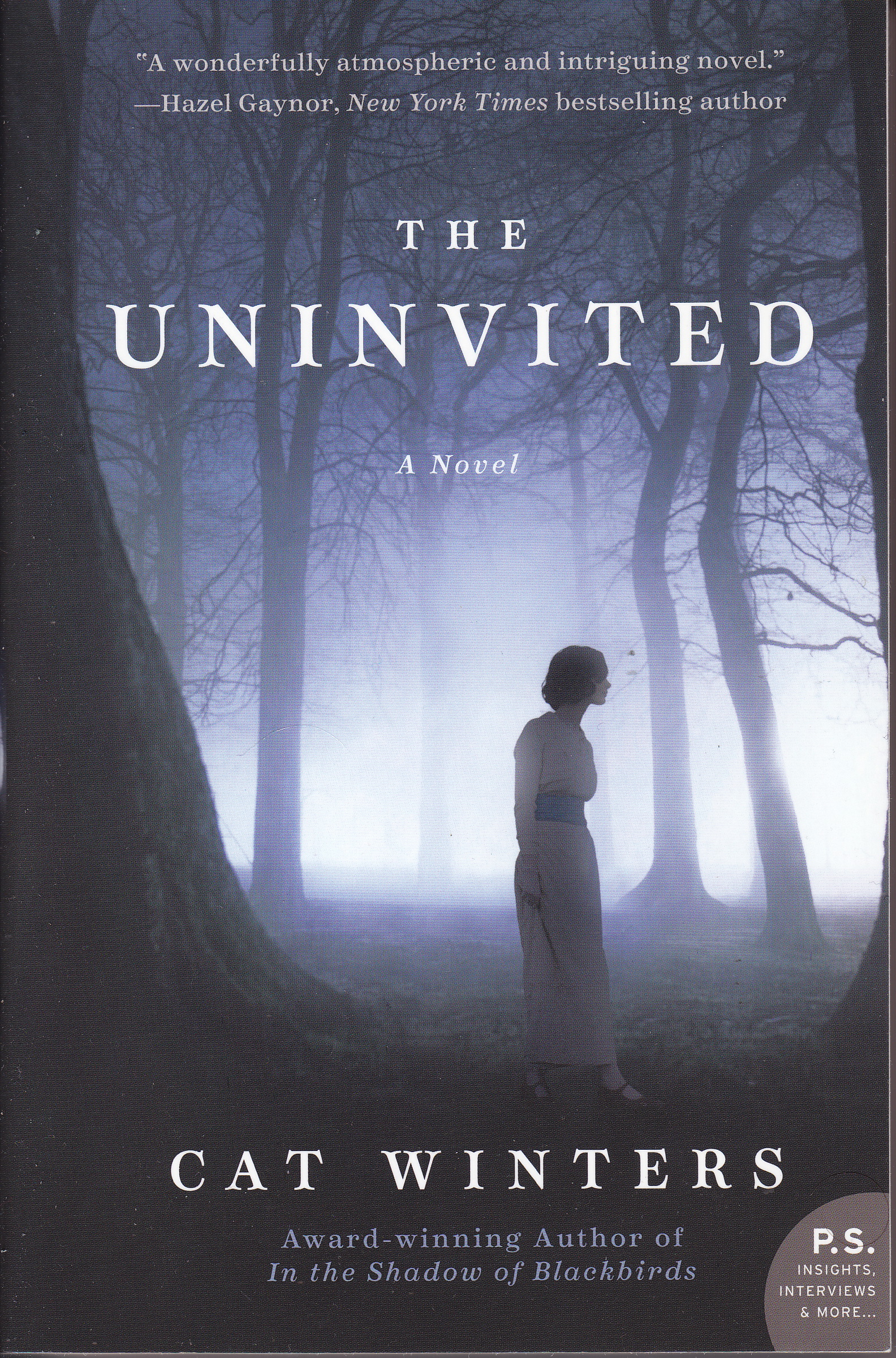
UninvitedIn order to have this book fit my blog, I’ll begin with a spoiler alert. If you plan to read Cat Winters’ The Uninvited, I will be giving away information below. Please believe me when I say it’s not intended to be persnickety by this preface, but I know what it’s like to enter a book knowing too much.

When autumn comes around I like to find a ghost story or two to read, to settle into what seems to be a primal urge connecting harvest with death. Sometimes the books I find are advertised in places like the Library Journal, or Publishers Weekly (which I see more like biannually). More often than not, however, they are books that I spy at a store. The Uninvited stared at me from a table. I picked it up, read the blurbs, and put it back. A week later I stopped in again and picked it up. It is a moody tale set during the First World War and the influenza epidemic. That was a time, I suspect, of great fear. And many ghosts. It’s easy to see why Winters chose such a time to set a tale. Still, the narrative is gentle and despite the places where the language sounds too modern, it is artfully told. Like most ghost stories it is a love story. Seriously folks, here come some spoilers!

The protagonist, Ivy, falls in love with Daniel, a German immigrant living in Buchanan, Illinois during the war. Germans have been under suspicion and lynchings have occurred. We come to learn, as in many ghost stories, that the protagonist and her lover were both victims—he of a lynching, she of the flu. He’s aware they’re dead, she’s not. The novel is one of Ivy’s growing self-realization that she’s deceased. While avoiding those who spy on Germans, she discovers the joys of an interracial, prohibition-free (being prior to prohibition, of course, but the idea was in the air) club where jazz is played all night long. She wants to bring her lover to the club, which is just across the street from his apartment, but he is German and feels he would not be welcome. The reader at this point doesn’t realize the two are dead. Once Ivy discovers the truth, she realizes that the club is actually Heaven. The reluctant ghosts, lost, stay away. She tries to convince them to come.

Heaven has been portrayed in many ways in literature. Although I find jazz very difficult to bear (it is like being inside a beehive without a bee suit, to me) the idea that Heaven is complete and utter acceptance of who we are is a compelling one. Religions are often all about change—how we must alter who we are to merit Heaven or Nirvana or whatever might await us at the end. Winters suggests that it is a place where people can be who they are and nobody will try to make you be any different than you were created. It is a comforting idea. It is my personal hope, however, that there might be a few different clubs in town and that some of them might be playing music other than jazz.


Fleeting Meaning

Just a year before I had been unceremoniously dismissed from a fourteen-year teaching job at Nashotah House, devastating everything I thought I knew. I’d found a temporary job at the University of Wisconsin, Oshkosh and the head of the department encouraged us to go see the mandala that some Buddhist monks were constructing in Oshkosh one weekend. My family came up and we breathlessly watched as the orange-draped, shaven monks meticulously tapped brightly colored sand into an intricate pattern of incredible beauty. My daughter, quite young at the time, wondered what they would do with it when they were done. We’d been told, in the department, that the sand would be safely flushed into a local waterway, as Buddhism teaches about the transitory nature of life. My daughter was upset at the thought of such a nice piece of art being destroyed. But that’s part of the point of a mandala. As the Buddhists say, too many people concentrate on the hand pointing at the moon rather than on the moon itself.

Photo credit: Kamal Ratna Tuladhar, WikiCommons

Photo credit: Kamal Ratna Tuladhar, WikiCommons

I’m no expert in Buddhism. It is a complex way of thinking, and, like many religious systems, it is not unified into one particular thought-structure. Nevertheless, one of the main teachings of Buddhism is that life is, pardon the crass translation, suffering. We experience desire and we will continue to experience desire until we die. Then we’re reborn to experience desire all over again. Those who are enlightened may break out of this system into Nirvana, or a kind of non-existence where desire can no longer afflict us. There is an appeal to this way of thinking in a universe that science tell us will eventually burn out so that we’re all just a bunch of cinders in infinite, but expanding space. Almost Buddhist in its conceptualization, actually.

So when this morning’s New Jersey Star-Ledger had a front-page, below-the-fold, story of a mandala incident in Jersey City, I had to read. This entire past week, three monks have worked on a mandala at City Hall in Jersey City, for up to ten hours a day. Having watched this work, I know it can be backbreaking, and it is incredibly meticulous. Yesterday, after four days of work, a three-year old, while his mother was distracted, jumped on and ruined the mandala. A mayor’s aide, horrified, had to show the monks what had happened. A mandala is all about the transitory nature of life. Its fleeting moments are, after all, suddenly swept away. Despite the drama, the monks repaired the mandala and one of them quipped that perhaps the child’s action had underscored the lesson the mandala was intended to teach. Indeed. Many religions recognize that children know something about life that most adults simply forget. It’s the moon that’s important, not the hand.


Unanswered Questions

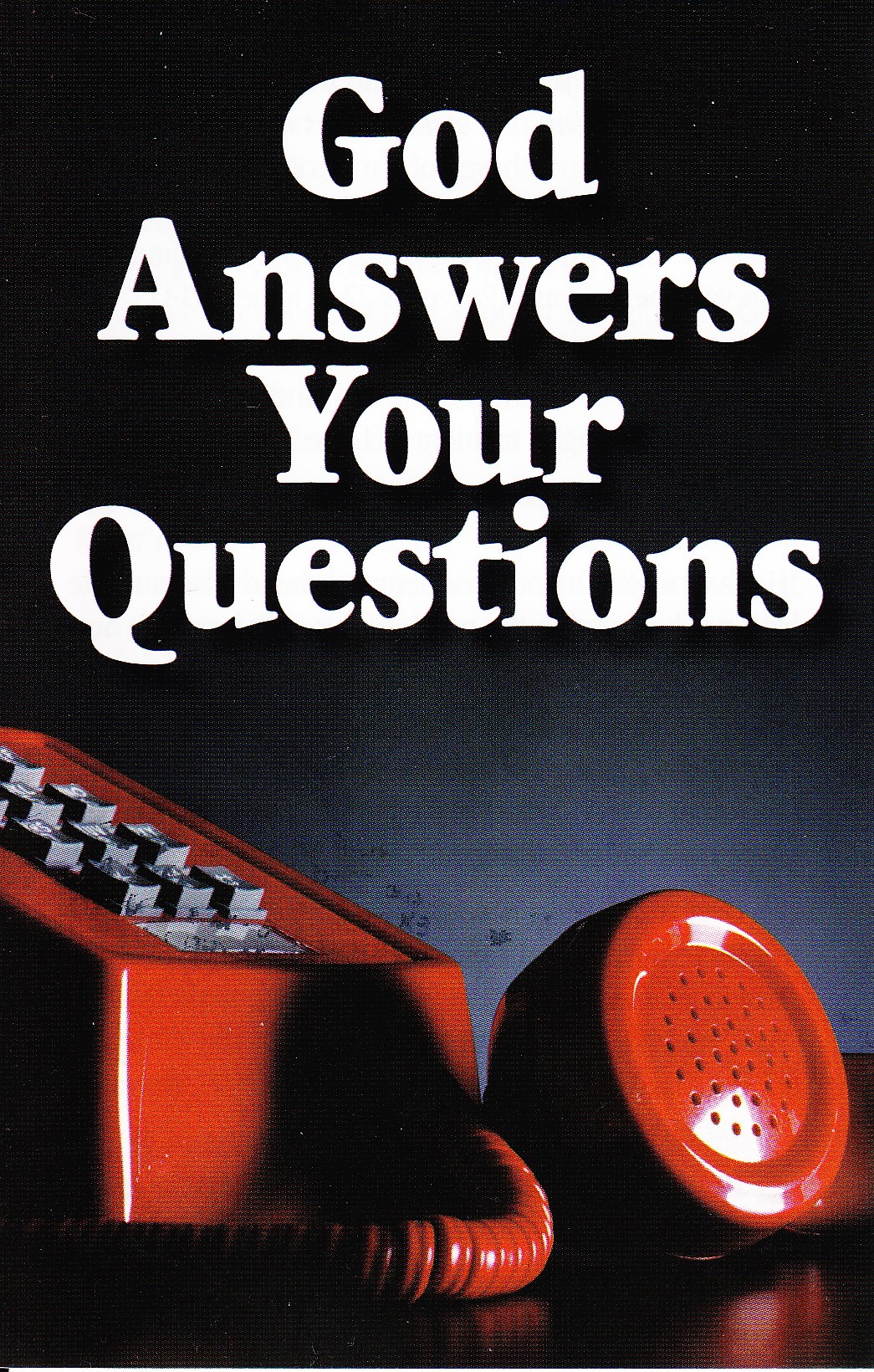
Attempting to write a blog post everyday on the single subject of religion can be a challenge when you don’t share the freedom of the Internet with most faculty. Once in a while a topic just drops in your lap like a gift from God. It helps that New York City is such a religious place. Despite the many critics who claim New York is godless and completely secular, it my experience there are a goodly number of the godly in it. It is not uncommon to see street preachers on a sunny day (apparently God has less need of saving on rainy days). On my way home from work today I was presented with a tract in which “God Answers Your Questions.” It was a little odd that the acolyte with the tracts knew what my questions were, but since the leaflet quotes extensively from the Bible it must be true. From this pamphlet I learned what my hidden question were.

The first question, rather flatteringly, states, “I am young yet, and likely to live for a long time.” Once I’ve been buttered up, the other shoe drops: “Why should I think of eternal things now?” Rather than the Bazooka Joe Bible verse, I thought I might field that one myself. I grew up thinking about eternal things on a nearly daily basis. By the time I was in high school I was somewhat creepy about it. In a college course on the psychology of death and dying, we were asked how often we thought of death. My honest answer was, “every day.” Now, a person with that kind of background may be overthinking this a bit. Death is a relatively simple matter: you need do nothing to achieve it eventually. I had been taught that if you worked to make sure you were honest and true, it would be rewarded. I was fired from my first job for being true to what I’d learned with intellectual honesty. I thought about death a lot.

Death, given its finality, is a universal religious concern. Some religions offer an afterlife—generally it is not an option—while others do not. The life well-lived is its own reward. Others suggest what seems to me a more insidious option: reincarnation. Those religions that take this approach are generally honest up front, stating outright that life is suffering. Reincarnation is goal-directed: break the cycle and achieve Nirvana. And there is no reason to flatter people with the long life yet ahead of them. The evangelist ignored my white whiskers and gave me an anonymous tip for salvation. Perhaps all I really needed was a sip of cold water. Having spent the better part of one life thinking about its end, reincarnation could be a cruel reprisal indeed. I don’t need to worry, however, because I’ve got the answers—along with the questions—right here in my pocket.