Subterranean Homesick Blues

When Bob Dylan was changing American music I wasn’t really in a place to notice. I was too young, living in a small town, and the member of a church suspicious of that kind of music. We didn’t listen to the radio at home, so I only really discovered who he was when I was in college. I’d heard many of his songs by then, of course, I just didn’t know the persona. So when the news broke that Dylan had been selected for a Nobel Prize in poetry he stunned me yet again. As someone who has always wondered if he’s made any contribution at all, let alone a significant one, this seemed like one of those roads a man walks down before he’s called a man. A mensch. A person who matters. I was pleased, then, to learn that I’m only 37 degrees of separation from the great man himself.

It was probably something like this desire to be significant that led me to genealogy in the first place. My wife had done significant work on her family tree, and apart from a college project in anthropology I’d done little. While at Nashotah House I began to work on it. I managed to make some connections and take many of my lineages (pedestrian, all of them) back a ways. One of the results of this was I posted some information on WikiTree. I had intended to put much more there, but since leaving academia I also seem to have misplaced anything resembling free time. The loss of summer is the hardest to bear for a man whose very pulse is divided into semesters. In any case, I received an email from WikiTree this week with the following chart, showing how I’m attached to Bob Dylan.
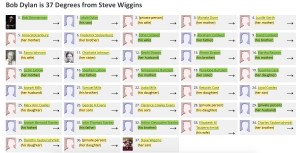
screen-shot-2016-10-22-at-5-22-00-am

Now, I didn’t ask for this connection to fame. I received the email unsolicited, blowing in the wind, as it were. I’m not sure I’ll be able to handle all the hits that are sure to follow such a public revelation. Fame, I’m told, can be quite a burden. The one important thing this chart tells me, however, is that we’re all connected. I suspect there are some famous people much closer than 37 degrees from me. Melvin Purvis, “the man who shot John Dillinger” was married to one of my great aunt’s sisters or something like that. Some of my southern cousins even got to visit his gun-lined house. Fame, as it will, rests rather on the side of John Dillinger. And Bob Dylan. If we were to cast the net wide enough we’d see that we’re all related and therefore shouldn’t hate one another. I would say “we are family” but I think that might be a different artist’s song.
Queens and Playmates

Once upon a time, theology was queen. I’m no theologian, but then, I didn’t make up the phrase. A recent article in the Chronicle of Higher Education discusses how some scientists say there is no longer a need for philosophy. In passing the piece mentions that theology had, long ago, been considered the queen of the sciences. According to medieval thinkers, philosophy was her handmaid. Antiquated archaisms apart, I sometimes think back on this whole venture of education. Few today acknowledge, and most probably don’t know, that education began as a religious exercise. Writing, and reading, were overseen by the gods. Even in the modern world the earliest universities were founded to teach theology and law. Many of the ivy league schools, including Harvard, Yale, and Princeton, began as training grounds for the clergy. How quickly our forebears are forgotten.

It’s not that I think religion deserves a privileged place in the academy, but I do believe it deserves a place. Science has a long track record of spectacular successes. Not only that, but the advances in science often capture the imagination—and here we are back in the realm of the humanities, that place where feeling and possibility are unlimited. Many of those of us in religious studies—apart from creationists and their kin—gladly award science its deserved paean to successfully unpacking the intricacies of the material universe(s). As the Chronicle article demonstrates, some on the science side of the circle want to claim all the marbles and go home. Some of us want to keep the game going well after dark.

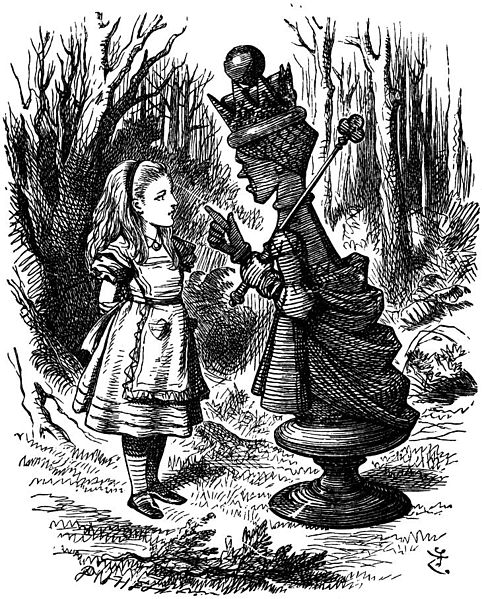
Maybe that’s a very wide metaphorical shift—from queen to playmate—it may be presumptuous. After all, what has religion, or philosophy for that matter, got to claim? What shiny Nobel Prizes to display gracefully, or great advances of which to boast? The benefits religion can claim are somewhat less tangible, but important nevertheless. While some people declare that meaning is a chimera, deep down, as a species, we know that it is important. Even more than that, the fact that you’re reading this right now owes its ultimate origin to religious thinking. Writing was the brainchild of the gods, an activity we learned in imitation of the divine. I will always find science fascinating, but I will always do so with a book held in my hands. “Now, here, you see, it takes all the running you can do, to keep in the same place,” in the words of another famous queen.


Expanding Universes

If you’re one of those people who has trouble finding your car keys, it looks like things are only going to get worse. We all knew the universe was expanding, but now that the smoke has cleared from this year’s Nobel Prizes (there was smoke, wasn’t there?) it is now common knowledge that instead of slowing down, the expansion is actually accelerating. Kind of makes you wonder who’s driving. Being somewhat of a science news junkie, I already knew of the increasing rate of expansion, but seeing it in the news again made me ponder the theological implications of it all (despite not being a theologian). Where do we locate Heaven in a rapidly expanding universe that is ripping itself apart? Why didn’t the prophets in the Bible see this coming? What is anybody doing about it?

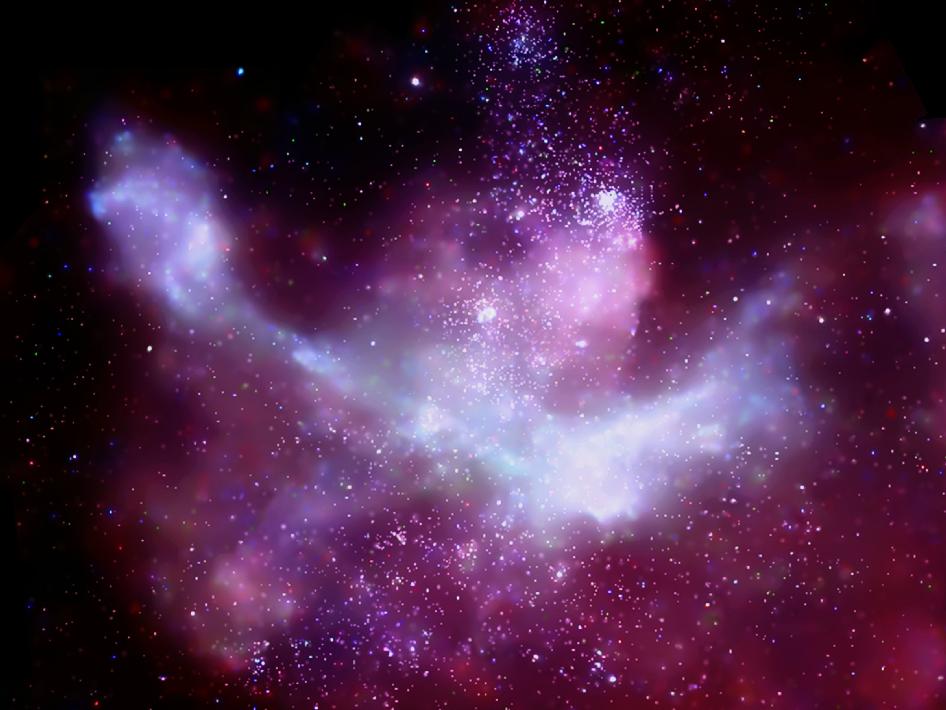
Physicists have had to postulate a new culprit in this unexpected scenario. Dark energy must be driving the expansion and the universe most be mostly composed of dark matter. Besides apparently being the substance between the ears of Tea Partiers and certain public officials, nobody really knows what dark matter is. The darkness of the name here is to be understood as “unknown.” We can’t see it or sense it, but it can be weighed—at least on a universal scale. Not only are we not the center of God’s universe, we are vastly outnumbered by something that we can’t even see.

Of course, it will only be a matter of time before some religious specialist suggests that God is the dark matter or the dark energy of the universe. Classic god-of-the-gaps thinking. If we can’t explain it, it must be God. That God, however, suffers the embarrassing phenomenon of shrinkage. At one time that Gog (God-o’gaps) was in control of the weather, until NOAA came along. At one time that deity held the nucleus of atoms together, until the strong and weak nuclear forces were discovered. At one time that God knocked off the dinosaurs. Well, maybe the jury’s still out on that one. The danger of conflating God with science is the inevitable effacement of divinity. Our universe has proven unfriendly to deities. Depending on how medieval we’d like to get, we might suggest that dark matter must be all those angels dancing on the heads of pins. While you ponder that one, I’m going to look for my car keys while I still can.

There it goes...