Storytelling

Those who know me personally say that I’m a good storyteller.  My own head houses, however, my harshest critic.  Since I tend to work alone this creates an inherent conflict.  This is most evident in my fiction.  I finished a draft of my eighth novel earlier this year, but it still needs work.  (No, really it does—not just harsh critic speaking.)  Part of the problem is obviously time.  My morning writing period is frequently held hostage by my moods.  Some of my past novels are, I think, publishable.  I’ve tried repeatedly with one of them, getting as far as having a signed contract, but things collapsed after that.  It sits brooding on my hard drive.  Another—I think it may be number four or five—seems publishable but it requires reworking with magic pixie dust.  Sometimes my supply of it runs low.  (Moods again.)

I sometimes wonder if I read too much nonfiction.  I’m a curious sort of chap, interested in the world around me.  When that world seems to be falling apart, however, fiction is my friend.  I’ve been reading a lot of novels and I’m often struck by the beauty of the prose.  Head critic says, “why can’t you do that?”  Then I recall the writing advice that I picked up from Stephen King’s nonfiction, On Writing.  Adjectives may be bad for your health.  Just tell the story.  With style.  My current novel (eight) tells an interesting story, I think.  If I’m honest I’ll say that I started working on this before any of the other completed novels (except number one, and that was a throwaway).  It was an idea that just wouldn’t go away.  I knew the beginning and the ending, and part of the middle.  I even found a potential publisher, but it has grown too long for them.

About three chapters from the end I realized that I hadn’t tied things up as well as I’d initially thought.  What I need is time away from work to think about it.  Thinking time is rare, even in the time I manage to wrestle from the 9-2-5.  There’s always more to be done, trying to stay healthy and out of the weather.  And really, maybe I should be reading even more fiction.  But what about the “real world” out there, which requires nonfiction to face it boldly and with informed decisions?  It’s dramatic, isn’t it?  Like a protagonist (hardly a hero) on the edge of a cliff.  How does the story end?  Perhaps an actual storyteller might know.

Blog Writing

From time to time someone will ask me about my personal writing process.  Those who know that I write at all, primarily, I suspect, think I do mostly blog posts.  I have, however, written five nonfiction books and have completed seven unpublished novels.  Thirty of my short stories, also fiction, have been published.  I also have a few novels and at least four nonfiction books currently underway.  Like other writers, I require quite a lot of alone time.  From at least seminary on, I have carved that out of the early morning hours.  I’ve gone through phases when I slept normal hours like a civilized human being, but when at Nashotah House, where morning chapel was a daily requirement, I began awaking early to write.  When I began commuting into New York City, that writing time got pushed back to 3 a.m., and that is mostly still true today.

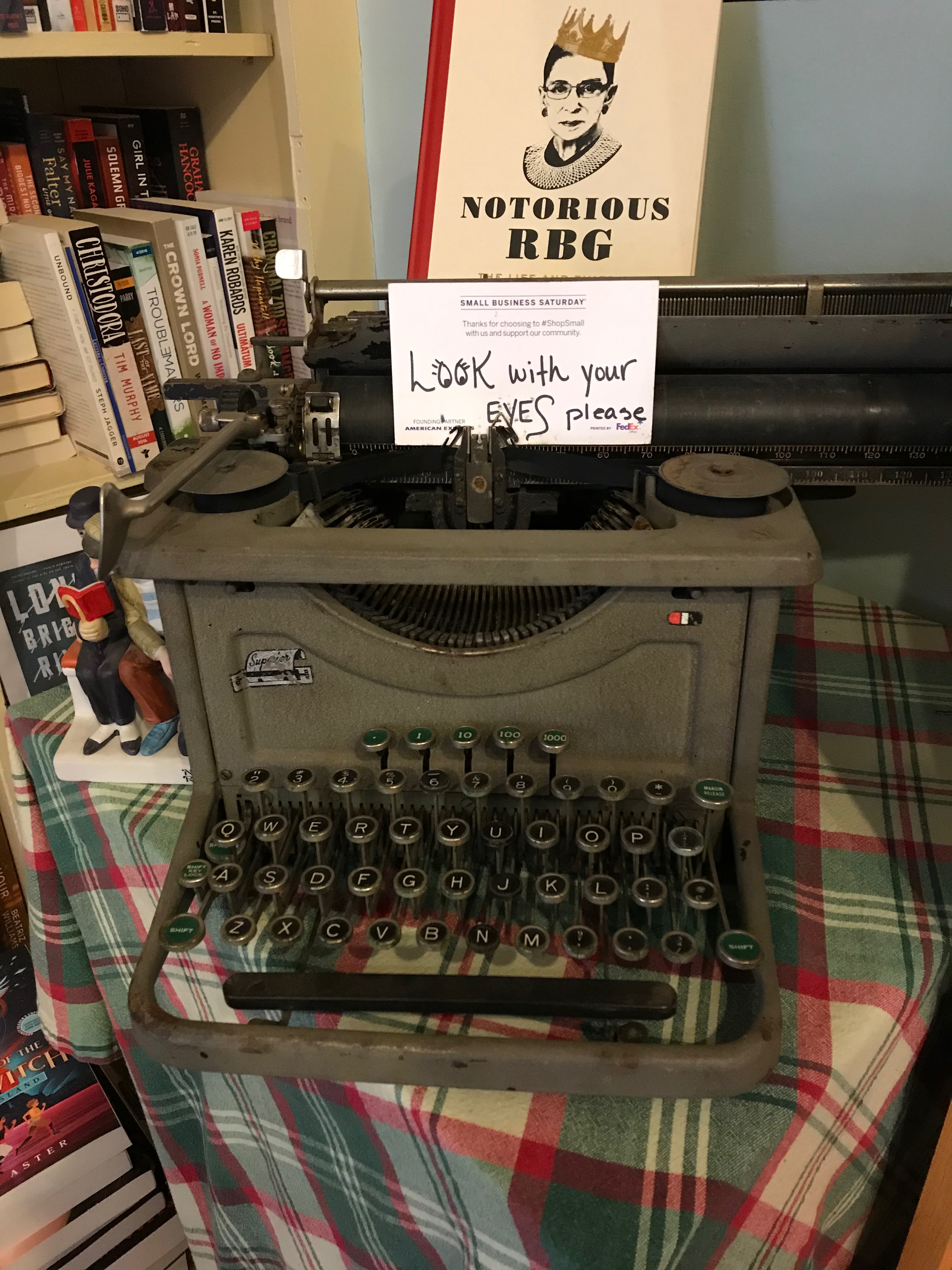
It is said that Isaac Asimov had three typewriters in his study, each loaded with a different writing project.  That way he could work on the one he felt like writing when the mood struck.  Yes, we writers use our emotions extensively.  What I work on in the morning depends on which me gets out of bed that day.  Is it the long fiction me?  Is it the nonfiction me?  Is it the short story me?  Is it the academic article me?  Is it the blog post me?  Ah, the blog posts.  They take a lot of time.  And, like most writing, they are driven by my moods.  Sometimes I write about current events, often posted after the fact.  Why?  Because I have other posts that have been waiting to be presented.

There’s a bit of illusion involved in writing.  Apart from the fact that all of my blog posts are written in the early morning, it isn’t evident from the post itself when it was written.  (Unless I refer to something as having happened “yesterday” or “last week.”)  I don’t follow current events closely.  I can get depressed just fine on my own, thank you.  I don’t start out the day with the newspaper.  Writers often live in their own worlds.  Reality intrudes too much, most of the time.  I may never become a bestselling author.  I may never be able to court an agent—believe me, I’ve tried.  I may never have more than a few followers on this blog, but one thing I will do is continue writing.  It wouldn’t surprise me, and in fact I think it would be entirely within character, if I died with my fingers on the keyboard.


Large Projects

Now, where was I?  I suspect it’s the same with you.  We’ve got so many things going that it’s difficult to keep up with them all.  When one big project comes along—say reading book proofs for a deadline—everything else gets displaced.  After a week of intense concentration you emerge from a daze and try to remember where you left off with other projects.  What was so dreadfully important before the large project began?  I’m used to deadlines at work, but there aren’t too many in my personal life.  I have goals and targets, to be sure, but due dates slip and slide with the slings and arrows.  When the big project’s done there’s relief, but also a kind of reboot that has to take place.  I’m afraid to look at the news.

The corrected proofs of Nightmares with the Bible have been submitted, along with the index, and now all I can do on that front is wait.  Which of my many other projects, neglected for an entire week, should I take up now?  Part of the difficulty is knowing whether to work on fiction or non.  Given my work-life commitments, fiction is easier.  I enjoy writing it, but I have trouble getting published.  Nonfiction, on the other hand, is simpler to get published but brings in very little remuneration.  I know as an editor that we distinguish between academics (who already have a good paying job) and, say, journalists, who write nonfiction trying to earn a living.  What about an editor who isn’t paid like an academic, but has a regular job nevertheless?  (When talking to an independent, nonfiction publisher a few years back, I heard him respond to the question of if he was non-profit with, “Well, that’s not how I intended it…”)

I have two nonfiction books well along at this point.  I also have several fiction projects, including an eighth novel and a short story collection.  I also have some essays underway for sites beyond my own blog.  A week seems like a long time to put all these things aside and then to pick them up again.  That week wasn’t vacation either.  Nor did it suggest topics for me to address on my blog because if you want to know about Nightmares with the Bible you’ll read the book.  The evening I finished the proofs I had a dream that seemed to stretch through the entire night that I had come up with a complete college curriculum all by myself.  As much as my weary mind wanted to go on to other things it was fixated at that stage.  I awoke to wonder where I’d left off on real life projects, none of which are very near the finish line.  Now, where was I? 


Write Brothers

Work interferes with my concentration.  I suspect I’m not alone among writers in this regard.  Just last week I had two fiction pieces accepted for publication (one of which won honorable mention), but the little time I can allot to writing is divided between fiction and non.  Up until now the non has been more successful at finding publishers, but last week might’ve tipped the balance a bit.  As someone who works well more than eight hours daily, culling that time for creative enterprises can be difficult.  I’m told that Isaac Asimov, in the days before personal computers, kept three typewriters, each with one of his projects ready to go.  He would work on the one he felt like at any given time without having to reload a single typewriter with a half-finished piece.  My laptop has the dubious advantage of keeping multiple windows open in which several projects are simultaneously active.

At the moment I have three book projects going; two nonfiction and one that will become novel number seven, if it ever gets finished.  Not only that, but my short stories file has many contenders for my rationed time.  Long ago I lost track of just how many tales there are—some are on disc and others are on paper.  Some are finished, awaiting revision, and others have just begun clawing their way into written form.  The problem is finding the time to work on them.  The oft-heard lament of the working writer is that life is more working than writing.  And having had some minor affirmation of my fictional functionality recently, I’d love to explore that a bit more, but who has time right now?  Even as I finish typing up my blog post for the day the hour to begin work is looming.

Stephen King’s advice to wannabe writers is to read.  A lot.  Although I do my best to keep this dictate among my personal commandments, I run into the immobile object of nine-to-five-plus repeatedly.  If I take a vacation (which is seldom) it is often “to get away,” but writing is more a matter of aging in place.  Finding your comfortable spot where your thoughts flow freely and where the coffee pot’s just in the kitchen and if an idea catches you before sunrise you can spend time wrestling it even after light filters in through the curtains.  Those are rare days since weekends are for doing the chores neglected in your forty-five-plus hour work week.  And settling between fiction and non is never an easy decision, especially when one has just received a vote of confidence before login time on a Monday morning.  For now, however, I have to concentrate on work.


Might As Well Read

During my recent travels I had a layover at Sea-Tac Airport. Since I don’t get out much, I always find a walk through the airport a way of measuring what other people find important. At least in a circumscribed way. When you’re traveling you’re limited in your options. Most airlines have addressed passenger ennui by offering devices with electronic entertainment. Instead of an in-flight movie, you’ll have choices of what you want to do, courtesy of the endless magic of in-flight wifi. So the thinking goes. Airports, it would stand to reason, will offer plenty of travel-size diversions. The kinds of things you’re allowed to take onto a plane but which won’t or can’t be used to harm others. A sign at Sea-Tac reads “Books. Food. And yes, beer. Just ahead.” An interesting choice of offerings.

I was strangely heartened by the pride of place given to books. Yes, people still find the book on a plane satisfying. Stories have a way of drawing us in. Making us forget that we’re in a cramped space filled with strangers and recirculated, pressurized air. Books have the ability to take us far away. It’s a magic that movies can’t always achieve. Books leave more to the imagination. I recently rediscovered this on a solo trip across the Atlantic. I used the opportunity to read a novel cover-to-cover. The impact was incredible. For those six hours I was on the ground, following the adventures of young people caught up in the liminal zone of adventure and love. It was a powerful experience.

On my daily commute I tend to read non-fiction. Perhaps it’s the result of earning a doctorate, or perhaps it’s the stigma of enjoyable reading being “fluff.” The great majority of books I read this way teach me a lot. I read about many different subjects, and have recently learned to make commuting time a type of research exercise. But then, a cross-country plane ride is different. While an evening commute from New York City can stretch to three hours or more, that’s fairly rare. Instead, air time is unbroken time. I look forward to it with the prospect of a good novel. Airports are one place where hoi polloi don’t mind hanging out in a bookstore. Yes, the fare will be mostly bestsellers, but anything that gets people to read is a good thing. And, of course, if that doesn’t work for you there’s always beer. Just ahead.