Half-Way Through

Here’s a writing phenomenon.  Maybe it only happens to me (I am self-taught), but when I’m writing a book a strange thing happens.  When I’m doing my rewrites, and there are usually several, about halfway through I’ll have an epiphany.  Something I should’ve been doing from the beginning.  Then you’re left standing at a crossroads: should I go back to the beginning again now?  But still need to address a basic rewrite as well as the new approach in the second half, so should I just carry on and then start rewriting from the beginning, catching up with the second half?  That may sound like a trivial question, but I assure you it’s not.  You see, right now I have two books in a complete stage.  “Complete” here means done in draft form.  When I write a book it gets rewritten several times before I consider finding a publisher, but when an important point comes to you halfway through, you’re between worlds.

Now, I work alone.  I am part of a local writers’ group and I’m only now starting to get to know others who’re willing to talk about writing.  I know several writers who don’t talk about it.  They’re still friends, but for me, there are few topics I’d rather discuss.  That’s how I learn.  You see, I have no idea what’s normal.  Do other writers labor over multiple rewrites?  I know some do, but I suspect some don’t.  I know that when I write a short story sometimes the first version seems best to me, but try to get such a thing published.  No, you need to rewrite.  Polish.  Make it shine.  But what if one half is shinier than the other?  This is starting to be a regular occurrence.

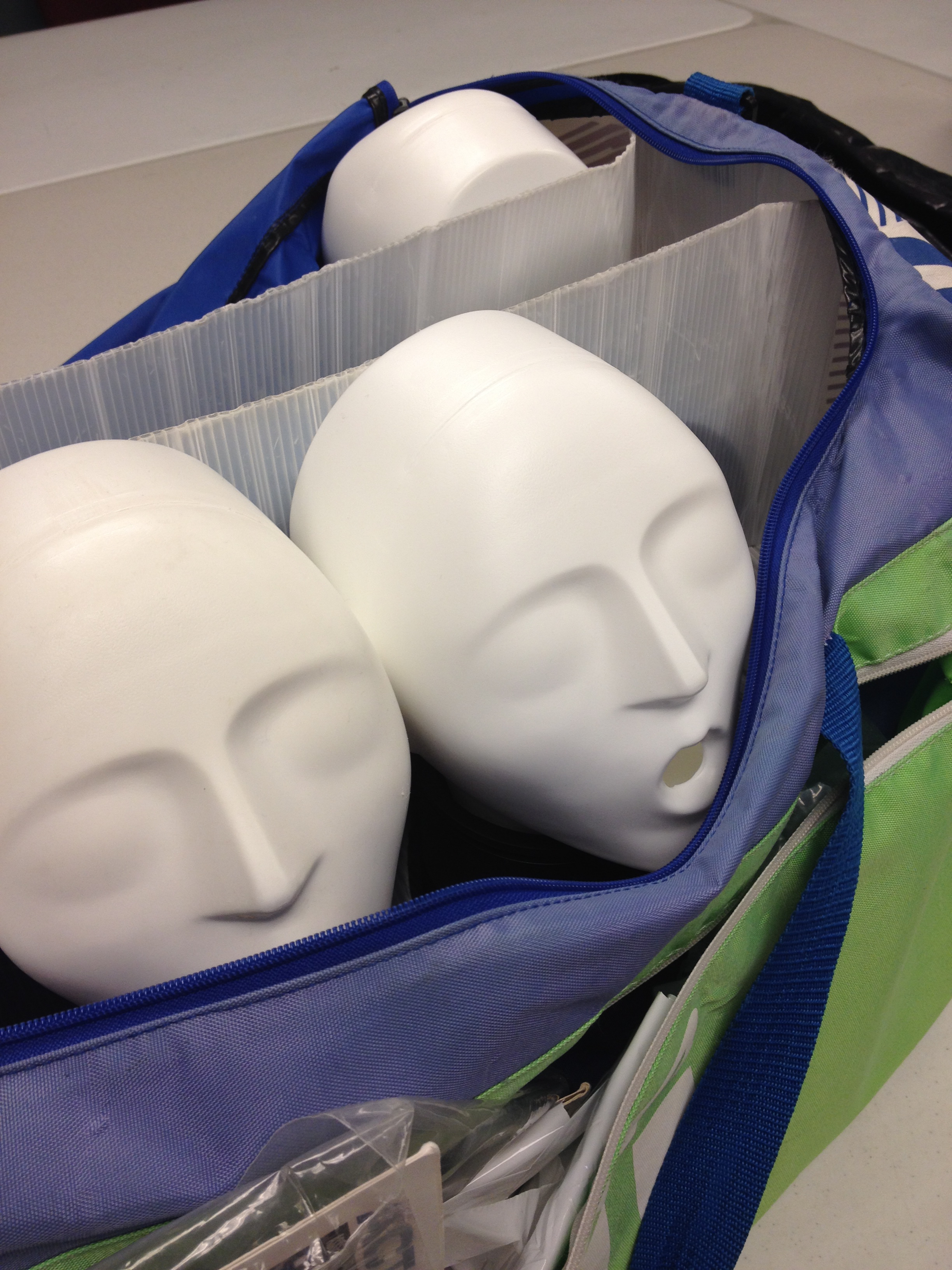
Inspiration is fickle.  That’s something we can all agree on.  But when you’ve been scrawling on a topic for weeks, or months, and then a realization dawns, you’ve just added yourself additional weeks or months of revision.  I’m sure a great deal of it is due to my own psychology.  Another part is due to writing under the constraint of a 9-2-5 job.  There are only so many productive hours in a day, and since mine come early they necessarily end when the work day begins.  I’ve tried writing after work but my brain and body feel like a CPR dummy when work’s through with me.  The next morning I start at it again, but the question is still should I finish this up with my new insight, or should I go back to the beginning?


2024 in Books

I’m trying to figure it out.  My annual last post is my book reflection for the fading year.  I keep track of my books on Goodreads, and I always join their reading challenge to keep myself honest.  What I can’t figure out is why I fell below 70 books this year.  (The official total is only 61.)  I set my goal below that, of course, because I’m no fan of setting targets impossibly high.  The only thing I can figure is that some of this year’s books took longer than usual to get through.  Maybe on average they were longer than my typical fare.  In any case, my favorites among the fiction I’ve read are these:

For standard horror I especially liked Thomas Tryon’s The Other, and Ivar Leon Menger’s What Mother Won’t Tell Me.  Interestingly, neither was speculative.  I do seem to have slipped in that category a bit.  Gothically speaking, Thierry Jonquet’s Mygale, Rebecca James’ The Woman in the Mirror, Alix E. Harrow’s The Once and Future Witches, and Erin Morgenstern’s The Night Circus were all memorable.  I started reading Dark Academia somewhat intentionally this year and I would argue that Sarah Moss’ The Ghost Wall fits since the professor’s up to no good in the woods.  Piranesi by Susanna Clarke also fits for a similar reason, only not in the woods.  I enjoyed both.  For literary fiction, edging back into horror, A Children’s Bible by Lydia Millet was very good.

My reading tends toward nonfiction (occupational hazard) and here there are categories also.  In the general category, Andrew Laties’ Son of Rebel Bookseller stayed with me.  Don Foster’s Author Unknown was enjoyable and eye-opening.  I also really enjoyed Mark Thomas McGee’s Fast and Furious.  For books on horror I read Stephen King’s Danse Macabre and his On Writing.  (I also read one of his novels.)  Both of these were quite good, I thought.  I also learned a lot from Olga Gershenson’s New Israeli Horror.

I see that I also read quite a lot of unusual nonfiction.  Most of it I quite enjoyed.  The most conventional of them was David Robson’s The Expectation Effect.  I’m fascinated by the power of the human mind, so Mitch Horowitz’s Uncertain Places and D. W. Pasulka’s Encounters gave me considerable pause early in the year.  Carlos Eire’s They Flew, a weighty tome, was well worth the time it took.  Among the reflective/spiritual nonfiction my favorite was Katherine May’s Wintering.

I very much enjoy my end of year reflection over the books I’ve read.  I don’t plan my reading for the year in any systematic way.  I will say that I received quite a few titles over the holidays that I’m looking forward to posting on these this coming year.  And I suspect a few new titles will appear along the way as well. I do hope to get past 61, in any case.  Read through 2025!


Good Timing?

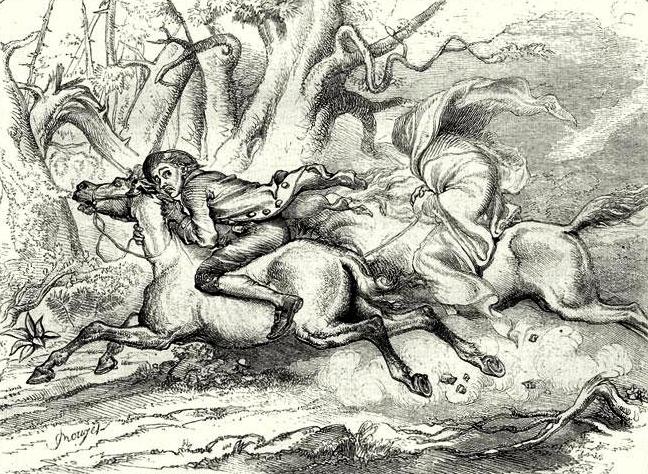
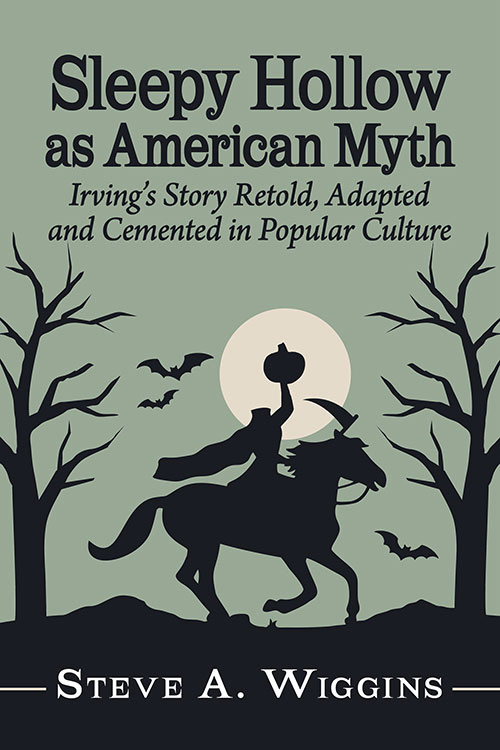
Timing is important.  I hope I have a sense of it, but it doesn’t always work out the way you hope.  My last book, The Wicker Man, was released on the fiftieth anniversary of that cult film.  A bigger publisher with better reach published their own Wicker Man book that year, and mine garnered no attention.  I decided to turn to Sleepy Hollow instead.  This is a story that has been quite well known since 1820.  Although the Fox television series ran out of steam in 2017, I wrote the book when I did because Lindsey Beer has been tapped to direct a reboot of the Tim Burton film of 1999.  Looking for books on the “Legend of Sleepy Hollow” I found very little.  This is what is known of in the biz as “a gap.”  I decided to try to fill it.  Fandom helps in situations like this.

I’ve been trying to find the Sleepy Hollow fandom and engage with it before Sleepy Hollow as American Myth comes out.  I am confident that there are fans out there.  The tragic collapse of the Fox series didn’t lead to lack of love for the tale.  Indeed, further renditions have continued to appear.  Some have gained considerable attention.  The online fan base, however, seems to be, ah, sleeping.  I’m not sure when the Beer movie is slated for release.  It was announced in several media outlets but now we’ve come to the lull where updates have ceased to surface.  I’m certainly no Hollywood insider and I generally don’t even find out about movies until after they’ve left theaters (unless they’re very big).  I hope the timing is right this time.

It takes a couple years, at least, for me to write a book.  I’ve been working on this Sleepy Hollow project, in some way or other, since before Holy Horror came out in 2018.  I sure hope I got the timing right on this one.  The many trade publishers and agents I approached didn’t think so.  Maybe it’s just that people aren’t curious enough to read a book about Washington Irving’s story.  I try to make the case in my book that it has risen to the level of an American myth.  The story’s known world-wide, but its largest fan base is here in the States.  Had the Fox series been handled a bit better, keeping both people of color and the apocalypse in the foreground, it might’ve run a couple more seasons.  The underlying story’s not quite dead in the grave yet, I hope.  But then, timing hasn’t always been my strong suit.

F.O.C. Darley, from Le Magasin pittoresque, public domain

Book Birthing

Books, like humans and other animals, undergo a process of conception, development, and birth.  It may seem, when holding a book in hand, that it is the singular work of one person, but in fact most books are a community effort.  I’ve read many books where the author was a specialist in one area and decided to write a book in a different field.  This used to be more acceptable, as various polymaths showed that specialization wasn’t the only way to understand the bigger picture.  Such efforts these days, however, take some convincing of skeptical editors.  And with good reason.  Factual books, especially, are subject to close scrutiny.  Does the author indeed know what s/he is talking about?  Is s/he qualified to write this book?

Recently I was reading such a book.  It was published by a university press, and the author was a specialist in one field, but writing in an unrelated one.  In my mind (so fictionally) I went through how this may have developed.  A writer goes to an editor and says “I have an idea for a book.”  From my own experience as an editor, this second party then asks her or himself a few questions.  Is this topic a viable book?  If so, who will buy it?  Is this author the right person to write it?  (It is possible that a person has an idea for a book better written by someone else.)  Depending on the author’s stature, the editor may cave and say, “Okay, but you need to let me help you.”  Editors (present company excepted) are some of the smartest people I’ve met.  They may not be specialists like professors, but they know an awful lot.  Many authors constantly question their editorial decisions nevertheless.

No matter how rational an author is, emotion plays into the process of writing.  I frequently tell my authors “the book has to be what you want it to be.”  Still, that may mean it should be published by someone else.  An author who publishes books s/he doesn’t like is not a happy person.  For nonfiction books other readers, such as peer reviewers and colleagues, also shape the final tome.  Seldom does the book in your hands represent something straight from the mind of the writer.  There are places for such things, of course, this blog being one of them.  (And there are many more.)  What makes the book authoritative, however, is that it has been fact-checked by many readers other than the author before it ever goes to press.  Gestation is important.  No book can be fully formed without it.


Unintentional Patterns

Time, they say, is what prevents everything from happening at once.  I’ve noticed something about my reading life (is there any other kind of life?).  One of my favorite topics on this blog is books.  Both reading and writing them.  When I wake up and try to clear the cobwebs of sleep from my head to think about the day’s post, I always feel relieved when I have a book I’ve just finished because that’s an eager and ready topic.  When I’m in the middle of a large book, it seems like a long time until I’ll be able to jot down some thoughts on it, and the ideas don’t always flow.  It’s here that I’ve noticed a strange kind of pattern and it has to do with the way I read.  Interestingly, it isn’t intentional.  It goes back to my post-commuting literary lifestyle.

I read nonfiction in the mornings.  I awake early and after about an hour of writing I try to get in an hour of reading before thoughts turn to work and its unraveling effect on the fabric I’ve been weaving before the sun rises.  The nonfiction I read depends, to a large extent, on my writing projects.  Not exactly the kind of research that time and libraries afford academics, but still, research in my own way.  Often these nonfiction books are large—400 pagers seem to be the trend.  I’m a slow reader, so they take some weeks to finish.  At night (or actually evening, for I retire early) I read fiction.  It isn’t unusual for my fiction choices to be briefer than the nonfiction books of the morning.  It always seems, however, that I finish two books very near the same time.  Then I have two book posts in a week and many days without any.

Since we married over thirty years ago, my wife and I read to each other.  Usually she reads while I wash dishes.  Those reading choices are by mutual consent.  They sometimes make their way into my research, but more often they show up in my fiction writing.  In any case, they also seem to fit this same pattern.  When I finish a large nonfiction book in the morning, the same day, or the next day, I generally finish my fiction book.  Shortly after that our dishes-reading book finishes.  I’ve noticed this happening over the past couple of years and I always wonder about unexpected patterns that I find.  It doesn’t always happen this way, but it does often enough to make me wonder.  If I intentionally set out to do this it would be understandable, but as it is, it simply happens.  As they say, things tend to occur in threes.


Fiction

All writing is fiction.  I suppose that requires some unpacking.  One of the first things we do when we approach a piece of writing is answer the question “what kind of writing is this?”  We may not do this consciously, but we wouldn’t benefit much from reading if we didn’t.  If your significant other leaves you a note stuck to your computer monitor or the refrigerator door, you know at a glance that it likely contains pithy, factual information.  If you pick up a newspaper you know what to expect the contents to be like.  It’s quite different if you pick up The Onion.  Or a romance novel.  These categories are extremely helpful, but they can also be problematic.  Any writer knows that you write and others decide on your genre.

I read a lot of nonfiction.  It is a kind of fiction, however, since it follows a narrative and it contains mistakes, or perhaps faulty assumptions.  Moreover, nonfiction is a reflection of its own time.  Geoffrey of Monmouth’s England had giants in its past.  It simply did.  Today we question his working assumptions just as surely as future people (if we long survive) will ours.  This current generation doesn’t really excel at critical thinking.  Many academics, as critical as they are in their own fields, fall into standard assumptions once you get beyond their expertise.  They accept the fictions of their era just as readily as does everybody else.  In reality our nonfiction is not the naked fact we like to think it is—it is the narrative of one perspective.  It is perhaps the truth as it is perceived in its own time.

This may seem to be a subtle distinction, but it is an important one.  Genres are very convenient handles that we use to classify what we’re reading.  Very often they become straightjackets that constrain what writing has the potential to be.  The word “genre” is related to the concept of genus, the classification about species.  Zonkeys and other, perhaps rare, but possible cross-breedings show us that hopeful monsters of the literary world are also possible.  We would soon suffer without genres in a world as full of words as this one is.  We also suffer from simple distinctions that somehow become iron-clad over time.  Think about the narrative that comes out of the White House.  We’re accustomed to it being mostly nonfiction.  At least we were until recently.  Watergate broke our trust in that, and now we live in a world of fiction masquerading as reality.  Critical thinking is, perhaps, the only way to make sense of any of this.