Unusual Places

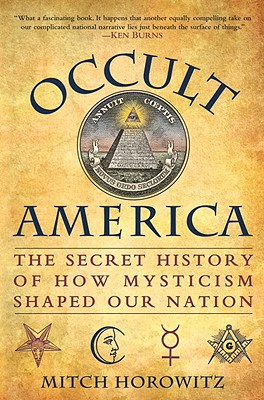
I don’t recall how I first learned about Mitch Horowitz’s work.  I read Occult America as soon as I found out about it—it helped as I was transitioning to writing about religious culture (largely through horror films) since there’s a healthy dose of occult in horror.  While still in publishing Mitch agreed to look at Holy Horror before it landed with McFarland.  The thing about my life is that it’s too busy (9-2-5 isn’t a size that fits all) to keep up with writers I find fascinating.  I hadn’t been aware of Horowitz’s continued, and continuing, book writing.  As soon as I saw Uncertain Places: Essays on Occult and Outsider Experiences I ordered a copy.  It brought back to mind the semester break at Nashotah House when I realized that to get anywhere near the truth you need to question and question boldly.  I told my students that if they didn’t challenge their perceptions with reading during semester breaks they were wasting them.

I met Mitch (although we’ve never seen each other in person) through our mutual friend Jeff Kripal.  They both have the courage to question apparent reality and to not stop at the line that the wall of materialism throws up around the pursuit of knowledge.  Uncertain Places is well titled.  Like almost all collections of essays some speak to the reader more than others, but I found myself pausing frequently to consider what I’d just read here.  One thought that keeps recurring is how even someone with a terminal degree can constantly feel like there’s so much more to explore.    Horowitz is a seeker unashamed.  And that also took me back to my past.

Growing up poor, I didn’t have many resources other than my mind to help draw some preliminary conclusions about reality.  Like many red-neck families of the time we had a CB radio and we were each instructed to come up with a “handle.”  I believe it was my mother who suggested “Searcher” to me.  She knew that I would never stop looking.  Uncertain Places is the work of another searcher—one who’s less fearful than I tend to be.  (I’m working on it.)  Reality, it seems clear to me, is far more subtle than most of higher education has taught me that it should be.  We try to make occult scary and demonic but Horowitz is, like yours truly, an historian.  Those of us who explore the history of religion can find ourselves in some pretty unusual, one might say uncertain, places.  And rather than dismiss what we see there, we take a closer look.

Help from the Friend

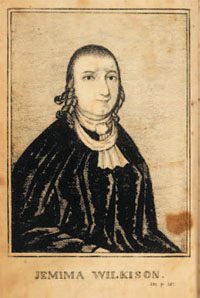
Being unconventional does carry certain risks. I first learned of the Publick Universal Friend, born Jemima Wilkinson, from Mitch Horowitz’s Occult America. There are many things, I imagine, worse in life than being labeled “occult,” but the Publick Universal Friend seems to have been more eccentric than occult. The “Friend” of her chosen moniker was a mark of her Quaker roots. The Quakers, while never among the most numerous of Christian sects, are infrequently considered occult. Two U.S. Presidents were Quakers, as is that friendly face smiling at you from your breakfast cereal box. What Jemima Wilkinson did that pushed her over the edge into the unconventional was actually the fault of her father: she was born female. In the 1770s religious leadership was nearly unanimously male. 

Wilkinson underwent a near-death experience that, like John Wesley some 70 years earlier, led her to believe that she was born to some higher purpose. Quakers, or Friends, generally eschewed excess showiness and the Publick Univeral Friend liked to make her presence known. She rode a white horse into Philadelphia and rode around in a carriage with her own logo, a kind of evangelical branding, if you will. Eventually tiring of the criticism of city folk (Publick Universal Friend was strictly platonic, advocating absolute celibacy), she moved to a region of New York that would eventually become the birthplace of several distinctive American religions. She settled near Keuka Lake and formed a community called Jerusalem.  New York and Pennsylvania would eventually harbor many utopian groups.  Both states were (and are, to a large extent) rural and it was a fairly easy matter to locate unclaimed real estate and establish a little bit of heaven here on earth. 

The message of Publick Universal Friend was peace and friendship, nothing too radical.  If preached by a male it would have been considered gospel. In fact, in a less darwinian world it might actually work.  The pull of nature on some people is too strong.  On others it is too weak. Maybe it is the legacy of having been born in a state that began as a “holy experiment” by William Penn, but I find it sad that the Publick Universal Friend has been nearly forgotten. Perhaps the Friend will have the final laugh. It seems that a young man named Joseph Smith might have been influenced by her in the days before writing up the Book of Mormon. As I’m sure Joseph Smith learned in the town of Carthage, we can all use a Friend who encourages us all to get along.


Occluded Religion

In my youngest days the word “occult” conjured the most perilous kind of fear in my inexperienced, Christian heart. It sounded malevolent and sinister, suggesting Hell, Satan, and the coercion of the divine. Therefore it took considerable time to pump up the courage to read Occult America by Mitch Horowitz. Well, maybe it wasn’t that dramatic—I learned in the course of my many years studying religion that “occult” is very difficult to tease out from “religion.” What I really feared is what others would think of me as I sat on the bus reading Occult America while heading to the Lincoln Tunnel. The word “occult” refers to the “hidden” or “secret” nature of certain religious practices. In ancient times it might refer to the Gnostics or Mandaeans, while in more recent days it might be used to describe Rosicrucians or Theosophists. Unconventional, yes. Evil, hardly.

Horowitz takes his readers through a whirlwind tour of some very colorful characters and, perhaps more importantly, shows just how deeply rooted occult practices are in the most Christian nation on earth. Few people realize just how influenced high office holders in this country have occasionally been by the occult. It seems a hard-and-fast rule that to be elected president you must be a professing Christian, strongly preferable if of the evangelical, Protestant flavor. Ronald Reagan made a great show of that while being personally convicted of the efficacy of astrology and some popular mediums. And Reagan has not been the only one. Still, politicians have to keep their more unconventional religious beliefs secret. The populace likes a straight shooter, devotionally speaking. The fact is that even what many people think of as regular Christianity has been seasoned somewhat with occult.

I can recommend this little book for getting a sense of just how deeply the occult has tunneled into the American psyche. The chapter on the ouija board took me straight back to a very straight-laced Grove City College, bastion of conservative evangelicalism. When I matriculated (which sounds vaguely occultish in its own right) the yearbook was called The Ouija. It was explained away as the combination of the French and German words for “yes,” but everyone knew, given what yearbooks are, that it had that spooky, occult vibe. By my senior year a more fluffy, evangelical-safe title of The Bridge replaced it. And many heaved a great sigh of relief. Christians thanked their lucky stars that they’d been delivered from the evils of the occult just as they were lining up to elect Ronald Reagan to a second term in office.