Little Girl

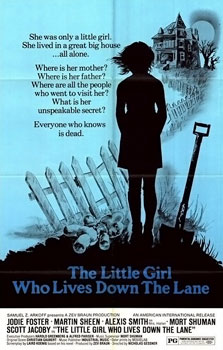
It might be inferred from the fact that I’ve mentioned it once or twice that I’ve seen The Little Girl Who Lives down the Lane before.  On a rainy autumnal afternoon it’s the horror movie that most often comes to mind.  While some find the “horror” designation overkill, it is the genre under which I bought the DVD many years ago.   Besides, it won a Saturn Award for best horror film.  I picked it up at a two-for-one sale not knowing what it was about but I was immediately taken by the atmospheric setting and weather.  A proper New England fall, after the leaves have come down.  It opens on Halloween with one of the most cringy openings ever.  Charlie Sheen plays a pedophile asking 13-year old Jodie Foster (Rynn) probing questions of where her father is when he finds her alone at home.

There will be a spoiler later in this paragraph.  Rynn lives on her own after her father dies by suicide and she murdered her mother and put her body in the basement.  Frank Hallet (Sheen), and his insufferable mother, own the Maine town where Rynn lives.  Befriended by Mario, a high school student who discovers her trying to drive, she eventually confides that Hallet’s mother was killed going down to the basement.  Meanwhile her son Frank keeps trying to insinuate himself into Rynn’s life, and, strongly implied, bed.  The story has some improbable plot elements and a few surprising moments, but not any jump startles.  It’s a slow burn, building to where Rynn attempts to poison herself, but Frank, not trusting her, drinks her tea instead.  Moody, rainy, and played out on a carpet of dead leaves, this is one of those horror movies that gets the season right.

Ironically for October nights, there aren’t a ton of horror films I know of that manage to capture this feeling.  I suppose that’s why I’ve seen this one a few times before.  I’ve gone through many lists of “October movies” and come out thinking that few people must think about this season the way that I do.  Or at least I haven’t found many horror movies that allow the season to pull its own weight.  Little Girl wasn’t welcomed with open arms when first released, but it has become a kind of cult classic.  Foster’s acting is pretty amazing considering her age at the time the film was shot.  But the autumnal weather does it for me, every time, even as we slip into November.


Still October

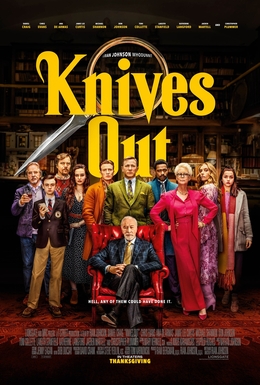
Before October was over, I wanted to watch Knives Out.  Not horror, it’s more of a murder mystery but it’s funny and it makes just about every list of movies to watch in October.  I’m pretty sure that list compilers don’t really understand what I mean by typing in “October movies.”  Or maybe the kinds of movies I’m thinking of simply don’t exist.  More on that later.  Knives Out is the story of the death of a famous writer.  (Given the fantastic house in which he lives, a very famous writer—the majority of us only ever modestly supplement our day job incomes with book sales.)  But this fantasy of being paid enormous sums for what is really hard work is, well, a fantasy.  This writer, who has/had three children, altered his will before his 85th birthday celebration and on this hangs the tale.

The two surviving children, and spouse of the third, have been cut out of the will.  Their means of support—they all relied on their father’s largess—is gone and so when the writer dies on the night of his birthday, by suicide, some questions arise.  There are many twists in the story, and I won’t give away the ending, but the main question that the private investigator asks is why he was hired in the first place.  All the forensic evidence confirms this having been a suicide, and although the adult children’s stories disagree in any particulars, the events surrounding the death seem clear enough.  At the center of all of this is the writer’s private nurse.  She’s an immigrant and she stays out of family squabbles.

The protests over the will bring out the true character of the children, or, in some cases, their spouses.  And although the viewer is clued in early as to what actually happened, like a mystery novel, a vital clue is left out that ties the whole together.  It’s quite well done.  It’s an October movie like Clue is an October movie, or perhaps Murder by Death.  There are some nice shots of trees in color, but it lacks the haunting, melancholy feel that I associate with October films.  Will I watch it again?  I should think so.  Movies like this bear re-watching, if for no other reason than to try to spot “donut holes” (the private detective’s phrase) in the plot.  It’s also a reflection on how money can corrupt.  But also how desperate people can become when their support system is withdrawn.  And that’s truly scary.  Knives Out would work on any dark and stormy night, but it’s not horror.


October’s Child

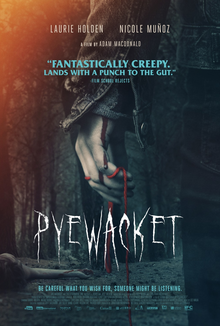
The thing about films is that there are so many of them, and they come into existence in so many ways.  Back when I was a kid, you learned about movies through the newspaper, or television or maybe radio ads.  Sometimes word of mouth, or, if you were lucky enough to see a film in a theater, through previews.  These days the internet has billions of pages and many streaming services and movies are produced faster than we can watch them.  All of which is to say Pyewacket, in my opinion, should be better known.  It’s an effective, thoughtful, and seasonal movie that caught me off guard.  It’s a Canadian independent film, not the product of a major studio, so it didn’t get the notice that massive advertising budgets provide.  I found it by scrolling on Amazon Prime.

Pyewacket is a teen angst movie (I wasn’t an angsty teenager—it came a little later for me).  Leah Reyes and her friends are into the occult.  Leah’s father has died and her mother’s having a difficult time coping.  She has decided to sell the house and move away.  Leah, who has a small circle of close friends, doesn’t want to move.  After mother and daughter are in the new house they fight, with her mother insulting Leah’s friends.  Leah goes into the woods and summons Pyewacket to kill her mother.  After this, mother and daughter make up and the tension builds.  Leah doesn’t want her to die but she’s set something in motion that she can’t control.  There are some really scary scenes in this movie, often without showing anything explicit.  In fact, views of Pyewacket are brief and indistinct, which really works.

This is an October movie.  Moody and evocative, it raises some very real questions.  Not all of them are resolved.  The occultist Leah consults informs her that Pyewacket is very deceptive and she can’t believe what she sees.  This leads to a tense resolution and somewhat abrupt ending.  It is very well done.  The point about deceptive spirits raises one of the truly potentially demonic facets of human society.  Deception throws truth off balance.  (Some of the more cynical politicians know and use this for their own ends, as we sadly know.)  Deception is dangerous and that seems to be almost the moral of this movie.  There are no villains here, but extreme actions can’t be taken back.  If you’re in the right mood, and the dark is just right, this is the kind of movie that delivers.  And I only found it by chance.


With Spiders

It gets October right, but Cobweb leaves quite a few unanswered questions.  One of the queries I always bring to movies is “where did it happen?”.  This isn’t, of course, the same thing as where it’s filmed.  Cobweb was filmed in Bulgaria—that certainly gives it an atmospheric feel.  It’s set, however, somewhere in the United States.  License plates aren’t shown long enough to really help, but a refrigerator magnet in the shape of Pennsylvania may be a hint.  In any case, the story’s a bit of a stretch, and it has some continuity issues, but I may come back to it in a future October.  The acting is pretty good, but the direction could be tighter.  So what’s it all about?  (There will be spoilers.)

A young boy, Peter, is bullied at school.  His parents are odd and they never believe Peter when he hears noises at night.  Or so they say.  As with much horror, things are not what they seem.  Peter’s parents had a somewhat Poesque solution to what turns out to be Peter’s older sister.  Born deformed, they made a pit in the basement to house her.  She gets out into the walls of the house, and talks to Peter at night.  We all know you should never listen to creepy voices in the dark, but she tells her brother he should defend himself from bullies.  And when he gets expelled from school for doing so, she suggests he give his parents the “We Have Always Lived in the Castle” treatment.  In support of this, she points out where he can find the body his parents buried in the back yard.  Now, there are many pumpkin-sized holes in the plot, but for a movie embodying October, I’m willing to let it pass.  Spooky rather than outright scary, the film does have some fairly tense moments.

Rescue comes at the hands of a teacher—and this is always a heartening development.  The name, “Miss Devine,” awoke hopes that maybe some traditional religious elements might appear, but no.  It seems to have been from the lineage of Miss Honey from Matilda.  She does read Poe’s “The Raven” to her class, though.  Overall she’s a teacher who has her students’ best interests at heart, particularly those who are sad.  The message is a little more difficult to discern.  Other than Peter and Miss Devine, pretty much everybody else is unlikeable.  Parents are murderers, sister a manipulative monster (even if made so by said parents), and all the other kids pick on Peter.  A good October effort, Cobweb is a story that needs some direction.


Ginger Wolves

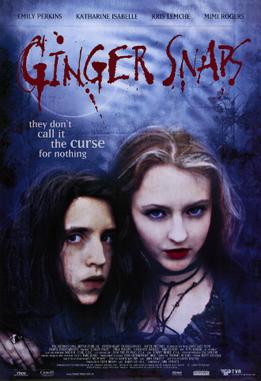
I’ve known about Ginger Snaps for years but the reason I finally watched it was a rainy fall weekend.  The kind of day that suggests imminent winter and you wish that you had a fireplace instead of waiting on the furnace guy to check everything out for another year.  Surprisingly, in my experience, there aren’t many movies that capture that mood very well.  The Little Girl Who Lives Down the Lane is one of the best.  But movies new to me give me topics for blogging, and so I watched Ginger Snaps.  It’s not a typical werewolf movie.  It’s become a cult favorite over the years since it didn’t get much of a box office boost.  It’s smart, and sad, and moody.  And, as is becoming more important to me, well acted.

Brigitte and Ginger are teenage sisters, 15 and 16 respectively.  They share a room and morbid interests.  Their affluent, suburban parents just don’t understand them.  They’re ostracized at school.  Then Ginger gets bitten by a werewolf.  The plot is a coming-of-age story for women, and it has attracted feminist interest over the years.  The sisters are devoted to each other because both are pariahs and, well, sisters.  This begins to change when one of them becomes a monster.  But only to a degree.  Brigitte is determined to stick with her lycanthrope sibling, and tries to cure her.  There’s quite  bit of dark humor along the way but this is pretty effective body horror.  Making it about growing up adds an emotional poignancy to the story.

Werewolves have always been my favorite classical monster.  Ginger Snaps made me realize that it’s almost always a guy problem, however.  Men are the ones struggling to keep the beast inside.  Having this apply to a young woman throws into relief all the uneven standards society harbors.  Some exist for pretty obvious historical reasons, but others are matters of convention, often religious in nature.  Religion is pretty much absent from this movie, however.  Lycanthropy is transmitted like a virus and you don’t need silver bullets to stop a werewolf.  This is a world, in fact, where teens have to try to figure out their own way because parents are too distracted with their own problems.  It is a kind of modern parable, but without a religious angle.  The girls are conflicted about what’s happening to Ginger.  She enjoys the power but fears the consequences.  It is a good Halloween movie, but mostly it’s about growing up, whatever that may be like.


What Message?

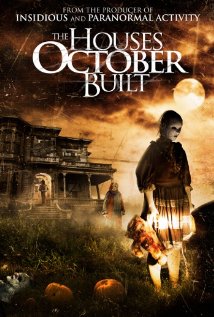
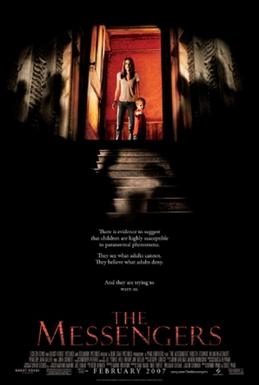
The search for autumnal horror movies is a never-ending one.  Can it really be that auteurs just don’t—drenched in the California sun—get that October feeling?  There’s something in the turning of the leaves and the appearance of pumpkins that changes everything.  And it works every year.  So it was that I thought of The Messengers.  I’d watched this years ago but found it somewhat unremarkable.  I seemed to recollect that, being based on a farm, it was autumnal in character, so I decided to try it again.  I remembered once more why I hadn’t watched it for years.  It’s a serviceable movie, but it is really set in summer (short sleeves the whole way through) and although August farm visits put me in the fall mood, this one is incoherent enough to prevent that feeling from catching on.

Jess is a girl with a past.  Driving under the influence, in Chicago, she was in a crash that rendered her baby brother mute.  In response her parents decide to move to a sunflower farm in North Dakota.  There the crows (actually ravens) attack them.  A stranger arrives and offers to help out.  Of course the house is haunted because of some past murders, but when the crows attack the hired help, it spurs him into a relapse—he’d lived here before and had killed his family, and so he decides to kill this new one too.  Being PG-13, they survive and the house swallows up the murderer from the past.  It’s never quite clear what the crows (the presumed messengers) really want to convey.  Are they trying to warn the family?  Are they trying to awake a killer’s memory?  What do they want?

This is an early Kristen Stewart movie—she’ll go on to more sophisticated horror films.  William B. Davis, with only cameo appearances, offers echoes of The X-Files.  Casting the generally congenial John Corbett as a killer is a bit of a stretch, however.  More intriguing, in this more global world, are the directors—the Pang brothers.  Known for their east Asian movies, including award-winning horror, they took on this American-themed, shot in Canada, project.  It had the backing of a few production companies and a reasonable budget.  Still, it struggles to be memorable.  I seem to recall that the prequel might’ve been a bit better.  But was it autumn-based?  I can’t recall and it’s that time of year when seeing falling leaves and a pumpkin or two make for essential viewing.


Something Wicked

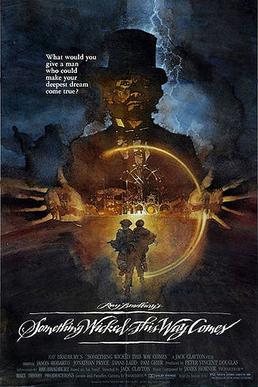
There comes a morning each year, pre-dawn, that it happens.  I crawl out of bed and things feel slightly chilly.  The furnace hasn’t been turned on yet, and ever sensitive to cold, I put on long sleeves and slippers to do my morning writing before the sun.  I start getting a powerful hankering to watch my autumn movies.  This year when that happened, in September, I finally watched Something Wicked this Way Comes.  Now, Disney isn’t a studio known for its horror films.  Over the years, however, they’ve produced some family-friendly efforts toward the scary end of the spectrum.  I tried to make the case in Holy Horror (and a list on IMDb agrees with me) that Pirates of the Caribbean falls into that gentle horror category.  I’ve read established writers on horror claim that The Watcher in the Woods was the movie that frightened them most.  I don’t think Something Wicked falls into that category, but I can say I liked it better than the novel.

And that’s saying something, because it was written by Ray Bradbury.  Bradbury’s stories were an integral part of my childhood.  In fact, much of my fiction writing is modeled on his work.  I didn’t really care for the novel Something Wicked this Way Comes, which I read last year.  The film is an improvement.  And it had a tortured way to the silver screen.  It began as a short story.  Bradbury himself adapted it into a screenplay anticipating a role for Gene Kelley.  This was in 1958.  When that didn’t pan out, he wrote it as a novel.  Filmmakers began to show an interest in the early seventies, but the movie didn’t come out until 1983, after Disney bought the rights and took over production.  The screenplay is mostly Bradbury and the soundtrack rips off Star Wars more than once.

Bradbury could get a little too nostalgic about boyhood.  His yesteryears seem far too innocent to me.  Although, having a few scenes where Jim shows curiosity about sex was a bit racy for Disney, I should think.  Jonathan Pryce does a fine job as Dark, and the mood isn’t bad for family-friendly fare.  I was never much of one for carnivals.  I can’t do rides and it’s easy to see through the games you can’t win and even if you do your prize is cheap.  Other entertainments always appealed to me more.  Still, the film sets a mood, and that’s generally what I’m after when the mornings begin to feel chilly and I’m looking off into another winter.


An October Movie

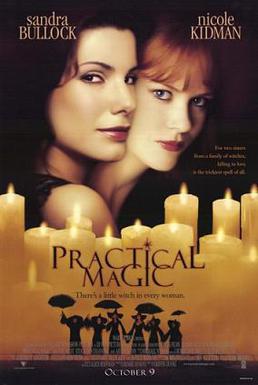
October means different things to different people.  I know what it feels like to me and I suspect, and hope, that there are others who experience it like I do.  When I search for October movies I’m looking for a kind of happy melancholy unique to the season, but others seem to think movies about witches capture the feel.  So it was that I came to watch Practical Magic, which was recommended on more than one October movie list.  It’s not a horror film, in fact it’s a rom-com and it doesn’t try to frighten anyone, although there is one tense scene.  Like many movies about modern-day witches, it has a good message of female empowerment.  I’m glad I watched it for that reason, and the story isn’t bad.  Set on an island community, presumably in Massachusetts, but shot in California, it’s not exactly falling leaves and pumpkins, though.

Witches seem to be the preferred monsters for feminine endorsement.  Most people, I suspect, wish they had magical powers.  We all want things to go our way and would like to manipulate them in that direction.  But there’s something more to it.  It’s tapping into an ultimate power—something that can’t be challenged.  Practical Magic, although not always in a serious mood, does portray the struggles witches have against occult powers.  The story is of the Owens family, which have been witches since the pilgrims landed.  They suffer under a curse dooming the men with whom they fall in love.  Not all the women are cut out for such a life.  So it is that Gillian and Sally set out to break the curse, each in their own way.

Other occult powers are at work, however.  One is clearly the curse itself and another seems to be an undead boyfriend who eventually possesses Gillian.  The women of the community have to come together to exorcise this entity, and that finally leads to communal acceptance of witches.  A major studio production with a reasonable budget and star power, it really didn’t do well at the box office.  Barbie seems to have struck a feminist chord that Practical Magic was reaching for, but the late nineties were a time when women’s power seemed to be starting to secure itself.  I noticed that, when looking for the movie on streaming services, it’s now having a limited theatrical run—it’s October, after all.  This may not be my October movie, but it has a good message that still needs to be learned.