Chrismahanukwanzadan

Happy holidays from a pluralistic world! Whenever I see the “Keep Christ in Christmas” signs that crop up this time of year, I think of the wonderful profusion of holidays that people from most faiths can share without being territorial about it. After all, the Pagans got there first—the Christian Christmas predates Jesus by centuries, it turns out. So when my daughter wished me a happy Chrismahanukwanzadan—from a mix of Christmas, Hanukkah, Kwanzaa, and Ramadan—I had to smile. Seems like some in the younger generation are really starting to get it. It doesn’t matter what you call it, but a holiday that celebrates people getting along is worth the effort. Being possessive of our holidays rings of hollow triumphalism—I feel happy because I have something that you don’t. Is this really the spirit of this secular season of giving wrapped in many confessional names? I’m sure shepherds and Magi didn’t exactly share a Weltanschuung.

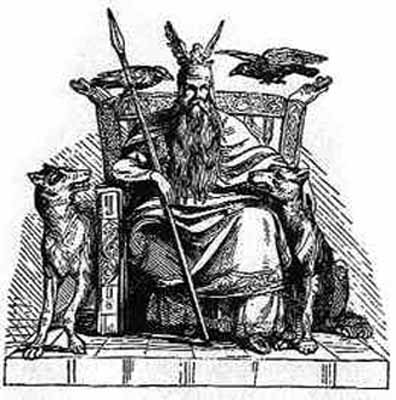
Those who despair the lack of Christmas have not spent much time with history. As a cultural holiday the celebration of Christmas is younger than the United States, at least in this context. From the beginning Christmas was a pastiche of traditions from different religions celebrating aspects of Odin, Sol Invictus, Jesus, and Zarathustra, at the very least. Bringing these religious figures together into a season that represents the human need for light amid a dark and cold time of year, who would want to exclude others from their own holiday traditions? Having stood in the bleak fields of the Orkney Islands in a massive stone circle aligned to the winter solstice and constructed over a millennium before the birth of Christianity, I have to believe Christmas is one of the earliest expressions of human desire and certainly not limited to Christians.

What makes a holiday holy? Is it exclusive rights like those slapped on every movie you pop into the DVD player? The trademarking of an idea someone else thought of? Religions have a long history of forsaking the spirit of the law for the letter—its most familiar name is dogma. No matter who came up with the idea of doing what we can to bring a little light back into the dreary world around the time when night seems unending, it is a cause that any person of any religion, or none at all, can fully appreciate. Instead of marking territory, should not those who claim Christmas as their own be glad to share it with all? If the one who’s birth the church proclaims at this time of year in no way improves our outlook to others we might wonder if there should be cause to celebrate at all. My answer, such as it is, is Happy Chrismahanukwanzadan!
A holiday in anyone's book

A holiday in anyone’s book


Thor’s Day

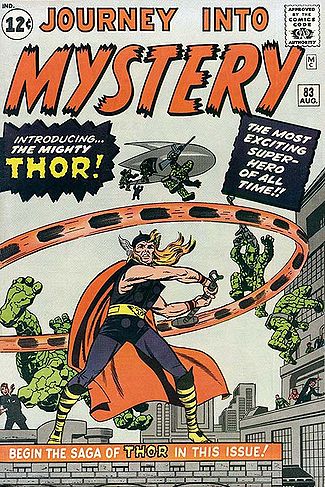
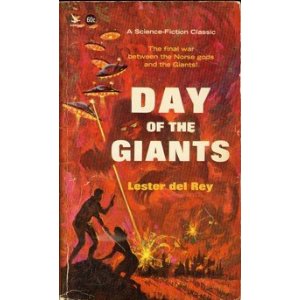
Mythology has visited the big screen in many guises, but among the current spate of superhero films a god may rival mere mortals and mutants. Thor opens in theaters today, bringing a Norse god back into the public eye. Like many young boys I owe my early reading predilection to comic books. One of my favorite heroes was Thor (our birthdays were very close) but I couldn’t quite make out how he was a superhero with the unfair advantage of being a god. Why weren’t other gods down here with us? At some level I sensed Thor’s rage, and perhaps even his estrangement from his father. Was there a sadness to this mighty wielder of thunder? When I was a little older Lester del Rey’s Day of the Giants became one of my favorite books. Norse mythology is plaintive compared to the world of the jovial Greek gods. Even the beloved Balder dies.

Thor is the embodiment of one of the most ancient principles of divinity: control of the storm. A generation after Odin, Thor also experiences that generational divide that all ancient people felt marked the lives of the gods. Zeus likely developed as a more civilized form of Hadad (Baal). In Ugaritic mythology Baal is the lord of the storm; he bears a mace where Thor will grasp a hammer. Baal, however, is often described as the son of Dagan, likely an early Mesopotamian storm god. Back to the earliest levels of civilization miniscule humans have quaked in wonder at the power of storm gods. Making Thor into a superhero humanized him a bit, and with classic comic-book biceps he was sure to be a hit among scrawny boys with dreams of grandeur. We would never have been allowed to read comic books featuring Baal.

The salient point, I suppose, is what makes a god a god? In the mythological mindset, deities are quite human except for their immortality and their strength. The might of gods clashes with the might of other gods. Omnipotence takes the fun out of the equation, for a truly all-powerful deity has orchestrated this whole cosmos and we are just pathetic players on the stage. Thor rages against the machine. If a god cannot be defeated, there is no story to tell. It may be difficult to predict how well Thor will perform on the big screen, but if I am not alone in my fascination of watching gods struggle against even greater gods, this may be like the Day of the Giants for grownups and kids alike.


Return of the Frost Giants

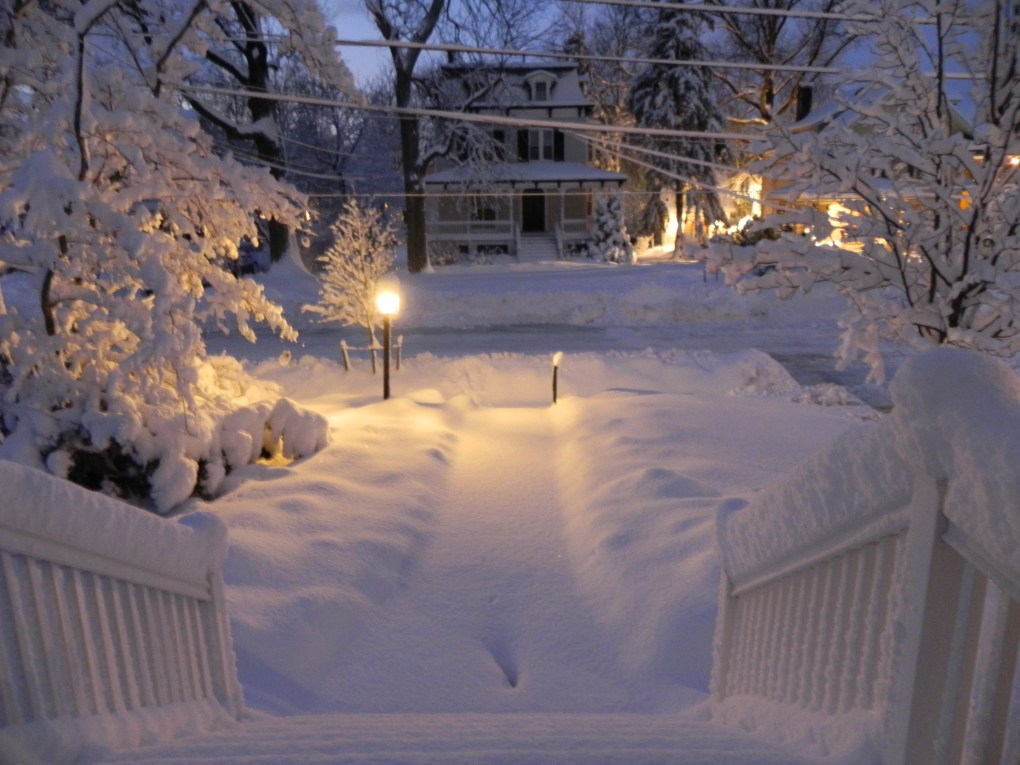
We have ceased believing in the gods, but we still feel their wrath. The recent winter storms encompassing much of the nation demonstrate our arrogance in the face of the uncontrollable. It has long been my contention that the chief god is a personification of the weather. No matter how many HAARPs we put into place or how many satellites we hurl over our heads, the atmosphere remains a chaotic system. Global warming triggers unpredictable weather and extreme conditions. Yet people claim the moderate level of snow in the northeast is proof against the facts. I say the gods are laughing. How quickly we forget the ice ages.

As a child Norse mythology was among my favorite pagan religious systems. Obviously those responsible for naming our weekdays felt the same. The struggles and weaknesses of Odin, Thor, and Loki are far more honest than claims of pristine intention on the part of the majority of gods. The most captivating aspect was the eventual victory of the frost giants at a kind of Ragnarök. In Scotland, so close to the landfall of many a Viking, I took advantage of indulging in Viking sagas and myths. My understanding remains that of a curious layman, but I sense a deep wisdom at work here.

A recent email from a university dean on a particularly treacherous weather morning admonished all instructors that classroom presence was a commodity that paying students have a right to expect. Deans, with their six-figure salaries, are not accustomed to not getting their own way. How hard it is to admit that the gods have bested us! There are those who’ve not bothered to study global warming but nevertheless like to make pronouncements about it. They claim such weather disproves that the world is heating up, despite the global warming models that predict erratic and localized colder weather. We have released the frost giants. The more we mess with them the more dangerous they become. So, what is my solution to the dilemma of too much weather? Well, I’m morally obligated not to say until I receive my six-figure salary.

The little wolf laughed to see such sport


Friday’s Wednesday

The ultimate stag party?

Mythology never ends. Many people live by it today under its name “religion,” and many in the ancient world endlessly recycled their gods until they ended up looking rather unrecognizable from their earlier forms. I was, therefore, intrigued when a friend asked me about Herne the Hunter. Herne is a mythological character about whom I had not heard. The earliest reference to the stag-antlered deity comes from William Shakespeare, and he has been co-opted by the Wiccan community, nicely tying together many of this week’s posts. So, whence Herne?

Shakespeare seldom invented ex nihilo, but rather adapted. Herne, already an established character, was a wrongly accused poacher who was hanged from a great oak in King Richard II’s England. He had been magically revived after a near-death experience earlier in life and had been crowned with fantastic antlers at that time. The horned head has reminded some Celtic mythologists of Cernunnos, a horned chthonian god attested in mainland Europe but not found in the British Isles. Yet others, by virtue of his being hanged on a tree and the similarity of his name to the epithet Einherjar, suggest Herne may have evolved from Wotan, or Odin himself. Woden was involved in the “Wild Hunt” episode of northern and central European mythology, and since Herne is a hunter, well, isn’t the connection obvious?

Such tales as this are instructive of the way that religions evolve. We know very little of the true origins of the story, but later versions become canonical. The present-day version is perceived to be “historical” and all others are merely coincidence or happenstance. Today Herne is a typical ghost story of Windsor Forest, and those who report seeing him say he still wears his supernatural horns. Those who want to discover his origins are left with a handful of books by publishers of the occult and hundreds of unanswered questions.