Fear Itself

Who you gonna call?

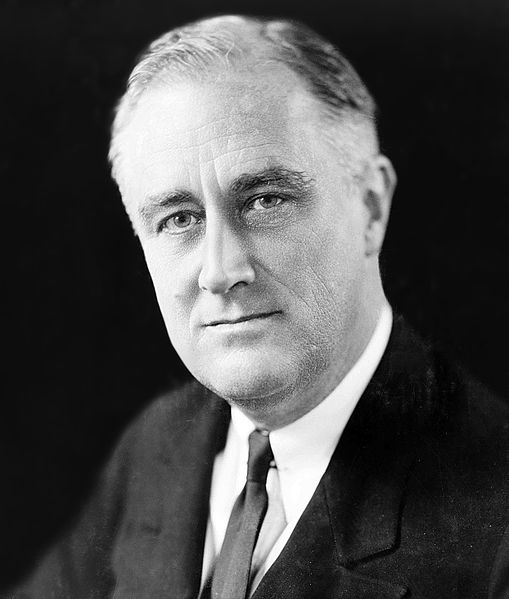
“The only thing we have to fear is fear itself—nameless, unreasoning, unjustified terror which paralyzes needed efforts to convert retreat into advance.” These bold words from Franklin D. Roosevelt’s first inaugural address could just as readily be applied to religion. Frequent readers of this blog will have no doubt noticed the recurring references to horror films and the occasional scary novel. Aside from everyday fears, (such as yesterday’s when I learned that my summer course, my only source of income for next month, had been cancelled) there are more deeply seated phobias that lurk in our subconscious minds. A reasonable conclusion might suggest that this undercurrent of fear is what buoys up the horror movie industry—people really are afraid. Fear is, in the final analysis, the original basis for religion.

Along with the evolution of consciousness, humanity has also acquired the knowledge of uncertainties and troubles ahead. We project to the next day and realize tomorrow is never secure. In desperate hope we beg the higher power for protection. If we were in control of our own destinies, we would not need the gods. Over the course of civilization, there have been luminaries who’ve tried to wrestle religion from the realm of fear into a more pleasing sphere. Jesus, for example, tried to stand religion on the basis of love. Within a couple of decades, however, Paul came along and managed to twist it back into the domain of fear once again. Fear of Roman persecution, fear of Hell, fear of life itself.

Religion is an embodiment of our fears. Many today choose to place their trust in reason and technological development. No doubt these arenas of human endeavor have improved life for many people. Yet, even with our growing global awareness, fear creeps in and we use our technology for weapons to keep us safe. We don’t call it religion any more, but national security, or the defense industry. Or, God help us, the TSA. The end result is the same: we fear more than fear itself. We place our trust in something we can’t fully comprehend. No matter how rational (or unemployed) we become, religion will never go away.
Aroma of the Divine

Religion is all about emotion. Those who approach religions rationally soon have to face the fact that believers approach the subject with a less-than-rational motivation. Religion fulfills basic psychological needs – we can explain our world without divine forces, but for many this cold and clinical approach lacks vitality and meaning. Belief in the divine is emotionally satisfying, and as long as humans experience emotion, God’s job is safe.

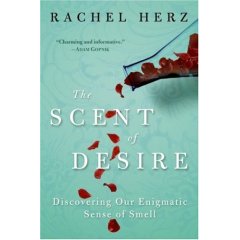
Aware of this emotional component, I was intrigued when I heard about Rachel Herz’s book, The Scent of Desire: Discovering Our Enigmatic Sense of Smell. It is schoolyard wisdom that smells are closely associated with memory; everyone I’ve asked about this has had the experience of a firm memory being mediated by an unexpected aroma. What Herz has discovered, however, is that our sense of smell evokes memory just about as well as other sensory cues. The vital difference is that our sense of smell is vital for emotional development. The fragrance-induced memory is more fraught with emotion, therefore it may seem more intense that memories brought on by old photos or songs. In fact, those who lose their sense of smell often report living with emotional flatness. Laboratory animals with their olfactory organs removed show no motivation in their pathetic lives.

Considering the emotional component of religion and the fact that our olfactory perceptions are closely linked with our limbic systems, I wonder how religious satisfaction smells. Surely emotion is more complex than what our noses detect, but if emotional systems are shut down without a sense of smell, it stands to reason that religion must be related, at least in some form, to smell. The presence of the divine is often described as “inspiration” or inhaling. In Hebrew and other Semitic languages the world for “spirit” is also “breath.” Although Herz doesn’t discuss this aspect of scentology in her book, it would be an avenue to investigate for those with an interest in the origin of religion and the aroma of the divine.


Strawberry Fields Forever

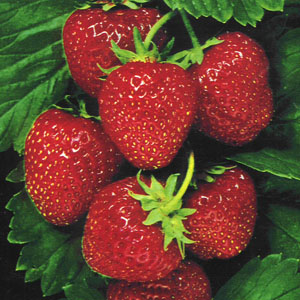
For beings dwelling on the surface of our planet, we tend to live far from the earth. I was reminded of this yesterday when my family went on our annual strawberry-picking venture. Each year we drive out to a remote farm that has pick-your-own strawberries and fill too many baskets because we just can’t stop ourselves when nature offers such obvious bounty. On the years when I can visit the northwest with my in-laws, one of my favorite pastimes is huckleberry picking. The two berry experiences differ vastly; one is a cultivated, planned layout of particular strains of red berries, the other is a forage-and-hunt search for wild purple berries that haven’t been stripped by the grizzlies. Both, however, put me intimately in touch with the earth. Trousers muddy from direct contact with the ground, fingers stained from the delicate fruit juices newly plucked from the plant – it is an earthy enterprise.

At such times it is evident how religions began. I don’t pretend to comprehend the whole complex phenomenon of the psychology of religion, but in those rare moments I share in the ancient art of survival. Finding your own food, body pressing directly on the earth with no cushion or blanket or furniture between. These moments must reflect our earliest ancestors’ daily life. When times of hardship came and food could not be found, they could only watch as members of their group died an agonizing death from hunger. Would they not call out to the powers beyond themselves, the unseen providers who alone could assure a steady supply of food?

In is no surprise that the first instances we find of religion in any developed form are strongly agricultural. Gods of rain and “fertility” abound. The ancient voices can distinctly be heard: we truly are helpless to create our own food. It is an echo that fades with each passing triumph of human control over our environment. When we can force nature to do our bidding – irrigating huge tracts of waterless land, feeding pesticides and growth enhancers into the very soil, even starting to create life itself in the laboratory – where are the gods? They have stiff competition indeed. So when I hold that strawberry in my hand, organically connected to the very planet that gave birth to us all, I feel that I have tapped into the roots of religion itself.