
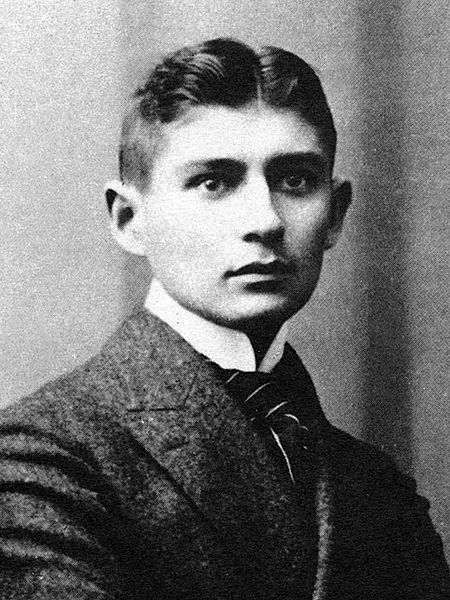
 “When Gregor Samsa woke up one morning from unsettling dreams, he found himself changed in his bed into a monstrous vermin.” I borrow the opening words from Franz Kafka’s The Metamorphosis since upon rereading it yesterday I found it consonant with much of mythology. Even the title chosen by Kafka resonates with Publius Ovidius Naso’s (Ovid’s) Metamorphoses. Transformation at the hands of the gods. The idea lives on in the concept of conversion, the religious experience of profound change at the behest of God; some claim a willful hand in their conversion while others simply give God the whole credit. Kafka, one of the great existentialist writers of the twentieth century, considers the transformation without the gods and the terrifying results.
Having discovered the existentialists in high school, I was immediately taken by their writings. Characters find themselves cast into a world devoid of meaning, a world that they can’t understand and in which they often suffer unusual consequences. Little did I know that I was in training for my own experience in the academic world. Academia involves a major metamorphosis, one from which the victim cannot return, and after which she or he will find him or herself ineligible for employment. Reading The Metamorphosis as an often displaced instructor who’s only ever received positive evaluations, I saw much in the novel this time that I could not appreciate last time I read it. In short, I had metamorphosized.
Gregor Samsa, discovering he is now a bug, immediately worries about how to get to work. The painful description of his financial worries and ultimate rejection resonated a little too clearly. Is conversion a positive phenomenon? It is difficult to evaluate. In my experience, those who’ve converted tended to have been pretty decent people in the first place. As Ovid notes over and over again in his lengthy epic poem, when the gods make you into something else a sadness will pervade this new existence. If you survive. As Gregor slowly starves to death (in a fate hauntingly similar to Kafka himself) he finds no divine consolation. The situation is absurd—best just come to terms with that. Kafka could have been a struggling academic in the century after his death and he would have found the same situation applies.

 Steve A. Wiggins