Jots and Tittles

While busy editing during the course of the day, I ran across this line in a Routledge book entitled What is Religion?: “We live in a pluralist, inter-racialist and multi-faith society and the need to understand one another is greater than ever before. Much misunderstanding arises from racialism and nationalism and could be avoided if people knew more about the beliefs and practices of one another.” Amen, Robert Crawford. I would, however, add a caveat to his statement: even more conflict could be avoided if people knew their own religions. I know many people, especially in the United States, who have no idea what their religion’s official teaching is. I know Presbyterians who have no concept of the official doctrines of this organization they’ve joined. Many Catholics, given the more corporate structure of that church, know the teachings but choose to ignore those that just don’t match the realities of life on earth. In such cases, the question of acceptance of religious teaching is a very relevant point. Can you get to heaven without crossing every “t” or, because it sounds more interesting, observing every jot and tittle? (By the way, “jot” is a stand-in for “yod,” the smallest Hebrew letter, “tittle” roughly translates as “serif” or the fancy little calligraphic flourishes typical of Tanak manuscripts.)

Religious membership devolves into self-declaration, often of a self-perceived version of the religion one favors. The vast majority of people are born into their religions, an immediate red flag that absolute truth claims will necessarily lead to conflict. And it won’t help to try to devise some Uber-religion that includes all the others, since apart from the occasional Universalist or Bahai, nobody buys that other religions are quite as good (or right) as theirs. Even the task of defining what religion is remains beyond the reach of mere mortals. I find Bronislaw Malinowski’s observation apt, that religion grows “out of the conflict between human plans and realities.” We can imagine a much better world than the one that exists. In some such fantasy worlds, religion itself ceases to exist.

Religion never existed in any pure form. It did not descend from the sky in a unified whole. Instead, religions have been cobbled together by people since the Paleolithic era, and we simply don’t have the time, resources, or influence to go back and start it all over again. Religion may be defined as conflict. Conflict between what is and what ought to be. Conflict between right and wrong. Conflict between us and those who believe differently than we believe. Religion brings, as one founder stated, a sword. Religion gets passed down the generations just as surely as the family jewels and deeds. To ask anyone to relinquish such valued property, even for the sake of world peace, is too much to ask. Even getting people to understand what they claim to believe is too much effort. It is much easier to praise whatever lord and pass the inhumane ammunition.

Zombies of Harare

In a tale that would have Edgar Allan Poe turning in his grave, a news article from Zimbabwe narrates the darker side of resurrection. In a July 26 story entitled “Schoolgirl ‘rises from the dead’News Day online reports that a sixth form girl, after falling into a coma (the article says she had “fallen into a comma”-embarrassing enough under any circumstances) was pronounced dead and taken to the morgue. Her coughing, possibly from the cold, caught the attention of an attendant and she was rescued. Her schoolmates feared her until school authorities “assured them it (the mishap) was normal.” Even more disturbing is the sentence, “Cases of people gaining consciousness in the morgue after being certified dead are quite common and in most cases doctors would have erred.” The story serves a grim reminder of how in many parts of the world what is taken for granted in developed nations is still a desideratum.

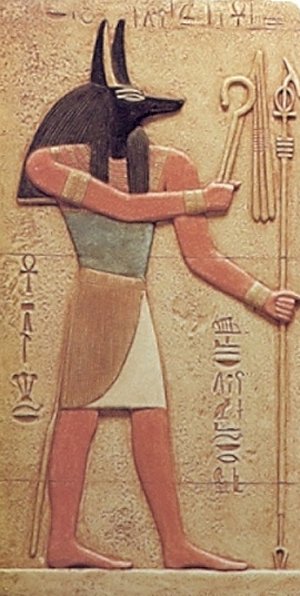
The fate of the dead is a major preoccupation of religion. Certainly among the most famous African outlooks on the subject, the Egyptians possessed a highly refined view of the life beyond. Having just covered Egyptian funerary beliefs in Ancient Near Eastern Religions class, the connection between this chilling story and an ancient optimism among the Egyptians is worth noting. Initially life after death was limited to the king in ancient Egypt. Over the centuries, a kind of democratization of the afterlife took hold and the chance for renewed life was open to us regular sorts as well. In a snapshot of how religions work, this transformation holds the keys for further religious developments. The benefits trickle down from the elite to the peasant. Those who awake in the morgue may count themselves lucky since Osiris demands their presence only at a later date.

When Anubis comes knocking, don't answer.

Modern ideas of resurrection are great motivators for religious belief. The fact that Paleolithic burials sometimes include grave goods demonstrates that some kind of afterlife hope predates civilization itself. It is one of the formative elements of religion. In a world where death may not be the worst possible fate, however, such an afterlife may eventually lose its drawing power. For Egyptian peasants, the afterlife was pretty much a continuation of peasant life. I suspect that those who wake up in a morgue have a new perspective on life after death that most of us, thankfully, never have to face.


Palm Versus Palm

“Mankind [sic] has managed to accomplish so many things: We can fly!” The words are not mine, but, depending on whether he was standing or sitting when declared, the Pope’s or God’s. In his Palm Sunday sermon yesterday the Pope addressed the issue of technology. Acknowledging flight a mere century after it began is breakneck speed for the Roman Catholic Church, but the concern behind the sentiment is real enough. Can religious systems survive the full onslaught of the technological revolution? As one small sample of the larger picture, ethics must react to increasing advanced technological scenarios. Raymond Kurzweil’s proposed Singularity where human and machine are fully integrated is perhaps an extreme example, but by no means the most extreme. Without fully understanding the context, our technical ability has soared way beyond our capacity to foresee implications. Believe it or not, many people alive today cannot use personal computers, have no palms, no cells. Sounds like they might be living free.

Palm Sunday is a day of tradition, heavily freighted as the start of Holy Week (in the Western tradition; of course, many Christians think it is a little too early some years, but that’s for a different post). Fronds from actual trees are waved as the Pope speaks. In the crowd palms are also being utilized to send the news home that one is waving a palm in the presence of the Pope. Traditional Christianity can survive with only the most rudimentary of tools. Religion, from the available evidence, began in the Paleolithic Era – earlier, I am pretty sure, than even the first integrated circuit. With its iron grip on the human psyche, religion is not about to disappear. Instead, technology is either ignored or embraced by it. As long as religions rely on human participation, however, technology will need to be reckoned with.

It's still a date (or palm)

The fact is technology has changed the perception of the world for many, especially in the western world. Even the revolution in Egypt earlier this year was conceived on the Internet. All the indications point to increased usage of technology rather than its imminent demise. Yet religious leaders still enjoin us to wave palm branches. Virtual Church websites abound where the faithful can wave electronic fronds and nary a tree will be harmed. Sermons, discussion groups, Bible readings, prayers – they can all be dispensed through wireless networks and modems. While many traditionalists turn from such ideas in disgust, it would behoove us all to pay attention. With the Vatican now onto the fact that we are flying, within mere decades we might receive a divine message on – oh, wait a minute – I’ve got mail!


Make Mine Myth

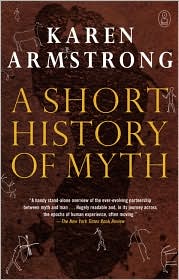
As a best-selling non-fiction author, Karen Armstrong needs no introduction. A recognized authority (some of us are mostly unrecognized) on religion in its broad sweep, she is an insightful writer and is worth paying attention to. I just finished reading her A Short History of Myth. The book does bear the marks of a religionist who hasn’t specialized in many of the materials she discusses, but when she reaches the time periods she knows, she comes alive. The book is a little unusual in that Armstrong believes myth began in the Paleolithic Period. I don’t doubt that early hominids who’d developed vocal skills probably told stories, but to be able to guess which ones in this first pre-literate period becomes rather speculative. The same applies to her treatment of the Neolithic. Still pre-literate, the people undoubtedly told religious stories but we will never know which ones.

Her discussion of the Axial Age considers mostly east Asian innovations, after acknowledging that distinct changes had also appeared in the Levant and Greece. It is, however, in her chapters on the Post-Axial Age and the Great Western Transformation that she demonstrates her craft fully. The western world, she argues, has lost something vital with the increasingly complete dismissal of myth. Those who see human history on an upward climb (mostly those who do not read or watch the news) are pleased to watch the demise of the non-rational. As Armstrong makes clear, however, pure reason comes with a very high price. The neurosis of the western world may be labeled “Exhibit 1.” Religions, institutions that evolved to improve the human lot in life, have turned destructive. Roping themselves in with a logic that doesn’t match their myth, they strike out at any who dare point out the inconsistency. Many of us have been on the receiving end of their lash personally.

Myth is where we seek meaning. Human beings are meaning-seeking creatures. While science and technology may see us safely to Mars and back, once the colonists start to arrive chapels will appear. We find ourselves lost in a meaningless world. Religions have tended to cast their uneasy lot with rationalism. What is left? Mythology. Mythology was never intended to be a literal account of “what actually happened,” but instead it was to explain what it all means. In these days when religious leaders are as likely to lob a high explosive in your direction – or engage in the Schadenfreude of watching you squirm before an overfed lawyer while being deprived of a livelihood – as they are to offer you a “hale and god-be-with-ye,” maybe what we all need is a stiff shot of mythology.


Sharks and Apostles

There are sharks in the water. For the third day in a week, some New Jersey beaches have restricted access to the ocean because of sharks. As a particularly hot July trundles along, this is not really welcome news. Also yesterday, the Vatican codified revisions to its clergy sexual abuse crisis. According to an Associated Press article in the New Jersey Star-Ledger, women’s ordination groups are angry because sexual abuse and the ordination of women are classed together as crimes against the church.

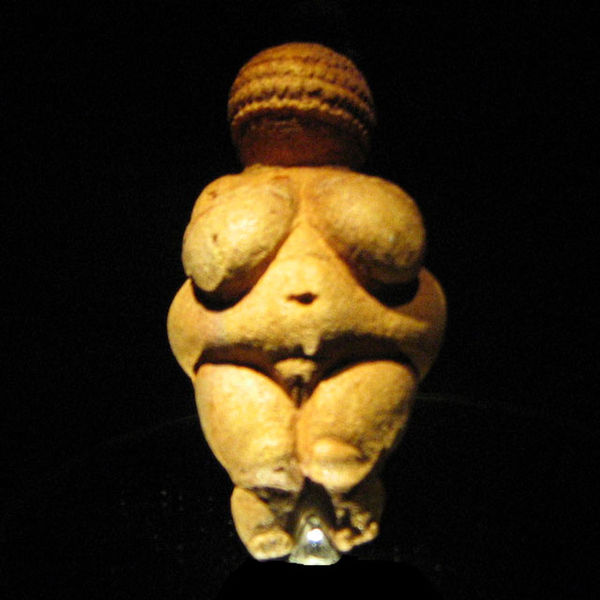
Venus of Willendorf

Even before civilization began, it seems, religion and sexual dimorphism were tied together. Beginning back 35,000 years ago Paleolithic humans carved female figurines. In a hunter-gatherer society where struggle for survival was the best paying job available, the execution of such objets d’art in a brutish, hostile environment reveals religious sensitivities. Stone Age humans knew something that organized Christianity forgot within its first century: sexuality is never far from religion. The Bible itself, particularly the Christian Scriptures, emphasize that celibacy is a putative gift, not something that can be learned or forced on someone. In typical Roman fashion, however, the church quickly mandated celibacy as the norm and ruled that women were the source of evil.

Nothing could be further from the indications of both Paleolithic remains and scientific thinking. Women, long the source of spirituality, were now cast aside in an arrogant aberration of earlier practice. Largely based on the angry writings of one man, the church decided that men alone should determine the eternal fates of others. Masculine men who knew self-control and who could turn off millennia of evolutionary pressures by a sheer act of will. Centuries later, and the Vatican with its own Pontifical Academy of Sciences, the church still can’t get beyond basic reproduction and sexuality issues. I would go to the beach to try to think this one out, but there are sharks in the water.