Optimism

On the homepage of my website (of which this blog is a part) is the statement that jaded optimism lurks here.  I’ve been thinking a lot about optimism and hope lately.  Trying to change the way you think is difficult.  Musing with my wife the other day I realized—and this should’ve been obvious—that my optimism became “jaded” when I lost my job at Nashotah House.  You see, our lives have been uncertain since then.  The steady income of an academic job with a retirement plan, a future mapped out (at least a little) with summers free for research and travel, the flexibility to have time to contemplate; all of this fits my neurodivergent way of thinking.  Having suddenly to cope with finding an apartment, finding jobs (not vocations), losing retirement options, all of this has led to a turmoil that has lasted going on two decades now.

I need to challenge my jaded optimism into becoming real.  I keep coming back to Mark 9.24, “Lord, I believe; help thou mine unbelief.”  I’m not a materialist, although academia led me close to it a time or two.  The universe, however, is an untamed place.  We don’t know the trillionth of it, let alone the half.  We’ve figured out a good bit of the physics of this world and think that it applies the same everywhere in this infinite, expanding space-time.  Then we discovered quantum physics and quantum entanglement which looks more like religion than science.  It seems to me that optimism—hope—lies in a combination of what science tells us and what is traditionally called religion tells us.  You may call it “belief,” “intuition,” or “hope.”  Yes, when Pandora’s box was opened, only hope remained.

John William Waterhouse, Pandora (1896), public domain, via Wikimedia commons

There’s a parable in the story of Pandora.  As told by Hesiod, Pandora’s jar contained the gifts of the gods which escaped when Pandora opened it.  Thereby evil entered the world.  Yet one gift of the gods remained for humankind, and that was hope.  Arguably the most valuable gift of them all.  I have been letting my career malfunction at Nashotah House dominate and drive my outlook for far too long.  It will never cease to hurt, I know, but it’s time I learned the meaning of what the Pandora myth teaches us.  Myth, please understand, functions like religion.  It provides insight and guidance.  And the tale of Pandora, especially when things turn unexpectedly frightening, reminds us that hope is the only necessary gift of the gods.

Sleepy Holy

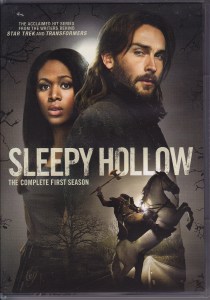
Fox recently announced that, after four seasons, Sleepy Hollow is being cancelled. The news, while not unexpected, is still disappointing. The initial success of the series caught just about everybody by surprise. Intelligent, witty, and literate, this program tapped into a number of themes dear to American sensitivities. One of those sensitivities, surprisingly, was the Bible. I sometimes wonder if the Bible might’ve been able to save Sleepy Hollow. In my limited view the first season was the best. It started out with an all-American apocalypse. To survive an apocalypse you need a Bible. George Washington’s Bible featured throughout the mythology of the first installment. Two of the four horsemen of the apocalypse had arrived in Sleepy Hollow. Then something went wrong.

In season two, Moloch—clearly a stand-in for the Devil in the series—was killed off. Apocalypse no. The end of the world, in Scofield’s canonical view, had been cancelled. Even Ichabod and Abbie began to wonder what good it is to be mentioned in Revelation if your role as world saviors has been made redundant. A new arch-villain was needed. The coven that had shielded Ichabod, headless without its horsemen, simply faded away. Ichabod learned how to drive. Where’s an enemy when you need one? Enter Pandora for season three. But wasn’t she rather a sympathetic figure? Sure, she unleashed lots of negativity but hardly with malicious intent. There’s no villain like a biblical one.

Where do you go after the apocalypse is over? What use is the Bible in such a world? Pandora has no book of Revelation behind her. No special effects budget can rival Pestilence, War, Famine, and Death. What can make you shudder like that pale horse and its skeletal rider? In a world with ebola and zika it would seem that pestilence still has a place. Famine in a world of plenty is horror defined. Two out of four isn’t bad, I suppose, but when you start off with Death you’re not leaving yourself much room for maneuver. Of course, after the horsemen there are three seals left. Perhaps if Sleepy Hollow had stayed with the script and followed through until just before the final trump, it might still be here among the land of the living. Just like creation, the “end of the world” has multiple versions in the Good Book. The Bible’s a consistent narrative only in the imagination of harmonizers eager for easy answers. The possibilities are endless. Where there is no vision, the people parish.


Dark Materials

After three years we have finally finished Philip Pullman’s His Dark Materials trilogy. The Golden Compass, a fantastic story made into a very disappointing movie, followed the adventures of Lyra as she struggled against the insidious designs of the Magisterium, Pullman’s not-so-subtle code for the church. The story picked up again when Lyra met Will in The Subtle Knife and revolves back to the Garden of Eden in The Amber Spyglass. It becomes clear early in the book that Lyra is a type of Eve, about to open a Pandora’s box for the entire universe. Along the way Metatron and the symbols of the old religion, including God, die. Detractors like to hurl accusations of atheism at the author, although Pullman tends to call himself agnostic. Whatever label is pasted to him, the fact is the message of the trilogy is profoundly in keeping with what is purported to be the message of Jesus. Not to put too fine a point on it, the message is “Christian.”

Of course, these days that word has to be qualified. “Christian” has been co-opted by so many special interests theologies that its vagueness is useful for little more than winning presidential elections. Part of the difficulty begins with the fact that we don’t have any objective way to assess what Jesus actually said. The earliest canonical Gospel, Mark, was written some three decades after the events that it recounts. There can be no doubt that Matthew and Luke borrowed heavily from Mark while John, written much later, blazed his own trail. Some of the statements attributed to Jesus in these variant accounts differ, but the basic idea seems to be: love others, try not to harm each other, and be willing to be the victim once in a while. These precepts permeate that story of Lyra and Will as they flee from an institutionalized church that seeks to destroy them. Yes, the parable is transparent here and even today many would-be rulers understand the power in the blood of the lamb. Accusations of someone being non-Christian can turn a red tide against them.

Ironically, today “Christian” often has the connotation of intolerance and lack of forgiveness. We see the wealthy and powerful adopting the rhetoric when it suits their purposes but refusing to live by its principles when the poor reveal their underprivileged faces. Taking Jesus out of context they like to say, “the poor will always be with you.” As if Jesus never spoke a harsh word to the wealthy. Something that Pullman makes abundantly clear is that power corrupts. The church in his books is not evil, but corrupt. It is too powerful for its own good. Above all, the books are a tale of growing up. Lyra realizes the danger that the Magisterium poses, and fights it with the conviction of the young. She learns to love and liberates the dead. She learns the pain of loss. Indeed, her sacrifice is for the salvation of the universe. Sounds like something Jesus might have approved of—when he wasn’t busy lining the pockets of the wealthy, that is.


Works and Fridays

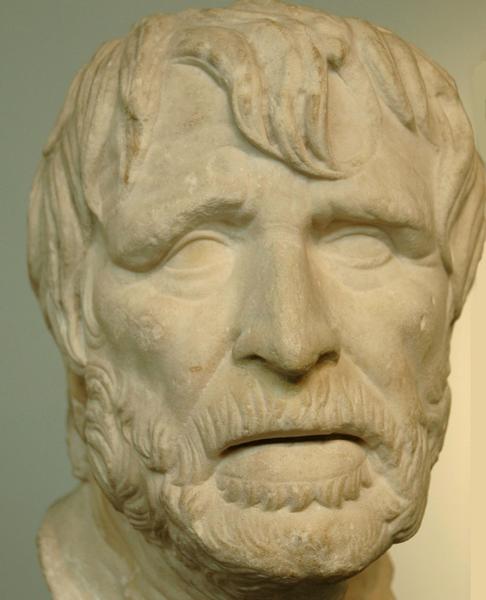
In rereading Hesiod’s classic Works and Days in preparation for my mythology class, I found the similarities with the Bible to be intriguing. One of the most noteworthy features of biblical wisdom literature is its universality. In a way that many believers find difficult to swallow even today, the wisdom authors accept – perhaps extol – the wisdom of sagacious “heathens.” We live in a world where religions are frequently engaged in building walls the envy of Jericho itself, while parts of the Hebrew Bible invite outsiders to join the party without even converting. Hesiod might have been a grumpy guest, but many of his words would have struck a familiar note with old Ecclesiastes.

Be not deceived – life is hard – so Hesiod tells us. The Greek gods made humanity to fend for itself. Men first and then Pandora to cause endless trouble, like the figure of Lady Foolishness in Proverbs. The misogynistic authors wave their flag in surrender to their passions; life is hard indeed. Instead of complaining (excessively anyway), the writers of wisdom interpret this difficulty as the crowning achievement of the human spirit. The gods made us to struggle, and when we’re up against it, we’re at our best.

Both Hesiod and the Hebrew Bible remind us that gods make the rules and we must obey. The human lot in life acquires an attenuated glory through living by divine standards. We will never shine like them, but we may sometimes outshine them. In the meantime, we must live by their apparently arbitrary rules. Reading the Torah, some of the Bible’s rules seem less-than-necessary to live a decent, honest, and moral life. We are not, however, to question the will of the divine. So it is that Hesiod warns, “don’t piss standing up while facing the sun” (Stanley Lombardo’s translation). Common sense might have added “while facing into a head-wind.” Such is the difference between gods and men.


I See You, This Time

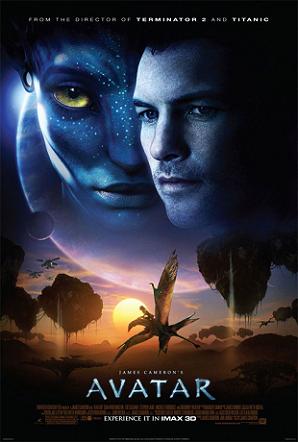
With the advent of Avatar on DVD, I finally had the opportunity to see the movie. This time there was no booming bass and overly active 3-D, and I didn’t end up feeling nauseous for days after. On a small screen it lacked the compelling sense of being in each scene that the first ten minutes of my theatrical experience of the movie had, before I had to seal my eyes tight for the rest of the film or be carried out on a stretcher. Nevertheless, I was able to follow the story this time.

I have posted several times on my affinity for old science fiction films; a large part of my boyhood was spent watching hours of improbable adventure on the black-and-white. Perhaps counter-intuitively, I ended up studying religion instead of science, or even literature. Religion, however, is deeply embedded in science fiction, probably because it is deeply embedded in people. And Avatar was no different. Early commentators noted the similarities of Pandora to Eden. Two trees in the garden (Hometree and the Tree of Souls) were easily borrowed from Genesis. The idea of nearly naked natives living in harmony with the world around them, the soft, graceful curves of the forest contrasted sharply with the angular, obtrusive construction vehicles intent on raping paradise. I’m a sucker for archetypes, I guess. The concept of Eywa as “All Mother,” a nurturing goddess rather than a frowning father deity, only enhanced the sense that Pardora’s box should not be violently wrenched open. Even the hideout of the protagonists was nestled among floating rocks called the Hallelujah Mountains – presumably the name given by earthlings.

Yes, the writing was at times trite, and the characters were caricatures of themselves, but in the tragic light of the Gulf of Mexico Oil Spill, Avatar’s world was pristine, uncomplicated by greed and corruption. The Na‘vi, like zealous Christians, are born twice; the metaphor of foolishly maintaining hope in the harsh light of uncaring entrepreneurs might lead to a limited salvation even for this tired old planet. I am an unrepentant tree-hugger. And if there is a film that, despite its limitations, says it is alright, even noble, to hug trees, then I say it is religious in the deepest possible sense.

All Mother is watching


Prophets in Disguise

Yesterday I decided to take a break from austerity and take my family to see Avatar. Not just on the big screen (a rare enough treat), but in 3-D Imax format. In my zeal I had forgotten about my debilitating congenital problem with motion sickness. I have had trouble since I was a child sitting in the backseat, or riding backward on a train, or even turning my head around too fast. Once I was talked into riding a county fair ride by some high school friends and found myself still getting nauseous two weeks later. I have learned to live with this embarrassing problem, but sometimes I forget that the mere suggestion of motion will send me over the edge. I managed the first twenty minutes of the movie before having to close my eyes and bow my head for the rest of it. It is an interesting experience to listen to a movie. Following the basic plot wasn’t too hard, at least when I wasn’t thinking about all the talk of great special effects and the money I’d spent to see them.

Like most science-fiction movies, Avatar makes substantial use of biblical and mythological themes. The planet is named Pandora, after the “Greek Eve,” and I could hear traces of the hero quest throughout. When the indigenous people were introduced, however, my ears pricked up (as I understand those of the characters do). The Na’vi, it turns out, share the name of the prophets of the Bible. The Hebrew title for prophet is nb’, pronounced the same as the movie characters. I thought about this as I wondered what was going on during the action sequences that I could not see. Those who guard the traditional ways are the prophets, silenced by the grinding machinery of modernization.

Even avatars have their origins in religion. The first I had heard of avatars in science fiction was in Neal Stephenson’s Snow Crash. The idea felt so fresh then that I had to remind myself that Hinduism had given the world avatars as earthly manifestations of deities centuries ago. Placing oneself in another form ultimately stimulates the question of which is the true self, the ultimate reality. It is an inherently religious question.

The morning after, the room is still swaying about me, I can’t scroll down on the computer screen, and I am asking the questions of reality again. It cheers me that Avatar is doing so well at the box office. Any movie, even if unseen, that causes the viewer to question a frequently painful reality is worth the price of admission.

Another blue avatar