
Universal Growth

Maybe the universe isn’t expanding, maybe it’s growing. Always tinged with a healthy dose of pantheism, I’ve often opined to those who will listen that life might be more than animals and plants and microorganisms. But then again, I don’t have the numbers to back me up. These aren’t just the ravings of a guy who wanted to be a scientist but whose religion prevented him, they’re also pretty close to those of a scientist who became a religious guy. When more than one person sends me the same article I figure I’d better comment on it. Those who used to be professors can’t help but professing, after all. So I read Meghan Walsh’s Ozy story, “Jeremy England, the Man Who May One-up Darwin.”

England spent his education on science only to turn to religion along the way. That’s pretty unusual, according to the standard social discourse, but I suspect it’s more common than we’d like to let on. There’s no clause in science that says you can’t believe in anything. Even Richard Dawkins has beliefs. Many scientists have been suggesting, of late, that perhaps physics and religion are converging. (Some of us from the other side of the equation have been saying so for years, but who believes a religionist?) Before I’m misunderstood, I’d hasten to add that I don’t mean religion as in literal trumpets sounding as a white horse and rider descend through the atmosphere. Nor do I mean in the sense of the minutiae of the Talmud. What I mean is the symbol systems that religion has long used may have been in some sense in line with what science has been trying to tell us.

According to the story, England thinks that matter may be self-organizing. That means life occurs where matter exists. Before I become too close a friend with my sofa I have to remind myself that this doesn’t mean everything’s conscious. Although my reading of Thomas Nagel does have me wondering even about that. You see, religion has historically been one of those disciplines where imagination has had a valued role to play. Those who accuse it of being doctrinaire and evil need to talk to a few more people. Religion has always claimed there’s more to life than what the senses reveal. Science professionally limits itself to the inferences of those senses. And you can get away with paying religion specialists a lot less. What’s not to like about this situation? If the universe is growing, there’s room for us all.
Nature of Religion

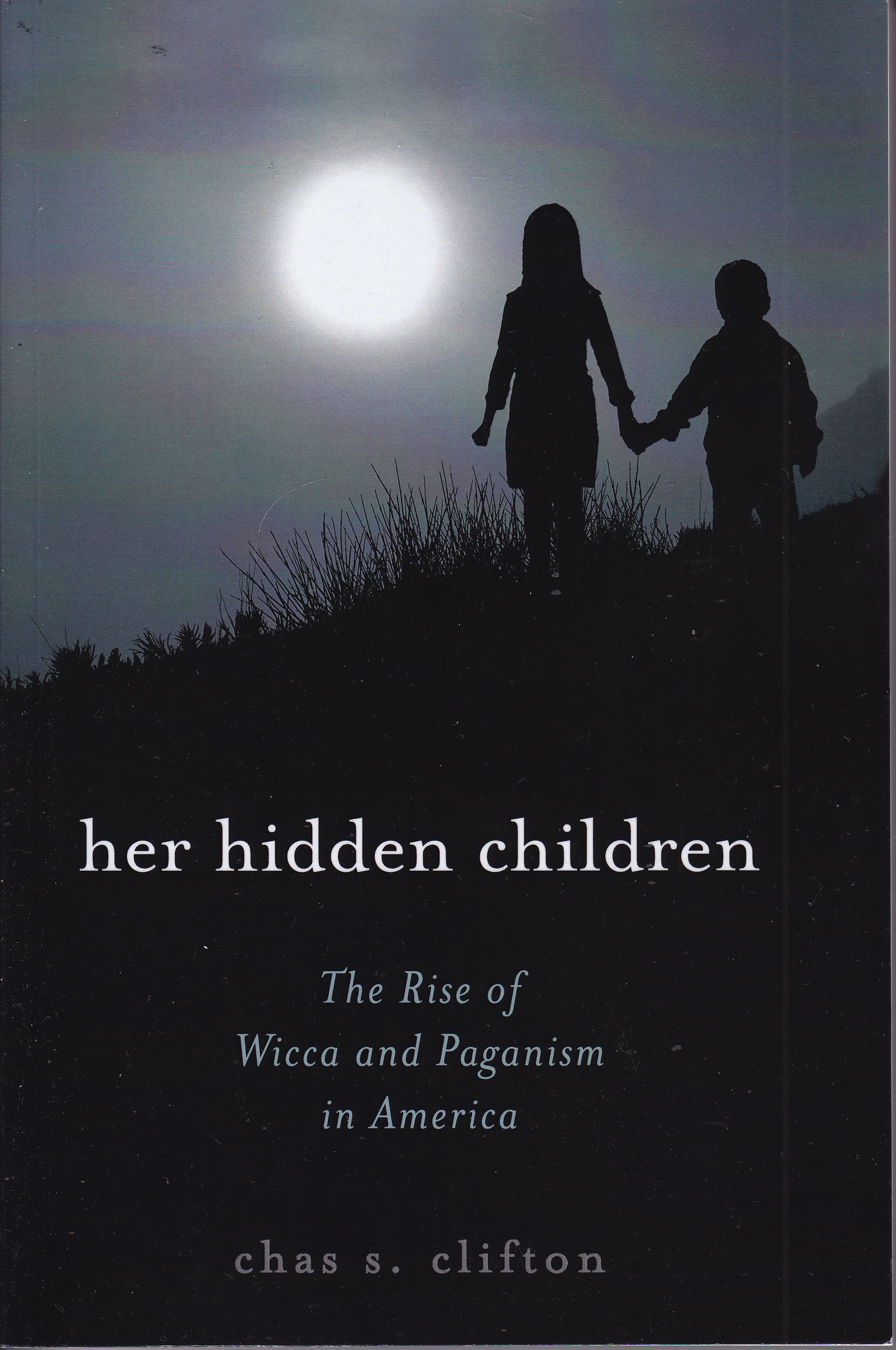
HerHiddenChAutumn is a moody time of year. Dolorous gray skies hang low one day, and the next a sky of such incredible blue stretches unbroken out into space itself. Nights are definitely longer now; I climb onto the bus in the dark in the morning and get off in the dark in the evening. And thinking about nature’s cycles leads me to thinking about nature religions. Wicca has often been presented as a nature religion, but it is somewhat more complex than that. Her Hidden Children: The Rise of Wicca and Paganism in America, by Chas S. Clifton provides a rare academic look at various pagan religions from the inside. Analysts of New Religious Movements have long classified religious witchcraft as a modern religion. Although Gerald Gardener made claims of being initiated into an ancient British coven when he began what was to become Wicca, it is recognized that this claim was unsubstantiated and that Gardener, in true prophetic form, was inventing a new religion.

I’ve read quite a bit about witches over the years, but I’ve always found contemporary paganism somewhat confusing. As Clifton points out, there are many branches of this relatively small religion, and there is no single leader or head of the movement. In fact, various groups, just like Christian groups, seem to splinter fairly easily. Many revival religions exist, also claiming the name pagan. You can join those who worship Egyptian gods or Norse deities. Or those who find nature itself divine. Pantheism, panetheism, or just plain paganism. Religions come in endless varieties. In a world committed to allowing individuals to follow their own religious conscience, there are bound to be varieties of religious experiences.

Clifton offers a brief history of these fairly recent groups. Paganism began to reassert itself only last century. There had been a social stigma with lying outside the territory claimed by church, synagogue or mosque. Many Americans only learned that religions such as Hinduism and Buddhism existed at the very end of the nineteenth century. What most people don’t realize even today is that a large, and increasingly expanding, variety of religious options exist for the seeker. Not all Wiccans see themselves as believers in a nature religion. Not all pagans call themselves Wiccans. Although Clifton makes no claims to an exhaustive tome, which would have to be far larger, he is a helpful guide through many of the groups that have existed over the past decades and some of which continue to this day. By learning about them we learn some basic truths about the very human urge to connect with something larger than ourselves.


Diggers, Ranters, and Muggles

Great Britain, despite its relative secularity today, has historically been the Petri dish in which many religions have been cultured. A large part of this phenomenon derives, I suspect, from the relative indecision during a crucial period of what the official religion should be. It is quite possible for a state to dictate a religion, and historically religions have often served the purposes of the state. Governments support the religion that serves them best. Beginning with Henry VIII, however, Britain had a difficult time making up its royal mind. The Church (in Rome) had decreed divorce immoral, and the interests of patriarchy run deep in some men’s souls. In the flip-flopping between Protestant and Catholic that took place, many new groups emerged from the froth. The True Levellers, popularly known as “Diggers,” were one such group. Taking the book of Acts literally, they believed true Christians should have everything in common. They formed farming communities (digging the soil) to support themselves as dissenters. As with most utopian communities, however, this kind of radical sharing just didn’t last. After only two years the Diggers had disbanded.

Around the same time another sect known as the Ranters abounded. The Ranters, early rivals to the Quakers, held ideas well beyond the simple communism of the Diggers. Pantheists in an age of omnipotence, they didn’t really stand a chance of survival. They didn’t trust the authority of the church, and being Christians, as well as pantheists, they urged their English compatriots to listen to the Jesus inside instead of the one proclaimed in a limited way by the church and the Bible. Their antinomianism led to the perception that they were a threat to the social order. Interestingly, there seems to be evidence that the movement was somewhat widespread in the seventeenth century. Eventually they disappeared, absorbed into the Quaker movement or simply losing their cohesiveness by dint of their native antipathy to order.

Mr. Muggleton, I presume

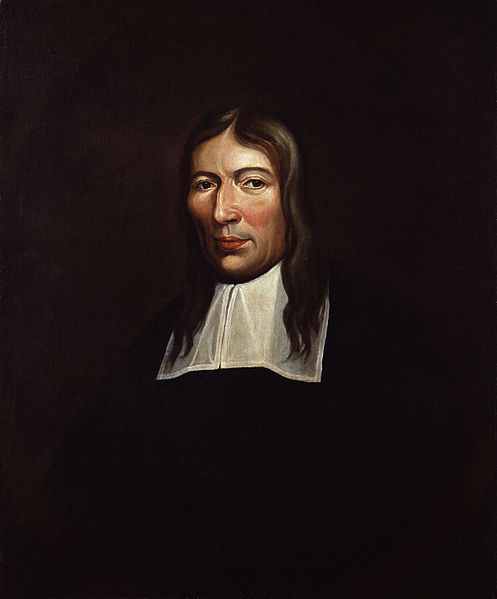
One of those influenced by the teaching of the Ranters was Lodowicke Muggleton. Technically a tailor, Muggleton is remembered as a religious thinker (a rarity in itself) largely because of his writings and Muggletonianism, which he founded (and which lasted until 1979). Apart from the Ranters, he also rejected the Quakers. Muggleton believed only in that which could be physically embodied, denying many aspects of an early modern world still alive with miracles and superstition. Even angels were beings of pure reason. Tracing the origins of fictional concepts may be a fool’s errand—and if so I am well qualified—but I wonder if J. K. Rowling’s “Muggles” derive from the name of this former Ranter who came to see life as having no magic. Muggleton’s world had no place for witches, magic, or divine intervention, yet it was profoundly religious. Once religion enters the public domain, it is sculpted to the satisfaction of individuals in search of their own meaning. Some of those searchers will be Muggles and others will be Ranters and a few may remain Diggers. Without any of them, the fabric begins to unravel.