Pope Springs Eternal

All channels lead to Rome. In a world where Christians lament their public influence, we can’t seem to get enough of the pageantry, the mystery, and the stylish drama of electing a pope. The secrecy is key. If cardinal debates were held in an open forum, by cardinals in business suits, the media would have trouble covering its yawns. In a conclave deep within the classical architecture of Rome, privileged men in expensive gowns meet and whisper in hushed tones until a puff of smoke rises though a sacred chimney and the world either hitches its collective breath or sighs in deep contentment. No wonder the election of a pope is such a big deal for Protestant and Catholic alike.

We would be mistaken, however, to limit such docu-drama to Rome. Religions, from the earliest institutionalization of their practices, used drama and showmanship to add to the draw of the sacred. Ancient Mesopotamians and Egyptians kept statues of deities hidden away in the deepest recesses of temples, and brought them out periodically to great public fanfare. The laity would watch in astonishment as an actual god was paraded among them—the popemobile had yet to be invented—and lapse back into ordinary time as the sacred statue was swallowed once again in the darkness of its great house. Even the aniconic Israelites maintained ceremony and mystery, for they had an invisible god who raised all kinds of questions in the naturally curious human mind.

The papacy is, after all, a recognized authority structure. Some nations recognize the Vatican as a sovereign state, a little bit of the City of God among the Rome of Humanity. For the time being at least, the Roman Catholics outnumber any other branch of Christianity. It is the most successful trader in the marketplace of religious commodities among Christian consumers. Its draw has always been tied closely to a sense of mystery and awe. There is a magic to the mass that the televangelist sermon splashed on the big screen somehow lacks. It is old and arcane. Few believe in its literal transubstantiation, and yet it stands as the outward and visible sign of a deeply occluded reality that takes place behind closed doors. Men in red, debating on the virtues of a new CEO for the vicar of Christ. No wonder all channels are tuned to Rome.
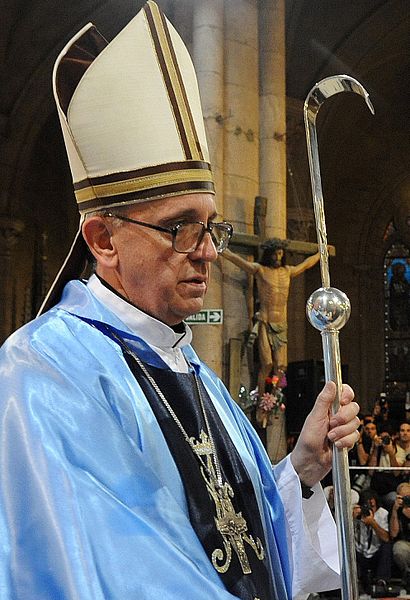
From presidencia.gov.ar, via Wikimedia Commons
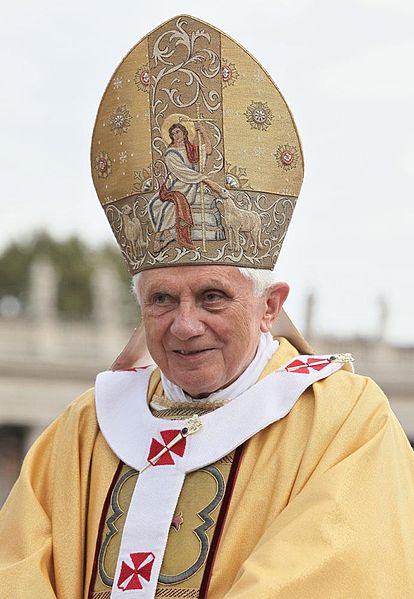
From presidencia.gov.ar, via Wikimedia Commons


Popeless

414px-Benedykt_XVI_(2010-10-17)_4 Pope Benedict XVI managed to catch many of us off-guard with his early retirement option. Not within living memory, or even very dusty, antiquated memory has a pope resigned. Such is the draw of power. Of course the founder and putative CEO of the organization stepped down at 33, or so the story goes, but after that the urge to stay on only grew. The papacy, some traditions claim, is as old as Christianity. Others suggest that the stresses and strains that eventually led to the primacy of Rome in the western church were much more intricate than that. Modern research has also indicated that one-size-fits-all Christianity really didn’t even exist from the beginning. Different groups claimed to be Christian but were labeled heretical by other groups. The Roman Catholic Church is still the single largest Christian denomination in the world, however, and that translates to quite a lot of weight.

According to the book of Acts, the first Christians were a communal lot, holding everything in common. Although we can’t call them communists, in a sense they were. It didn’t take long for that structure to break down, however. Before long it was obvious that leaders would emerge in the movement. At first they wouldn’t have been priests, but eventually that age-old designation came to describe what the clergy did. Worship became ceremony, and ritual requires expert leadership. Various religions have tried to break down the hierarchical structure of having one person over the others, but in this masculine world of CEOs and prestige, well, there’s only so much you can share.

What’s really striking is that no pope in 600 years has stepped down. There could’ve been many occasions. Presiding over about a sixth of the world’s population must be a heady experience, especially for a religious person. Already the speculation is thick on who the next pontiff might be. The fact that the faithful are already chomping at the bit shows something of the nature of the creature (one can’t very well say “beast” in such a context). The papacy has become a symbol in its own right, and even megachurches can’t hope to top their numbers. The Pentecostals, however, are racing to catch up. The two types of Christianity are about as far apart as possible while remaining under the same Lord. I suspect by the time the next pope vacates the office the religious landscape will be very different. Perhaps Benedict XVI is wise to call the game on his own terms.