The Printed Word

I miss them, newspapers.  Now, I’ve never been a great newspaper reader—I tend to live in my own little world, I guess, and I really have no taste for politics.  I still glance over the New York Times headlines daily (mostly) but that’s not what I’m talking about.  I’m talking about physical newspapers.  The other day we had a family creativity session.  This generally involves painting in some form or other and I realized with chagrin that we had no newspapers to lay down.  Nothing to protect the table top.  The same is true when we carve pumpkins, or do other activities that make you think that you want to protect your furniture.  Newspapers were always there.  We used to line our birdcage with them.  Made papier-mâché out of them.  They were handy to have around.

Josef Danhauser, Newspaper Readers, public domain. Image credit: Österreichische Galerie Belvedere, via Wikimedia Commons

We live fairly close to our means, so we don’t have lots of drop cloths lying about.  (Plastic is so much less feeling than paper.)  We don’t have rolls of butcher paper in our kitchen.  We even use cloth bags for groceries, so grocery bags are at a premium.  Our electronic mania has meant that physical creativity suffers.  I do applaud the saving of trees, but you sometimes just need the disposable broadsheet to catch the drips.  (And when I paint, believe me, there are drips.)  But perhaps this is a symptom of this insipid internet life into which we’ve slipped.  The other day I was searching for an electronic services store.  I’m not even sure what to call them anymore.  I had to go to the physical store (yes, they still make them) to have something looked at.

The website kept telling me a store with a different name was what I was looking for.  All I wanted to know was whether this was an actual store or some knockoff.  If you’ve purchased what are being called “dups” now you know that companies blatantly use other companies ads to sell cheap knockoffs that don’t resemble the product you wanted at all.  This all seems to be perfectly legal.  I guess I’m just nostalgic for the days when you had to have patience and doing things slowly was a sign of good quality.  The 24-hour news cycle has hardly been a benefit, and Trump could’ve never been elected without it.  And if you wanted to paint something, you’d just go to the stack of newspapers that every house seemed to have, and paint over any headlines you wished you hadn’t seen.
More Writing

I keep a list.  It includes everything that I’ve published.  It’s not on my CV since I keep my fiction pretty close to my vest.  The other day I stumbled across another electronic list I’d made some time ago of the unpublished books I’d written.  Most were fiction but at least two were non, and so I decided that I should probably print out copies of those I still had.  As I’ve probably written elsewhere, I started my first novel as a teenager.  I never finished it, but I still remember it pretty well.  Then I started another, also unfinished.  After my wife and I got engaged and before we moved to Scotland, I’d moved to Ann Arbor to be in her city.  Ann Arbor, like most university towns, has many overqualified people looking for work and I ended up doing secretarial support for companies that really had nothing for me to do quite a bit of the time.  I wrote my first full novel during dull times on the job.

My writing was pretty focused in Edinburgh.  My first published book was, naturally, my dissertation.  I started writing fiction again when I was hired by Nashotah House, but that was tempered by academic articles and my second book.  An academic life, it seems, doesn’t leave a ton of time for writing.  What really surprised me about my list was what happened after Nashotah.  In the years since then I’ve completed ten unpublished books.  Since my ouster from academia I’ve published five.  I honestly don’t know how many short stories I’ve finished, but I have published thirty-three.  What really worries me is that some of these only exist in tenuous electronic form.  I guess I trust the internet enough to preserve these blog posts; with over 5,700 of them I’d be running out of space.

I see a trip to buy some paper in my future.  For my peace of mind I need to make sure all of this is printed out.  My organizational scheme (which is perhaps not unusual for those with my condition) is: I know which pile I put it in.  Organizing it for others, assuming anybody else is interested, might not be a bad idea.  I know that if I make my way to the attic and begin looking through my personal slush pile of manuscripts I’ll find even more that I’ve forgotten.  That’s why I started keeping a list.  Someday I’ll have time to finish it, I hope.


In Praise of Paper

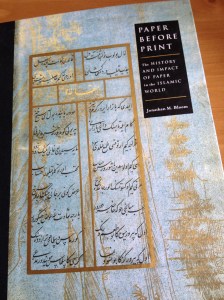
I’m working on embracing the electronic age.  No doubt it’s convenient.  And fast!  Publishing is, and always has been, a slow industry.  As connoisseurs of anything know, quality takes time.  This brings me to my paean to paper.  I generally write these blog posts on a computer.  That makes sense since they have to go onto the web and to do so they must be keyboarded.  Many of them start, however, on paper.  Sketching and free-flowing lines can become ideas, yet to draw on a computer you have to buy specialized (and expensive) equipment and software (which costs even more) to use it.  You’ll lose months of you life learning how to use said software.  In the end you’ll probably have forgotten, what?  I forget.

The other day I ran into an author who wanted maps.  In an electronic age the easiest way to get maps is to take them from the web.  Google Maps seems innocent enough.  Only it’s covered by copyright, and commercial use requires permission.  As I went through the whole permissions process I was thinking of tracing paper.  Copyright covers the execution of ideas, not the ideas themselves.  Coastlines, rivers, and mountains added through the miracle of tracing paper become the copyright of the maker.  (Don’t try this by rewriting written words through tracing paper—that doesn’t work.)  Tracing paper’s old school.  The illustrations in many older books used a similar technique.  In A Reassessment of Asherah all the illustrations were ones I drew by hand.  You can do that on paper.  The only investment is a single sheet and a pencil.  A scanner can handle the rest.

Technologists like to espouse that there’s no such thing as a page.  Authors, they aver, must learn to write without references to page numbers.  Avoid the words “above” and “below” to refer to something discussed elsewhere in the text.  This “format neutral language” (for it has to have a fancy name) is intended to ease the reading experience for the ebook.  With my Kindle software, however, there are still pages.  Don’t we call them webpages?  Don’t we bookmark both our place in Kindles and on the web?  Why then can’t we have our page numbers?  Have you ever tried to make your laptop into a paper airplane when you’re bored?  It’s often hard for progressive creatures like ourselves to admit that maybe we have had it right the first time.  Maybe reading and paper need each other.  A future without paper will be very sterile indeed.