Keeping House

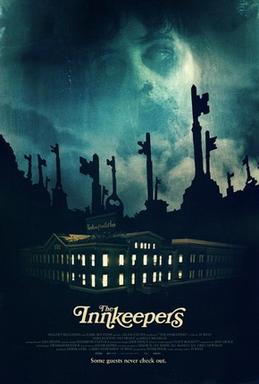
I really wanted to like The Innkeepers.  I’ve appreciated the Ti West horror that I’ve watched and Sara Paxton has a compelling screen presence.  The setting of a hotel that’s about to be shut down is a good set-up, and although the ghost story is somewhat conventional, it’s workable.  Part of the problem was clearly lighting.  Maybe I’m just too old, but when something important takes place in a scene that’s just too dark, well, it loses something.  So here’s how it goes: Claire and Luke are at the front desk for the final weekend of The Yankee Pedlar.  The guests are a woman and her young son, a psychic who used to be a television star, and an old man who wants to stay in the room where he had his honeymoon.  Claire and Luke are also ghost hunting at the hotel and a suicide-bride ghost is said to haunt the property.  When Claire finally does see the ghost, after the old man dies by suicide in the same room as the bride, Claire ends up in the basement where they get her.

The chase through the basement is dark.  I didn’t realize, until reading a summary later, that Claire, who uses an inhaler throughout the movie, died of an asthma attack.  That gives the story a nice ambiguity.  I, for one, couldn’t see that because things just weren’t lit well enough.  The final sequence, before the credits, shows the room in which the psychic was staying (she had a tendency to gaze out the window) and then the door slams on the camera.  The summary said a very light image of Claire is visible, and that she turns toward the camera before the door slams.  I watched the ending twice and couldn’t see her anywhere.  That scene was too brightly lit.  Without those two bits, the ending really doesn’t make much sense.

Movies generally involve many, many people (thus the very long credits).  Although the director is the “conductor” of the piece, sometimes I wonder about the lighting decisions, and whether this was a lighting department decision or West’s.  Whoever it was, I’m sorry to say that it made my experience of seeing the movie a confusing one.  The movie did reasonably well against budget so I suspect plenty of people saw what I could not.  I would be willing to try it again, maybe in a darker room or on a bigger screen.  A ghost story where you can actually see the ghost seems like a winning combination for an October weekend.


Dyatlov

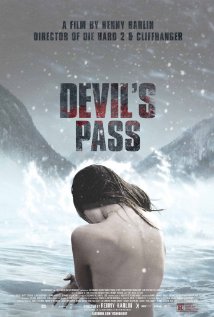
Dyatlov Pass is a name well known to paranormal enthusiasts.  With good reason.  In 1959 a group of nine experienced hikers were killed in the region now named for their leader.  Dying in the wilderness is, I suspect, not that unusual, but the circumstances surrounding these deaths were puzzling.  In the wintery mountains of Russia, some were undressed.  Three died from blunt trauma and six from hypothermia.  One victim had a missing tongue and two had missing eyes.  One least one tent had been cut out of from the inside, and one body had evidence of radiation.  While many theories abound, no satisfactory explanation has ever emerged.  Devil’s Pass is a found-footage horror movie based on this incident.  For horror, it’s low-hanging fruit.  This is a scary episode in history, whether an avalanche or wild animals, or a combination, killed the young people.

Devil’s Pass is set up as a documentary with five Americans following the same route to try to determine what really happened.  The majority of the film is the story of how they arrived at the location, anomalously hours ahead of schedule.  Along the way some kind of creature passed close by and sharp-eyed viewers can see them moving in the background of one shot.  At the place of the 1959 incident, the Russian military starts an avalanche that kills one of the women and breaks one of the men’s legs.  A couple of soldiers come, chasing the three mobile youths into a bunker, and killing the one with the broken leg.  In the tunnels in the mountain, they discover evidence of teleportation experiments—citing specifically the Philadelphia experiment—that leave people monstrous and distorted.

A bit over the top.  Still, the incident itself grows more and more bizarre when it’s examined.  I first learned of the Dyatlov Pass incident many years ago.  It would’ve never occurred to me to make a horror movie about it, but those who did made reference to pretty much all of the strange facts associated with the real incident.  As a horror film it partially works.  The last fifteen minutes or so strain any credulity, but they wrap up in such a way that they make sense of factors planted earlier in the film.  Over all, the movie is intriguing enough to retain viewers’ attention.  It was filmed in Russia, which lends it verisimilitude and it rewards those who like to speculate about paranormal explanations for events that just can’t be explained otherwise. 


Paranormal Religion

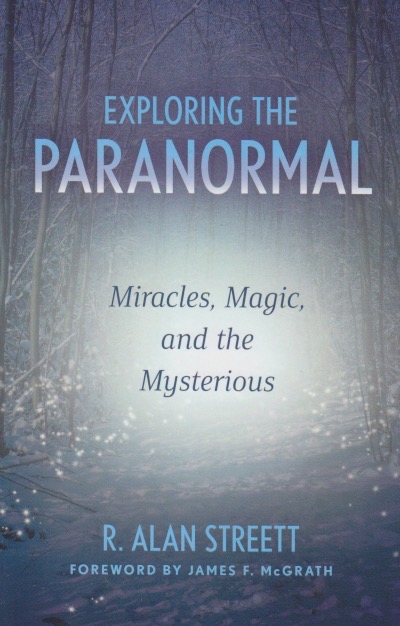
I remember well what it was like to be an evangelical.  Measuring everything by what I thought the Bible said, fearing those things that seemed to come from outside.  Being very concerned with salvation and its opposite.  At the same time, I was fascinated by the paranormal.  As I child I was teased for these interests and subsequently buried them.  Then I had a slow, protracted, and continuing waking from dogmatic slumber.  So it is natural that I would want to read R. Alan Streett’s Exploring the Paranormal: Miracles, Magic, and the Mysterious.  I didn’t know how he would approach the subject, and I didn’t know where on the evangelical spectrum he fell.  Still, I’m always interested to see how others handle what we all know—strange stuff happens and there is no real explanation for it.  Scientific method may one day be able to address some of it, but at the moment it generally falls outside the bounds.

Streett’s book is somewhat autobiographical, from his non-religious childhood, believing in parapsychology, through seminary and having an evangelical awakening, to the point that he stopped supposing such things were demonic, and on to where he stands at the moment—thinking that most such things can be explained by brain science and alternative states of consciousness.  There are a number of interesting situations and concepts described in this book; I learned quite a bit when he discussed different brain states.  I understand his theological rejection of potential realities behind the phenomena he discusses (mostly mediumship, but also reincarnation and faith healing) but don’t always agree with the conclusions.  There is much in the world that theology can’t explain.

Something that is perhaps overt between the covers, is that the paranormal is something that happens to evangelical, liberal, Muslim, Jew, Hindu, Buddhist, atheist, agnostic, and none alike.  What differs is the interpretation, based on various faith traditions and their tolerance for that which is outside.  Evangelicalism is a worldview, perhaps more so than it is a theological position.  Non-divine miracles, or whatever you want to call paranormal occurrences, don’t fit comfortably into that worldview.  Other interpreters, also raised in Christian traditions (Catholicism, for example, is quite open to mystical happenings that can fall into the paranormal category), might approach the question in a different way.  Dialogue is important, however, and trying to make sense of this world we live in, in my humble opinion, has to reach outside the reductionistic view that brains alone account for human experience.  Streett’s account offers a reasonable perspective on the issue from an evangelical outlook.


Must Be Autumn

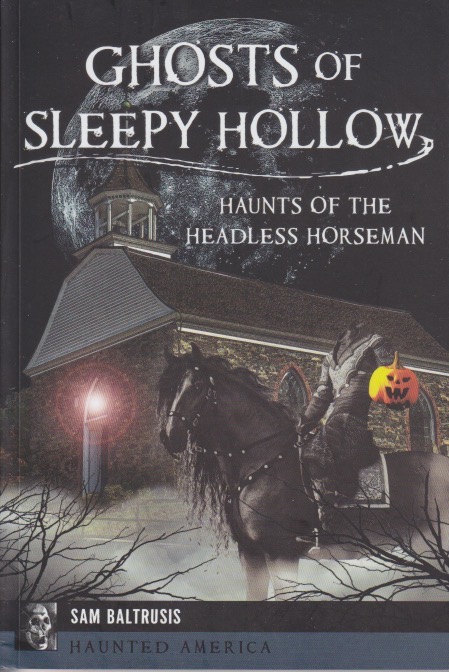
As it often goes, a friend pointed out to me a book on Sleepy Hollow that published just this week.  I preordered a copy that arrived on Tuesday and buzzed through it.  It’s what I describe to family as “one of those books”—you know, the local history, heavily illustrated quick reads from The History Press.  (I would note that I submitted what was then The Myth of Sleepy Hollow to The History Press, but they never even responded to the submission.)  In any case, Sam BaltrusisGhosts of Sleepy Hollow: Haunts of the Headless Horseman is really quite different from what I do in my forthcoming Sleepy Hollow as American Myth.  The History Press isn’t really regarded as such by historians.  I like their books nonetheless.  I was castigated by an academic journal editor early in my career for using one such book to illustrate local folklore.  (That was, by far, the snootiest rejection letter I’ve ever received.)

Aloft noses aside, there is a legitimacy in listening to what the folk say.  The tales in a book like this won’t convince skeptics, of course, but if you read them in the dark you’ll nevertheless find yourself glancing into the corner now and again, wondering if you saw something.  The book does cover the “Legend of Sleepy Hollow” and Irving’s life in a few pages—Irving was a complex man and the first truly famous American writer—before moving on to local haunts.  The thing that kept nagging at me was the easy shifting from fiction to fact.  Folklore does have a way of becoming reality (and who can definitively even say what that is?) for people.  No doubt, Sleepy Hollow has latched onto tourism in a big way.  Even more so than on my last visit there. And folklore draws on that shifting borderland between fact and fict.

One of my motivations in writing Sleepy Hollow as American Myth was that the story is largely ignored by academics and “sophisticated” readers.  It nevertheless remains important in popular culture.  Academics tend to be slow in picking up what general readers find fascinating.  I found a few academic articles on the subject, but my book was written for general readers as well.  I hesitate to say too much, otherwise, why buy it?  I have a handful of History Press (and similar) books on the region on my shelf.  I learn from them.  And I’m glad to see Sleepy Hollow getting more attention.  My only real regret about my book is that I’ll have to wait a couple of years before the price comes down.  In the meantime, those really curious about Sleepy Hollow will have this Haunted America version to read.


Unidentified

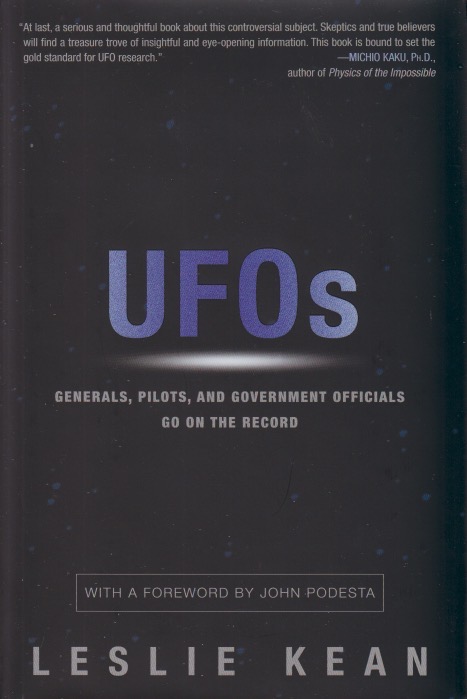
Some topics are subject to ridicule.  The poster child for this is UFOs.  What’s so remarkable about Leslie Kean’s book is that she began as a skeptic.  She points out that before a sea change takes place intense ridicule against the new idea is normal.  Then Kean did an extraordinary thing—she actually looked at the evidence.  UFOs: Generals, Pilots, and Government Officials Go on the Record is a remarkable book.  It’s filled with stories of the power of conversion.  Many UFO experts were skeptics at first, completely dismissive of the phenomenon, until they took a close look.  Official government files, even those available to the public, demonstrate the reality of UFOs.    Interestingly, as Kean highlights, the average person now no longer really requires convincing.  The elites (government officials, scientists, and mainstream media) are slow to accept the fact that UFOs/AUPs exist, even if we can’t say for sure what they are.  And they still like to poke fun.

Skepticism is necessary for science.  We can’t simply accept anyone’s word for something.  Kean’s book, which contains pieces written by an international group of high-ranking witnesses, points out that strong evidence does exist.  And it is possible that some group (not “the government”) does have more information than they’re sharing.  I also found it interesting that a number of countries—many, in fact—treat UFO reports from pilots seriously.  In the UK they are required to report them, for example.  In the United States, they are instructed to keep their mouths shut.  They doesn’t stop them from seeing what they do, however.  Still the ridicule taboo remains.

Ridicule of what we don’t understand must be a deeply ingrained defense mechanism.  As Kean notes, it took centuries before a heliocentric model was accepted.  People laughed.  And as recently as the nineteenth century it was considered impossible for rocks to fall from the sky.  Paradigms had to shift.  Meanwhile, people laughed.  We seem to have an aversion to anything in the sky other than God and angels.  Even in current models that assure us that the universe above us stretches on to infinity.  The only one “up there” is divine.  So we laugh at anyone who’s mastered the skies.  Until we catch up.  Heavier than air flight was impossible in my grandparents’ lifetimes.  People laughed at the idea.  It took me over a decade to find the courage to read this book—it made a little splash when it came out, but it didn’t change much.  Until the U.S. Navy fessed up.  Other countries had already done so.  Maybe we should see a psychologist about that laughing reflex, though.


Wonderful Impossibility

I used to tell my students that a semester break without reading a book that challenged your assumptions was wasted.  I tried to lead by example, but jobs are such fragile things.  Since I have no semester breaks I try to read books that push the limits more frequently.  I’d heard about Carlos Eire’s They Flew before the author had settled on a publisher.  (I don’t know him personally, but would be glad to.)  In case the title doesn’t do enough heavy lifting, the subtitle A History of the Impossible might help.  Yes, we’re stepping into the world of the post-secular here.  It’s a wonderful place.  Although much of the book deals with early modern cases of levitation, the study ranges wider than that.  Written by a respected historian, this is a very important book.  For many reasons.

I am glad to see Yale University Press joining with Chicago and some noted others (Rowman and Littlefield, for instance) in challenging a paradigm that is no longer upheld by science.  I can hear the howling already, but if you read carefully, with an open mind (which is required by science) you’ll quite possibly learn something here.  Our minds do influence our reality.  We haven’t figured out how because secularism ends the discussion with scorn.  That was true of the study of UFOs as well, until the U. S. Navy said, “Nope.  They’re real.”  (It only took about seven decades, so don’t expect instant results.)  We cut off our possibilities when we mock things out of habit.  I remember the Turok comic where one character said to another (give me a break—this has been five decades and I can’t recall all the names) “Fools scoff at what they don’t understand.”  Truer words have never been penned.

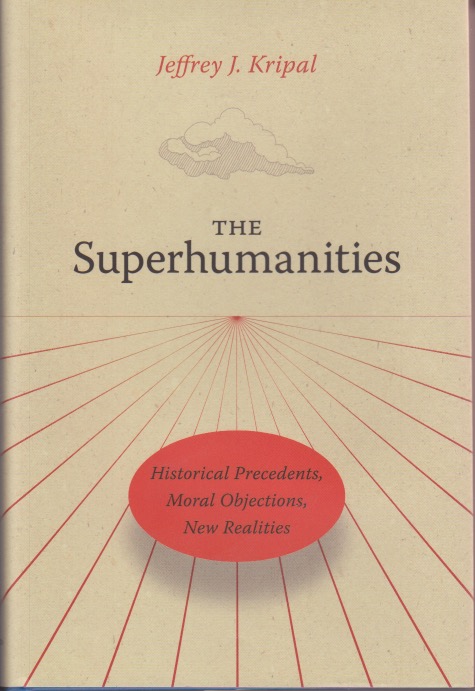
The impossible happens when scientists aren’t there to witness it.  It sometimes happens when they are.  Doubt that?  Read about the Pauli Effect.  Or call it gremlins, the choice is yours.  It’s real in either case.  Academics are often among the last, with the exception of Trump supporters, to see what’s been staring them in the face all along.  I’ll say more about this book on Goodreads, but let me float a hope here.  I want to go back to that indefinite article in Eire’s subtitle.  This is A History of the Impossible.  May more follow.  Others, such as Jeff Kripal, have been doing similar work for many years now.  We can ignore it, or scoff at it.  But I think that character in Turok got it right, even if I can’t remember his name.


A Different Zone

I haven’t read Stephen King’s The Dead Zone yet, but it’s on my list.  That’s why I was a little reluctant to watch the movie.  It was free on Amazon Prime, however, and I reasoned to myself that I’d seen The Shining and Carrie before reading the books.  Indeed, my earliest introduction to Stephen King was through movies.  (Well, I did read one of his short stories in high school, but the novel side of things came later.)  When the opening credits revealed it was directed by David Cronenberg I wondered what I was in for.  I didn’t know the story, but I hadn’t heard of this as a Cronenberg body horror spectacle either.  It was quite cold outside and I was nodding off, so why not.

The thing is, it’s not always listed as horror.  That’s a faulty genre designation, as is sci-fi.  There’s one futuristic scene in the movie and it lasts for just over a minute.  Does that make it sci-fi?  Also, I  realized, it deals with clairvoyance and for similar reasons the X-Files are also listed as science fiction.  Paranormal, it seems, is permanently ruled out of the realm of possibility by assigning it an improbable genre.  Well, back to the zone.  I figure the title will be better explained by King, but there is a brief scene explaining what a dead zone is.  The story follows Johnny Smith, a schoolteacher who becomes clairvoyant, although it manifests itself only after a car accident and a coma.  The main purpose of this, at least through the movie lens, is to prevent a Trump-like populist from being elected president.  That is the horror part, I guess.  And it’s becoming clear to me that writers were warning about these things since the seventies.

Unlike many of my weekend movies, I’d actually heard of The Dead Zone before.  There are some horror tropes present.  It begins with Edgar Allan Poe’s “The Raven,” and has a few other horror references tossed in.  Still, it’s a very human story.  The movie probes the difficulties of a life with special abilities.  Johnny never gets over the woman he was going to marry before his coma, and he feels for those whose futures he sees.  The movie is fairly slowly paced and it drops a few threads, again, likely found in the novel.  In the book or movie debate I generally go for book first, but that often leads to disappointment on the silver screen.  Maybe this was the right order to go this time around.  Once I read the novel I guess I’ll know.  Or at least have an opinion.


Brain Exercise

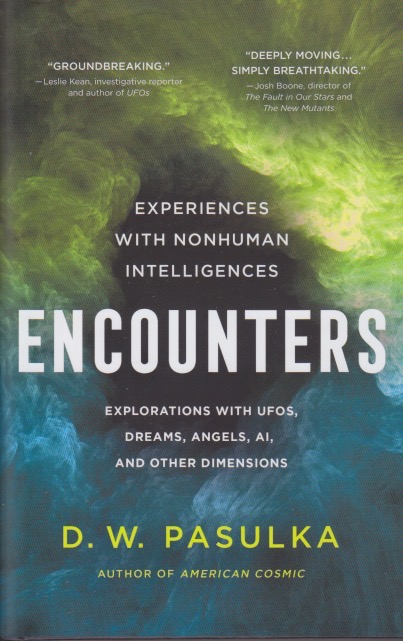
Why do we read, if not to expand our minds?  I’ve read all of Diana Walsh Pasulka’s previous books but Encounters is mind-blowing.  I feel particularly honored that a scholar of religion has been able to put together so many pieces of a very strange puzzle.  Pasulka’s first book was about Purgatory.  Having grown up Catholic that seems a natural enough choice.  Her second book, American Cosmic, focused on a topic that academics were just starting to address at the time—UFOs.  That book justly earned her acclaim.  Encounters takes a few steps further into the mysteries of being human.  Those who experience UFOs have much in common with people who have other extraordinary encounters.  The profiles in this book will give you pause time and again.

Many of us have felt that the unfortunately successful government strategy of ridicule toward experiencers has been a blanket covering up the truth for too long.  I was interested in UFOs as a child and was unmercifully teased for it.  One of the reasons I was interested was that I learned, when I was about eleven, that my grandfather had been interested as well.  I was only two when he died, so there was no way to learn this personally.  It came through discovering a couple of his books that my mother had kept.  Since she was one of five siblings, it’s difficult to say if he’d had any other books on the subject, but being a reasonable kid, I wondered why this was a forbidden topic.  You could talk about ghosts (at least a little bit) and be considered “normal.”  Mention UFO’s and you’re insane.

When the Navy’s video recordings of UFOs—renamed UAPs—were released in 2019, there was silence in the room for about half an hour.  Serious people began to realize there might be something to this.  Of course, those who’d internalized the ridicule response continued to fall back on it, perhaps as a defense mechanism.  That revelation has allowed, however, serious consideration of what is a very weird phenomenon.  I’ve deliberately avoided saying too much about what Pasulka covers in her book.  As I generally intend when I do this, what I’m hinting is that you should read this book.  You should do so with an open mind.  If you do, you might find yourself thinking in some new ways.  Of course, some will ridicule.  Others, however, may walk away with an expanded perception of reality.


Dials and Destinies

Indiana Jones and the Dial of Destiny didn’t do well in theaters.  I’m afraid that Indy fans, like Harrison Ford, may be aging out.  Although anthropologists are loathe to admit it, Indiana Jones was a boon for archaeology.  He made it cool, back in the eighties.  We’re four decades older now and for some of my generations, Indy’s still a draw.  The energy of Raiders and Final Crusade, however, has dissipated a bit.  I don’t watch trailers, so I learned that the eponymous Dial of Destiny was the Antikythera mechanism, curiously called “the Antikythera” in the film.  Or Archimedes’ Dial.  The film starts off with a religious artifact, the lance of Longinus, but it’s a fake.  The Dial, however, is real, if broken.  In order to make the Indy magic work they had to make a remarkable scientific device into something occult.

While I watched I thought about how the move away from religious artifacts into secular is a sign of our times.  The original trilogy involved Christian and Hindu symbols.  (It was only a couple years back that I realized Temple of Doom was set before Raiders, when Ford was young enough to pull that off.)  Crystal Skull was a mix of religious and secular.  We don’t know, historically, what the crystal skulls were for, but clearly they could have had religious significance.  The film spun them all widdershins into paranormal playthings.  The Dial, as it’s called, has no religious implications at all in the current film.  The 1960s Nazis want to travel back in time, which is what the Antikythera, we’re told, predicts (letting interested parties know the time and place of time fissures).  A Hitler wannabe plans to do World War II right, so that Germany wins.  They end back at Archimedes’ time, however, and the world is saved.

As I’ve noted with other pop culture franchises, when a series begins with a religion plot and then drops it, things start to unravel.  I suspect many screenwriters and directors underestimate the power of religion for generating compelling stories.  Belief changes things.  Dial of Destiny demonstrates that substitutes really don’t engage viewers to the same level.  This is a perfectly serviceable Indiana Jones movie.  Lots of adventure and PG 13-level violence.  Getting the girl may not have the same urgency with an octogenarian archaeologist, and Helena seems undecided what she wants, in any case.  What’s really missing, however, is the pizazz that religion brings to stories of finding ancient artifacts.  Archaeology, embarrassingly for some, began in West Asia for religious reasons.  Acknowledging that is simply staying true to history.


EsoterX

This has been a brutal winter for us closet paranormal fans.  Linda Godfrey died in late November and now I’ve just learned of the passing of Aaron Dabbah, known as EsoterX to many of us.  As with Linda, I never met Aaron but we had corresponded over his excellent and unfailingly well-written blog.  About a decade my junior, he posted sporadically—sometimes manically—and grew a sizable readership.  There was no esoteric topic he wouldn’t take on and his style was consistently so light that I suppose I was secretly jealous.  At one time I toyed with the idea of suggesting to him that we write a book together, but I was simply too impressed by his writing ability to broach the subject.  He kept his identity secret, only recently letting his name become known.  I miss him already.

I don’t fly my freak flag too often on this blog—guess I’m irrationally hoping an academic position will open up and I’m no Jeff Kripal— but I do find the weird to be of interest.  I have ever since I was a kid.  One of the reasons, I suppose, is that I noticed what I’d been taught about the way the world works didn’t match up with my experience.  I saw strange things as a kid, but I knew I was rational and thought things through.  Like that time our dog refused to go through the middle of the living room, but stalked around the edges of the room growling at something in the center that none of us could see.  That particular dog was quite smart and not prone to unusual behavior.  That kind of thing happened.  Among other things.

Back when I was making a living as an adjunct (also strange) I had time to keep up with several blogs.  I was always glad to see a new post on EsoterX.  Then, as too often happens, life got busy.  I put off reading the posts when the notices came.  The scariest part about all of this, however, is the assumption that there will always be time.  Every time I got an email notice from EsoterX I thought, “that can wait, I’ll read it later.”  I feel for Dabbah’s family.  Although fifty isn’t exactly young, it’s not really old either.  Paranormal studies dwell in that liminal space of life and death.  When I saw the blog post title, “This is the end of one road, but not goodbye” (written by his wife) I thought perhaps EsoterX was retiring his blog, but I read the post with something deeper transpiring.  Aaron Dabbah, we never met, but you are very missed.


Thinking Big

Depending on who you are the Bigelow Institute for Consciousness Studies (BICS) may set your eyeballs to rolling.  You might know that extremely wealthy Robert T. Bigelow made his fortune as a hotelier and then began investing his money in aerospace technology.  He publicly admits to believing that aliens are already among us, and has contributed to advances in space travel components.  (It seems that many of the uber-wealthy are looking for a way off this planet at the moment.)  Not an academic, Bigelow is keen to admit his interest in what is often laughingly labeled the “paranormal.”  If you’ve got money you really don’t need to worry about what other people say.  I recently ran across an announcement regarding the winners of a BICS essay contest regarding the survival of consciousness after death.

As I’ve noted before on this blog, the paranormal and religion are close kin.  Nevertheless it does me good to see that so many people with doctorates (both medical and of philosophy) entered the contest.  I’m glad to see not everyone is buying the materialist narrative.  We’ve been so misguided by Occam’s razor that we can’t see reality is more complex than they teach us in school.  Churches may not be doing it for us any more, but it does seem that “there’s something out there.”  With a top prize of a half-a-million dollars, there was certainly a lot of interest in this enterprise.  If you go to the website you can download the winning papers.

Consciousness remains one of the great unexplaineds of science.  Answers such as “it’s a by-product of electro-chemical activity in the brain” don’t mesh with our actual experience of it.  Indeed, we deny consciousness to animals because our scientific establishment grew out of a biblically based worldview.  Even a century-and-a-half of knowing that we evolved hasn’t displaced the Bible’s idea that we are somehow special.  Looking out my window at birds it’s pretty clear that they’re thinking, solving problems.  Dogs clearly know when they’re pretending, as in a tug-of-war with its weak owner.  We don’t like to share, however.  Being in the midst of my own book project I really haven’t had time to read the essays yet.  I do hope they come out in book form, even though they’re now available for free.  I still seem to be able to carve out time for a book, which is something I consciously do.  I’m not convinced by the materialist creed, although I’ve been tempted by it now and again.  I like to think that if I had money I’d spend it trying to sort out the bigger issues of life, no matter what people call them.


Looking to the Stars

American Indian culture fascinates me.  As my usual readers know, so does the unusual.  A few years back I read Ardy Sixkiller Clarke’s Encounters with Star People.  Clarke is an American Indian who holds a Ph.D. and had several years of university teaching and administration to her credit.  She has degrees in psychology and education.  In other words, she’s credible.  Being American Indian she’s also aware of the cultural belief in star people.  Those of European descent, often expressing their self-supposed superiority, deny such things exist.  Interestingly the mainstream media seems to have taken an interest in the subject of UFOs lately, and that is also the phenomenon that Clarke investigates in her books.  Her follow-up More Encounters with Star People: Urban American Indians Tell Their Stories is another compelling glimpse into a different way of looking at the world.

The book consists of contextualized interviews with people of American Indian ancestry, and, as Clarke points out, with nothing to gain by telling their stories.  They don’t want their names or locations to be revealed.  They don’t want money.  Many of them don’t even want to be mentioned in a book.  These stories will take you into very strange places.  Places without the filters most of Anglo culture puts before anything that might hint at the paranormal.  I’m intrigued by the nearly universal (outside a narrow European outlook) belief that the world is not as it seems.  Because European-based cultures developed the most sophisticated weaponry and an economic system that takes no prisoners, its view, by default is considered the accurate one.  Time may tell on that.

I read quite frequently about indigenous cultures.  Often widely separated and not in any direct contact, such groups often drew very similar conclusions about the world.  These views are actually shared by those of European stock, but only when carefully labeled as fiction: fantasy, science fiction, speculative stories of any sort.  All of these are widely consumed.  They are also safely considered “not real.”  I’ve been rewatching The X-Files over the past several months.  Its success and its continuing fan base show that as long as we can agree that we’re watching something not true, we enjoy monsters and aliens.  And besides, Halloween wasn’t that long ago.  Still, I wonder if we’re missing out on things we might learn if we’d be willing to consider what the original inhabitants of this continent have believed.  It would take us to some strange places, but we might just emerge wiser.


The Bible Files

As intimated several posts ago now, my wife and I are rewatching The X-Files.  Neither of us has much free time, so this proceeds slowly over many weekends, and we’re now nearing the end of season three.  This exercise brings me back to an article I wrote on Sleepy Hollow, the Fox series that ran from 2013-2017.  That article, published in The Journal of Religion and Popular Culture, I later adapted into a chapter in Holy Horror.  At the advice of my editor I dropped that particular chapter and wrote a different one.  In the lost chapter, if I recall, I made the case that Sleepy Hollow was biblically based in a way that other monster-of-the-week series, like the X-Files, were not.  While I still have to hold to this, I must admit the X-Files are far more biblical than I recollected.

Somewhere about halfway through season one I started to jot notes when the Bible was mentioned or quoted.  Soon it became obvious that religion was a major theme in The X-Files pretty much from the beginning.  I’ve mentioned here before that some scholars of religion have begun to address the paranormal seriously.  One of the reasons for this seems to be that the two fields are related.  Some of the x-files derive from folk traditions, and these traditions often hold religious elements.  When those themes derive from American folklore the Bible creeps in.  There are quotes, visual displays, and even biblical themes.  How had I not noticed this the first time around?

I didn’t watch The X-Files during the actual airing of the series.  As a kid I was endlessly teased for having an interest in the strange and unexplained, and it bothered me that it had become mainstream after I’d already paid the price.  When the series became available on DVD, though, I had second thoughts.  My wife and I watched it all the way through some years ago, and, having finished rewatching another series several months back, we began slowly to make our way through again.  When I wrote my article on Sleepy Hollow I had vague recollections of X-Files episodes with some biblical content, but I’d forgotten how extensive it was.  Religion is that way.  It tends to permeate society, and even though we’re proudly secular, the base of it all is religion.  This should be obvious to anyone who takes the time to tally just how often it appears in the most secular of spaces.  Instead, there’s little interest in it.  Like the paranormal, lack of concern about religion is something we just can’t adequately explain.


Paranormal Pilgrimages

Although the Allegheny Mountains are hardly the Rockies—they’re much older and gentler on the eye—they harbor many tourist locations.  Even before my daughter attended Binghamton University, I’d been drawn to the natural beauty of upstate New York.  Prior to when college changed everything, we used to take two family car trips a year, predictably on Memorial and Labor day weekends, when the weather wasn’t extreme and you had a day off work to put on a few miles.  One year we decided to go to Sam’s Point Preserve (actually part of Minnewaska State Park) near Cragsmoor, New York.  It features panoramic views, a few ice caves, and, as we learned, huckleberries.  What my innocent family didn’t suspect is that I’d been inspired to this location suggestion by the proximity of Pine Bush.

A friend just pointed me to an article on Smithsonian.com by my colleague Joseph Laycock.  Titled “A Search for Mysteries and Monsters in Small Town America,” Laycock’s article discusses how monster pilgrimages share features with nascent religion.  People report strange encounters with all kinds of creatures and objects, and science routinely dismisses them.  Odd encounters, however, leave lasting impressions—you probably remember the weird things that have happened to you better than the ordinary—and many towns establish festivals or businesses associated with these paranormal events.  Laycock has a solid record of publishing academic books on such things and this article was a fun and thoughtful piece.  But what has it to do with Pine Bush?

Although it’s now been removed from the town’s Wikipedia page, in the mid 1980s through the ‘90s Pine Bush was one of the UFO hot spots of America.  Almost nightly sightings were recorded, and the paranormal pilgrims grew so intense that local police began enforcing parking violations on rural roads where people had come to see something extraordinary.  By the time we got to Pine Bush, however, the phenomena had faded.  There was still a UFO café, but no sign of the pilgrims.  I can’t stay up too late any more, so if something flew overhead that night, I wasn’t awake to see it.  Like Dr. Laycock, I travel to such places with a sense of wonder.  I may not see anything, but something strange passed this way and I want to be where it happened.  This is the dynamic of pilgrimage.  Nearly all religions recognize the validity of the practice.  It has long been my contention, frequently spelled out on this blog, that monsters are religious creatures.  They bring the supernatural back to a dull, capitalist, materialistic world.  And for that we should be grateful.   Even if it’s a little strange.


Big Shoes

Belief in the supernatural seems to be alive here in the northwest. At least if the culture at Sea-Tac Airport is anything to go by. I’d noticed, last year, that a sasquatch graces a restaurant in the N terminal, where jets from Newark tend to land. This year we had a bit of a layover, so we strolled through the C concourse. There I found sasquatch approved salmon in the somewhat anomalous Hudson News. Then, as I sat in one of the stylish, Seattle seats, a young woman came up next to us and sat down wearing a Sasquatch Volleyball shirt. I’m past the age when I can get away with innocently asking young ladies if I can take a photo of their shirts, so you’ll just have to use your imagination for the latter. The point is, bigfoot has been mainstreamed.

When I was growing up you got pretty mercilessly teased if you expressed any interest in such things. Now that I’ve got a respectable career others can get away with what captured my imagination as a young man. I’ve never thought of myself as being ahead of the curve. Or really ahead of anything, for that matter. Still, I trust my instincts. Maybe religion will come back into vogue some day. Or maybe it will simply be called something else. A tainted name is difficult to live down. The supernatural—or paranormal—often shares conceptual territory with religion, and although the pews aren’t getting any fuller, the number of those looking for some kind of meaning in the unusual seems to be holding steady. Physics can take us only so far in understanding what it is to be human.

Times change. Yesterday’s jokes are today’s orthodoxies. Those who spend a great deal of time peering back into history won’t be surprised by this. What is true today is true for today. New facts will be discovered and if we lived long enough we’d find that the future world will believe quite differently than we do. Not that the truth is relative. It is, however, temporary. Massive religious wars have been fought over trying to keep truths timeless. The sad irony is that the truths had already changed by the time such wars had been waged. The more rational we become, it seems, the more we open the door for the supernatural. I won’t presume to be one declaring such truth. That would take more weight than I have to offer. And anyone making such a claim would have some awfully big shoes to fill.