Making Noise

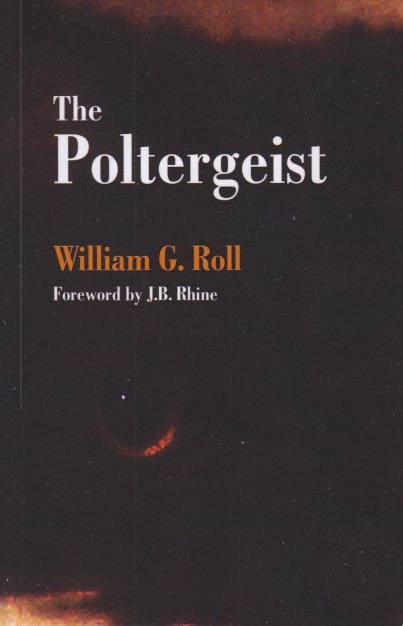
There’s a real danger, it seems, to having an open mind.  We live in a world defined and classified by materialists.  They hold sway not only over science and commerce, but in whether prestigious jobs are on offer.  Consider the case of William Roll.  Roll was a fully credentialed psychologist with an interest in parapsychology.  His book The Poltergeist is a classic in the field.  He’s now frequently called a “credulous investigator.”  What that means, of course, is that he listened to and sometimes believed the people who reported the paranormal.  For materialists that discussion is already closed.  Anyone who tries to pry it back open is ridiculed and called names.  (We’re all adults here, right?)  Yet his classic book still gives pause.

If you actually read it, “credulous” is not a word to suggest itself.  Could Roll have been tricked by clever pranksters?  Yes.  Most people, even clever pranksters, can.  If someone is caught hoaxing a phenomenon, does that mean the whole thing is a hoax?  Not necessarily.  It’s here the materialists swarm.  Interestingly, Roll acknowledges that there could be good psychological reasons for hoaxing after a genuine event.  The person caught hoaxing perhaps realized the benefits of the attention received when something unexplained occurred, and learned how to replicate, or at least imitate it.  People will do anything for attention.  Roll asked a bit more finely parsed question: does hoaxing discount genuine phenomena?  He even tried to get experiencers to the lab where controls could be put into place.  As this book demonstrates, he doubted some of the cases and did so openly.

I became interested in Roll after watching A Haunting in Georgia.  The Wyrick family maintains that the events happened (I’ve written about a book penned by two of the aunts), and they seem sincere.  The problem is money.  Once there’s potential money to be made the skeptics come out, claws bared.  The problem is we all have to make money to survive.  If that involves “capitalizing”—even that word betrays much—on weird things that happen to you, skeptics claim it’s all made up.  There’s an ulterior motive.  For most of us there’s an ulterior motive for going to work, too.  For me, Roll appears to have been sufficiently skeptical.  Statistical anomalies shouldn’t be simply dismissed.  If they are, it’s possible we’re missing something important.  While this book may not have aged particularly well, it is still worth reading with a mind at least a little bit open.  


Amityville Rehaunted

One of the problems with scarce resources is the desire not to squander any of them.  Time is so rare these days that I keep multiple writing projects going (and growing) and when they’re ripe I pluck them and take them to market.  One of my writing projects had me read Hans Holzer’s Murder in Amityville.  Why?  Fair question.  It was the “inspiration” behind Amityville II: The Possession.  I discuss this film in Nightmares with the Bible, and I’ve been going back and reading those period pieces from the 1970s that formed so much of our culture through the end of the last century.

In case you didn’t grow up with an interest in parapsychology, Hans Holzer was a pretty big name then.  I can assert that with some confidence because I grew up in a small town without access to big city resources (where fame is made) and I knew about him.  Holzer wrote well over 100 books, which might give you a hint regarding their quality.  He was an interesting person.  Like Ed and Lorraine Warren he made a living by investigating, writing, and lecturing.  (I can’t seem to break into that cycle—times have changed!)  A firm believer in ghosts and demons, Holzer was naturally drawn, like other moths around the candle, to Amityville.  Murder in Amityville is his summation of his investigation and all I can say is it’s a good thing he wasn’t a lawyer.  Apart from containing lengthy transcripts of Ronald DeFeo’s trial, the book also contains interviews conducted by Holzer.  Full of leading questions and lacking evidence, it fails to convince even a sympathetic reader.

Still, you’ve got to give Holzer credit for including interviews where his loaded questions get him nowhere.  In interviewing a town historian for Amityville, Holzer kept bringing up allegations about the house at 112 Ocean Avenue only to have the nonplussed historian tell him point blank that his (Holzer’s) allegations are incorrect.  His assertions of an “Indian burial ground” are taken for granted, although no historical records substantiate it.  His interview with DeFeo demonstrates Holzer’s irrepressible faith.  After being told by DeFeo that he’d heard no voices—something he made up for a failed insanity plea—Holzer keeps coming back to what the voices told him to do.  Not only that, when Holzer does stumble upon a good question he fails to follow up, chasing some other notion down another rabbit hole.  There was clearly enough material here to work into a horror movie, but for sorting out the troubled home life of the DeFeo family the critical reader finds her or himself being asked to take a lot on faith.