Strange Passions

In Holy Horror I make the suggestion that Mel Gibson’s The Passion of the Christ can be considered a horror film. It certainly has more gratuitous blood and gore than many examples of the genre I’ve seen. Really, I had no desire to see it. One of the great aspects of teaching is learning from students. While an adjunct at Rutgers one of my undergrads brought me a copy of the DVD to watch. She said I needed to see it. Obligingly I did so. I knew if I returned the disc to her without watching she’d ask why I hadn’t. Apart from the famously sadistic flogging scene, it was, like any other Bible film, off base quite a bit of the time. This was commentary, not Scripture.
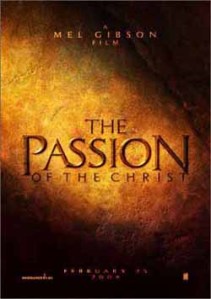
This came back to me reading Bob Cranmer’s account of his haunted house on Brownsville Road in the book about which I blogged a few days ago. Cranmer didn’t exactly follow orthodox methods for driving the demon out of his house. Some of his tactics were improvised. The one I found the most startling was that in the rooms that were most badly affected he played The Passion of the Christ on a continuous loop for weeks at a time. Not only does this suggest demons are capable of watching movies, but that this film can stand in for the actual events that took place in Israel two millennia ago. If the priests involved objected to this method, he didn’t record it. So we have what could be considered a horror movie being used to try to drive out a real life monster (depending on one’s point of view).

Interestingly, this is one of the points behind Holy Horror. Film (and other media) can be a powerful force in our experience of the world. We don’t just go to the cinema because everybody’s talking about a movie. Our experience of watching it is transformative, if only temporary. The same is true of live theater or a concert. Far from being mere entertainment, these cultural events provide a form of transcendence, if they speak to us. In my own case The Passion of the Christ didn’t sell me on Mr. Gibson’s vision. I have no doubts that Roman crucifixion was a horrible spectacle. I also have no doubts that the Good Book indicates that the point of all of this was elsewhere. The Gospels weren’t an effort to traumatize readers. That’s the job of horror movies. Apparently this is something on which even demons agree.

Doubts Creep In

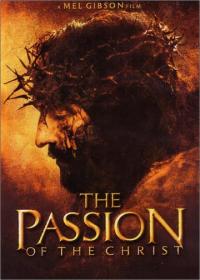
What between Snooki at Rutgers and Mel Gibson’s Passion played at Montclair, I seem surrounded by university controversy lately. A recent article in the New Jersey Jewish News addresses once more the pre-Easter screening of The Passion of the Christ on Montclair State University’s turf. Education is bound to be embroiled in controversy since learning is seldom comfortable. I suspect that is one reason bully governors and the occasional president go after higher education. Few adults like to have their assumptions challenged, their values questioned. I am reminded how blindly many educated clergy accepted the version of the faith story by a disgruntled actor rather than by scholars who actually know what they’re talking about. It is difficult to dismiss the truths of the big screen.

The fact that the wounds opened by this screening are still bleeding weeks after the event demonstrate just how vital open dialogue is. Not only open dialogue, but frank discussion of religion. Many, if not most, religious believers carry on the tradition in which they were raised. Parents begin religious instruction early, and with the threats of a fiery Hell and an enraged divine father overhead, children are shunted toward Heaven everlasting. Not all religions use the same stick and carrot, but no matter what the bludgeon or the vegetable, religions give the faithful reasons to stay in line. Best not to discuss it too much, otherwise doubts might creep in. Educating students in religion is controversial, but necessary as long as people continue in practicing it.

As the article notes, the objection to the film revolved around the fact that no educational component was included. This was one of those “think with your guts” kind of moments, as if feeling sorry for the fictional portrayal of Jesus might somehow make one a better Christian. Educational institutions are duty-bound to teach critical thought when it comes to matters of belief. Emotion is a fantastic motivator, but as history has repeatedly demonstrated, it tends to act without thought. Universities should be open to such constructive criticism, although, it is doubtful that many minds are likely to be changed when the draw at the box office is too great to ignore.

Entertainment or education?


Aftermath of Easter

Holidays, it seems, are increasingly overloading themselves with baggage. Not only are many of them thinly veiled celebrations of materialism, but many are now being tied to “issues.” As I survey the aftermath of Easter as I saw it this year, it becomes plain that even the message of self-sacrifice and hope springing eternal can be co-opted. The Fellowship of Catholic University Students at Montclair State University hosted a screening of Mel Gibson’s The Passion of the Christ last week. An outcry of biblical proportions flooded university discussion groups over what was deemed cultural insensitivity. Gibson’s version of the gospel failed to impress me when I saw it, stressing as it did Gibson’s sadomasochistic torture scenes in an effort to raise a few welts over “Christ-killers.” Back at Nashotah House I was regularly on the preaching rota. (I’m not now nor have I ever been ordained in any denomination. I have, however had preaching experience going back to my high school years.) My final sermon asked whether we should accept theological truths from a loose cannon of an actor. These physical accidents may have had more than a little in common.

Conversely, my first sermon at the seminary – the very year I was hired, and several years since my last pulpit performance – featured Abraham Lincoln. Nashotah House was a bastion for disgruntled southerners at the time; they were often the only ones conservative enough to fit the seminary’s profile. My admiration of Lincoln was expressed in an innocent expostulation on the merits of freedom. Afterwards I was drawn aside and admonished, being informed, “not everyone here believes Lincoln was a hero.” Lincoln was assassinated on Good Friday, a point that has not escaped those who note that the Civil War began 150 years ago this month. Those at Nashotah who disliked my words felt that I was disparaging the south. With roots in South Carolina, I indeed was not. Slavery is wrong in any ethical system that will stand up to scrutiny. Those who believe in equality, however, often pay the ultimate price.

Holidays do not always bring out the best in us. We need the respite, and we have the Jewish community to thank for coming up with the Sabbath that has led to our weekend lifestyle. Each weekend rival churches fill up with those who believe others to be wrong. Religion seems to have failed in its quest to unite. A colleague at Montclair cited the quotation of uncertain attribution: “having a war about religion is like having a fight over who’s got the best imaginary friend” – this was in the context of the screening of Mel’s Passion. The fact is, when it comes to religion nobody knows the correct answer. The humble response one would like to imagine is the mutual encouragement to continue to strive for the truth. More likely than not, the response is someone will select their weapon of choice and try to prove their point of view the old fashioned way.


Latest Temptation

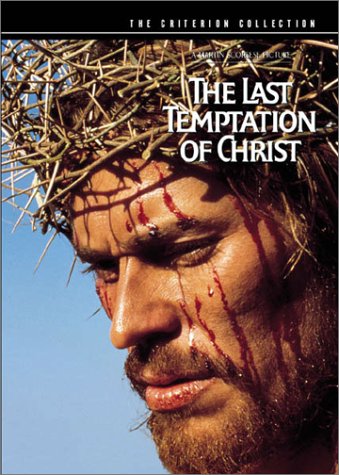
It would be a rare day indeed when I claimed to be the first to see, read, or watch something. Caught up between constant obligations (part-time jobs can be more demanding than their full-time facsimiles) I often find my mind awhirl for a semester at a time, only to discover that inter-term courses start just two or three days after the current term ends. If there’s a great movie out there that everyone’s commenting on, I am lucky to catch it before it leaves the theater. Sometimes I even miss the DVD version. So it was that yesterday I finally got around to watching The Last Temptation of Christ, the 1988 Martin Scorsese movie. This film came out right after I finished seminary, while I shared an apartment with a seminary friend who was an irrepressible movie buff. Together we missed it and, despite teaching in a seminary for a decade and a half, I still missed this one by twenty years and a few. At last I can feel caught up with the late eighties.

I’m not a big fan of Jesus movies. Movie makers shooting such films portray an eminently likeable guy getting beat up and tortured to death with such contempt that it is wrenching to watch. Yes, I know that’s how the story goes, but must we be brought into the Schadenfreude? As a life-long religionist raised in the Christian tradition, however, I feel a professional obligation to see popular portrayals of the foundation stories. The first one I recall viewing was Franco Zeffirelli’s 1977 Jesus of Nazareth, a movie so reverently rendered that it is frequently cited as the best ever. The eponymous Jesus by Peter Sykes and John Krisch came out in 1979 and claims to be the most watched movie of the genre. I saw Jesus Christ Superstar in college, but even Andrew Lloyd Webber’s music couldn’t remove the depressing aspect. Then, of course, Mel Gibson’s The Passion of the Christ in 2004. All of them have left me depressed. Perhaps that is their intended purpose.

The Last Temptation was laden with controversy in its day. I was anxious to see why (okay, so not terribly anxious, but I was curious). So yesterday I got to satisfy an ancient itch. Despite the caveat at the opening of the film, many critics jumped on the portrayal of an indecisive Jesus who has a rather chaste love scene with Mary Magdalene in a “last temptation” vision while on the cross as irreverent. Perhaps two decades and countless movies later this criticism has been calmed, but I found Last Temptation to be a typical Nikos Kazantzakis introspective, full of self-doubt and deluded penance. Kazantzakis’ work is a man’s struggle against his personal demons. Do dream sequences count as theological fodder? The movie suffers from pacing issues and at times contrived dialogue. The best scene is where Jesus meets and dresses down Paul only to have Paul declare himself the true bearer of the message. Even that is in the dream at the end.

In 2004 a Fundamentalist atmosphere pervaded Nashotah House. Newly appointed “theologians” on the faculty easily bought into Mel Gibson’s theatrically distorted view of their faith. By the end of that academic year it was clear that the evangelical leadership had decided on a new victim for the sake of facile Christianity, but that is a story that can wait another couple of decades before being told.