UCB

The Flying Spaghetti Monster came onto my radar while teaching at the University of Wisconsin, Oshkosh. I was teaching a course entitled The Bible and Current Events and the controversy over teaching Intelligent Design had been gaining steam. As I addressed the evolution section of the course, I became aware of the Flying Spaghetti Monster and his noodly appendages. The Jesus fish had recently evolved to a Darwin fish, and the Darwin fish was being eaten by a Jesus shark, then I finally saw the Flying Spaghetti Monster on somebody’s bumper. I looked it up online and discovered a whole mythology had been developed to go with this parody of a religion. It was lighthearted and funny and had an obvious purpose—to challenge the equally bogus claims that creationism is science. Now, I don’t try to change anyone’s religion. If someone finds creationism comforting, well, the United States is based on freedom of religion and who am I to dictate what someone else believes? The problem is creationists often don’t share that courtesy and try to get their religion taught in public schools as science, which it isn’t. The Flying Spaghetti Monster was their nemesis.

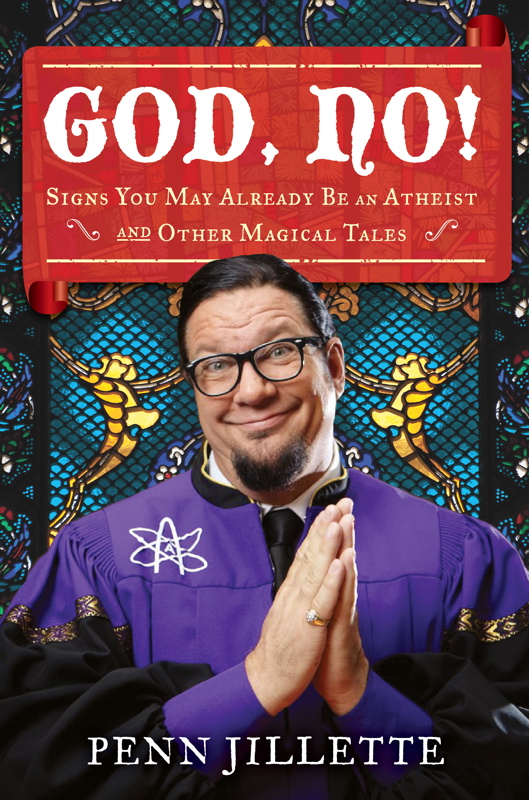
Over the weekend, when I actually have time to do a little surfing, I came across the United Church of Bacon. Noticing the similar food-based theme as the Flying Spaghetti Monster, I decided to check it out. It seems to have become a cottage (cheese?) industry to start your own anti-religion. A look at the United Church of Bacon’s website reveals it to be the brainchild of Penn Jillette of Penn and Teller, and friends. As usual, the voice of Teller is not heard. This is a legal church which performs many of the services of traditional religions, but without the belief. Bacon, it seems, is the ultimate reality here—to quote the church on a billboard: “Because bacon is real.” They have nine bacon commandments and an impressive list of charitable works.

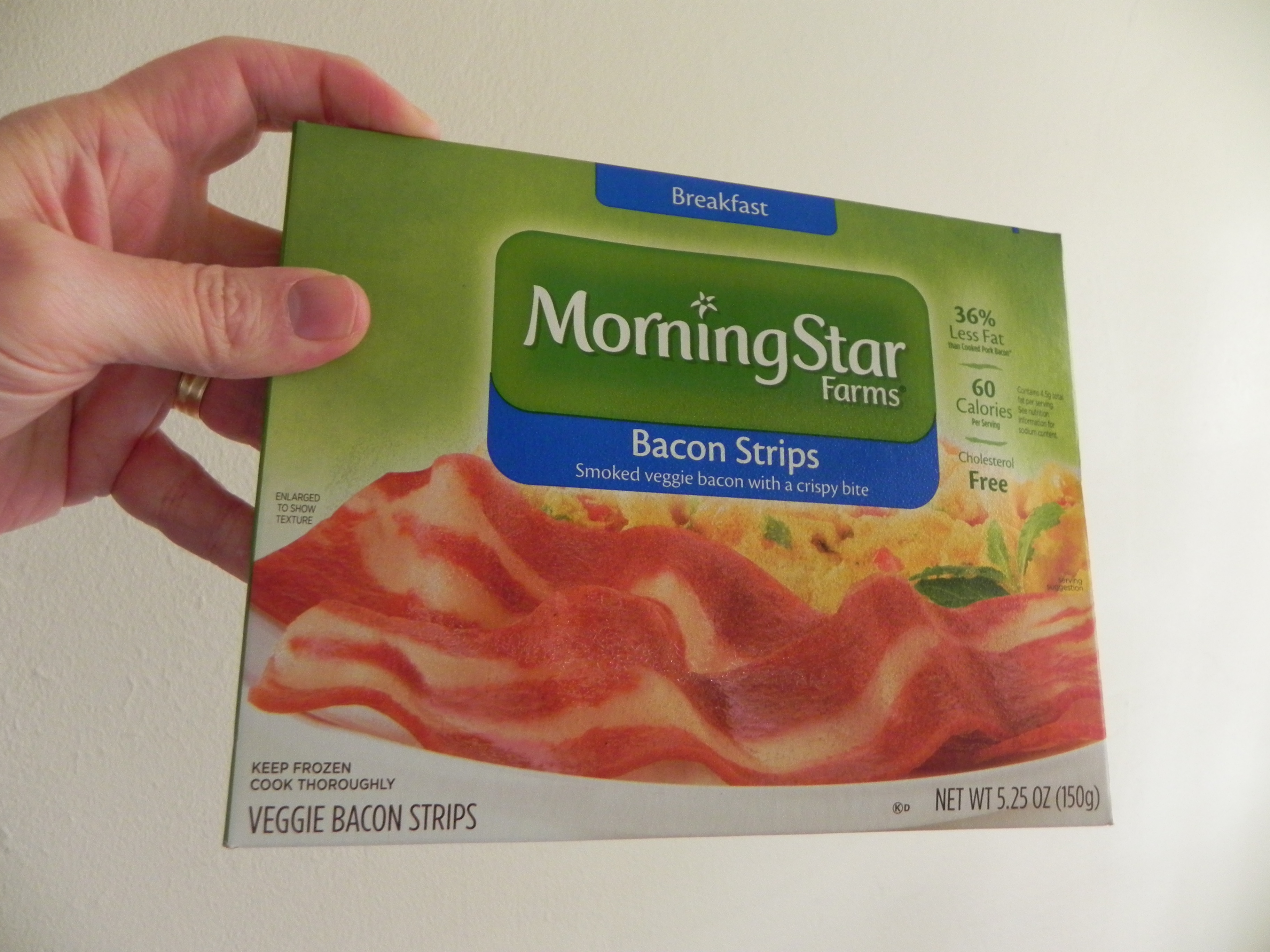
Looking over all of this material, I wonder what the mainstream churches might take away from all of it. For one thing, the obsession that Christian denominations have had for centuries with correct belief has become a kind of albatross. Petty differences in theology tend to lead to hatred in the name of the prince of peace. Another is the repeated emphasis on giving has taken its toll. The United Church of Bacon openly advertises that they give money, they don’t take it. While few clergy become fantastically wealthy, it is no surprise that most bishops or those of equal rank never seem to go hungry or drive cheap cars. If entertainers are rich, it is because they offer something worth paying for. And for those of us who are vegetarians, the UCB offers the alternative of praising vegetarian bacon. You are, after all, what you believe.
Heretic?
Heretic?


Coexistence

Sometimes I think I’m a punching bag. Not uncommon among scholars of religion, I suppose. I have read my fair share of overt attacks on religion: Hitchens, Dawkins, and even Jillette, and sometimes limp out of the ring wondering why I even bother. Still, science doesn’t completely explain the universe I inhabit either. Thus is was with some glimmer of hope that I read a story in Monday’s Chronicle of Higher Education entitled “Does Religion Really Poison Everything?” There can be no doubt that religious behavior has a track record of some execrable atrocities—some very bad behavior has been engendered by fervent religious belief. At the same time, those who despise religion have a hard time explaining it. As the Chronicle piece points out, religion is likely an evolved trait. There is some survival value in it, otherwise it would, by natural selection, disappear. Religion is seldom a rational enterprise. That doesn’t mean that it can’t be rationally studied, but rather that religion is primarily experienced as an emotional phenomenon. We find ourselves motivated by feelings, although reason will often drive us to do things we don’t feel like (like going to work). And emotion is necessary to be truly human.

It is often difficult to respond to those who castigate religion as an evil or poison, not for lack of reason, but because of feelings. Having spent most of my life with religion, it is not surprising that attacks on it often leave me feeling ashamed. But ah, that is an emotional response! It seems rational on the surface, but really, shame and embarrassment are typical emotional responses. This is the realm of religion. Reason may indeed indicate with great accuracy the way the universe works—of this I have no doubts. At the same time, I’m not sure the entire universe is something that humans can adequately comprehend. I have a hard time remembering what’s on a short shopping list if I accidentally leave it at home. Our brains aren’t equipped to the task of comprehending universes. Feel overwhelmed when facing a physics test? That overwhelmed feeling is an emotional response. With considerable cheek, might I suggest it might even be a little bit religious?

The Chronicle is a high-profile source for academic rectitude. I am pleased to see Tom Bartlett pointing out that the line-drawing in the sand between religious Fundamentalists and pro-science New Atheists will not solve anything. Religion is often guilty as charged. It is not, however, pure evil. There is enough evidence out there to suggest that religion is a tremendous coping mechanism for billions of people. And coping is not a bad thing, all things considered. Wisdom that is often attributed to the Greeks suggests that “all things in moderation”—the golden mean as it’s known—is the way to human happiness and success. The idea is older than the Greeks, and indeed, can even be found in the Bible for those who are willing to look. One need not be religious to see that, like most human inventions, religion has both good and evil uses. Evolution gave us religion, and it gave us science. It also gave us brains divided down the middle and strong reasoning that must dance with creative emotion in a tango that frequently makes abrupt shifts of direction. Our job, as humans, is to learn the steps to the dance.

Different, but equal.


Zombie Jesus

It must still be October. Despite a snowstorm before Halloween (one of nature’s trick-or-treats), all the signs are still there. My daughter showed me a Venn diagram yesterday, during a whole-day marathon of putting plastic around our drafty old windows, showing the intersection of three “monster” traits: resurrected from the dead, local townspeople fear and revere him, and convert as many mindless followers as possible. The creatures that inhabit this eerie universe are Dracula, Frankenstein, Zombie, and, where all three intersect, Jesus Christ. Obviously this was just for a laugh, but interestingly, one of the traits of Penn Jillette’s book, God, No!, is his rather frequent reference to Jesus as a zombie. Then I clicked over to Religion Dispatches, and the lead story is headlined, “Praying to the Zombie Jesus.” Ours is a world of mindless, quick connections where the compelling idea of resurrection has lost its appeal. Despite our religious culture—or perhaps because of it—we have come to see Christianity as just one more peddler of a wonderful, disturbing idea.

As regular readers of this blog know, I find the abuse of religious ideals inexcusable. Using one’s faith to beat another down is just plain wrong. Nevertheless, to focus on the folkloristic aspect of resurrection (or perhaps it is a metaphor) is to miss what drew the very earliest followers to Jesus. Before the idea of rising from the dead came a message that people should love each other and treat one another with respect and dignity. By the end of the first century of the common era, or perhaps as early as Paul, that idea grew to be a quasi-magical resurrection from the dead. No longer were women counted as equals among the followers of Jesus, and no longer were wealthy compelled to give it all up. Paul’s faith looked to a future world, beyond death, and was willing to consider this world, well, to be polite, crap. The reasons for this transformation are legion: the persecution that Christianity was undergoing, the failure of an apocalypse to take place, the disenfranchisement of the believers. They needed something to look forward to.

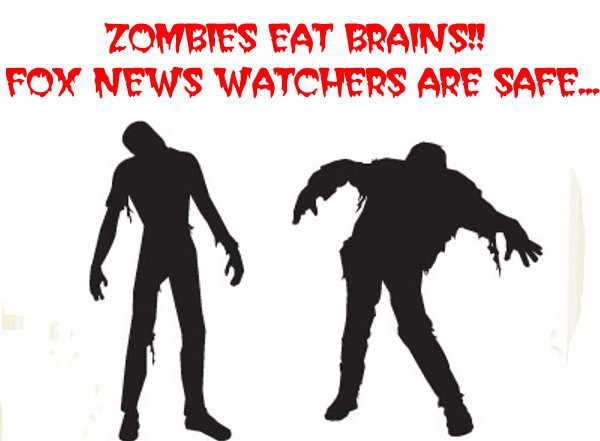
Zombies are likely a passing fad. When we start seeing books of zombie Christmas carols, zombie haikus, and zombie apocalypse survivors’ guides, we seem to be reaching the peak of the plateau. The zombie is mindless, rapacious, and entirely selfish. It will not go away. It is the perfect denizen of October. When I stare into those uncomprehending eyes, and see the disturbing lack of compassion and the desire to consume human brains, I start to make connections of my own. Analysts often describe zombies as the ghoul of the common folk. But all these characteristics taken together suggest that perhaps the month in which to expect zombies is November. Surviving another snowpocalypse, earthquake, and hurricane, the human spirit is difficult to dominate. And yet, when the polls open up in the darker season of the year, zombies will rise. The plastic on my windows does nothing to stop these chills.

Borrowed from a friend's site


Who’s to Say?

Stereotypes are so easy to fall into. Having been “typecast” myself, early in my career as a “seminary professor” and a “conservative”—neither of which matched my mental outlook at all—I eventually had to abandon higher education as a career option. Why did I take a job that didn’t fit? If you’re asking that question, obviously you missed the 1990s. It was a brutal time to be looking for a job; there was this recession… wait a minute. What decade was I writing about again? In any case, many people will always remember me in the various roles I’ve played as I sought to actualize my ideal career. It is always interesting to see how others break out of their expected roles into new venues. Penn Jillette of Penn & Teller has established a reputation for speaking his mind. To those with limited experience, such as myself, he is stereotyped as a “magician,” more specifically, a “bad boy magician” who gives away the secrets of the guild. To find out that he is a writer was a kind of epiphany.

I read his new memoir/confession, God, No! this past week. I’ve always been cognizant of the strangeness of a world where someone may speak authoritatively on the basis of star status, but Americans love their performers. I’ve enjoyed the Penn & Teller acts I’ve seen on television, and after reading Penn’s book, I think I would like him in person. I can’t agree with him much of the time, but his honesty and good moral sense are very winning. I seriously cannot remember the last time I read a book that made me snort out loud with laughter or try to sink even lower on public transit so the polite person sitting next to me would not be able to see all the profanity on the pages before me. The book itself very loosely follows the Ten Commandments, which, surprisingly, the author largely agrees with in principle. The essays are all over the place, but the libertarian spirit is difficult not to admire. His appreciation of rational explanations for the world is admirable.

Probably the most difficult point of agreement for me, however, is his definition of an atheist as anyone who do not know if God exists. He does have a chapter lambasting agnostics, but as a stickler (as much as anyone in religious studies can be a stickler about anything) for definitions, it is useful to distinguish atheism and agnosticism. Saying one does not know is not the same as declaring one is certain. Since the existence of God can be neither proven nor disproven, those who say God does not exist believe that assertion. Those who say God exists also believe their assertion. Objective knowledge, in our current state, is not possible. I had to agree, in the final chapter, that faith causes most of the problems we find associated with religion, but I’m afraid faith is a huge part of the human condition. God, No! is not for everyone. Those who read it will, nevertheless, find an author as convinced as any evangelist that he’s right. And if they are honest, they will have to admit to having laughed along the way.


Religious Democracy, Media Style

A delightfully witty book review appeared in yesterday’s newspaper introducing Penn Jillette’s book God, No! Signs You May Already Be an Atheist and Other Magical Tales. Having just learned of the book I’ve not yet read it, but I am intrigued. Penn Jillette is best known as the talking portion of the magic-debunking duo Penn and Teller. Having forged a career of exposing false claims to the supernatural mystique of stage magic, Penn and Teller delight in bucking the orthodoxy of the guild and showing that anyone clever enough can fool many people into believing what they know can’t be true. They are exploiting, of course, a phenomenon that neuroscientists have been exploring for a number of years: human brains retain belief even in the face of disproving evidence. Many religious believers call it “faith.” According to Hank Gallo, author of the review, Jillette uses his book to endorse atheism as the only real option for a thinking person. The book is generally categorized as humor.

Although Bill Maher’s Religulous makes many good points from a similar perspective, one of the haunting realities poised for religious specialists is almost a chiaroscuro with excessive contrast. It takes no special training to be a religious specialist. That is hard news to hear for those of us who’ve spent over a decade of our lives and thousands of dollars learning the trade. Comedians and others who are famous will impact far more people than this little blog ever will. Rick Perry can call together thousands to pray to pave his way to the White House. Maher and Jillette can poke fun at religious yokels and scholars will sit at their desks ignoring the crude efforts of those who have no training. There is no doubt, however, as to which will reach a wider audience.

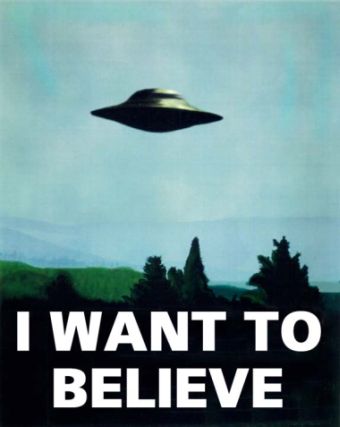
Harry Houdini famously debunked spiritualists in his day. Like Penn and Teller, he was a stage magician who recognized that people could be easily fooled. He was able to expose mediums that scientists and academics of his day failed to uncover. It seems that those with access to the most basic of human desires—the will to believe—gain credibility more readily than an erudite yet obtuse specialist with several odd initials after his or her name and several obscure books to his or her credit. Those in the media have direct access to the mind of the public. If the tent is big enough the whole town will show up for the circus. The truth may be out there, but the minds of the public are won over by those who entertain, not those who bury themselves in dusty tomes and seldom see the light of day. The fact is people want to believe. Until a better alternative is offered, we might prepare ourselves for a long round of Texas Hold’em and a Tea Party or two.