Liberty and Justice

I confess to being a bit vexed. How are we supposed to celebrate Independence Day under the Trump administration? Since January our government has demonstrated over and over and over again that it’s dearest desire is to pick democracy apart, to its own advantage. Making voting more difficult for those who oppose the Republican Party, gerrymandering to ensure local election victories, cutting their healthcare so that they might, well, just die off. Repeated and loud public protests do not impact them at all. When their own party moderates protest, they claim they’re collaborating with the enemy. The American people have become the enemy of the wealthy and privileged who want this country to resemble a country club, not a nation of liberty and justice for all.

How do we celebrate a country like that? Back in high school, my senior year, I won a state-wide essay contest. I got my picture in the paper and everything. I don’t have a copy of the essay, but I do remember that the topic was Americanism. Yes, the “ism” was part of it. Although I didn’t know Shostakovich at the time, it was my attempt at what he did in his fifth symphony. Looking back, it seems strange that a Pennsylvania statewide committee would select an essay so full of irony from a working class boy who was only too well aware of his own inferiority. Yes, there was irony in that essay, and anger. Carefully hidden. It sounded patriotic. The hundred dollar prize didn’t make a dent in my fall tuition bill.

Nearly four decades have come and gone since then. I’ve watch my nation teeter-totter between humane treatment of those left out by the system and offering kick-backs to those who by no definition need or deserve them. Until November of last year I’d never seen a nation stoop to the absolute abyss of cynicism in the election of Trump. Although President Obama had the grace to say that many people were obviously happy with the results, it was as if my essay—now lost and forgotten by all but one—had come true. Make no mistake about it—I’m a poor boy who grew up among the working class. As a teenager I could see, hear, and taste the hypocrisy. I hoped and dreamed that as I grew up so would my nation. It’s the fourth of July. Normally I would be celebrating Independence Day. This year, however, I’m only wondering what went wrong along the road to liberty and justice for all.

Hex Marks the Spot

Public versus private has been on my mind quite a bit lately. Partially it’s because I’ve been reading about magical beliefs and their persistence. It always amazes me how publicly we declare ourselves rational and uninfluenced by the supernatural. Once we get behind the closed doors of our domiciles, however, a transformation takes place. Our insecurities and uncertainties surface. Given the right circumstances we might even confess that we believe in magic. I know I’m generalizing here, but private space does allow for private thoughts and getting out with others can bring a much-needed relief. I was reading about Hex Hollow in an article a friend sent me from Roadtrippers. Hex Hollow is a small town in my native Pennsylvania where a murder took place over witchcraft. I won’t go into the details here—the Roadtripper story is quite brief and tells the tale—but it turns out a man was killed for being a witch. His murderer was also a witch who’d been sent to him by yet a third witch. The crime took place in 1928.

Think about the timeframe for a second. It was between the World Wars. Technology was fairly advanced. Witch trials had ended centuries ago. Still, some people believed enough in witches to kill for their conviction. Historians of religion have pointed out that Americans have never really outgrown the belief in magic that we deny so assiduously. I’m not trying to single out one nation here—there is widespread evidence that magical thinking is endemic to the human thought process. We aren’t so quick to let something go that, according to reason, has served us well. Had magical thinking been purely detrimental it should’ve died out long ago. We need our magic.

As yesterday, so today.

I’m not suggesting witchcraft is real. At the same time I know that it’s natural enough for thoughts to move into familiar terrain when stressed out. In Hex Hollow the man who did the murdering was convinced he’d been hexed by his victim. Perhaps he’d climbed the ladder of inference (what we tend to call confirmation bias) to a rung where the only way down was a criminal act of desperation. That’s no excuse to kill someone, of course, but it fits with what we know of an all-too-human form of stress relief. Nor is it rustic rubes to blame. Psychics in New York City are abundant and even US presidents have been known to consult the stars a time or two. Of course, once I step outside that door I’ll say it’s all nonsense.


The Scofield Connection

While reading about Cyrus Scofield recently—and that book has stayed on and played with my mind for some reason—I ran across the conferences that he held in preparing his famous reference Bible. Although he claimed the sobriquet “Doctor,” placing D.D. after his name, like many a self-puffer Scofield has no university that will support the claim. (It’s amazing how many high-level CEOs and “important” businessmen pad their résumés with false degrees. Even some government wannabes do it, and then they want to defund education after they get into office.) Perhaps because he had no seminary training, and likely didn’t even graduate from college, Scofield might’ve felt a sense of insecurity when it came to a very large book originally written in languages he couldn’t read. There’s a reason “King James Only” Christians exist. In any case, he set up meetings in a couple of conspicuous places to go over his work. One of those places was Grove City College.

Now, like many small, Christian colleges, Grove City isn’t widely known. Most of the student population—at least when I was there—was fairly local. Pennsylvania, Ohio, and New York, for the most part. Still on the (admittedly rare) occasion when someone asks me where I went for my undergraduate work, they generally haven’t heard of Grove City at all. Even though I spent four years of my life there, I had no idea about the Scofield connection until I read Joseph Canfield’s book. That’s because not all Fundamentalists grow up with Scofield. I’m sure I heard about the Scofield Reference Bible but I didn’t own one and I wondered what the big fuss was all about. After all, the annotations were the work of a man, and I was interested in the words of God. Far more popular was the revision of Scofield known as the Ryrie Study Bible, but I never read that either.

The end result is that many people think that Scofield’s words are “the Bible.” As I used to tell my students, binding pages together within a book makes a statement. If you’re saying “this is the word of God” and part of “this” is Scofield’s annotations, most people can’t distinguish between text and commentary. I eventually acquired a Scofield Bible, not for valid information, but simply for information. I was amazed at how poorly executed it was. Nevertheless, a true believer reading through the first chapters of 1 Chronicles is ready to accept even minimal narrative as divine. So it is that many Americans have come to believe in a Bible that’s not biblical. Religion is full of paradoxes and in this case I’d shared sleeping quarters with one in my more formative years although the connection was unknown at the time.


Lingering Memories

Visiting northwest Pennsylvania always makes me think of oil. I suppose the fact that I attended high school in Oil City has something to do with the fact. Many people suppose that the oil industry began in Texas, but Pennzoil and Quaker State have earlier roots back to the days when people flooded to Oil City and Titusville to get rich from the petroleum underground. I grew up in a refinery town that is becoming a ghost town, like Pithole City and Petroleum Centre before it. And when I returned home to New Jersey I wanted to find my Oil City book. Yes, there is a book. I first saw it in junior high school and I coveted it. Hardbound and large format, it was a book about my town. I had no idea where to get one, however. There were no bookstores in Oil City, or nearby Franklin. Any further afield than that and nobody cared.

I used to work as a janitor in my junior high school. It was my summer job for several years. One day our task was to haul out the garbage bins. I saw my opportunity. The library was discarding several copies of the book. They were in the trash. I dumpster-dived for the first (but not last) time in my life. I had the prized book. It had been locally printed. There is no publisher listed. It bears no ISBN. Nothing like a book to validate where you’re from. You see, I’ve always wanted to write a history of the area where I grew up. No major publisher would touch it—it can’t possibly sell enough books to cover its costs. It would be a labor of love.

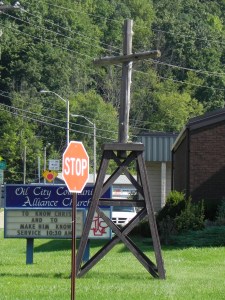
Not that I’m a fan of Big Oil. Quite the opposite, in fact. I don’t appreciate their proprietary arrogance toward ownership of the planet. Of their pollution of the world to gain more money for themselves. I support alternate energy. But still. This is where I’m from. Not that anybody’s making much money off of oil there these days. The shallow wells ran dry long ago. The local oil companies were bought out by larger corporations but they kept the local names. Once in a while I pull out my old, salvaged Oil City book and scan the pages with wonder. Many of these towns wouldn’t be here if it weren’t for the prehistoric sludge that flowed under the rocks and stones. It’s easy to believe that the town would stay the same forever. Heading out of Oil City there is a church. A crude cross stands atop a truncated oil derrick. I stare at it and the irony is only half complete.

dscn6574


Becoming the Past

Back home for a flying visit over the final dregs of the summer, I find myself in a hotel in my hometown. It’s an odd place to be. As I’ve often remarked to those who know me, I remember living in three houses in this area and all three have been torn down. Looking over the vacant lot where my elementary school once stood, I have a feeling of being erased. Just up the hill from my hotel is a blank space, like when a molar has been removed, where my junior high school once stood. Even the seedy shops I remember from childhood are gone, an entire block of buildings torn down. Wal-Mart opened up just a couple miles away outside of town, and all small businesses got down on their knees and prayed before dying. Being from somewhere is more than just a matter of going away. It’s also coming back.

IMG_2930

Standing outside in the misty morning sipping my coffee, I watch the river flow. There’s a fog rising over the Allegheny this morning and it makes this place look mysteriously beautiful. I think back to New Jersey, where I was at this time the day before, and how I can’t step outside without seeing other people. I go jogging at 4:30 in the morning sometimes. I’m never alone. On this balcony over the river I see no one. That person down by the river is really just a statue. Maybe I am too. What is left of a person when their hometown disappears? My fascination with ghost towns is catching up with me. Once someone said they thought I disliked small towns from the way I talked. Quite the opposite, the statue whispers. Quite the opposite.

If it weren’t for the people I know, would I ever come back here, I wonder. The warm coffee through the styrofoam cup reminds me of Judas. Even he knew how to kiss. This town, shrinking with age, gave me life. When I stamp the streets of Manhattan on my way to work, I know I’m a different man than I was back in this town. I would’ve found it difficult not to want to help anyone in need, back then. This homeless guy’s been sleeping in the same spot all week while millionaire wannabes look the other way. There’s a mist on the water this morning. The Allegheny flows on to the Ohio, and the Ohio on to the Mississippi. Down into the gulf that’s part of the ocean than encompasses us all.


Personal Heroes

I’m not inclined toward hero worship. Sometimes I think it must be a personality flaw on my part. The cult of celebrity is so pervasive that I feel desperately behind the times when I read what web-savvy authors write. Or maybe the truth is that my heroes live closer to home. Or lived. I grew up in a small town as the child of a working-class couple, both of whose sets of parents were not educated beyond high school. We were simple folk. We didn’t have much money and we didn’t have elaborate demands. My mother put up with an alcoholic and then absentee father, raising three children largely on her own for the better part of a decade. (She eventually remarried and the three became four, but I want to focus on the early part of the story today.) She had a rough life. Her hero, not surprising for an only girl with four brothers, was her father. Her admiration for him, whether genetic or via learning, passed on to me. I can’t claim to remember him since my grandfather died just before I turned two and just before he turned 75. As I grew up, however, he became my hero.

HomerSitterley

Today would have been his birthday, and I’m thinking about Homer Sitterley, my hero. He grew up on a farm in upstate New York and tried to better his circumstances. He taught in a one-room schoolhouse, which you could do in those days without a college degree. He also met my grandmother in that schoolhouse, which you could also do in those days. He had to change careers and became a civil engineer—still with no degree. He started and supported a family of five and moved around the country trying to keep his spouse happy. Back in the 1920s and ‘30s they moved from Virginia to Montana and back to the east, eventually settling in New Jersey, where my mother was born. They finally moved to Pennsylvania where my three brothers and I were born. He died there in August of 1964.

Homer Sitterley may have never worn a cape like one of his silly grandsons did in college. He didn’t have any super powers beyond the strong will to survive in a hostile and thankless world. He never grew rich despite hard work and few outside his family knew his name. He is a hero nevertheless. His kids were upstanding people: religious, polite, and kind. Their children—my many cousins—are good people. In a world where superheroes are shown increasingly as flawed, the real heroes are simply human. And my personal hero, although he never knew he was—and is—was a man who cared for his family to the very end. He was only human. And all the more heroic for being so.


Holy Girdles

Religions, it seems, come in belts. Or at least elements of religions do. Although we may not all agree on what constitutes the “Bible Belt” we all have a pretty good idea that it includes several southern states, and parts of the Midwest. It doesn’t really resemble a belt that I can tell, but its convenience and assonance keep the phrase alive. Over this past weekend I was in the “Borscht Belt.” I’d heard the term before, but had no idea where this supposed belt was, or, indeed, why it was called this. Historically, three counties in the southern Catskills, so I learned, were attractive locations for summer homes for Jewish families from New York City. All within a easy day’s drive of Gotham, they provided the low mountain, resort feel of much of New York State and Pennsylvania. According to Wikipedia (surprisingly, I had no books on the Borscht Belt in my library) this designation is less descriptive now than it had been, back in the day.

BorschtBelt2

One of the immediately obvious features of the region, at least as recently as last weekend, were the number of orthodox Jews walking beside the roadways throughout these counties. I’m using “orthodox” here not as a technical term since I have difficulty identifying the different brands of conservative Jewish belief (there I go again!). Another obvious indicator was the number of billboards written in Hebrew. Just a hundred miles down the road west and these markers tend to disappear. By the time you reach the central part of “the southern tier” you come back to what was once called “the Burnt Over District” from the “Second Great Awakening.” Distinctively Christian in orientation. Religion is endemic in these hills.

The internet tells me that the Borscht Belt began to unbuckle with the relative ease of air travel. I have many Jewish colleagues who pop over to Israel on a fairly frequent basis. I suppose the Catskills just don’t compare with the Holy Land. Further south, along this same rocky spine, you come to the Poconos. I grew up hearing about this vacation paradise in my own state, but, like the Catskills, the region has been largely abandoned for higher mountains, bigger thrills. Having grown up in the foothills to the Appalachians, I learned in school that these are ancient mountains. Old ways are naturally preserved here. The religion I grew up in was old-time, for sure. There’s an agelessness to these weathered hills that seems to invite those with old religions to form enclaves and imagine that little has changed, despite what Wikipedia might say. And maybe it’s time to get a bigger belt, since conservative religion seems to be growing rather than shrinking.


States Slights

States, at least the united kind, can have personalities. Some of us move after the diminishing herd of jobs and so end up in places we hadn’t really planned to live. In each state where I’ve made by domicile (six, as of the present), I’ve met people born and bred, down home and with no intention of ever leaving their native land. To such people, I imagine, state symbols may be important. I always felt unjustly proud of Pennsylvania’s Keystone status. I was born there, but neither of my parents and none of my grandparents were. I don’t live there any more myself. I was pleased and just a little surprised to learn that New Jersey has a state dinosaur (the hadrosaurus), discovered right here in the Garden State. This past week, according to an NPR story my wife sent me, Tennessee is trying to garner its own state dinosaur, in the form of the Bible as the State Book. I think it would be a great idea for each state to have an official book, but I would think that it might be a book written by someone from that state.

IMG_1363

Senator Steve Southerland, according to the story, put forward the legislation due to the Bible’s importance in the Volunteer State. The problem is, of course, the Bible is a religious book and that by choosing a religious book you’re getting dangerously close to choosing a state religion. “There used to be a wall here,” you can almost hear the constitutionally minded saying. The Bible is important. Whether we want to acknowledge it or not, no well-informed individual can deny that the United States has had a long and complicated love affair with the Good Book. As I try to show in many of my posts, the Bible still permeates our society in unexpected ways. Nobody’s trying to erase that history, but really, which state is going to select the Rigveda for its own book? Or the Qur’an? The Analects?

States are justly proud of their contributions to the whole. We have state flowers, mammals, trees, and birds. Tennessee’s is the Mockingbird. We have state slogans and mottos. But can any single state claim the Bible more than any other? I have to be just a little suspicious about claims that there’s no religious jingoism at play in suggesting it should be any state’s book. Yes, many Bibles are printed in Tennessee. Many writers have called the state home as well. Wouldn’t the more distinctive contribution come from a book that Tennessee actually had a hand in producing? Bibles, like it or not, can be claimed by all. I can see a tug-o-war coming with Texas, should this state symbol be canonized.


Time in a Museum

Over the weekend we visited the National Watch and Clock Museum in Columbia, Pennsylvania. I became aware of the museum during one of my steampunk phases, and since we were running out of summer, it seemed the ideal time to go. I didn’t know what to expect, but it certainly wasn’t anything quite so profound as what we actually found. Time, as we now know, is relative. In fact, up until just two centuries ago, nobody really knew what time it was. Well, maybe those people in Greenwich did, but the average person, even if s/he owned a watch, lived on approximate time. Try telling that to any boss today! The need for people to meet trains at various stations led to the standardization of time in the United States. Now the government declares official time, kept by atomic clocks. You could be a billionth of a second late for work and Uncle Sam would know. What happened to the days of looking for when the sun was directly overhead and guessing from there? Greenwich Mean Time indeed.

Time in inherently religious. For human beings, conscious of its passage, it is a limited commodity. Our concerns for our personal A.D. (“After Death” as the misnomer used to go) have led to religions suggesting that God, or gods, take a special interest in the passing of time. That became clear from the first display in the museum. Hardly a placard existed without some reference to the gods—people knew that time was somehow divine. Not only that, but the passage of time was punctuated by religious observances. Even such things as deciding when to harvest your crops could lead to religious revelations. Besides, time was set in motion by those ageless beings known as gods, and they mandated on-time performance. The ability to influence time was far beyond human capacity, thus deities informed us how to handle it. Into the Medieval period clocks maintained a regular array of religious imagery, reminding the user that this is the ultimate non-renewable resource.

IMG_2453

It was almost overwhelming, being surrounded by so many clocks. I remember being a young man—indeed a little boy—when time seemed to be in infinite supply. Religious observance was always a large part of that pool. Here I stood, a middle-aged man, spending my time pondering time. All the while, it was passing. Time is measured by regularity. Uniformitarianism is the geologic principle that informs us of the age of the earth itself. Beyond that, we’re told, the universe—so long ago—had its own beginning and anything that has a beginning will inevitably have an end. Such sobering thoughts amid the beautiful timepieces that so many spent their lives crafting. Now we only need glance in the corner of our computer monitors, or pull out our phones to glance the time. Taking a bit of it is wise, it seems to me, to explore our fascination with time itself. There is an air of eternity about the very enterprise itself. Well worth a summer’s day when forever is in your rear-view mirror on the way home.


Eternal Huckleberries

It began as a quest for immortality. Sometimes, however, you don’t recognize something even when it’s all around you. As an historian of religion, the quest for immortality is a familiar one. Certainly the ancient Egyptians believed they had found the keys, at least for royalty, and most religions haven’t given up trying since then. Some clonal plants have achieved extreme longevity. Since they grow by extending their roots, rather than by sexual reproduction, a single plant can remain alive as long at, at least 8,000 years. The specific plant to which I’m referring is the box huckleberry. I first learned to pick huckleberries for food in the Pacific Northwest. In that part of the country, I’ve learned to identify the plant from a distance and have spent many contented hours picking berries. Time, however, is something always endangered for those of us aware of its passing.

The box huckleberry colony in the Hoverter and Sholl Box Huckleberry Natural Area in Pennsylvania is about 1,300 years old. Summer is waning and my family wanted to see it. Indeed, for this particular colony, development probably destroyed parts of the system and so it has to be preserved. With that strange east-coast worldview, “just over there in Pennsylvania” comes to mean things are closer together in the imagination than they really are. Driving three hours just to see a huckleberry colony became more appealing when we combined it with the idea of visiting the National Watch and Clock Museum in Columbia, Pennsylvania. Both concepts were obviously related to the theme of time. They aren’t quite as close together as they look on a map. Map, after all, we are told, is not territory. The museum exists in a fixed location marked by a street address, so we went there first. There will be plenty to write about that later. As, ironically, we didn’t allow as much time as we should have for the museum, we had to head out further west and north to find the elusive huckleberry. All we had were the GSP coordinates and the name of a local town.

From the length of the line of cars behind me, the locals preferred to travel faster. Knowing only the relative direction and an approximate mile count, we stumbled upon Huckleberry Road and knew we must be close. Off into the woods we drove. As onetime manic geocachers, we had learned to both trust and distrust a GPS, but there was a trail head out here and a single parking spot. No one else was around. The signed indicated we were in the right place, but where were these ancient huckleberries? The ones we generally harvest grow knee-to-waste high with distinctive leaves. We walked the entire nature trail in frustration. How could a 1,300 year-old plant hide so well? Frustrated, we went back to the start. Fortunately, there were brochures. We found the box huckleberries. Indeed, they had been all along the trail, but we didn’t know what we were seeking. Just a few inches high, they cover the ground like a carpet. A few ripe berries poked through. We were in the presence of an entity that was older than Beowulf. Indeed, in the Middle Ages, this plant had been alive. Without the guide we’d never have realized we were standing in the midst of a kind of immortality.

DSCN5969


Preacher’s Best Friend

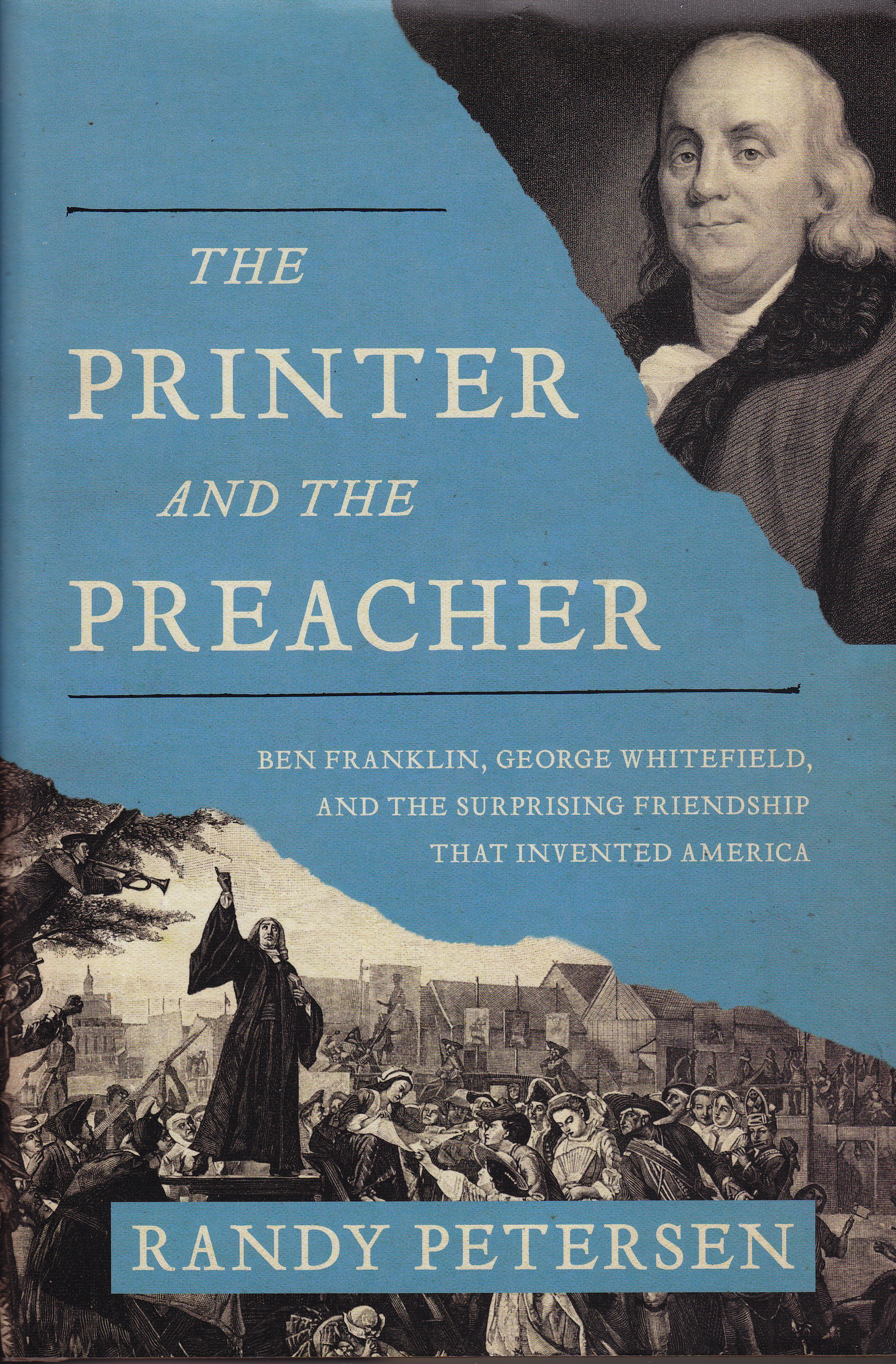
PreacherPrinterPerhaps it’s because I was born in Franklin, Pennsylvania, or perhaps it’s because everything I’ve ever read about him suggests he was delightfully unorthodox, but whatever the reason, Benjamin Franklin has always held my admiration.  Probably we all like to hear echoes of ourselves in the great.  It is difficult to believe that during his early rise to fame, Franklin was eclipsed by an unlikely superstar who was, of all things, an evangelist.  George Whitefield, an early English Methodist, wowed the colonies with his born again message, perhaps being responsible for its appeal even today.  Randy Petersen’s The Printer and the Preacher explores the unlikely friendship that sprang up between Franklin and the younger Whitefield.  While cataloguing early founders’ religious lives is always problematic, Franklin was a self-described Deist, and certainly not an Evangelical.  Whitefield was very into the personal relationship with Jesus idea that Franklin found, at best, simplistic.

Petersen’s book is a kind of wishful history.  He wants to see Franklin and Whitefield together, often suggesting that they might have met here or there, or that they might have discussed this or that.  The fact is, we have little to go on beyond the reality that the two knew and respected one another.  Whitefield stayed in Franklin’s house in Philadelphia.  Franklin printed and sold Whitefield’s best-seller sermons.  Certainly there was a good business opportunity here.  Even today the evangelical Bible market is a strong one.  Savvy businessmen and women know that a good living may be had from the Good Book.  You can’t read a book like The Printer and the Preacher without thinking that Whitefield and Franklin were a kind of odd couple.  Franklin is remembered as a man of wit and science.  Whitefield is barely remembered at all.  One of the first preachers to hire a publicity manager, Whitefield was the Joel Osteen of his day, raking in the accolades for being emotional in front of salt-of-the-earth colonials.  His oratory skills were legendary.  Even though he is honored as one of the founders of the University of Pennsylvania, he was no scholar and has largely been relegated to an historical footnote.

Petersen’s book is a quick read.  His writing is winsome in an evangelical way.  He assumes the truth, or so it appears, of the evangelical position.  Nevertheless, there is material to stop and ponder here.  Many of the questions can never be answered: why, particularly, did Franklin and Whitefield hit it off, for example.  On a more approachable level is the why of Whitefield’s faded flower verses Franklin’s perennial bloom.  The message of Whitefield simply doesn’t stand up to the experience of history.  Human beings—many of them born again—experience constant turmoil in their lives.  Franklin, on the other hand, was the consumate pragmatist.  His aphorisms are regularly mistaken for verses of the Bible.  Although others would have gotten there, we largely have him to thank for our harnessing of electricity, and even the birth of a new nation.  Whitefield’s spiritual descendants now rally to prevent stem cell research and the teaching of evolution.  Franklin’s children, illegitimate or not, reap the benefits of the lightning rod.


Finding a Vein

Travel broadens the mind. I always find that it’s a form of education. Sometimes what I learn is disturbing. While driving across Pennsylvania on I-80 recently, I had a chance to study some contrasts. I’ve made this trip many times, but this particular journey revealed two Amish farmers out plowing their fields behind teams of horses. It’s easy to romanticize this view—there is a majesty about it. Once, while driving back to Wisconsin from an interview at Luther College, I saw an Amish farmer and his team in the rain, the horses’ breath could be seen billowing out, but the farmer, implacable in his conviction of what had to be done, stood rigidly behind them, keeping the animals at their task. When you don’t eat if the crops don’t grow, a new kind of urgency is added to this picture. All around us on the highway hi-tech vehicles whizzed, and, gathering from the behavior of the drivers, I couldn’t help but wonder if any of them were very happy.

Then we sped past a billboard. It was facing the opposite direction from our travel, but the words went something like this: “The wind dies, the sun sets, but coal lasts forever.” In much of Pennsylvania, with its spine of Appalachian Mountains, coal is abundant. Growing up some of the highways we drove had exposed coal seams in the road cuts. It’s pretty much everywhere. Coal, however, is a dirty, non-renewable, polluting source of energy that exacts a severe cost on the planet through mining. No doubt it is abundant, but the amount is certainly finite and it makes the world less inhabitable when we use it. The wind blows where it wills. The sun rises on the righteous and wicked alike. Coal is decay left from the life forms that helped ensure that we’d show up here. One of those circle of death kinds of things.

IMG_2176

Then a car went by with a communique in paint on its back window. “Pray to end hatred” it read. This is a sentiment with which I could surely live. I recalled driving this same interstate many years ago when I was old enough to read but not enough to comprehend. The pylons of the overpasses on 80 frequently have spray-painted messages reading “Trust Jesus.” Some of them are still visible at highway speeds, faded though they are. The elements seem to have left a negative of the original work of what is technically vandalism. I think back to the Amish farmer. He’s watching, I’m sure, the never-ending flow of sinful vehicles on a highway as he plows. He’s been raised to trust Jesus and to believe in the old way of doing things. I’m behind the wheel praying that the hatred I see played out in these metal coffins will stay far from me until I can exit to some quieter backroads where the pace of life is more to my liking. And I wonder if that sunset I see is influenced by the coal that we’re burning and hoping the wind will simply blow it away.


Maine Event

We have no control over where we’re born. Place, however, has a sacred significance. Many people have a sense of where they belong. Life may be a prolonged journey, like that of a salmon, to find one’s way there. While in seminary, one of my professors had the class introduce itself by name and town of birth. This was in Boston, at a school with a highly eclectic student body. I was born in the small town of Franklin, Pennsylvania. Other than having been the setting for an X-Files episode may years later (not filmed there, of course), it was not the kind of place anyone was likely to have heard of. In a class of maybe 50, imagine my surprise when an older gentleman announced he was born in Franklin, Pennsylvania. We was not of my generation, but it turns out, we had origins in common. As the introduction passed further forward, someone about ten years my senior announced, with a glance at the first student, that he was from Franklin as well. By the time it reached me, this seemed more of a synchronicity than a mere coincidence. We were all entering Juniors (the starting year of seminary), all born in the same hospital, and none of us had known the others existed prior to that day.

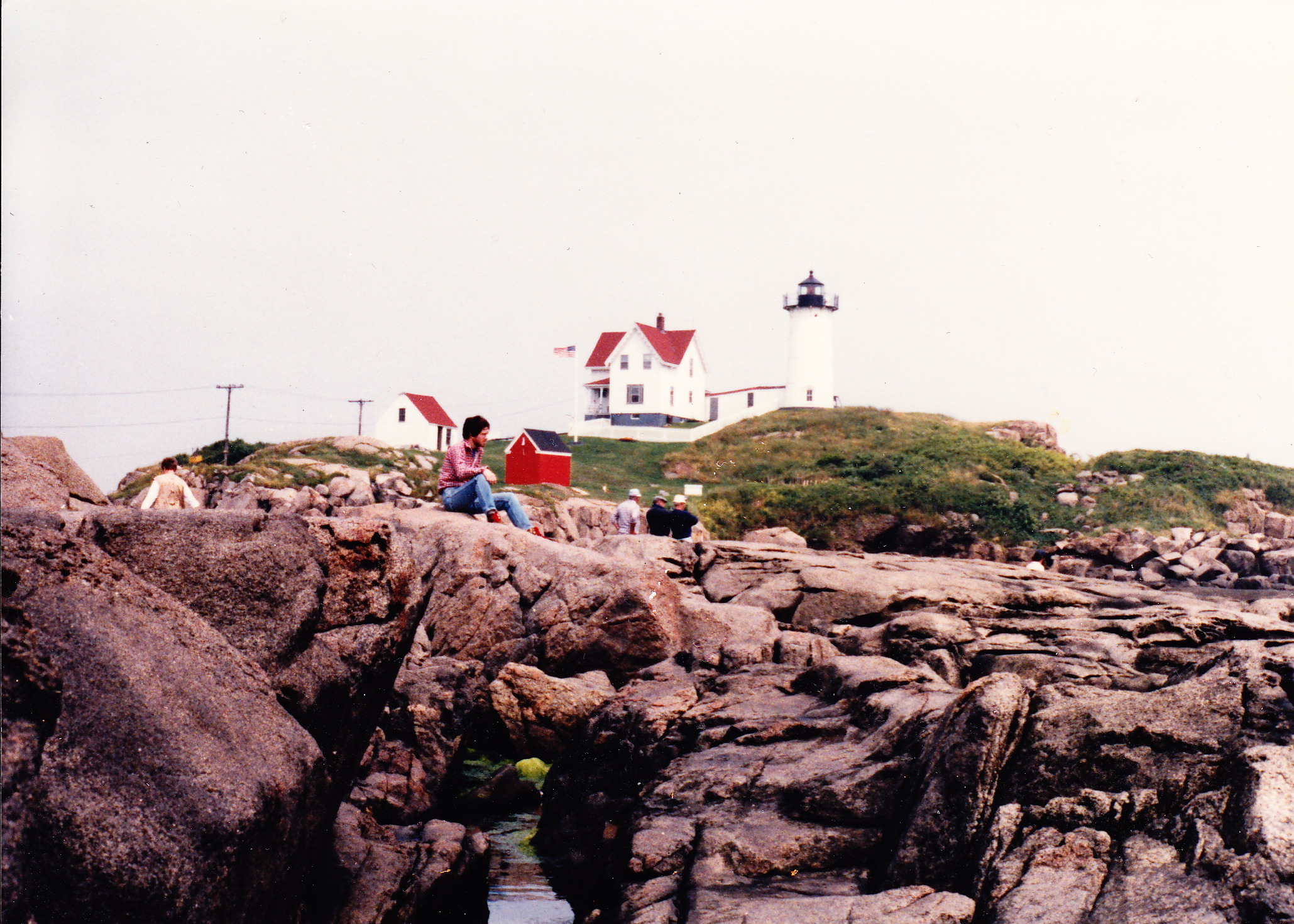
I was in Boston, however, because of a deep-down conviction that I belonged in New England. More specifically, Maine. After having grown up for about a decade in Franklin, we moved to Rouseville, Pennsylvania when my mother remarried. Apart from the industrial, drug-intensive culture, there was a haunting sense that this was not where I belonged. I began to read voraciously. My literary adventures found my spiritual home: Maine. Vividly I could imagine its rocky coasts and large stretches of northern woodland. I had never been to Maine—had never even seen the ocean at that point—but I knew, without a doubt, that Maine was my spiritual home. While a student in Boston I made several trips to Maine, each one convincing me more that I shouldn’t be leaving when Sunday afternoon rolled around. I should be staying here.

Life has, however, kept me from my beloved Maine. Academic jobs, mythical beasts that they are, are location-specific. You have to follow the jobs (I almost wrote herd there, but there’s nothing close to a herd of such employment). The population of Maine doesn’t support the number of schools that places like Massachusetts, New York, and Pennsylvania do. Even all of these were closed to me. Maine never abandoned my dreams. I moved to Wisconsin, following a job that abandoned me. I moved to New Jersey to take another, which also abandoned me. One of the motifs to which I constantly return is the sacredness of place. A sense that a person belongs somewhere. Out in the ocean, many salmon are captured before they make it to the stream of their birth. I wonder what their thoughts might be as they lie gasping for breath, knowing deep in their piscine souls, that this is not where they were meant to be.

Maine


Small Town Heroes

When World War Three starts I hope someone will let me know. You see, I barely have time to satisfy the needs of employers and tax collectors to get everything done in a day, let alone read newspapers. Or Facebook. I check my page, very briefly, twice a day and get on with the business that I’m assigned in life. But yesterday I had a notice from a high school friend that one of my teachers had died. Since I don’t name people I know here without their permission, suffice it to say I took a current events course with this teacher in either my junior or senior year. Then, as now, I didn’t read newspapers. Given the small town rags available in rustic regions, there was often not much mentioned beyond deer season and local tragedy anyway. Originally enrolled in the regular curriculum, several friends told me, “You’ve got to take Current Events! The teacher is great!” Those who’ve influenced my life for the good were great teachers, and despite my reservations, I took the class. When it came time to sign up for projects, I was a bit flummoxed. What did I know of current events?

Our teacher kindly allowed me to offer evolution as a topic. It was occasionally in the news then. Six of us decided to debate the issue, three for, three against. My religion having held me in a headlock, I was the lead debater against evolution. The day for the debate came and we ran over the bell. Our teacher, with his usual calm wisdom, suggested we continue the next day. And the next. Three days of sometimes acrimonious debate and it looked, from my point of view, as if creationism had demolished evolution. How terribly naive I was. Ironically, I had just posted a piece on evolution yesterday when I saw the notice about my teacher’s demise. The position in my post was a sharp 180 from high school. It was a tribute to the love of education.

Source: Wellcome Images, Wikimedia Commons

Source: Wellcome Images, Wikimedia Commons

I was an outsider in high school. I literally lived outside of town and after school activities were not really feasible. We were poor and couldn’t afford extra-curriculars anyway. I wore a large cross on my chest and although I was shy, I felt that it said all I had to say. My teachers, to their eternal credit, let me explore. In college I learned about Fundamentalism. I had never heard the term although I grew up in it. Gently my teachers nudged me to think more deeply about things. Through three degrees delving more profoundly into the origins of religion, as well as humankind, I came to see the errors of my ways. Had I been forced in high school I would’ve fought back. Instead, a persistent, patient wisdom guided many of my teachers. I don’t know how they recognized that I might be worth salvaging, but they apparently did. They let me speak, they let me trip. Just as I was about to fall they caught me. And I hope, in my own small way, to repay this favor in kind.


Retro Progress

LittleOrleyIn these days of high technology, remembering childhood might be seen as cowardly nostalgia. When driving my daughter back to college, however, sometimes I need a little nostalgia. So it was that we passed a pleasant couple of hours listening to Little Orley stories told by Uncle Lumpy. Having read ancient history for years, I don’t mind saying that I was a devoted fan of Captain Kangaroo as a child, and Mr. Green Jeans was one of the reasons. Before the Captain, Green Jeans (Hugh Brannum) had recorded a set of radio stories about Little Orley, beginning in 1946. (Lest readers get too driven by nostalgia, I wasn’t around for the original broadcasts.) In the small town of Franklin, Pennsylvania, across the state from where Brannum died, our library had a record of some of the episodes from his radio show. As a child I listened to these tales so much that I still have parts of them memorized to the word. The web brought Little Orley back to me, and now anyone can purchase the tales that I had gone for decades without hearing. Driving through eastern Pennsylvania on an emotionally laden journey, Uncle Lumpy seemed the perfect fare.

A few facets of the program struck me anew. Little Orley stories, for those unfortunate enough never to have heard them, are tall tales about a farm boy that involve all manner of hypostatized natural phenomena. Animals, plants, the moon, clouds, and even pancakes talk and act like humans. Or gods. Orley encounters these all with no hint of surprise, and yet goes to church on Sunday and Wednesday night for prayer meeting. The God in these stories is anything but a jealous deity, sharing the stage with a king of the oceans, lakes and seas that can transform a person to a fish, or with mysterious voices that can make a boy a worm and a worm a boy. Leprechauns gambol through the woods, and snowmen amble about trying to help with farm chores. Stories like these in the Bible are now considered factual, right Balaam? In the 1940s they were standard fantasy for children.

Now we’ve come to an era of biblical literalism that fears and despises challenges to the single God of sacred writ. In Little Orley, however, a message of tolerance (with some notably politically incorrect caricatures) predominates. Orley is time and again in situations where those who are different should be, and inevitably are, treated as equals. Even God gets some help from talking bats who ring the bell to bring the faithful to church when the sexton breaks the bell-rope. Change, I know, is inevitable. As these miles disappear behind me, I can feel it keeping pace, eventually to eclipse me. Progress is good, but sometimes the way ahead is best found by looking back in wonder.