Reflecting Spirituality

I always find undergoing anesthesia a spiritual experience.  It’s too bad the the prep for things like colonoscopies is so stressful that it’s difficult to appreciate the fasting and how it changes your perceptions.  This is followed by the delicious blackness of a complete loss of consciousness.  If death’s like this we have nothing to fear.  I’ve written about this before, but chemical sleep is not like nighttime sleep.  You hear the anesthesiologist say, “You’re going to sleep now.”  Then you wake up, disoriented because no time has passed.  I blinked a few times, saw my wife’s coat on the wall, and thought it was a nurse.  I started to say “Stop, I’m waking up!”  But then I focused on my wife and wondered why they’d let her into the procedure room.  “Are they done already?”  I asked.  Where had I been for the last hour?

Spiritual experiences are sometimes only seen in retrospect.  They jar us out of ordinary time into an alternative time.  It doesn’t make up for the nasty taste of prep medicine, or the unpleasantness associated with it, but emptying yourself is a spiritual practice.  I need to try to remember that next time around.  I know people who are afraid of anesthesia.  I’ve only had it three or four times—oral surgeries, and my first such procedure as this—but there’s something mystical about it.  I don’t use drugs (never have) so perhaps I’m a neophyte, but looking back on the experience I know that something extraordinary happened.  Coming out of it is coming into a new world that is somehow strangely the same as the one I left.

Religion has always, at least partially, been about altered states of perception.  Organized religion succeeds in making it rote, but those who experience the naked phenomenon never forget it.  Anesthesia is, I know, potentially dangerous.  It so like a light being switched off that I’m always left in awe of it.  Mystical experiences are rare, which is one of the things that makes them so valuable.  I’ve had them—widely spaced—since childhood.  Sometimes it’s evident in the moment, but often some reflection is necessary.  I suppose few people look forward to any kind of surgical procedure, but there can be benefits beyond the physical health that we hope will result.  That’s the way spiritual events often take place.  Perhaps advanced practitioners (not always clergy) can bring them about intentionally, but any of us might recognize them afterwards, upon reflection.
Planting Knowledge

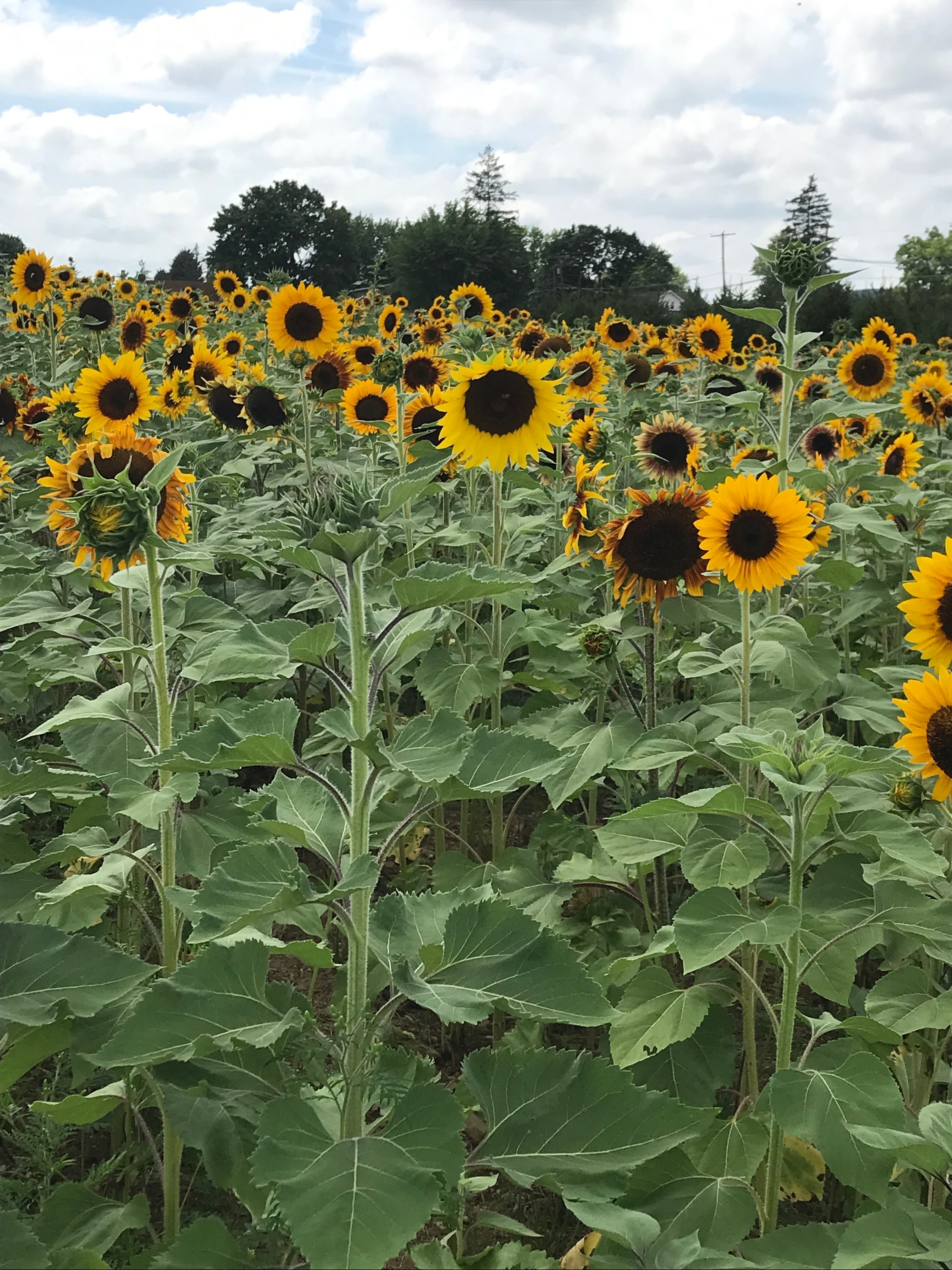
In an effort not to harm other living creatures, I became a vegan about seven years ago.  Generally it’s not too difficult, although many eateries still think you have to exploit animals to eat anything.  Vegan fare is quite good, and some of it is remarkable.  Then I saw the article in Popular Mechanics, “So It Turns Out Plants Have Had Voices This Whole Time” by Jackie Appel.  Well, “voices” may be stretching it a bit, but they do make sounds.  According to the article, plants “talk” at the same volume as humans tend to, only it’s in a range that we can’t perceive.  Other animals, however, may.  That’s right, your dog may be able to hear the noise plants make.  This is one of the reasons I marvel at scientific arrogance.  Human senses simply can’t perceive all stimuli—how can we claim that what we term “supernatural” doesn’t exist?  We don’t have nearly all the data.

Meanwhile, we live with animals whose sense of smell would send us running even more frequently to the showers.  Animals who can hear plants “talking.”  Animals who can perceive magnetic fields.  We’ve evolved knowing what we need to know.  (At least in part.)  What then do plants communicate?  Can they hear one another?  The sounds plants make, if “translated” to human perception, seem to be “I’m thirsty,” “I’ve been hurt,” or “I’m fine.”  The terminology here is Appel’s but you get the idea—plants broadcast their status.  Can plants scream?  One of my students reminded me a few years back that I once wondered to her what a tomato felt when it was being sliced.  I responded, “That sounds like something I would’ve said.”

They know.

So now I’m a vegan and plants are joining the conversation.  My hope is that they don’t feel pain.  As far as we know, plants don’t have brains.  Even so, heliotropes are smart enough to follow the sun across the sky.  And even fully grown trees move—very, very slowly—to optimize the light they require.  Such intelligence in nature always leaves me in a state of wonder.  We’ve been told for centuries of human exceptionalism.  Sure, we have opposable thumbs and have figured out how to communicate intricate things vocally.  So much so that we can represent them in written form (such as you’re reading right now) and can know what someone’s saying even at great distances.  That doesn’t mean we’re the only remarkable creatures.  But it does leave me with the dilemma of what to eat.


Believing and Seeing

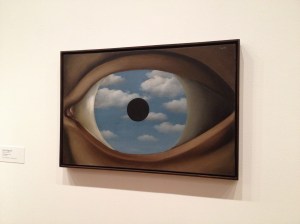
Our eyes locked for a moment.  He wasn’t ten feet away.  Of course, like all famous people he knew that his fans thought they knew him and hoped that he would know her or him.  This isn’t a particularly rare thing to happen in New York City, but the instance in my mind happened in Atlantic City after an Alice Cooper concert that I attended with my brother.  As kids we’d listened to Cooper with some avidity,  and even the concert itself was a somewhat intimate affair (we were both adults at the time).  An audience of hundreds instead of thousands, and many of the attendees about our age—that is to say, not young.  That meeting of the eyes, however, reinforced something I already knew.  Looking is more that your eyes receiving light particle-waves.  It is a connection.

Try this with your bestie—it can be your spouse, lover, or friend.  It especially works if you’ve known her or him for many years.  See how long you can go staring into each other’s eyes.  It’s not easy.  You start to feel that they can see your secrets: your fears and vulnerabilities.  You glance away.  Materialists claim that seeing is a simple matter of light entering our eyes and our brains interpreting it.  We all know, however, what it’s like to be stared at.  How uncomfortable it makes us feel.  We can often tell when someone’s staring at our backs.  I wonder if there’s more to seeing than appears?  Performers often crave the energy of being before thousands of eyes.  They know how it’s just not the same when you have to pretend.  I knew that well as a teacher.

Could seeing really go both ways?  Even animals don’t like to be stared at.  It’s an informal experiment I’ve tried while jogging.  If you break eye contact with a deer, cat, or rabbit, you can get fairly close.  If you stare, however, they dash away.  It doesn’t matter if you turn your head—it’s the eye contact.  I ponder how this relates to narcissists in power.  They crave the eyes on them.  The way to de-power them is to stop looking.  Alice Cooper, I’m certain, has no idea who I am.  He wouldn’t remember me if we ever met.  That night he was standing outside the door of the afterparty where those who’d paid extra could get to meet him.  We didn’t exchange a word, but we made a connection.  There’s more to seeing than meets the eye.


Illusions Incorporated

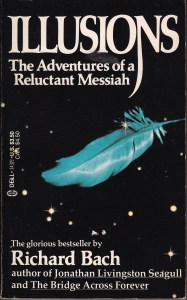
illusionsFiction and fact aren’t so different. Long before the Wachowski Brothers came up with The Matrix, Richard Bach wrote Illusions: The Adventures of a Reluctant Messiah. I was in seminary when I read it and it seemed, at that time, to change my life. Fiction, or fact, has a nasty habit of getting into the way of things and over the course of decades I forgot. The Matrix reminded me—reminded me multiple times—but Illusions sat on the shelf, gathering dust. I was reminded of this book that refuses to be categorized when playing a family game. Like many games these days it’s a set of pre-printed cards and what makes the fun is the context in which you put the words. In this particular game you have to find the suggested idea in the book you have at hand.

I have to confess that this is just a touch artificial at our house. We don’t have much in the way of things, but we have books. Lots and lots of books. When we play this game, we think ahead of time what books we might bring to the table. You never know what the cards will ask, so books with diverse ideas are a good choice. I saw Illusions on the shelf. As I thumbed through, it was as if the decades were wearing thin. I knew I had to read it again.

Stubbornly refusing to classify itself as fact or fiction, the narrative of what it’s like to meet a messiah is inspirational. I can’t claim to have come to the conclusion on my own—I’ve read Illusions before, and I have seen The Matrix many times—but I recollect the realization coming to me on the streets of Manhattan. This is not real. Standing in the shadow of the tallest buildings in this country, that’s not a comfortable realization. Nobody said reality was comfortable. We easily let ourselves accept what we can’t do and what’s impossible. It’s far more rare to consider what is truly possible. What we can do. These ideas will be a hopeful ebenezer over the coming months. We choose to elect reality. Despite what the loud and angry say, the mind is the arbiter of truth. I read the book before I knew much about the world. If I’d had the good sense to believe it, it might not have taken me decades before pulling it off the shelf to remind myself of what I already knew.


Pay Attention

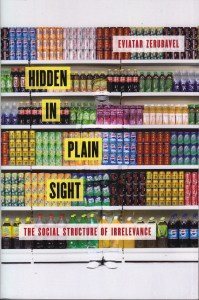
hiddenplainsightIt happened in seventh grade, but I remember it vividly. It was music class. I’ve always enjoyed music but have never been able to make it without the assistance of a device that plays recordings. This particular day, however, Mr. Butler gave us the assignment to write down whatever we heard for about ten minutes. He told us to start and I began listening. Hard. I didn’t want to miss a thing. When time was up he asked some people for their answers. The first person said the sound of Mr. Butler’s footsteps as he walked to his desk after saying “start.” I was utterly shocked. How had I missed that? More answers emerged and my sense grew that I was completely inept at hearing things—well nigh deaf—since I had only heard the sounds that I was listening for. Hidden in Plain Sight: The Social Structure of Irrelevance, by Eviatar Zerubavel, makes me feel a little better.

A lot has happened since seventh grade. I have now realized that I’ve missed most of it. We filter out stimuli constantly. What is really interesting about a sociologist’s look at what we fail to notice is that we often miss important things in life by assuming that figure is more important than background. Or that space between things is less important than the objects themselves. Or that we can indeed listen for silence instead of sounds. It is a matter of how we perceive things. There are millions of stimuli bombarding you right now. I’m flattered that you’re even bothering to pay attention to my musings here. Are you also feeling the clothes you’re wearing? The shoes on your feet? The taste of either your last meal or the toothpaste that might have followed it? We shove things into the “background” all the time, including other people. We can’t pay attention to everything.

Interestingly, Zerubavel raises the issue of moral inattention. We do sometimes consider things outside the realm of moral consideration. But should we? What are morals if not an indication of what society has taught us to value? Indeed, social attention, or inattention, teaches us from our earliest days what is safe to ignore and to what we must pay attention. It helps us survive. Reading this little book, however, has left me wondering about all the things I have habitually missed through the years. Some of them may have been important. Sitting in a silent room, after all, I failed to notice the sounds of my own pencil scratching on paper, writing down all the sounds I was hearing.


Cave In

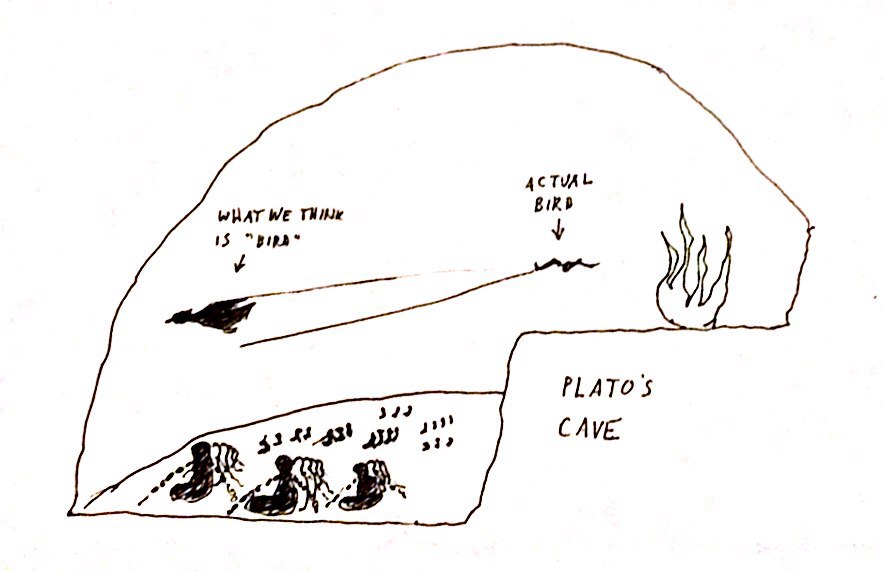
The conversation began, as conversations often do, with Plato’s allegory of the cave. The nature of reality was the topic of a chat I had with a very intelligent undergrad the other day. Plato believed in a realm of ideal forms. What we experience in life is not the actual forms themselves, but a reflection of them sufficient to alert us to what it is we encounter. Humans are sitting, as it were, in a cave. We are chained so that we face the inside wall of the cave and can’t look around. Behind us there is a fire and the ideal forms pass between the fire and people, throwing their shadows on the wall. Not having ever been outside the cave, we suppose the shadows are reality. We are, however, deceived. This led, naturally enough, to a discussion of Aristotle’s counter-argument that the “essence,” or entelechy, of things is something inherently within it. No need for an alternate realm of reality. And so, I asked, what is reality? What is truth?

PlatosCave

My young interlocutor said that reality is what we perceive. It is different for every person, and therefore there are a multitude of realities. Truth is simply the term we apply to our experience of reality. I began to feel as old as Plato. When I was young I believed, not exactly in a realm of ideal forms, but in a universe that contained abstracts. Abstract concepts objectively existed, and in a kind of neo-Platonism, we recognized them when we encountered them. Love, for instance. We may not be able to define it precisely (although materialists claim it is just a pretense to get sex), but we sure know it when we feel it. Or consciousness. What is it? No one reading this doubts, however, that it exists. And truth. I had always assumed that there was Truth with a capital T, objectively floating around out there. Perhaps, if the undergrad is right, there are multiple truths around. We chose the one that fits our experience of reality. Q.E.D.

C.Q.D.! C.Q.D.! Worldviews are in the process of changing. I tend to think the internet has democratized truth. Religions have tended to play their trump card—revelation—at this point. The unambiguous input from the divine should end all questions. But it only requires a moment’s reflection to realize that there are multiple religions and multiple revelations. Which one are we to believe? Some scientists claim there is no need for philosophy, religion, or the humanities. Objective facts, however, are interpreted subjectively. To privilege one reality above others is a kind of intellectual fascism. Perhaps my reality is different. We all sit in the same cave watching the same shadows play in front of us. We then decide what is real. Perhaps we need to get outside for a breath of fresh air. Even Plato knew, however, that that is against the rules.


Eye in the Sky

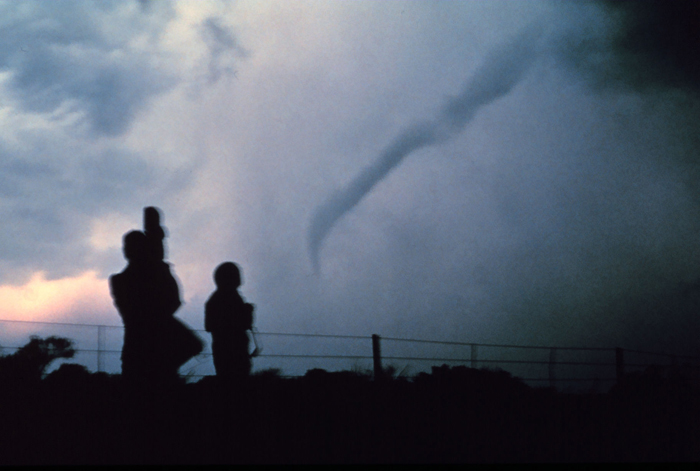
No one is safe. The calamitous tornadoes that have been devastating the south are indeed tragic. Some years ago while working on my weather in the Psalms book, I experienced a brooding fascination with tornadoes. Since I was living in Wisconsin at the time, this was natural enough, but the facet that always gleamed the darkest was the arbitrariness of it all. Tornadoes are notorious for destroying one building while leaving the one next door unharmed in a rapture-like abandon. And there are those who claim the righteous survive while others soberly state the good die young. The fact is life always ends in death, and if tornadoes don’t get you, earthquakes, comets, or microbes will. Our religions help us cope with the fact that consciousness leads to a sense of victimization—things are always after us. Religions teach us that something (God, spirits, Tao, karma) will balance it out. We so hate to see the bad guys win.

Tornadic devastation does have the divine edge, however. Apart from the randomness are the celestial origin, the sharp distinction between those reaped and those sown, and, of course, the angry brow of the frowning wall cloud. What is purely a natural event feels like punishment from our species-specific view. And who doles out the punishment if not a parent stronger than the cowering children? Does religion reassure in this case? The one who is begged for comfort is the same one who sent the storm. As humans the best we can do is help those who are within reach.

The photos emerging from Joplin, Missouri are heart-rending. The more we build the more we stand to lose. Long before European settlers laid claims to this land, cool, dry air masses tumbling over the Rocky Mountains collided violently with warm, moist air flowing in from the Gulf of Mexico. For as long as prevailing weather patterns have been established, there have been tornadoes. Believing in God’s protection and blessing we build on dangerous fault lines, in drought-stricken plains, and in the shadows of biding volcanoes. Disasters are a matter of perspective, for they are as natural as the air we breathe. Perspective transforms them to divine chastening and us into helpless children.

Coming for you?