Things about Pennsylvania

When I used to pick up my daughter from college in upstate New York, we’d sometimes come up with ways to keep the conversation going for the three-to-four hours it’d take us to drive home.  One trip we thought of doing a parody of “Sweet Home Alabama,” namely, “Sweet Home Pennsylvania” (same number of syllables).  We sketched out some verses by her asking me what Pennsylvania was known for.  Now, I was born and reared in this state, but my ancestral states are more properly New York, North and South Carolina, and the District of Columbia.  Still, I feel at home in PA, but I’ve always felt it was one of those places that people think “Philadelphia” then call it quits.  Pittsburgh used to be much larger than it now is; it was the 16th largest city in the country when I was in high school.  So, the Liberty Bell/Declaration of Independence, and steel (also in Bethlehem), were obvious gimmes.  But what else?

The Amish.  Yes, they have colonies in many states, but Pennsylvania has Lancaster County.  The state may not be widely known for this, but it is the second biggest supplier of fossil fuels in the lower 48, right after Texas.  Indeed, the petroleum industry was born right here, not far from where I grew up.  So we have the Mennonite farmers and heavy industry.  It is really quite a varied state, my home.  We have lakefront property on Erie, and a tiny part of the Atlantic in Philly.  We have a good dose of the Appalachian Mountains.  Lots of forests, even some with elk.  We were the second state, after Delaware, and Pennsylvania is properly a commonwealth instead of a state.  Our European founding was by means of the Quakers.  Pennsylvania housed several Indian tribes.  It was known for religious tolerance.  Daniel Boone was born here.  So was Stephen Foster.  And two US Presidents.  Not bad.  Not bad at all.
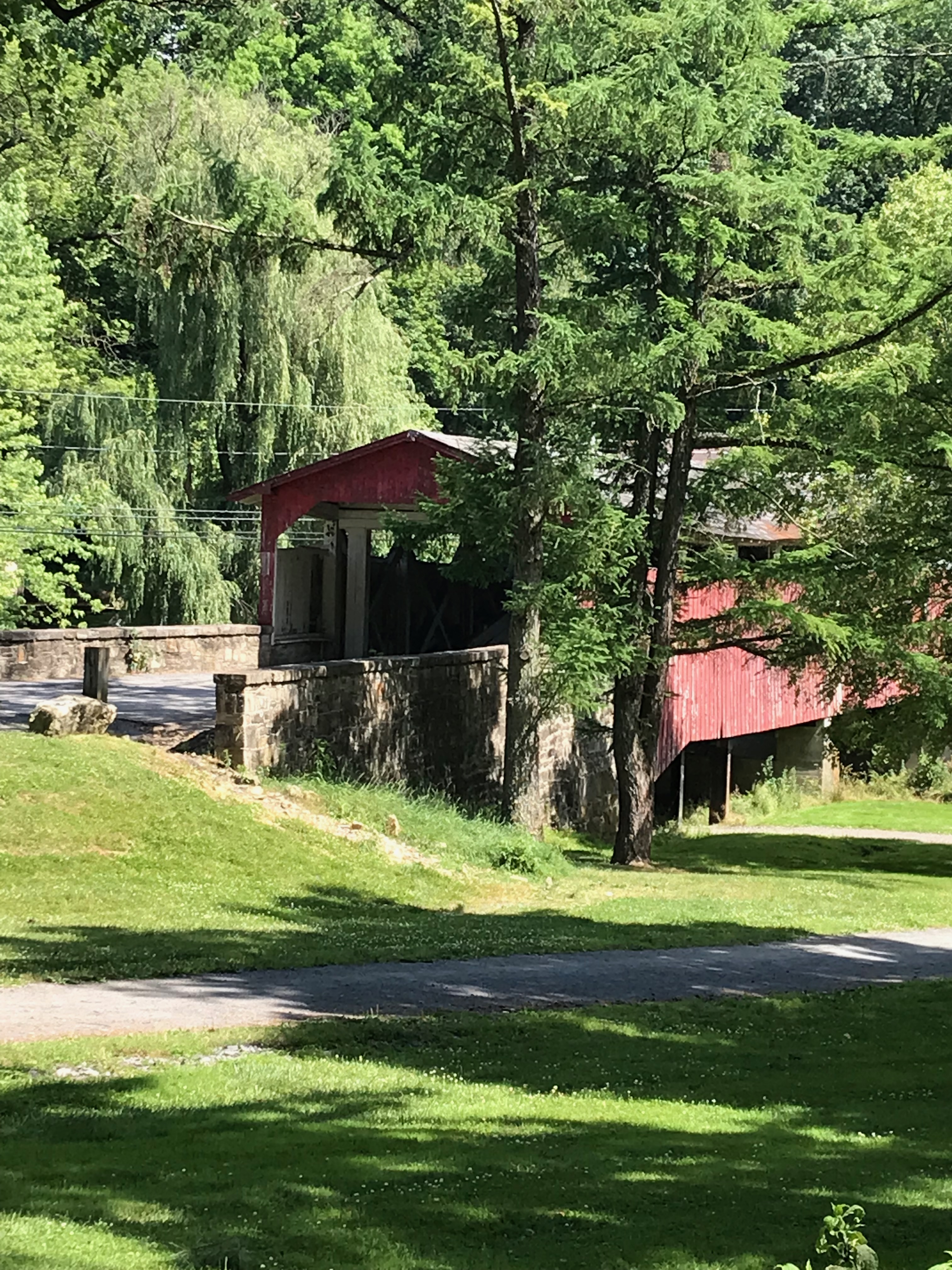
Only recently did I learn that the covered bridge was invented in Pennsylvania and that we have more still standing than any other state.  The current count is about 209.  Now, there’s a romance to covered bridges.  During this summer of staycations, we started to visit some.  You can’t go shopping there, and you can’t stay overnight or even order food, but these old-timey structures are a draw all on their own.  Part of the fascination is that we don’t build them anymore.  We have cars to keep the rain off and our vehicles don’t get spooked by the sight of open water or slip unduly on wooden planks.  Back when we were trying to make up alternatives to Alabama’s charms, I wasn’t aware we had so many covered bridges.  I saw a few growing up, of course, but paid little attention.  Now they’re another part of what makes this a sweet home.

Energized

I grew up in Pennsylvania, but there’s a lot I don’t know about the commonwealth.  (I do know that it’s a commonwealth rather than a state.)  My parents weren’t educated—neither one finished high school—so I didn’t have a lot to go on at home.  I recently learned that it is the second largest energy producing state in this somewhat tenuous union.  Texas is, of course, first.  I suspect this is because the Keystone State is old.  Not because it was one of the original thirteen colonies (which it was), but because the Appalachians around here are ancient and abundant in coal, oil, and natural gas.  And speaking of natural gas, the state houses of congress are dominated by Republicans.  The state motto should probably be “Burn, baby, burn.”  Given the number of Republicans, it is also one of the most corrupt states.

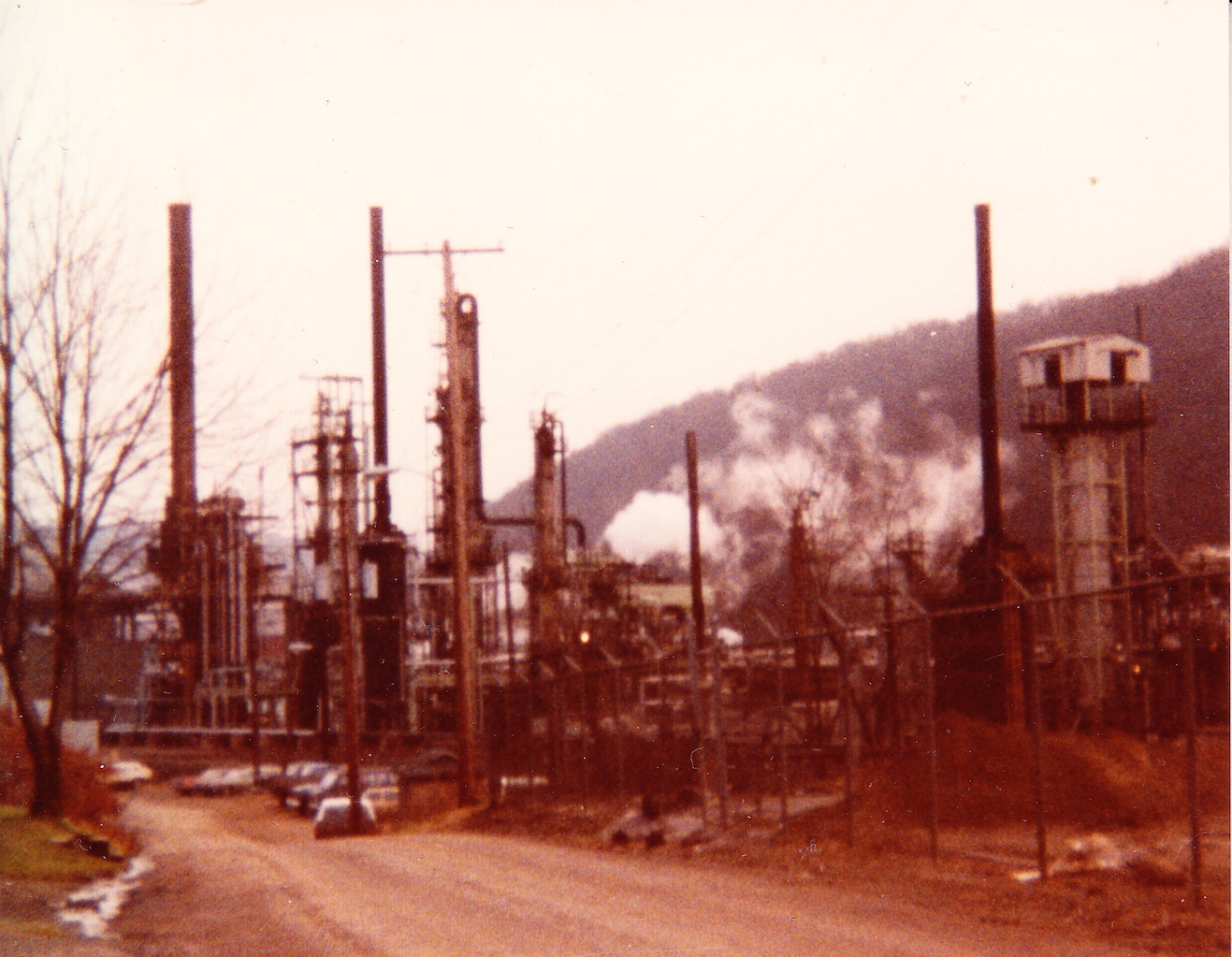
Even in the rural parts where I grew up, it was clear that energy was a huge part of our history.  The petroleum industry began in Pennsylvania.  Col. Edwin Drake’s well at Titusville is still producing.  The oil fields here are shallow (speaking of the GOP), however, and the interest shifted to Texas where, well, everything’s bigger.  Growing up, refineries were a familiar sight.  One of my vivid childhood memories is witnessing a refinery fire.  I was too young to really understand.  My brothers and I were outside playing when it started to snow in the summer.  It wasn’t really snow, it was hot ashes falling from the sky from a refinery fire about five miles away.  We later drove out to see the huge vats melted like wax, charred and rusted under what had been an industrial paint facade.  Petroleum companies are like that.

My second hometown of Rouseville lived under constant threat of a refinery fire.  The small town of about 800 was completely dominated by a Pennzoil refinery that took up much of the valley.  We trembled whenever the refinery sirens went off.  My life may have been shortened by breathing in all those toxic fumes.  Big petroleum comes with massive costs.  We know that alternative sources of energy are available, but we have very rich people who stand to lose some of their vast fortunes if we move away from fossil fuels.  There’s much about Pennsylvania that I don’t know.  I’ve lived here longer than in any other state.  And I, for one, would like to see this fascinating commonwealth work for the betterment of the world it inhabits instead of rewarding the bad behavior of the wealthy.


Are You Being Served?

Weary from a long day at work, I stepped off the bus last night to find the street to my house barricaded. That’s seldom a good sign. From the looks of the sludgy stains along the street, it was pretty clear that we were dealing with a water-main break. Sure enough, at home, no water. As I pondered making supper, washing dishes, and brushing my teeth—all that I usually have time for before going to bed—I wondered how I’d do any of them without water. As humans do, I managed. This morning I awoke to find the faucets still empty and considered the prospect of going to work with no shower, when a natural kind of grumpiness settled over me. We expect water. We take it for granted. For much of the world, however, lack of clean water is one of the largest problems faced. Showing up for work in a modern city with dirty hair hardly seems like a major issue when children are dying of diseases due to lack of potable water. Water is a justice issue.

Some experts have been positing that the next great war (as if there’s anything such as a great war) will not be over oil, but water. Politics aside, we know that western involvement in Middle Eastern conflicts comes down to petroleum. They have what we want. Better make some friends. But water is even more basic than oil. Scientists have discovered many odd creatures in extreme environments on this planet, and all share this quality: life can’t go on without water. Even the amazing tardigrade, able to survive a decade without water, will eventually die without it. People can barely make it a day or two. We have the technology to make clean water possible for many. Instead we wonder what’s taking them so long with the repairs this time, and my gosh, it’s time to go to work and I can’t even brush my teeth. It’s a sliding scale of fairness. The ethics of economy.

I can’t put it off any longer. I’m going to need to head for the bus stop and await my fate. I live less than fifty miles from the ocean. All oceans are interconnected, covering a full three-fourths of our planet. With water we can’t drink. We emit our gases and melt our ice caps—some of the largest natural reservoirs of fresh water on the planet—thinking only of the joyous prospect of an overflowing bank account. What will we do, however, when we awake in the morning to find the water still off? Will we think of our fellow humans dying at this very moment for lack of life’s most basic necessity? Will we rush out to petition our leaders to ensure that safe water is provided to those without? Will we even remember this tomorrow? I know that like your average other guy I’ll find myself grumbling over the fact that I don’t have coffee, and it will seem that my petty world is suffering its own little apocalypse. And justice hasn’t been served.

Photo credit: Tiago Fioreze, Wiki Commons

Photo credit: Tiago Fioreze, Wiki Commons