Holy Hollow

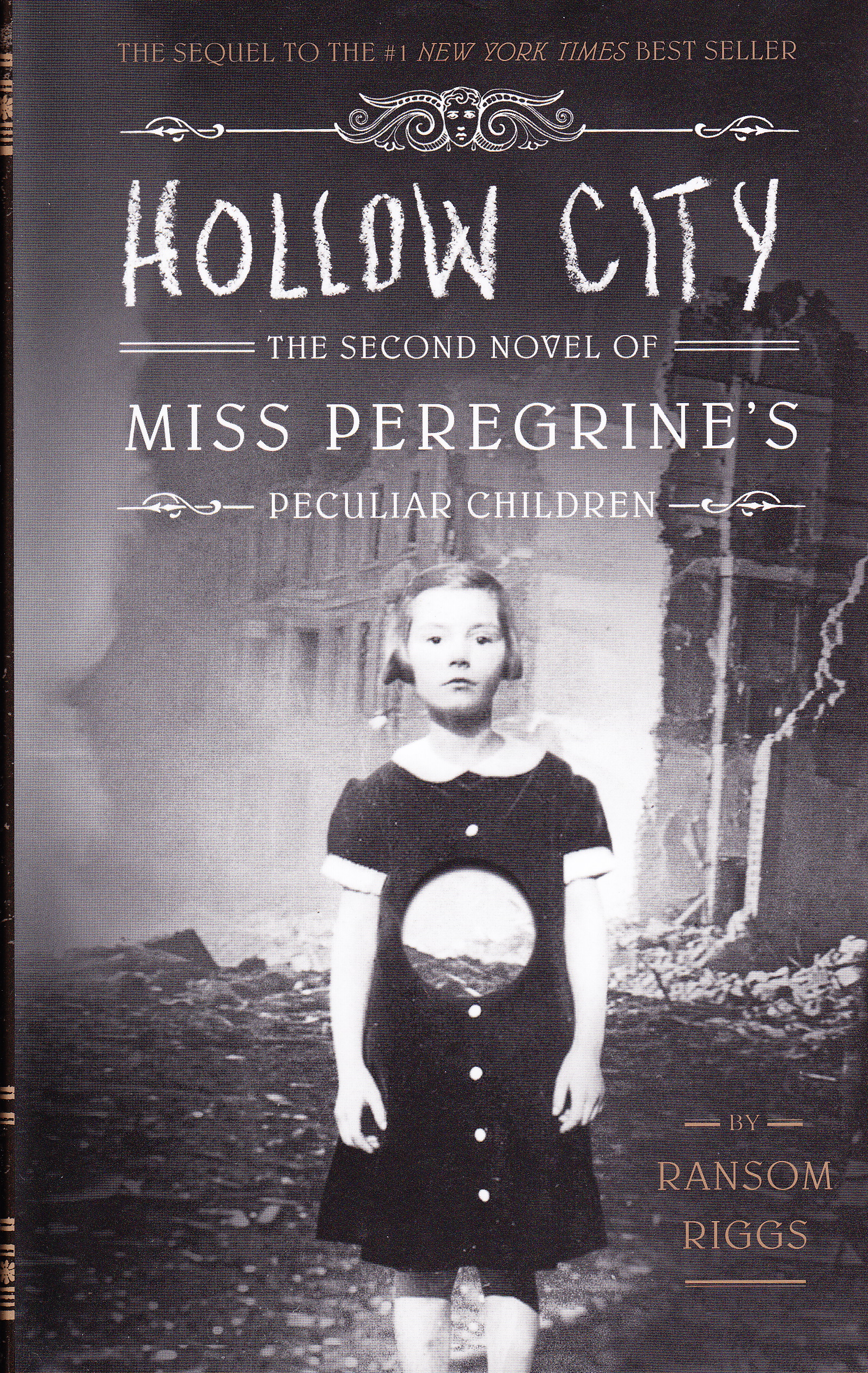
HollowCityEveryone wants to belong, to fit in. Growing up, I seldom felt I managed it. When you’re very young you don’t know enough to notice that you are more melancholy than other kids, or that you can’t afford the nice things they can. As you reach your teenage years, however, and you know that you come from the kinds of families that other parents warn their kids about (fairly poor, very religious, and just a bit peculiar). No wonder I find Ransom Riggs’ books so engaging. Yes, they’re written for young adults, but just about anything that Quirk Press publishes is worth the read. As an adult, if I’m honest with myself, I’m still waiting to feel like I fit in. The kids in Hollow City, the peculiars, know that they can never fit in. They have special, impossible talents that make them the targets of monsters called hollowgasts, or hollows, who try to gobble down as many as possible. Monsters, outsiders, and very human relationships—it’s a winning combination.

Quite apart from the spellbinding pace Riggs spins out (he’s a master of building tension), there are some quasi-religious elements in the books as well. I read Miss Peregrine’s Home for Peculiar Children a couple years back, and Hollow City develops the mythology a bit more. The real enemies are the wights—mean-spirited malcontents who rule the monsters. They learn that they can become demigods if they extract what makes a peculiar peculiar. That’s a religious concept: the essence that materialists tell us isn’t really there at all that makes us what we are. The children are self-sacrificial toward their mistresses, birdlike and godlike at the same time.

Peculiars have two souls, although most of us don’t know what to do with even one. The soul has, of course, come under great suspicion over the last century or so. There seems to be something that makes us what we are, and it isn’t just cells and DNA. Some call it consciousness, others personality. There are those with élan and others with spirit. We can’t call it “soul” because that smacks of superstition and yesteryear. So we read of children with two souls and none to spare. Even Philip Pullman had souls for his children in His Dark Materials. The soul, in both these book series, leaves a person completely dehumanized when it is excised. Of course, materialism will do that for free. Yes, I know it’s fiction—young adult fiction at that—but my money’s on Ransom here. Let’s hear it for those who have a surfeit of souls!
Bleak Visions

The day was leaden and rainy. Hopes for seeing the sun over the next several days dim. I had been warned about this, but once my mind has settled on vampires, they’re hard to resist. The reviews said Priest, as a movie, was full of cliched dialogue and predictable outcomes. This is true. But still, it is perhaps the most religious vampire movie ever made. While some have doubted my analyses of Underworld and other vampire films, Priest is set in a Pullmanesque world dominated by a church that has lost its belief in vampires. In fact, the civilized world, in scenes reminiscent of Blade Runner, owes ultimate allegiance to the church. Based on the graphic novels by Hyung Min-woo, the post-apocalyptic world of Priest presents an over-industrialized society where humans live in walled cities (ironically, Jericho has no walls). Vampires, more fierce than any Count, even by fifteenth-century standards, rip humans to shreds, but have been forced into reservations by the warrior priests. Their weapons are cross-shaped, but there is otherwise no reference to Jesus in the movie—only an amorphous “God.”

Despite the endless tropes, “a vampire killed my brother,” “the Priest is her father,” and endless chatter about the nobility of sacrifice, the movie is strangely compelling. Visually it maintains the appeal of a place somewhere between Planet of the Apes and the Book of Eli. And something appeals about priests who are willing to fight evil rather than sit around arguing about whether women should be allowed to join the movement or not. Keeping with modern proportions, we see only one female priest and none among the Monseigneurs, but she is the one who actually stops the vampires. And these are vampires that have evolved into the blind, naked denizens of the night who kill, apparently, for the sheer joy of it. The only article of faith the church can muster is, “if you go against the church, you go against God.”

I wonder if anyone in the world of religions is tracking how society perceives them. Religions once stood for our noblest aspirations, and our humblest weaknesses. Like bad caricatures from the movies, religious organizations don’t shy away from the desire for ultimate power. In His Dark Materials and in Priest, the church is content with nothing less than total domination. This is not missionary zeal, but good, honest power-lust. Not all religions are like that, of course. Still, there are those who perceive them that way. Maybe it is my own insecurity, or maybe it is the fact that I’m seldom convinced I have the answers, but I can’t help but feel the thrill of justification at the rebel who maintains conviction to the ideals s/he holds deeply. It takes no backbone to enforce obedience when might is on your side. But only those who have faced the vampires personally know who the real enemy is.


Dark Materials

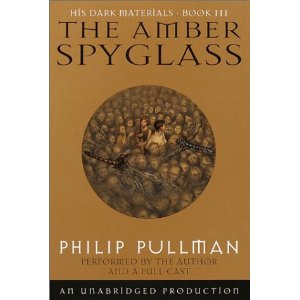
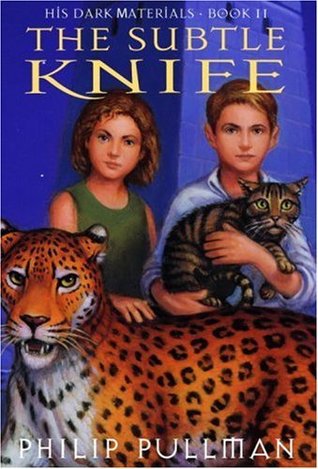
After three years we have finally finished Philip Pullman’s His Dark Materials trilogy. The Golden Compass, a fantastic story made into a very disappointing movie, followed the adventures of Lyra as she struggled against the insidious designs of the Magisterium, Pullman’s not-so-subtle code for the church. The story picked up again when Lyra met Will in The Subtle Knife and revolves back to the Garden of Eden in The Amber Spyglass. It becomes clear early in the book that Lyra is a type of Eve, about to open a Pandora’s box for the entire universe. Along the way Metatron and the symbols of the old religion, including God, die. Detractors like to hurl accusations of atheism at the author, although Pullman tends to call himself agnostic. Whatever label is pasted to him, the fact is the message of the trilogy is profoundly in keeping with what is purported to be the message of Jesus. Not to put too fine a point on it, the message is “Christian.”

Of course, these days that word has to be qualified. “Christian” has been co-opted by so many special interests theologies that its vagueness is useful for little more than winning presidential elections. Part of the difficulty begins with the fact that we don’t have any objective way to assess what Jesus actually said. The earliest canonical Gospel, Mark, was written some three decades after the events that it recounts. There can be no doubt that Matthew and Luke borrowed heavily from Mark while John, written much later, blazed his own trail. Some of the statements attributed to Jesus in these variant accounts differ, but the basic idea seems to be: love others, try not to harm each other, and be willing to be the victim once in a while. These precepts permeate that story of Lyra and Will as they flee from an institutionalized church that seeks to destroy them. Yes, the parable is transparent here and even today many would-be rulers understand the power in the blood of the lamb. Accusations of someone being non-Christian can turn a red tide against them.

Ironically, today “Christian” often has the connotation of intolerance and lack of forgiveness. We see the wealthy and powerful adopting the rhetoric when it suits their purposes but refusing to live by its principles when the poor reveal their underprivileged faces. Taking Jesus out of context they like to say, “the poor will always be with you.” As if Jesus never spoke a harsh word to the wealthy. Something that Pullman makes abundantly clear is that power corrupts. The church in his books is not evil, but corrupt. It is too powerful for its own good. Above all, the books are a tale of growing up. Lyra realizes the danger that the Magisterium poses, and fights it with the conviction of the young. She learns to love and liberates the dead. She learns the pain of loss. Indeed, her sacrifice is for the salvation of the universe. Sounds like something Jesus might have approved of—when he wasn’t busy lining the pockets of the wealthy, that is.


Multiverse of Angles

Alternate realities. The concept fits well with astrophysical views of the multiverse that posit undiscovered dimensions and all their implications. Last night my family finished its group reading of Philip Pullman’s The Subtle Knife, as alternate a reality as might be imagined. Plucking Lyra from the uncertain ending of The Golden Compass, Pullman draws his readers into alternate worlds where everything is tied together by the consequences of “the fall” in Eden and where a new battle against the divine is about to take place. In an ambitious attempt to shift perspectives, we are told that the forces against God are, in fact, good. The magisterium, as its uncompromising strength in Lyra’s world demonstrates, will always seek to rule the world. It is an unsettling picture that Pullman paints, a reality where what we thought was Ormazd turns out to be Ahriman.

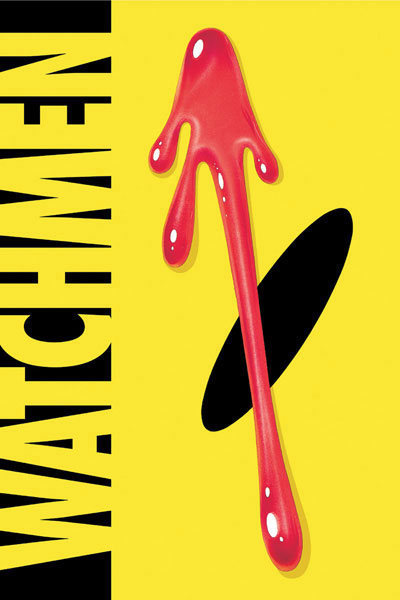
At the same time, I have caved in and begun reading The Watchmen. Not a great fan of graphic novels, I have been faced with a mounting curiosity after watching the movie a few times. In this alternate reality, God is simply irrelevant. Doctor Manhattan elaborates on the nature of a universe without a deity more fully in the novel than audience forbearance would allow on the big screen. This is a world perpetually on the brink of self-destruction, where God is absent and human ambition becomes the driving force behind a petty, short-sighted reality. Despite the comic-book feel, the story is profound and the concepts disturbing. Alan Moore’s dark vision of other worlds allows unrestrained human desire free reign with no divine restraints.

Such alternate realities underscore just how much of our reality is structured by religious beliefs. They resemble our world in significant ways, but their lack of divinity forces a nascent nobility from human characters who are only too aware of their own weaknesses. Flawed people try to create a better world. Some theoretical physicists suggest that all imaginable realities likely exist in the infinitude of universes that crowd in on our limited view of the way the world actually is. The ideas are mind-bending since even the worlds imagined on our own limited universe have both created and destroyed concepts of God. What might God’s role be, should the multiverse (or even a Stephensonian metaverse) turn out to be the true reality?


Go and Dust No More

Finally getting around to reading Philip Pullman’s The Golden Compass (I hate to admit that it took the movie ads to prod me into reading the book), I have been surprised by the depth of the story. Spoiler warning! From the very first chapter I have been pondering what dust might be, and I have just discovered that it is Pullman’s metaphor for original sin. In the chapter where this is finally revealed to the protagonist, Lyra, her father reads an explanatory passage from Genesis 3 (somewhat altered). Indeed, dust drives the plot of the story.

With apologies to the magisterium

With apologies to the magisterium

Pullman’s treatment of the topic once again throws into relief a popular, but mistaken, concept. “Original sin” is simply not a biblical idea. Nowhere in either the Hebrew Bible or the Christian Scriptures does the text suggest that people are born with the taint of a physical liability passed on from the first human coupling, as Augustine hypothesized. In fact, the Bible hosts several potential explanations for the origins of human troubles. One solution that it never reaches is a genetic passing on of an original sin.

Tradition often makes Scripture into its own image. Ideas are inevitably read back into the story and a chimera of hazy concepts emerges. Pullman’s treatment of the human condition is to be applauded, and to his credit he does not attribute the concept of original sin directly to the Bible. Although he alters the text a bit he doesn’t add this most damaging concept to it. The belief that people are inherently defective has allowed for some of the worst crimes imaginable against our species. As a concept original sin is dust in the wind.