No FOMO

Some fringe websites (of course I do!) present the case for reincarnation via past lives memories, particularly of children.  You see, adults hear/read/see a lot of things as the years weigh down and we might misremember something we encountered somewhere else.  Children have less exposure and therefore make more credible witnesses.  I know perfectly rational adults who believe in past lives as well.  I must confess, however, that this is one of the scariest things I can imagine.  I’m glad to have lived, most of the time, and I’m not in a hurry to end it prematurely, but the thought of doing it all over again is terrifying.  Even if it’s a different and better life.  You see, I entered life with a lot of questions and I have to say, over six decades later, I’m still uncertain about many of the answers.

If reincarnation means starting from scratch all over again, that scares me.  I’ve spent much of my life building walls to protect myself from the things that hurt me.  I avoid overly risky activities.  I handle sharp objects with great care.  I spend quite a bit of time by myself.  I don’t like being hurt.  That may be one reason that I watch horror movies.  They help to desensitize that particular phobia.  Still, I have to think of all the hard lessons I’ve learned in this life and have to think about how I might improve upon it all with another go-round.  In religions of East and Southeast Asia, where belief in reincarnation is common, the idea is often that you want to break out at the end.  Nirvana.  The place were you don’t have to queue up again.  Even Plato thought reincarnation might explain a lot.  But the very thought makes me feel weary.

If you could be rebooted with the knowledge of your previous life intact, that’d be one thing.  The idea of one day finding myself in another mother’s arms, not knowing anything, learning each microsecond, well, it’s frightening.  My parents weren’t educated people.  They taught me the blue-collar hard knocks of life (which I don’t want to have to learn again).  The white-collar hard knocks are sometimes even worse.  I tried to live this life as a clergyman, but that never really panned out.  I sometimes wonder if the Abrahamic religions/monotheistic traditions, didn’t develop Heaven and Hell out of fear of reincarnation.  The idea certainly makes sense, in some contexts.  And it’s one of the scariest things I can imagine.


Real ID

On the DVDs of the complete The Twilight Zone (or at least the edition I bought over a decade ago), the opening sequence of seasons 3 and 4 both have a voice-over from episode “Five Characters in Search of an Exit,”  calling out “Who are we?”  In context, the disparate characters in a shapeless prison are, in reality, toys that have gained consciousness (and this well before Toy Story).  Having gone through a traumatic scam, and trying to piece life back together, I spend a lot of time on the telephone trying to verify my identity.  This isn’t a simple matter for a guy like me who constantly asks myself the question, “Who am I?”  Descartes, going back to Aristotle, opined we enter life as a tabula rasa, a blank slate.  Those of you who look around the other pages of this website will see that I have as a six-word biography “Missed the first day of school.”  That must’ve been the day when they told us who we were.

Some people have a clear idea of who or what they are.  The surround themselves with tchotchkes of their favorite animal, or symbol, or even screen idol.  Or deity (deities).  Others of us, it seems, are constantly searching, never quite satisfied that we’ve discovered our essence.  I’ve mentioned before that during the CB craze of the eighties my handle was “Searcher.”  I have an innate curiosity and I crave depth of knowledge.  How do you symbolize that?  How is it even an identity?  I ask with Rod Serling’s characters, “Who are we?”  I’m not sure who might answer that.

When I first started this blog I had some hope that I might once again become an academic researching ancient Semitic mythology.  Working a 9-2-5 to acquire material for the company long ago meant that the full-time research needed to keep abreast of the field could not happen.  For several years this blog consisted of wry interpretations of various political- or travel- or reading-related observations about life.  As it became less focused on the world of the Bible I lost most of my original readers.  I thought there might be potential in writing about my fascination with scary stuff.  That caught my wife a bit off-guard since during the time we met, married, and began this journey together, that interest had been dormant.  It revived when I lost the job that I thought defined me.  I still write about horror but have recently felt the draw of dark academia.  Meanwhile the representative from the bank is on the phone asking me to verify my identity.  “It’s complicated,” I want to say.


Aging

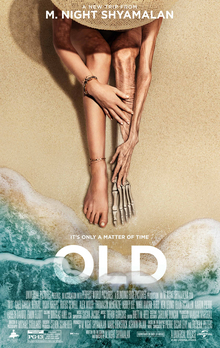
M. Night Shyamalan’s horror is thoughtful.  Old is a little difficult to accept because it’s very difficult to keep artificially aging actors at a steady rate, either by make-up or substitution.  And it seems that the mysterious beach that ages people but also heals them should, in some way, make exploring its medical possibilities somewhat difficult.  Still, it is a noteworthy day-light horror offering that has an underlying ethical question.  I will need to include a spoiler to discuss that ethical issue, but before I get there, a vacation brochure.  Individuals, and families, are brought to a resort where everything’s perfect.  Then they are driven to a remote beach and discover that they really can’t leave.  And they age at a rapid rate.  (This may make you think of a Gilligan’s Island episode, but this one has no laughs.)  The aging is first noticed with the children and by the time the adults realize what is happening, it’s too late.

Here comes a spoiler.  Old was released during the pandemic’s second year, so I suspect it wasn’t widely seen.  If you’re still waiting, here’s your chance.  Ready?  Okay.  So, this island’s aging properties have been tapped by a pharmaceutical company to test new drugs on patients with various diseases.  Instead of waiting years for results, they can know in a day whether a treatment, unwittingly taken by the clients when they first arrived, worked.  If a “client” has no symptoms for a day, it is the equivalent of years.  The company, although it is responsible for the deaths of the people in the trial, give the results away, saving many lives for free.  Here is the ethical dilemma—do you save thousands, or millions, by having one person die to test the drug?  The real issue is that it’s done without consent.  Those aging have no idea they’re test subjects. 

Consent is an ideal, but in fact life happens to us and we seldom have the right of refusal.  Perhaps that’s the more insidious message here—giving consent furthers the illusion that we’re in charge of our lives.  I’m sure all of us can think of things that happened to us not because we chose them, but because we were at the right or wrong place at the wrong or right time.  When some such thing transpires, it often takes us considerable time to regain our balance, to feel like we’re “in control” again.  I chose to watch Old, perhaps when it wasn’t a good time to do so.  Or did I choose it?  And whose morals are these?


Alien History

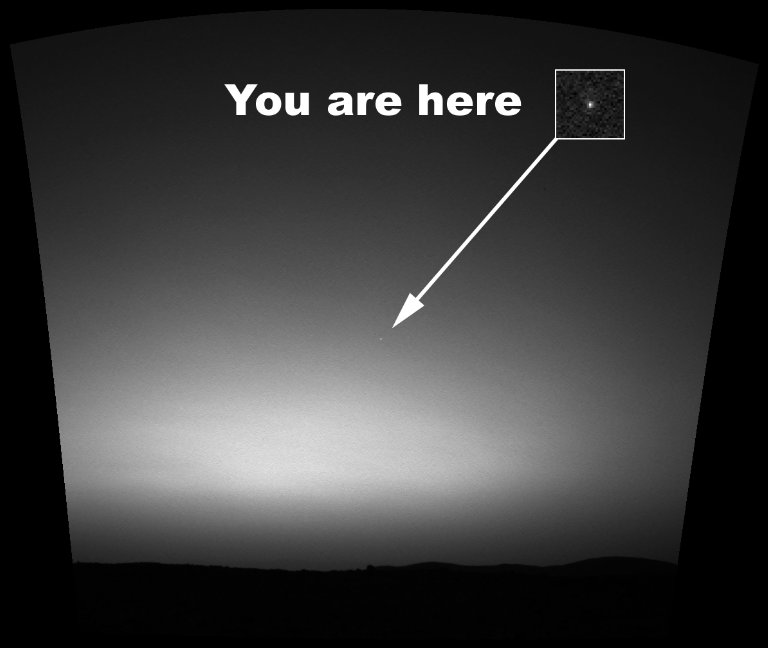
If aliens sat down to read earth history, they’d get the impression that we’re a very warlike species.  While, no doubt, this is true for a large part of history, I’d suggest that at least since 1900 it hasn’t been so much that the species is warlike, but that its leaders are.  As long as we have “shallow bastards” (to use Frank Turner’s phrase from “1933”) leading us, is it any wonder?  Even with current world leadership given a pass, looking back over the big ones of the last century, it was mentally unstable leaders with fragile egos that led to wars.  I’m sure some national resentment across borders certainly exists, but would people just go and kill those in the next town over, in the “modern” world, if their leaders didn’t tell them to?  Think of World War II, brought on by a madman.  Yes, Germany had grievances, but war wasn’t the only way to solve them.  And killing Jews did nothing to help anybody.

Or World War One.  The assassination of an Archduke need not have led to nations clashing with excessively deadly force.  Men with inflated egos and personal ambitions seem to have played a large role.  To any aliens reading this, some of us would like to take exception to this warlike generalization.  Human society is complex, and the jury is still out on whether democracy can really work when the electorate doesn’t bother to educate itself.  Or allow itself to be educated.  Still, my sense of my species is that we’ve managed to civilize ourselves out of being warlike, but we do have strong emotions that we need to learn to control.  Watching Washington flirt with war every day because of incompetence, well, dear aliens, we’re not all like that.

Image credit: NASA (public domain)

The world into which I was born seemed to be okay as far as national boundaries went.  Younger generations are raised to realize that colonialism was an evil, exploitive outlook.  There are those alive, unfortunately many of them in public office, who want to go back to acquiring more land.  And countries, sometimes artificially created (generally by Europeans), continue to break apart.  South Sudan became a country only in 2011, but Sudan appears to have been artificially held together by pressure from other nations.  I still don’t see why globalism and lack of war can’t coexist.  If nations had thinking persons in charge rather than macho men eager to show how big they are (aliens, this is a human fascination, I’ll grant you), we might well be able to live in peace.  If you want to take them back to your planet, you are most welcome to do so.


Artificial Hubris

As much as I love writing, words are not the same as thoughts.  As much as I might strive to describe a vivid dream, I always fall short.  Even in my novels and short stories I’m only expressing a fraction of what’s going on in my head.  Here’s where I critique AI yet again.  Large language models (what we call “generative artificial intelligence”) aren’t thinking.  Anyone who has thought about thinking knows that.  Even this screed is only the merest fragment of a fraction of what’s going on in my brain.  The truth is, nobody can ever know the totality of what’s going on in somebody else’s mind.  And yet we persist in saying we do, illegally using their published words trying to make electrons “think.”  

Science has improved so much of life, but it hasn’t decreased hubris at all.  Quite the opposite, in fact.  Enamored of our successes, we believe we’ve figured it all out.  I know that the average white-tail doe has a better chance of surviving a week in the woods than I would.  I know that birds can perceive magnetic fields in ways humans can’t.  That whales sing songs we can’t translate.  I sing the song of consciousness.  It’s amazing and impossible to figure out.  We, the intelligent children of apes, have forgotten that our brains have limitations.  We think it’s cool, rather than an affront, to build electronic libraries so vast that every combination of words possible is already in it.  Me, I’m a human being.  I read, I write, I think.  And I experience.  No computer will ever know what it feels like to finally reach cold water after sweating outside all day under a hot sun.  Or the whispers in our heads, the jangling of our pulses, when we’ve just accomplished something momentous.  Machines, if they can “think” at all, can’t do it like team animal can.

I’m daily told that AI is the way of the future.  Companies exist that are trying to make all white collar employment obsolete.  And yet it still takes my laptop many minutes to wake up in the morning.  Its “knowledge” is limited by how fast I can type.  And when I type I’m using words.  But there are pictures in my brain at the same time that I can’t begin to describe adequately.  As a writer I try.  As a thinking human being, I know that I fail.  I’m willing to admit it.  Anything more than that is hubris.  It’s a word we can only partially define but we can’t help but act out.


Mexican Philosophy

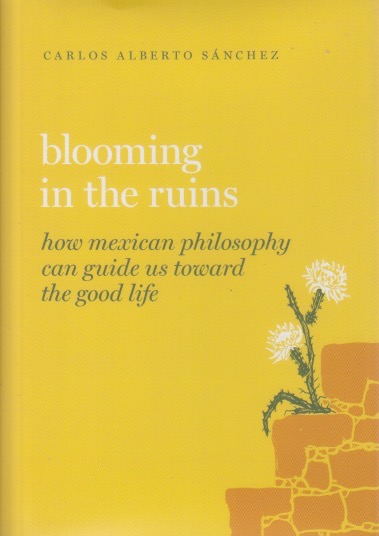
Once upon a time, I applied for a teaching post at Syracuse University.  (Actually, twice upon a time, but that’s a longer story.)  I was able to gather that one reason I failed to merit an interview was that the religion department prided itself on its dedication to continental philosophy.  Lacking imagination, I couldn’t see how that might apply to teaching Hebrew Bible but then again, I don’t know much.  I’m starting off with than anecdote because it is in keeping with the spirit of Carlos Alberto Sánchez’s excellent Blooming in the Ruins: How Mexican Philosophy Can Guide Us toward the Good LifeI recently wrote about how reading philosophy is something I enjoy when I can find the time, but what really struck me about this book is that Mexican philosophy is a counter to continental (i.e., European) philosophy and it is much closer to my own outlook.  I’m not in any danger of being offered a new job so it’s safe to say so.

I actually picked up a copy of Sánchez’s book because of a chapter that I’d read.  Much of the work begins with anecdotal accounts, followed on by something original, amplified, and solid (you’ll need to read the book to flesh that out).  Mexican philosophy rejects the idea of universals because each of us is socially located.  What may have seemed universal to European philosophers of the seventeenth through the nineteenth centuries, many of them quite privileged, simply doesn’t apply to a person raised poor in Mexico.  (Or Pennsylvania, for that matter.)  I read the continental philosophers in school, but they had not had my experiences.  My traumas.  And yes, Sánchez emphasizes that trauma is part of the picture.

While I can’t summarize this wonderful little book here, I can recommend it.  If you have an interest in the larger questions, and if you want some philosophy that doesn’t try to impress you with big words and complex grammatical formulations, this may be for you.  Sánchez writes as if he’d be willing to sit down with you and discuss the matters that make life worth talking about.  The chapter that sold me on his book was the one on the Mexican view of death.  It is only one of several that deserve a bit of your time to chew over.  So I was not welcome among those who specialize in continental philosophy.  Maybe I was looking in the wrong place.  Maybe those who are open to homegrown thinkers of sometimes deep thoughts live south of the border.


Sad Joy

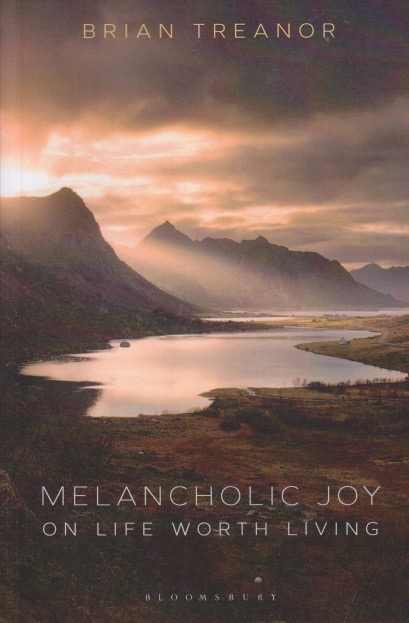
I sometimes make the mistake of thinking a short book will be a quick read.  Melancholic Joy is a case in point.  Every time I indulge in a book of philosophy I wonder if I missed my true calling.  As my wife is well aware, I’m prone to philosophical musings about the meaning of life although I tend to place myself among the existentialists.  As soon as I saw the title of Brian Treanor’s book it went on my reading list.  It’s short and I thought maybe a week would be enough.  But it wasn’t.  I do hope I can remember much of it.  A word to the wary, the first chapter is very depressing.  Treanor doesn’t sugarcoat the world in his quest on a Life Worth Living.  Those of us who ponder things deeply tend toward melancholy, in my experience.  But stick with it.  There is gold in this book.  Starting with chapter two I was reminded why I took so much philosophy in college.

The world is full of depressing facts.  By the time I was born we’d already devised ways to wipe out the entire human race.  Many, far too many, people live lives of suffering, much of which could be prevented if we didn’t have people like Donald Trump running things.  The political situation is so bad that I’ve disengaged.  Yet still, amid my melancholy, I do feel joy.  You need to parse words carefully here.  Treanor knows that joy and happiness aren’t the same thing.  For those of us predisposed toward melancholy, joy is probably much more common in our lives than happiness.  This book is one that led me to start underlining again.  I do hope to come back to it when my outlook becomes too bleak.  Treanor interacts with both other philosophers and other writers, even some who aren’t always classified as philosophical.  It is a nepenthe.

Some of us think incessantly and can’t help doing so.  It’s a bit difficult to be cheerful if that’s the case.  Melancholic Joy, if I can keep it in mind, may help with that.  There are sections where I had to go back and re-read because my attention had wandered (it happens to us all), but to do so was rewarding.  For anyone who finds many aspects of the world oppressive, and depressing, and who has a philosophical bent, this book is for you.  Just be careful with that first chapter.  Whatever you do, don’t stop there.


Not Schrödinger’s

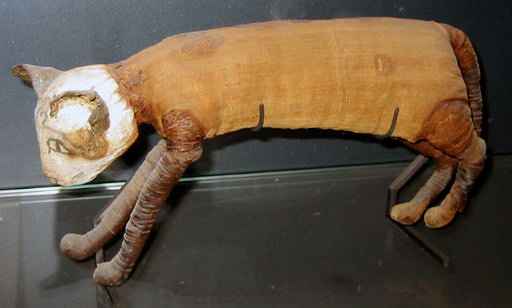
It’s quite a dilemma.  It’s Schrödinger’s cat without the box.  Well, it’s a dead cat in my yard.  It’s not my cat and I only know about it because the next-door neighbor saw it while out mowing.  (It’s on the thin strip between our houses and we seldom make our way over there.)  Death is always a problem.  I don’t want to bury it since it looks like it was a pet.  Said neighbor is the only one I know around here but I know some pets have tracers/implants to help owners know if something happens.  So I tried calling the local animal control companies.  They don’t deal with cats.  There is a county service, in the next town over, but we’re across the border in a county that doesn’t deal with cats or dogs.  The DOT won’t get involved unless they’re on the street.  The local municipality also handles them only on the street or sidewalk.

Now, I own a shovel and I’m not afraid of hard work.  I am a bit squeamish, though.  I’ve handled half-squirrels from some hawk with eyes bigger than its stomach.  I also have to take care of dead birds and squirrels that get into the garage.  This is a bit bigger than I’m used to.  I’m not even entirely sure if it’s a cat, really.  Once an opossum got into our compost bin and the fur looks like it could be an opossum.  It doesn’t smell bad, though, and possums don’t have the most pleasant bouquet even when they’re alive.  The flies seem to like it okay, however.  The space between our houses would be challenging for the turkey vultures I see around daily.  They must be mad with frustration circling up there.  If it’s somebody’s pet I’m sure they’d like to know, but it’s looking like I’ll be digging—but you’re supposed to call Angie first, right?  In case of buried cables?

Death is entirely natural.  Ironically, I live two blocks from a pet crematorium.  I wonder if they make house calls?  Then again, it wouldn’t be cheap.  We expose ourselves to loss when we bring pets into our families.  My own beloved childhood beagle was hit by a car.  Meanwhile, I know that we shall all meet on that beautiful shore, by and by, and when we do I hope someone recognizes their cat from this side of the vale of tears.  Or at least outside of Schrödinger’s box.

Image credit: Greudin, public domain, via Wikimedia Commons

Remembering Consciousness

I recently inadvertently read—it happens!—about anesthesia.  I’ve been relatively healthy for most of my adult life and have experienced anesthesia only for dental surgery and colonoscopies.  I’ve actually written about the experience here before: the experience of anesthesia is not like sleep.  You awake like you’ve just been born.  You weren’t, and then suddenly you are.  This always puzzled me because consciousness is something nobody fully understands and there is a wide opinion-spread on what happens to it when your body dies.  (I have opinions, backed by evidence, about this, but that’s for another time.)  What I read about anesthesia made a lot of sense of this conundrum, but it doesn’t answer the question of what consciousness is.  What I learned is this: anesthesiologists often include amnestics (chemicals that make you forget) in their cocktail.  That is, you may be awake, or partially so, during the procedure, but when you become conscious again you can’t remember it.

Now, that may bother some people, but for me it raises very interesting issues.  One is that I had no idea amnestics existed.  (It certainly sheds new light on those who claim alien abduction but who only remember under hypnosis.)  Who knew that even we have the ability to make people forget, chemically?  That, dear reader, is a very scary thought.  Tip your anesthesiologist well!  For me, I don’t mind so much if I can’t remember it, but it does help answer that question of why emerging from anesthesia is not the same as waking up.  Quite unrelated to this reading, I once watched a YouTube video of some prominent YouTubers (yes, that is a full-time job now) undergoing colonoscopies together.  They filmed each other talking during the procedure, often to hilarious results.  The point being, they were not fully asleep.  The blankness I experience after my own colonoscopies is born of being made to forget.

I think I have a pretty good memory.  Like most guys my age, I do forget things more easily—especially when work throws a thousand things at you simultaneously and you’re expected to catch and remember all of them.  Forgetting things really bothers me.  If you haven’t watched Christopher Nolan’s early film Memento, you should.  I think I remember including it in Holy Horror.  In any case, I don’t mind if anesthesiologists determine that it’s better to forget what might’ve happened when the last thing I remember is having been in an extremely compromised position in front of total strangers of both genders.  My accidental reading has solved one mystery for me, but it leaves open that persistent question of what consciousness really is.


Call Me AI

Okay, so the other day I tried it.  I’ve been resisting, immediately scrolling past the AI suggestions at the top of a Google search.  I don’t want some program pretending it’s human to provide me with information I need.  I had to find an expert on a topic.  It was an obscure topic, but if you’re reading this blog that’ll come as no surprise.  Tired of running into brick walls using other methods, I glanced toward Al.  Al said a certain Joe Doe is an expert on the topic.  I googled him only to learn he’d died over a century ago.  Al doesn’t understand death because it’s something a machine doesn’t experience.  Sure, we say “my car died,” but what we mean is that it ceased to function.  Death is the overlay we humans put on it to understand, succinctly, what happened.

Brains are not computers and computers do not “think” like biological entities do.  We have feelings in our thoughts.  I have been sad when a beloved appliance or vehicle “died.”  I know that for human beings that final terminus is kind of a non-negotiable about existence.  Animals often recognize death and react to it, but we have no way of knowing what they think about it.  Think they do, however.  That’s more than we can say about ones and zeroes.  They can be made to imitate some thought processes.  Some of us, however, won’t even let the grocery store runners choose our food for us.  We want to evaluate the quality ourselves.  And having read Zen and the Art of Motorcycle Maintenance, I have to wonder if “quality” is something a machine can “understand.”

Wisdom is something we grow into.  It only comes with biological existence, with all its limitations.  It is observation, reflection, evaluation, based on sensory and psychological input.  What psychological “profile” are we giving Al?  Is he neurotypical or neurodivergent?  Is he young or does his back hurt when he stands up too quickly?  Is he healthy or does he daily deal with a long-term disease?  Does he live to travel or would he prefer to stay home?  How cold is “too cold” for him to go outside?  These are things we can process while making breakfast.  Al, meanwhile, is simply gathering data from the internet—that always reliable source—and spewing it back at us after reconstructing it in a non-peer-reviewed way.  And Al can’t be of much help if he doesn’t understand that consulting a dead expert on a current issue is about as pointless as trying to replicate a human mind.


Motorcycle Trip

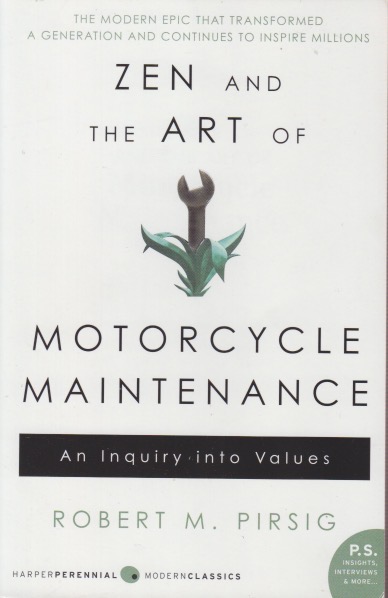
Among my introductory lectures to students was one that covered genre.  I recall saying something along the lines of “when you read something your expectations of genre influence how you understand it.”  Strangely, my own writing sometimes defies easy categorization, but I find it disorienting to read something without an idea of whether it’s fact or fiction or whatever.  I suspect I’m not alone in this.  When my wife suggested we read Robert M. Pirsig’s Zen and the Art of Motorcycle Maintenance together, I wanted to know what it was we’d begun reading.  The BISAC code (the category on the back cover of a book) simply said “Philosophy.”  I took almost enough philosophy in college to minor in it, so I had a general idea of what philosophy might look like.  Then I remembered reading Nietzsche’s Thus Spake Zarathustra and found myself back at the question of genre again.  Was this philosophy, autobiography, or a novel?  All of the above?

Now, I’ve known about this book from college days on.  It was in the college bookstore and I’m pretty sure it was assigned in some classes (not the ones I took).  What threw me was the autobiographical part.  Was this fiction?  The philosophy parts were pretty stout stuff.  And was Phaedrus real or imaginary?  Of course, you start getting some inklings that Phaedrus and the narrator are the same.  And that the latter isn’t a particularly good father.  The edition we read came with a helpful introduction that suggested that Phaedrus was the one with a correct outlook all along.  And an afterword that told how Chris died during a mugging when he was only 22.  There was pathos all over this tale.  Even when we finished I wasn’t quite sure what we read.  It’s sometimes classified as an autobiographical novel or philosophical fiction.

Rejected over 120 times, the book became a national bestseller when one editor took a chance on it.  (That is how publishing works.)  Perhaps the most poignant part of the book is the author.  What’s more, Pirsig wrote the book by getting up and writing at the same time slot that I use, so he could work a regular day after.  And he had been in a psychiatric hospital and had received electroshock therapy for schizophrenia.  Clearly a lot was happening behind the scenes for this most unusual tome.  Among the academic publishing crowd it’s common to hear that Stephen Hawking’s A Brief History of Time was a book that many bought and never read.  I did find that one a bit rough going too, but I do wonder how many engage with the philosophy in Zen and the Art of Motorcycle Maintenance.  There’s heady stuff here to ponder.  And I’m glad for that one editor who thought differently from all his colleagues.


Philosophical Thoughts

Please don’t read too much into this!  I read a lot of professors who spend their careers trying to understand a previous scholar’s thoughts.  I suspect this happens quite a lot in philosophy, but it fits pretty well in religious studies also.  And I wonder, what of those intellectuals where were grappling with pure ideas?  Did they know they’d become adjectival?  In other words, did Immanuel Kant know that he was Kantian?  Or was he just writing stuff, trying to explain how he understood being in the world?  Now scholars dedicate themselves to understanding Kant.  Or in more recent times, Derrida, Lacan, and Bakhtin, or whoever’s the flavor of the day.  The ones who were too busy being Derrida, Lacan, and Bakhtin to figure out what someone else was saying about things just wrote.

Image credit: Portrait of Immanuel Kant by Johann Gottlieb Becker, 1768, public domain via Wikimedia Commons

I often wonder about how higher education has shifted the way we do scholarship.  It’s not really a place to test out ideas that the world can evaluate, but more a place where specialists can discuss possibilities and what someone else might’ve thought of something.  I guess that’s why I tend to think of my last four books as being non-academic.  I’m not using the tired formula of reacting against what some theorist has said about my subject.  I’m simply observing and drawing inferences.  Maybe it’s because I wasn’t raised in an academic environment.  I remember reading Nietzsche for the first time.  How he didn’t footnote.  How he didn’t argue against what some prominent others had said.  He simply wrote.  And he did so brilliantly.

Perhaps it’s yet another example of having been born early enough.  Tech has made it remarkably easy (for those without families to feed) to become writers.  No agent or editor required.  And things like Book-Tok can make those who publish outside the Big Five famous.  What would Kant have done?  That’s a nice Kantian question.  In fact, the whole reason I began this post was that I’d run across James C. Taylor’s A New Porcine History of Philosophy and Religion on my shelves.  Just seeing it reminded me of the Kantian pig refusing to lie to an axe-wielding maniac.  That got me to thinking of Kant and what it must’ve been like to see him being Kantian.  I’m no expert.  I took a lot of courses in philosophy and religion back in the day, but I have a book about philosophical/religious pigs on my shelf.  Somehow I suspect Kant wouldn’t have appreciated his page in this book, even though it gave me philosophical thoughts to start the day.


Consciousness Conscience

Not so long ago—remember, I read old books—living to 60 was considered a full life.  I’ve passed that and while I’m in no hurry to shuffle off this mortal coil, I often think of how improved medical practice has prolonged many lives.  This is a good thing, but it does make death a more difficult fact to deal with.  If there is any good that came from my Fundamentalist upbringing, it was that it taught me early on to think about death with some frequency.  I’m not a particularly morbid person, but since we all have to face this, avoidance seems to lead to grief, shock, and acute mental pain.  I tend to consider watching horror movies a spiritual practice.  Little reminders, in case I forget to consider my own mortality today.

Our faith in science is a little bit misplaced.  Sure, it helps enormous numbers of people live longer, healthier lives.  But it may also detract from the necessity of attending to our spiritual lives.  I don’t care if you call it consciousness, your soul, psyche, or mind, but we have a life we’re accountable to, and it’s not all physical.  Since consciousness feels neutral enough, let’s go with that.  We don’t know what happens to our consciousness after death.  There are plenty of theories and ideas about it, but no certain knowledge.  There may be faith, and there may even be some evidence, but it is always disputed.  It does seem to me that facing death squarely on may help take care of at least some of the anxiety.  Fear of the unknown is probably the greatest fear our species possesses, so pondering it may take the edge off a bit.

Some people claim to remember past lives.  Sometimes I wonder if they might be tapping into the great unknown: consciousness.  Perhaps consciousness survives without a physical body.  Perhaps it’s large—expansive—and encompasses far more than we can imagine.  Maybe some people can access part of that consciousness that includes the past lives of others.  We have no way of knowing, but it seems worth thinking about on this All Souls Day.  Of course, I have the advantage of having lived what used to be considered a full life.  In it I have set aside at least a little time each day to consider what happens after this.  Do I have a definitive answer?  No.  I do have faith and I do have beliefs.  And I’m always reflective on All Souls Day.

Frans Hals, Young Man holding a Skull (Vanitas), public domain via Wikimedia Commons


Powerful Belief

Even someone who’s spent a lifetime studying religion can’t know every single sect.  People are far too creative in that regard, and some belief groups are fairly small.  I had never heard of Unarius, for example, before reading this book.  If I had, it simply washed over me, getting lost in the noise.  Part of the trouble with defining Unarius is that it calls itself a science.  Words can be slippery, and Christian Scientists also use that designation in a similar way.  The word “science,” etymologically speaking, denotes “knowledge.”  In our materialist culture we often suppose that means the physical sciences, grudgingly allowing it to be borrowed by the “social sciences.”  There is a science of religion, but this leads to its own set of discussion points.  Let’s look at Diana Tumminia’s title: When Prophecy Never Fails: Myth and Reality in a Flying Saucer Group.  That give you an idea. 

The “prophecy” part concerns a “failed” prediction, or two, of when the spaceships would land.  Being a sociologist, Tumminia’s real interest is what happens then.  And here’s where things get interesting.  Failed predictions generally don’t lead to true believers giving up their convictions.  History has played and replayed this for us—it’s happening around us this very second—and yet “rationality” supposes that when the ships don’t land, people simply move on.  The Millerites outlived “the Great Disappointment,” after all, when the world didn’t end as predicted.  Their heirs include a sizable Christian denomination.  All this talk of AI has muddled our thinking about what it means to be human.  We are emotional.  More than that, we are believing creatures.  Our society is living proof.

Perhaps the most important, and ill-studied facet of being human, is belief.  Belief (no matter what in) is a religious phenomenon.  This study of a fairly small group shows that convinced people cannot be dissuaded, no matter how many facts are presented to them.  One need not look far to find the same phenomenon surrounding Trump.  (I do not condone violence, but history can inform us if we allow it.)  Make no mistake—he is the center of a new religion.  Unarians have absolute belief that their system is right.  Mistaken predictions—even very public ones—will not convince true believers otherwise.  It seems to me that our society, our democracy, cannot survive without intensive study of belief and how it affects the way otherwise completely rational people think.  My study is full of books exploring various aspects of belief, but we are still no closer to any kind of definitive answer.  And voters, at least a great many of them, follow their beliefs.


Stalking the Stalker

You had to’ve seen this coming.  The Night Stalker introduced how Carl Kolchak, hard-nosed reporter, became a believer in the supernatural.  This highly-rated television film led to a sequel, The Night Strangler, which appeared the following year.  It also did well.  Ditching a third script by Richard Matheson, ABC decided on a series, Kolchak: The Night Stalker.  The subtitle was probably considered a necessary reminder that the movies had done very well.  It also transferred the stalker epithet onto Kolchak.  But I’m getting ahead of myself.  The Night Strangler shifts the action to Seattle where an elixir-of-youth-drinking monster is murdering young women to keep himself alive.  Once again the police and government officials cover up what’s really going on, for fear of losing tourist dollars.  There is a bit of social commentary here.


This movie reminded me of an In Search of… episode on Comte de Saint Germain, who, as a child, I assumed was a Catholic saint.  Saint Germain (just his assumed name) was an alchemist who claimed to be half a millennium old.  He seems to be, guessing from the number of books that treat him as an actual saint, just as popular now as he was in the seventies.  At least among a certain crowd.  And it was in the seventies that this movie was released.  Saint Germain’s enduring popularity all but assures no academic will touch him.  No matter, we have Kolchak to fill in the details.  And Richard Matheson was a smart man.  The Night Strangler does have a few pacing problems, but it certainly is a film worth seeing, even though it exists in that shadowy world of telinema (the combined forms of television and cinema).

Kolchak succeeds by believing in where the facts point, although the conclusions are supernatural.  In fact, watching The Night Stalker I couldn’t help but think of those who claim to have staked the Highgate Vampire.  That’s some strong conviction.  Indeed, the will to believe is more powerful than most people would like to admit.  Our minds contribute to our reality, but we insist that minds = brains, despite our inability to define consciousness.  That’s why I liked shows like In Search of…  As a teenager I couldn’t get enough of it.  I purchased all the accompanying Alan Landsburg books with my hard-earned summer income, skimping, as always, on the school clothes that I had to buy for myself.  Funny, it seems that my mindset hasn’t changed that much since the days of my youth.  Or maybe a sign of maturity is recognizing you were closer to the truth than you realized, back when you started the quest.