Nothing Unusual

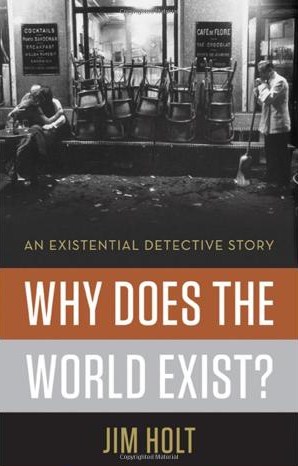
WhyDoestheWorldExist“Is this a world?” Ranger Tom asks seriously, “And if it is, am I in it?” On the lips—or fingertips—of some, this set of questions appears profound. Although I’m not technically a philosopher, I find it impossible to walk by a book with the title Why Does the World Exist? and not pick it up. I am not familiar with Jim Holt’s other work—I engage a little too heavily with books to spend much time with magazines—but the question of the title is one I’ve often pondered. It is right up there with “Why can some people get published and others can’t?” Holt is, however, on a serious quest. Not surprisingly, religion features prominently in the discussion. For the usual existential reasons, including a couple of significant deaths in the family, Holt asks perhaps the most basic of all questions and engages a number of prominent philosophers on the issue. Why is there something rather than nothing? For some in the western world such a question appears a non-starter, because our culture is biblically suffused. Whether we want to admit it or not, our social ocean veritably bobs with the basic belief that God created the world, end of story. We don’t need to ponder it, we just have to accept it. For those who look deeper, however, the answers aren’t that easy.

Holt goes through some serious computation in various forms of logic to try to arrive at a schematic demonstrating that the world is a surprising place. Not trained in such rigorous logic, I was interested to notice how the language occasionally slipped from “world” or “universe” to “reality.” Reality is perhaps the slipperiest concept of them all. Many simply accept their own experience as real, a position known as “naive realism.” Others probe somewhat deeper, seeking to verify reality. How do we know what is really real? It is, however, a different question than the existence of the world. Reality has the distinct ability to haunt with its half-answered questions and surfeit of ambiguity. Every time I wake from a dream I ask myself what is really real.

Once the divine is removed from the equation, why the world is here becomes a much more complex issue. Holt engages the new atheists as well as the neo-orthodox. It turns out that God may not help as much as we generally assume: whence God? Or, in its more childlike version, where did God come from? Once brute fact is ruled out, this becomes a tangled problem indeed. Faced with an endless regression, logic quails. Perhaps, however, we have reached the limits of rationality—even Einsteinian physics breaks down at the Big Bang. No matter what scientists or philosophers may tell us, we will always wonder, “and before that, what?” I put Holt’s book down with a sense that I’d spent a few pleasant hours considering the possibilities, but I still wonder, with Ranger Tom, if this is a world. And if it is, am I in it?


Hair to the Throne

Absalom was the first of the big-hair rock stars. According to the book of 2 Samuel, his hair was so luxuriant that he had it cut once a year and it weighed two hundred shekels (about five pounds, not sterling). This little bit of foreshadowing in 2 Samuel 14 will appear again in the story of Absalom’s demise, as he is caught in a great oak tree by his untrimmed hair. I’ve always related to Absalom on the coiffure issue—I don’t like getting my hair cut. In my more self-analytical moods, I relate it to having stepped on a bee’s nest as a child and having received multiple stings on my bare legs. That horrible buzzing of bees in my ears stayed with me, and whenever the girl at SuperCuts grabs the clippers and the bee-like drone nears my ears I flinch in terror. Like Absalom I have rather an abundance of hair, and so when I’m shorn, it is easily noticeable. I don’t like people to comment on it, however. One of the most banal phrases, not to mention an utter tautology, is when someone smartly observes, “you got a haircut.” With what am I to follow this up? “Yes—I was feeling a bit too much like Absalom in the forest of Ephraim where Joab found him dangling in the tree after David followed the advice of Hushai instead of Ahithophel”?

Gustave_dore_bibel_death_of_absalom

While walking through a mall recently, I commented to a friend how all the stores seemed to be clothing and shoe stores. You never find a bookstore any more, or museum shops, or anything approaching profundity. People really mostly care about what they look like on the outside. I’m more of an interior guy. Not among those generally cast among the hunky, good-looking examples of masculinity, I’m small, bookish, and still wear clothes that I’ve owned for two decades. My hair is usually out of control as well, but not in a fashionable Einsteinian way. I am, I fear, the heir of Absalom.

Religion used to be a source of profundity. It was, once upon a time, the queen of sciences, and philosophy was her handmaid. Seeing the way that religion appears in the media today, however, I’d have to guess she’s been shopping at the mall. Those who measure religion by the cut of her hem rather than by how deep her thoughts may be, have brought her into the limelight of popular culture. She used to be all about the meaning of life and offered a reason for many of us to get out of bed in the morning. Absalom’s trouble started out when he fell in lust with his half-sister Tamar. His addiction to appearances led him to bad decisions that ultimately divided David’s kingdom and cost him his very life. And I guess that’s the price you pay for not getting a haircut on a regular basis.


Tempting Truth

Recently I was discussing the internet with friends. Real ones, I mean, physically in the room with me. One asked if the internet made conspiracy theories more believable. My response was that the internet has changed truth. That probably seems like a bold statement, I know. Truth, however, is an abstract very difficult to pin down. Science, for starters, does not deliver truth. Science is theoretical, and since it is falsifiable, a scientific theory, while based on facts, is always contingent; it is the best explanation that we have at the moment. Scientists generally know not to conflate this with truth, deferring the latter to the realm of philosophy. The average person probably conceives of truth as that which is literally real. Reality itself is, however, a very slippery concept—quantum physics reveals realities where many are not comfortable going, and which very few truly understand. Truth is a philosophical concept that reflects what humanity collectively accepts to be reality. It is in this sense that the internet has changed truth. It is the Wikipedification of the mind.

People, for as long as they’ve had the luxury to consider abstracts, have struggled with the question of truth. For a few centuries—almost a couple of millennia—in much of the western world, the Bible was considered a source of truth. If it was in there, it was true. The source of authority here was that of a deity who oversaw the writing of the Bible, word by sacred word. When science began to demonstrate that this Weltanschuung was untenable, people realized that truth was a bit more complex. When westerners came into contact with other religions, the complexity grew. Large swaths of humanity believed things completely different from the rest of us. What was the truth? A rear-guard action was often the result. Those who had the Bible had the truth already, and since truth doesn’t change, what more was there to be said.

Truth or dare?

Truth or dare?

The internet is not yet a mature adult, but an entire generation has now grown to a kind of maturity with it. It is the first line of recourse for true information. Who has a phonebook in their house anymore? When is the last time you opened a physical dictionary? Some of us routinely look up Bible verses online, since the internet is the ultimate concordance. Instead of turning to the Bible, or any other source, we turn to the collective “wisdom” of humanity as the measure of what is true. Snopes aside, we plow ahead with what we read online, confident that with all those millions of users, we just can’t be wrong. How strange a concept to unplug and look at the actual reality behind the screen. We might be surprised to learn that there are great and terrible wizards back there after all.


Mind Your Cosmos

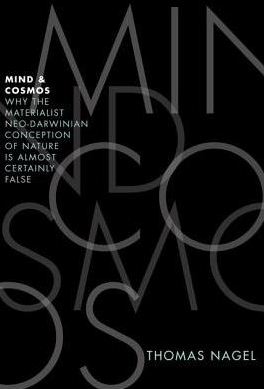
MindandCosmosSomething on your mind? How often do we bother to think clearly about our minds? One of the most dispiriting concepts ever invented is the idea that even our minds are merely part of a reductionistic, mechanistic universe. All those beautiful, frightening, sublime, and mundane thoughts are just noise, clutter. An inevitable side-effect of all that electro-chemical activity in the gray matter. Nothing more. It is an idea to which it is very difficult to warm. Philosopher Thomas Nagel, however, doesn’t use a soft approach to the concept of mind in his Mind and Cosmos: Why the Materialist Neo-Darwinian Conception of Nature is Almost Certainly False. This is not an easy read, but it rewards the reader well.

Some, I suspect, will accuse Nagel of being a closet creationist, but he addresses that concern up front. Nagel is an atheist, but he recognizes that the creationists have raised some valid points about the explanatory value of a materialistic, reductionistic view of the universe. Nagel, like all careful thinkers, realizes that the fact of evolution is not to be disputed. The mechanism driving mutations, however, is open to some speculation. I’ve read many books that suggest we are but (in a more than angst-ridden Kansas) dust in the wind. Particles and reactions and nothing more. That love you feel when your heart is thumping wildly over that special someone? Mere chemistry. And not the kind that implies a transcendent state. Just lab-coat chemistry. I read Nagel because this kind of reductionism just doesn’t fit reality as I’ve experienced it. I’m no physicist, but I’m all I’ve got. And my reason tells me that there’s something more too it.

Nagel approaches the issue by examining the origins of mind. Whence does consciousness emerge? Using precise, carefully selected reasoning, he demonstrates that there is a chance that consciousness is inherent in this universe we inhabit. Just as bodies are built of cells, and cells are built of proteins built of molecules built of atoms, the mind could be constructed of components as well. I can’t replicate Nagel’s elegance of expression, but his suggestion that we may be part of a universe beginning to awake is as much poetry as it is logic. And that, more than anything else, is a reflection on the complexity of being human. We are meaning-seeking creatures. Being told that we’re mechanistic automatons is like slamming a door in a two-year old’s face. If I am merely particles and tiny jolts of electricity, I’m going to take the particles that make Nagel’s book with me as I try to reconcile myself to a universe where nothing is really what it seems.


Rational Religion

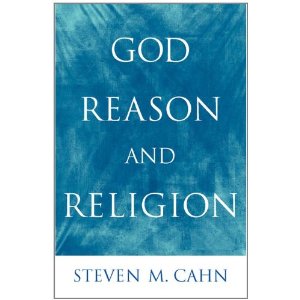
GodReasonReligionGod, Reason and Religion, the title of Steven M. Cahn’s book, fit uneasily together. Or so it would seem. Cahn, a philosophy professor, collected together in this little book a set of sixteen short, provocative essays keyed to major topics of the philosophy of religion. I’m always skeptical when I see Reason and Religion together on a book cover. It seems like an unholy plotting is going on. Perhaps it’s because those of us who study religion are often classed together with those who use slipshod techniques to “study” a subject they’ve already made up their minds about. Any scientist who’s seriously tried to learn Akkadian might have to reevaluate that premise. Happily, Cahn is not trying to promote such an idea. He states in the introduction, “My conclusions may be surprising, for although I am not a traditional theist, I find much to admire in a religious life, so long as its beliefs and practices do not violate the methods and results of scientific inquiry.” For books with Reason and Religion on the cover, that can be quite a concession.

One of the biggest faults of religions is their lack of introspection. That is a gross generalization, I know, but there is truth in it. Most religions have been severely challenged by the empirical method. Reason, it turns out, can explain most of what required one—or a multitude of—god(s) to accomplish. At the same time, religion makes people feel secure and happy. My experience of science has often been enlightening, but decidedly prickly. I’m sure I’m not the only one. Nevertheless, Cahn takes the reader through a maze of ways to think about religions from different angles. What is the tie between religion and ethics? How do we tell a good deity from a bad one? What is faith and is it a safe bet? Do miracles happen? These kinds of questions, when viewed rationally, don’t always have the dreadful results so often feared. So maybe the laws of physics aren’t violated, but that doesn’t mean you have to stop praying. Did I mention that Cahn makes concessions?

We are the cultural children of our logical, Greek forebears. They taught us to trust our reason and we’ve developed that to a high skill. Yet reason has its limits. Consider the Republican Party, for instance. Or Snooki. In life not everything adds up. Facing their final moments, few have the fortitude to keep their thoughts purely on the rational. What lies beyond we just don’t know. Science has no way of answering. So Reason and Religion should get along. There may be more than one way of knowing, and some things in our world may bridge that deep gulf between Reason and Religion. That bridge may sometimes be difficult to find. If you decide to seek it out, however, I would recommend taking Cahn along for some good reading. Even the most serious search must offer some concessions.


The Splice of Life

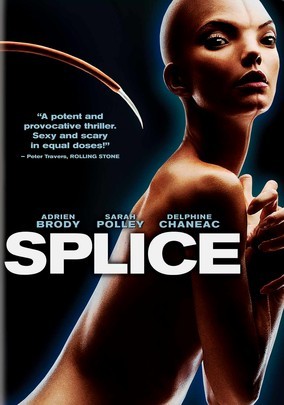
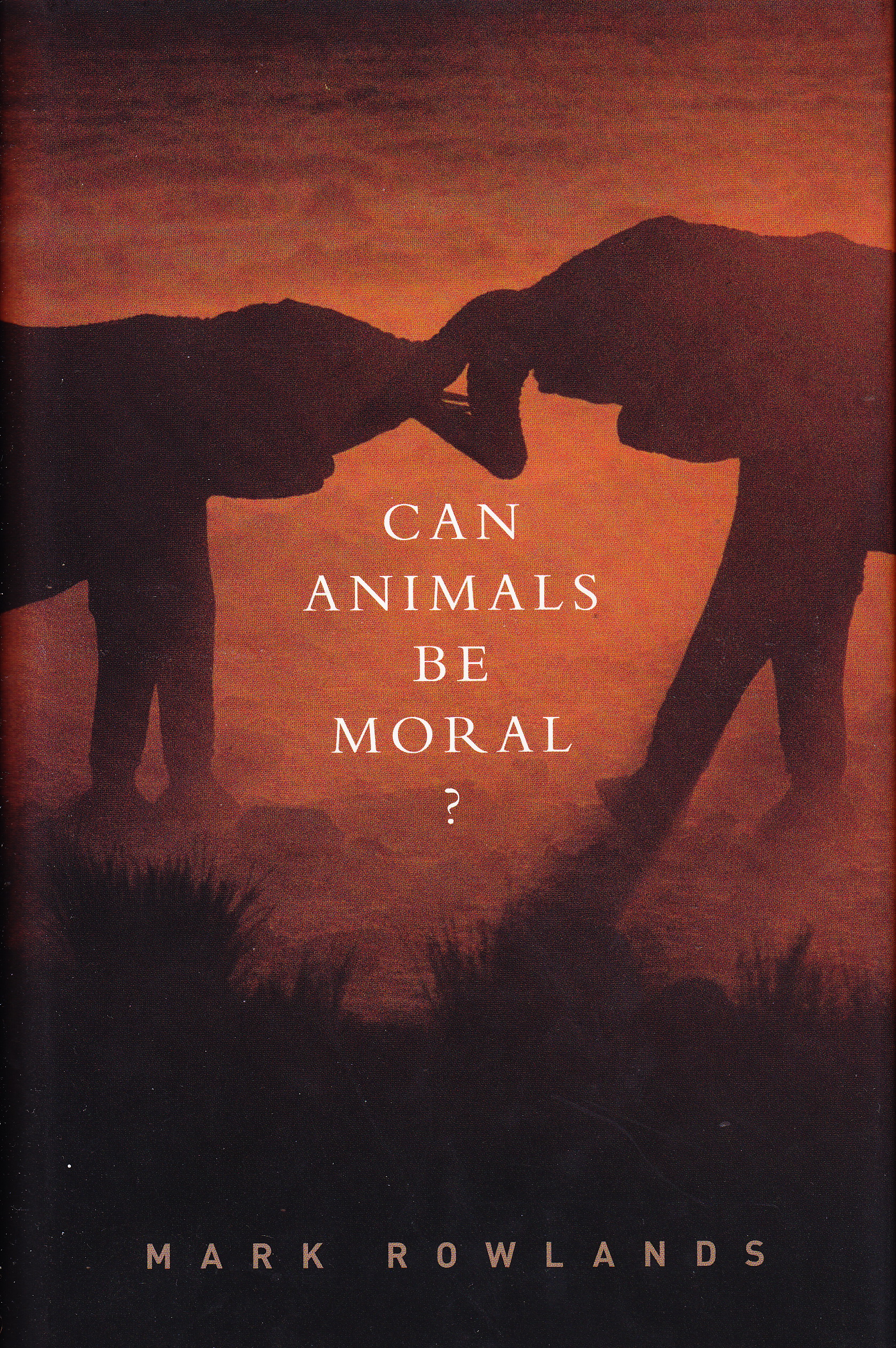
Splice Although not really scary, and although almost attainable with current technology, Dren is a curious monster. Many movies of the horror genre have explicit religious elements, but Splice may be a little too much science fiction for that. Or is it? The story is simple enough: a couple of geneticists have gene-spliced a couple of viable creatures that can be farmed for important chemicals and enzymes to solve diseases. So far, so good. But then the idea occurs to them: if the chemicals that can be used to help cure animal diseases had a human element, couldn’t they be used to cure our own diseases? And here is where the ethical quandaries begin. Adding human DNA to the mix, even when in small portions, suddenly throws open the moral dilemmas. Dren is the somewhat human result of these experiments, but the movie ends with the haunting, unanswered question—what is it to be human?

Although today the field of ethics is largely claimed by philosophers, morality is a measure of beliefs about right and wrong. In many cultures, including our own, religion has quite a lot to say about the issue. Once human DNA is mixed in the creature morphs from a bumpy slug into a creature that looks mostly human. The ethical dilemmas that surround human potential—abortion, stem cell research, cloning, and in past ages eugenics—all focus on the rights of the human person. Once a person is born, however, we almost immediately begin to curtail those rights until most of us become cogs in an unfeeling corporate machine. We are valuable, but for whose purpose? Who, sitting in their cubicle, or on their assembly line, or behind the wheel, says, “For this they defended my right to be born”?

Oddly, we privilege the potential of life without tirelessly working to improve the lot of those who’ve already been born. Perhaps, indeed, this is some form of evolutionary advantage—protect the future of the species at all costs. This idea becomes religious when it is deemed God’s will. In the movie, Dren’s creators ultimately deem her unhuman, a monster who must be destroyed. They, however, nurtured her humanness all along. While not the most profound movie ever filmed, Splice highlights the fact that ethics reflect the values of society. And society sometimes withdraws even humanity from those who’ve lost its favor.


On Dasher, On Dancer

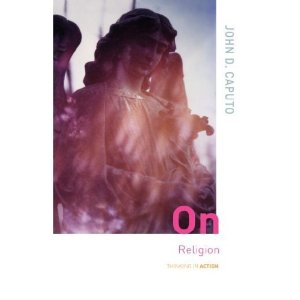
CaputoOnReligion It’s a little embarrassing to admit that after having pondered religion for all of my life, I still have no clear idea what it is. In my case pondering includes three degrees in the study of religion and almost two decades in teaching it. I still read books that introduce religion, hoping to catch some distilled essence that I might label the core of the phenomena that go by the name. Some least common denominator. But that’s not how life works. Even the most basic of things can be complex, so I recently turned to John D. Caputo’s On Religion to find out what a philosopher thinks it might be. From the start this little book is jarring. Caputo, while staunchly refusing to tip his hand, defines the religious as those who love God. Or god. Or not really god, but something that might be as impersonal as the Force. Of course, love is as slippery a term as “God,” so Caputo suggests that it is caring for more than one’s own self. If many of our religious politicians and televangelists could get even that far perhaps we’d be closer to the religious idea of heaven itself. Then when Caputo turned philosophical, he started to lose me a little.

The big problem, and one of which Caputo is well aware, is that loving God is a western religious ideal. There are those who claim that some “Eastern religions,” such as Buddhism, Taoism, and that of Confucius’ followers, are actually philosophies and not religions. But if we’re trying to define religion, excluding a very large portion of the world’s belief structures seems to tilt the balance a bit dangerously westward. Come to think about it, the idea that all people have to have some kind of religion is a western conceit as well. Who are we to define the terms of another’s existence? That, it seems to me, is one of the problems of reductionism. Assuming that all people accept the premise that an empirical system can explain everything will not rid the world of religious martyrs. So what is to be done?

Caputo has thought about this as well. He concludes his short manifesto with a chapter entitled “On Religion—Without Religion.” Here the true root of the problem is exposed—religions that claim they alone can be true. For Caputo’s purposes western religions work best here because the three major monotheistic faiths share so much in common. Put crassly, the real question is where does the line of final revelation end. Is it Moses? Jesus? Mohammad? We could go on—Joseph Smith? Raël? Philosophically, at least, Caputo suggests that all religions could co-exist if they were willing to admit that they are all right. It boggles the reductionist mind. How can they all be right? How can they not be? After all, despite the millennia spent on the topic, we still don’t know what religion is.


Two Ways

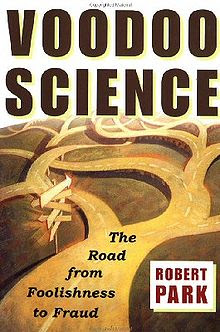
In my own attempt at balance, I turned from reading about the world of literary possibilities to a book on the inevitability of the scientific method. Robert Park’s Voodoo Science: The Road from Foolishness to Fraud is an enjoyable jaunt through the distressing world of pseudo-science. The reader quickly discovers, however, that Park shares in the same scientific orthodoxy as Richard Dawkins (and many others) that claims since science works it is obviously the only way of demystifying our world. I admit that when I read of our government spending billions of dollars on projects put forward because our elected leaders know less about science than I do as a specialist in religion, I grow quite upset. More money than most of us will ever earn in a lifetime has been poured into projects that defy laws such as First and Second Thermodynamics. I learned those laws in Junior High physics and have never attempted to violate them. Even when scientists explain to elected officials in congressional hearings why these proposals simply can’t work, the pork barrels, once opened, are difficult to close.

Like many scientists, Park envisions a world where religion (same as superstition) is slowly losing its explanatory power and people will eventually have to admit that we are just acting out the role pre-determined by the laws of physics. We are fleshy machines, sometimes pretty flabby, but still machines. Ironically, when Park wants to express the seriousness of scientific review, he resorts to religious language. In explaining how peer review for scientific journals works, he notes that objectivity is a “sacred obligation.” Now, of course, one can argue that this is just a metaphor, language that non-scientists can understand. I wonder if it goes deeper than that. Reality, whether sought by scientists or religious believers, rests on the idea that there is only one truth. This, and not the incidental differences between theologies, is the reason for nearly all religious conflict and the “war on science.” There is, we are told in our Aristotelean world, only one possible Truth. Why?

Scientific theory, no less that superstitious theology, finds a unity of truth sensible and comforting. I wonder if the truth (and I use that word advisedly) is more complicated than that. No strict necessity exists for a single truth. (I am awake of Occam’s razor, but I don’t shave.) In fact, truth is a philosophical, not a scientific, concept. The problem is that societies tend to break down if they don’t share a view of the truth. There can be no doubt that science, done properly, works. The existence of the very internet where these virtual words reside is proof of that. That does not mean, however, that other truth can’t exist side-by-side, simultaneously with it. Scientists are duty-bound to declare a singular, physical universe because of the sacred trust of seeking the Truth. My bi-cameral mind just can’t see the necessity in that. But then again, I prefer a world with some mystery left in it. No thanks, I don’t shave.


Queens and Playmates

Once upon a time, theology was queen. I’m no theologian, but then, I didn’t make up the phrase. A recent article in the Chronicle of Higher Education discusses how some scientists say there is no longer a need for philosophy. In passing the piece mentions that theology had, long ago, been considered the queen of the sciences. According to medieval thinkers, philosophy was her handmaid. Antiquated archaisms apart, I sometimes think back on this whole venture of education. Few today acknowledge, and most probably don’t know, that education began as a religious exercise. Writing, and reading, were overseen by the gods. Even in the modern world the earliest universities were founded to teach theology and law. Many of the ivy league schools, including Harvard, Yale, and Princeton, began as training grounds for the clergy. How quickly our forebears are forgotten.

It’s not that I think religion deserves a privileged place in the academy, but I do believe it deserves a place. Science has a long track record of spectacular successes. Not only that, but the advances in science often capture the imagination—and here we are back in the realm of the humanities, that place where feeling and possibility are unlimited. Many of those of us in religious studies—apart from creationists and their kin—gladly award science its deserved paean to successfully unpacking the intricacies of the material universe(s). As the Chronicle article demonstrates, some on the science side of the circle want to claim all the marbles and go home. Some of us want to keep the game going well after dark.

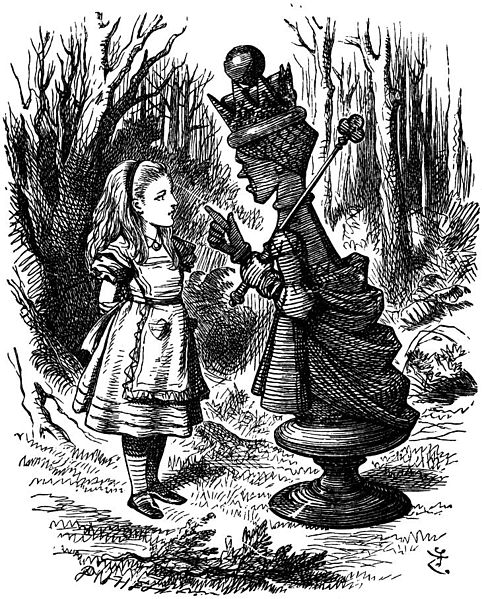
Maybe that’s a very wide metaphorical shift—from queen to playmate—it may be presumptuous. After all, what has religion, or philosophy for that matter, got to claim? What shiny Nobel Prizes to display gracefully, or great advances of which to boast? The benefits religion can claim are somewhat less tangible, but important nevertheless. While some people declare that meaning is a chimera, deep down, as a species, we know that it is important. Even more than that, the fact that you’re reading this right now owes its ultimate origin to religious thinking. Writing was the brainchild of the gods, an activity we learned in imitation of the divine. I will always find science fascinating, but I will always do so with a book held in my hands. “Now, here, you see, it takes all the running you can do, to keep in the same place,” in the words of another famous queen.