Planting Knowledge

In an effort not to harm other living creatures, I became a vegan about seven years ago.  Generally it’s not too difficult, although many eateries still think you have to exploit animals to eat anything.  Vegan fare is quite good, and some of it is remarkable.  Then I saw the article in Popular Mechanics, “So It Turns Out Plants Have Had Voices This Whole Time” by Jackie Appel.  Well, “voices” may be stretching it a bit, but they do make sounds.  According to the article, plants “talk” at the same volume as humans tend to, only it’s in a range that we can’t perceive.  Other animals, however, may.  That’s right, your dog may be able to hear the noise plants make.  This is one of the reasons I marvel at scientific arrogance.  Human senses simply can’t perceive all stimuli—how can we claim that what we term “supernatural” doesn’t exist?  We don’t have nearly all the data.

Meanwhile, we live with animals whose sense of smell would send us running even more frequently to the showers.  Animals who can hear plants “talking.”  Animals who can perceive magnetic fields.  We’ve evolved knowing what we need to know.  (At least in part.)  What then do plants communicate?  Can they hear one another?  The sounds plants make, if “translated” to human perception, seem to be “I’m thirsty,” “I’ve been hurt,” or “I’m fine.”  The terminology here is Appel’s but you get the idea—plants broadcast their status.  Can plants scream?  One of my students reminded me a few years back that I once wondered to her what a tomato felt when it was being sliced.  I responded, “That sounds like something I would’ve said.”
They know.

So now I’m a vegan and plants are joining the conversation.  My hope is that they don’t feel pain.  As far as we know, plants don’t have brains.  Even so, heliotropes are smart enough to follow the sun across the sky.  And even fully grown trees move—very, very slowly—to optimize the light they require.  Such intelligence in nature always leaves me in a state of wonder.  We’ve been told for centuries of human exceptionalism.  Sure, we have opposable thumbs and have figured out how to communicate intricate things vocally.  So much so that we can represent them in written form (such as you’re reading right now) and can know what someone’s saying even at great distances.  That doesn’t mean we’re the only remarkable creatures.  But it does leave me with the dilemma of what to eat.

Blooming in December

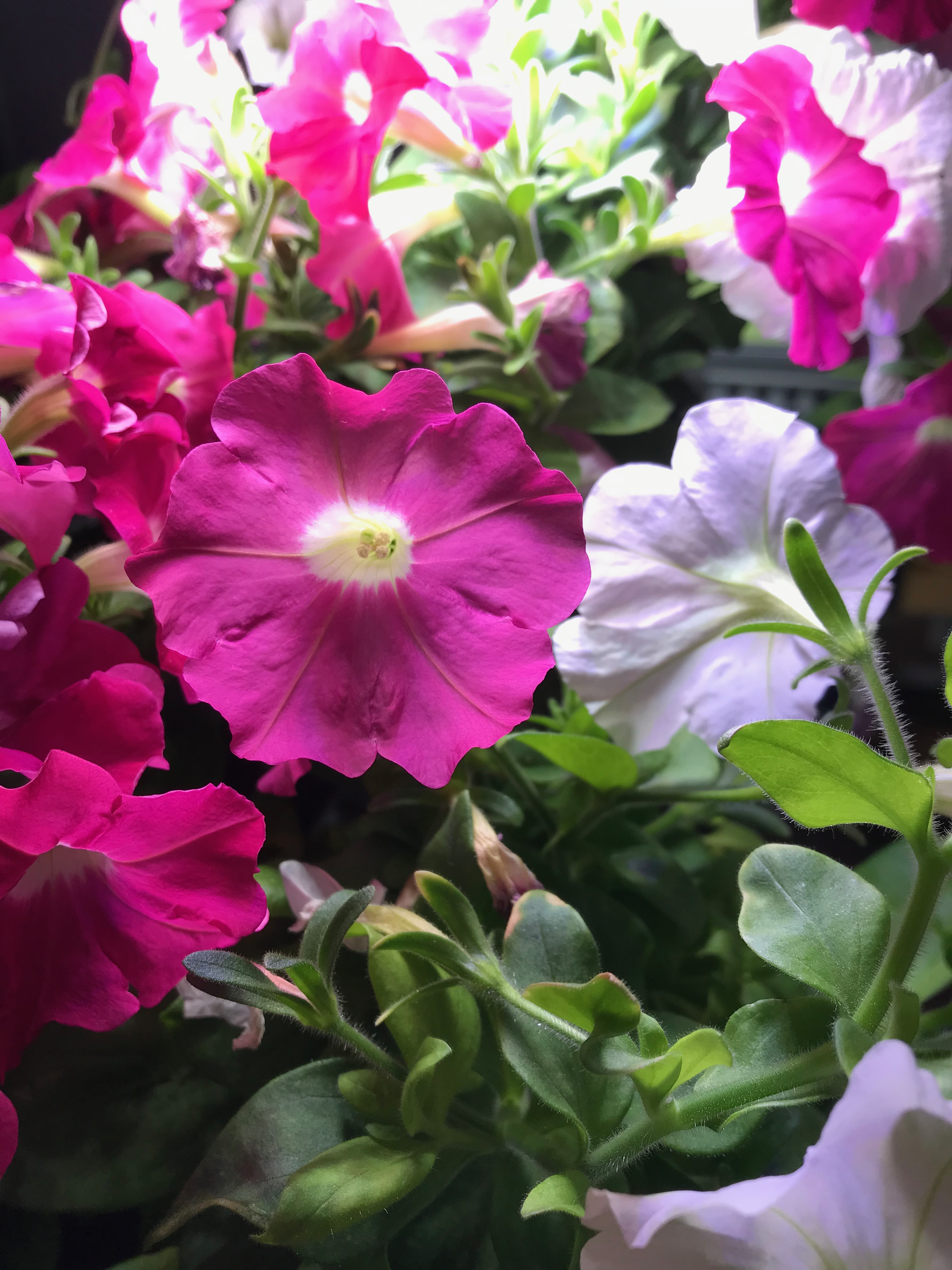
The cascading petunias are doing fine.  It’s a little odd to see them in December, given that petunias are annuals, not perennials.  (The terminology has always been confusing to me—annual could mean, as it does, that they only grow one year.  Exegeted differently, however, annual could mean that they come back yearly, but it doesn’t and they don’t.)  The Aerogarden (not a sponsor) system provides plants with a perfect mixture of light, water, and nutrition.  The only thing missing is the soil.  Hydroponic, the unit gives plants the ability to prolong their blooming life preternaturally long.  These particular petunias have been blossoming since January and they’re showing no signs of slowing down.  This is kind of what science is able to do for people too—keeping us going, even as nature is indicating, well, it’s December.

I often wonder what the flowers think about it.  We keep our house pretty cool in winter.  Partly it’s an expense thing and partly it’s an environment thing.  In the UK they talked of “overheated American houses”—how many times I Zoom with people even further north and see them wearing short sleeves indoors in December!—and we went about three years without using the heat in our Edinburgh flat.  You see those movies where Europeans are wearing vest and suit coat over their shirts (and presumably undershirt) at home?  It occurs to me that it was likely because they kept their houses fairly cold.  In any case, I suppose the low sixties aren’t too bad for plants, but they certainly aren’t summer temperatures.  Still, what must they think?

Set on a counter where the summer sun came in, at first they gravitated toward the window during May and June.  Even with their scientifically designed grow light, they knew the sun although they’d never even sprouted outdoors.  That’s the thing with science.  I’m grateful for it, don’t get me wrong, but it can’t fool plants.  We can’t replicate sunshine, although we can try to make something similar.  (Fusion’s a bit expensive to generate in one’s home.)   So it is with all our efforts to create “artificial intelligence.”  We don’t even know what natural intelligence is—it’s not all logic and rules.  We know through our senses and emotions too.  And those are, in some measure, chemical and environmental.  It’s amazing to awake every morning and find blooming petunias offering their sunny faces to the world.  As they’re approaching their first birthday I wonder about what they think about all of this.  What must it be like to be blooming in December?


Flower Power

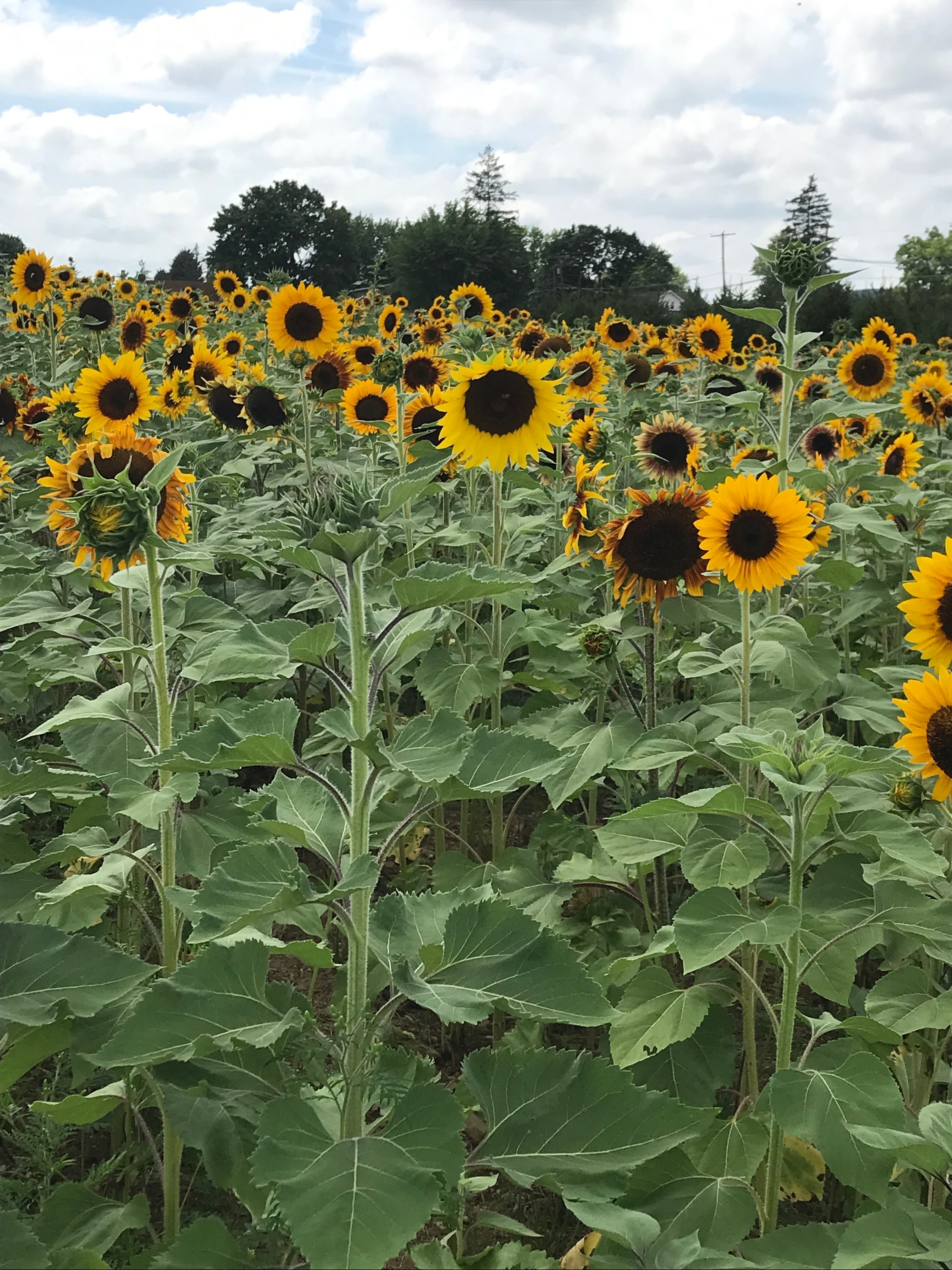
Why do we find flowers so attractive?  Often what separates weeds from desired plants are the flowers.  (Not always, though, as the much maligned dandelion can attest.)  The bright colors clearly help.  Intended to entice pollinators, flowers offer many natural attractants—nectar, intricate patterns, stunning colors—that draw both insects and humans to them.  Summer is the time for weekend festivals, and thus we found ourselves at Yenser’s Tree Farm for their Sunflower Festival.  Located near Lehighton, it’s in some pretty territory.  At this time of year it’s dedicated to sunflowers.  Perhaps all the more poignant this particular year, given that the sunflower in a national symbol of Ukraine, lots of people were there a warm Saturday afternoon.

The Helianthus genus is actually part of the daisy family.  What we call the “flower” is what botanists call a “false flower” because the head of a sunflower consists of many tiny flowers surrounded by a fringe that has petals like other flowers.  In other words, a sunflower is a cooperative venture.  The name “sunflower” either derives from the disc head looking like the sun, or by their trait of heliotropism.  The buds, before blooming, track the sun across the sky.  Most remarkably, at night, typically between three and six a.m., they turn back east anticipating the sunrise.  This speaks of an intelligence in nature.  There is a scientific explanation, of course, having to do with changing growth rates in the stems that allow a kind of swiveling effect.  To me it seems to indicate plants are smarter than we give them credit for being.  Not having a brain doesn’t mean you can’t be amazing.

The tiny flowers in the head are arranged in a spiral that follows a Fibonacci sequence.  I can’t even follow a Fibonacci sequence, so I’m glad to cede intelligence to our plant friends.  How can they anticipate where the sun will rise?  It’s the anticipation that’s heavy with significance.  Sure, using the word “anticipate” is to ignore the garden sprinkler analogy of snapping back once you’ve reached the end of your trajectory, but even so, when a seed bursts from its pod it has to figure out which way is up.  Plants move, to give themselves the advantage of sunshine.  We plant flowers because we want to be near them, admire them.  Plants provide food and oxygen, and we offer nutrients, at least in theory, when we decompose.  We’re all part of an intricate system, and we benefit when we turn to face the sun.