Mind the Gap

One of the general rules for writers is not to engage in too many platforms on social media.  There are a few reasons for this advice, the largest one being time.  Social media can easily become a time sink.  And time on social media is time not spent in writing.  Another reason, also related to time, is that becoming proficient in various platforms takes time.  And again, time spent on social media…  This has been on my mind because when people find me on various media they sometimes (not often) want to engage in discussion.  They often don’t use email.  They want me to join their favorite app or platform, and that’s where conversation breaks down.  I don’t use many platforms.  Those that I do use I do sparingly.  I’m still on Twitter, but I’m trying to move that following to Bluesky.  (I’m glad for followers/friends there!)  And I’m on Facebook, but I only check it once a day.

I don’t do this to be difficult.  I work 9-2-5 and after that I’m too exhausted to learn new platforms.  The first hours of the day (and it starts early for me) are spent writing.  There’s simply no more time for additional platforms.  The largest culprit is Academia.edu.  I suppose that’s because much of my pre-horror work is posted there.  People want to discuss it, but on their terms.  The thing about producing content—whether for this blog or for YouTube—is that it takes time.  And I’m just a working slob.  Those folks you see doing this professionally (there are professional bloggers and vloggers and podcasters) are paid for what they do.  Some of us rely on a full-time job for that.

Most of the people who reach out want me on a chat platform.  I prefer not to chat.  Or text.  Long-form writing has less opportunity for creating misunderstandings.  If you can’t take the time to say what you really mean, thoughtfully, doesn’t that open the door to hastily scrawled, easily misunderstood comments?  Communication breaks down.  I’m very flattered people are discovering my work.  I’ve been at this for decades now.  Like anyone who researches and writes, I’m very happy to learn someone, anyone is interested.  I’ll respond briefly on Facebook, and more fully to a comment on this actual blog.  Email is probably the best way to converse without devolving into mere chat.  I seldom use my phone, so all I humbly request is to meet me where I am.  I’ll get back to you, but I prefer long-form.  Tell me what’s on your mind.

Photo by LUM3N on Unsplash

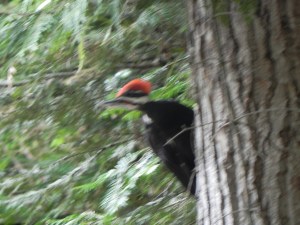
Book Birds

I just read an interesting article about how social media, and the internet in general, hijacks our time.  If you’re reading this, no doubt you’ll agree.  Those of us who write books on our “free time” know that the way books are both found and sold is on the web.  Publishers  encourage authors to build a social media platform, usually involving Twitter.  Academics are often hopeless at social media—they’re lousy at following back on Twitter, as I know from experience.  There is a kind of self-importance that comes with higher education which makes many of the professorate assume the work of others is less important than their own.  It’s more blessed to be tweeted than to tweet others.  After all, such-and-such university has hired you, and that proves the value of what you have to say.

Head-banging tweeter

Book publishers, however, will be looking at how many followers you have.  Not that all of them will buy your book, but at least a number of them will know about it.  Curiosity, indeed, drives some sales.  Just like many academics, I’m jealous of my time.  I’m also conscious of that of others.  These blog posts seldom reach over 500 words.  I tweet only a couple times a day, although I understand that’s not the way to get more followers.  You need to tweet like a bird, often with images or memes, but try explaining that to your boss when each tweet is time-stamped.  The academic is uniquely privileged to be given control of their time outside of class and committee meeting.  Tweet away.  That doesn’t mean they’ll follow you back.

The reason for tweeting is, of course, self-promotion.  45 may understand little, but he understands that.  You can commit treason and people will overlook it if you tweet persistently enough.  My own Twitter activity is like the eponymous birds after which the site is named; it is active before most people are awake.  And it, like this blog, is not designed to take up your time.  Since my tweeting during the work day is limited, my tweets are seldom picked up.  I try following other academics, but often they don’t follow back.  After all, what does a mere editor have to say that could possibly be of interest to the high minded?  Alas, I fear my advanced studies of the Bible have become bird-feed.  And my forthcoming book won’t get noticed.  I only wish more colleagues would consider the adage, tweet others as you would like to be tweeted.