Job Months

I’m sure you’ve had them too.  Job-like months when everything seems to happen all at once.  Your bank account grows anemic, making Quicken feel more like quicksand.  Our most recent started when the roof leaked yet again during heavy storms—I sure am glad climate change isn’t real!  Can you imagine how it’d be if we had extreme weather?  This house dates from the late nineteenth century and presumably, if such super-soakers had always been common, well, the roof would’ve been replaced down to the joists.  In any case, in our fourth call to the roofers over seven years, we faced yet another scary bill.  Then the sink began to leak.  Some minor repairs I can do myself, but this house was an either a DIY’s paradise or purgatory.  For us, mainly the latter.  

A couple years back there was a leak from the upstairs toilet tank.  Now, I’ve replaced the guts of a toilet more than once.  I bought the parts and went to work.  It was then that I discovered a previous owner had purchased a fancy-brand toilet for which toilet guts couldn’t be purchased (well, maybe from Japan or China, by slow boat).  You’ll probably agree that without an outhouse, a working toilet is more or less a necessity.  I watched YouTube and my wife and I went to Lowe’s and bought a new toilet.  I’m sure angels were laughing watching the two of use wrestle this metric-ton porcelain throne up the stairs (and demons laughed as we got the old one down).  Installing it looked straightforward.  When it started to leak, the plumber—we’re on a first-name basis now—came over.  He pointed out the faulty mounting pipe and asked if I’d installed it.  It was from the previous owner with high-class taste in toilets.  He turned to his companion and said, “This is why we’ll never go out of business.”
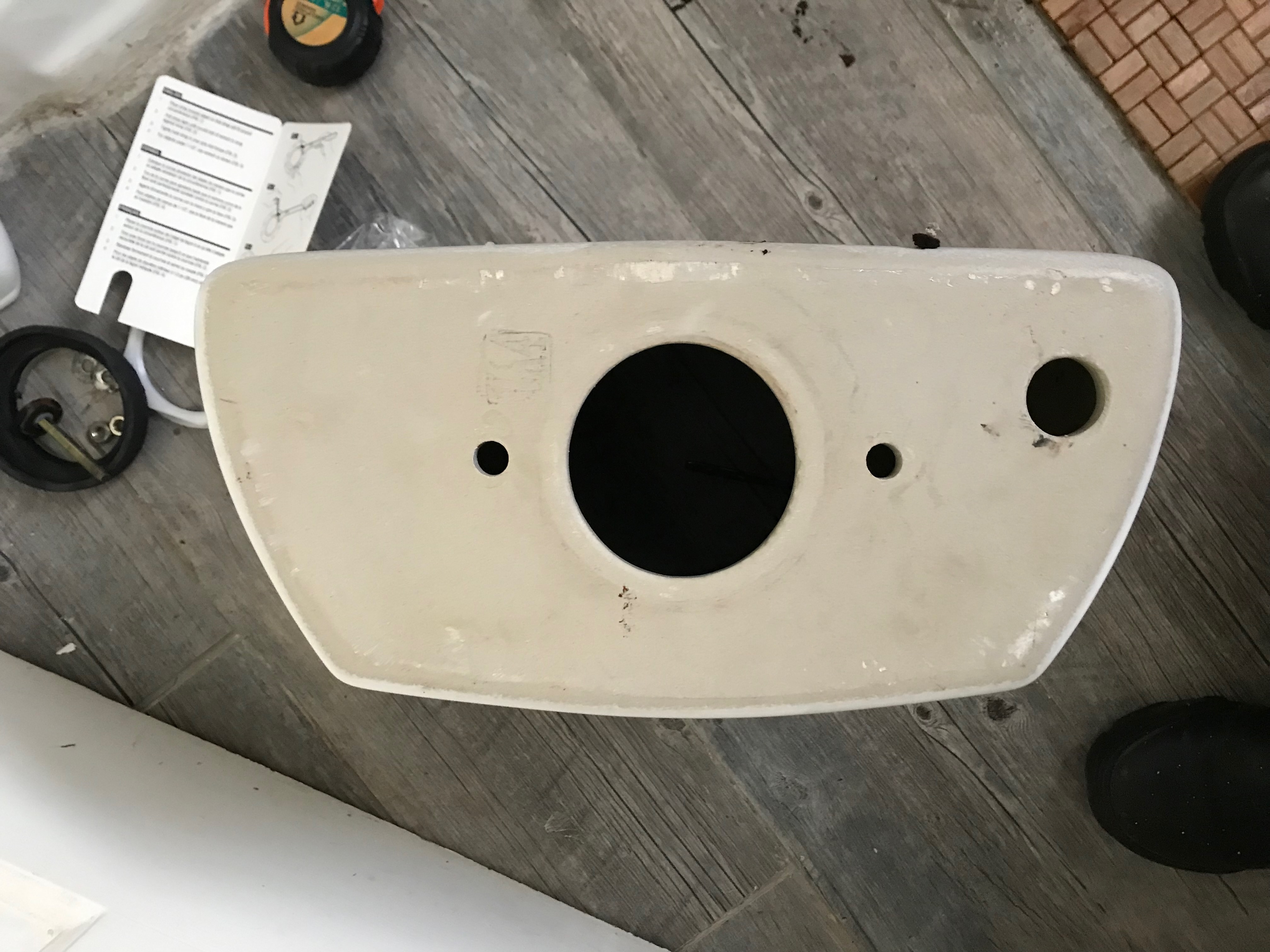
So a twenty-dollar toilet gut replacement turned into a $600 full toilet replacement.  This was in my mind when I had my head under the sink.  We seem to have stopped the water getting in from above, at least for the moment, but now it was clear that the base cabinet under the sink was going to need to be replaced as well.  I called Doug and he said he’d slot me in as quickly as he could.  I’m pretty sure Job didn’t have indoor plumbing.  He probably had to repair his own roof a time or two, though.  Only in his case, it happened just before God made a bet with Satan.  So the story goes.

Toil et cetera

Few items are as necessary for modern day life than a functioning toilet.  If you live in town and don’t have an outhouse your other options are pretty limited.  Religion scholars tend to know quite a bit about what goes on in toilets, so I’ve repaired my fair share over the years.  When we had a leak in a fill valve, I had to wait for a weekend to do the repair.  I figured half an hour and thirty dollars at most.  I left it for an afternoon project.  Once I got the new fill valve installed, there was a problem.  The tank wouldn’t fill with water.  It had been clear that the faulty part was the fill valve, as it was hissing and sputtering and there were no leaks into the bowl.  I made a late trip to Lowes for another valve, following the logic that the one I’d bought earlier must’ve been defective.  It didn’t work either.  We had to flush by buckets of water.

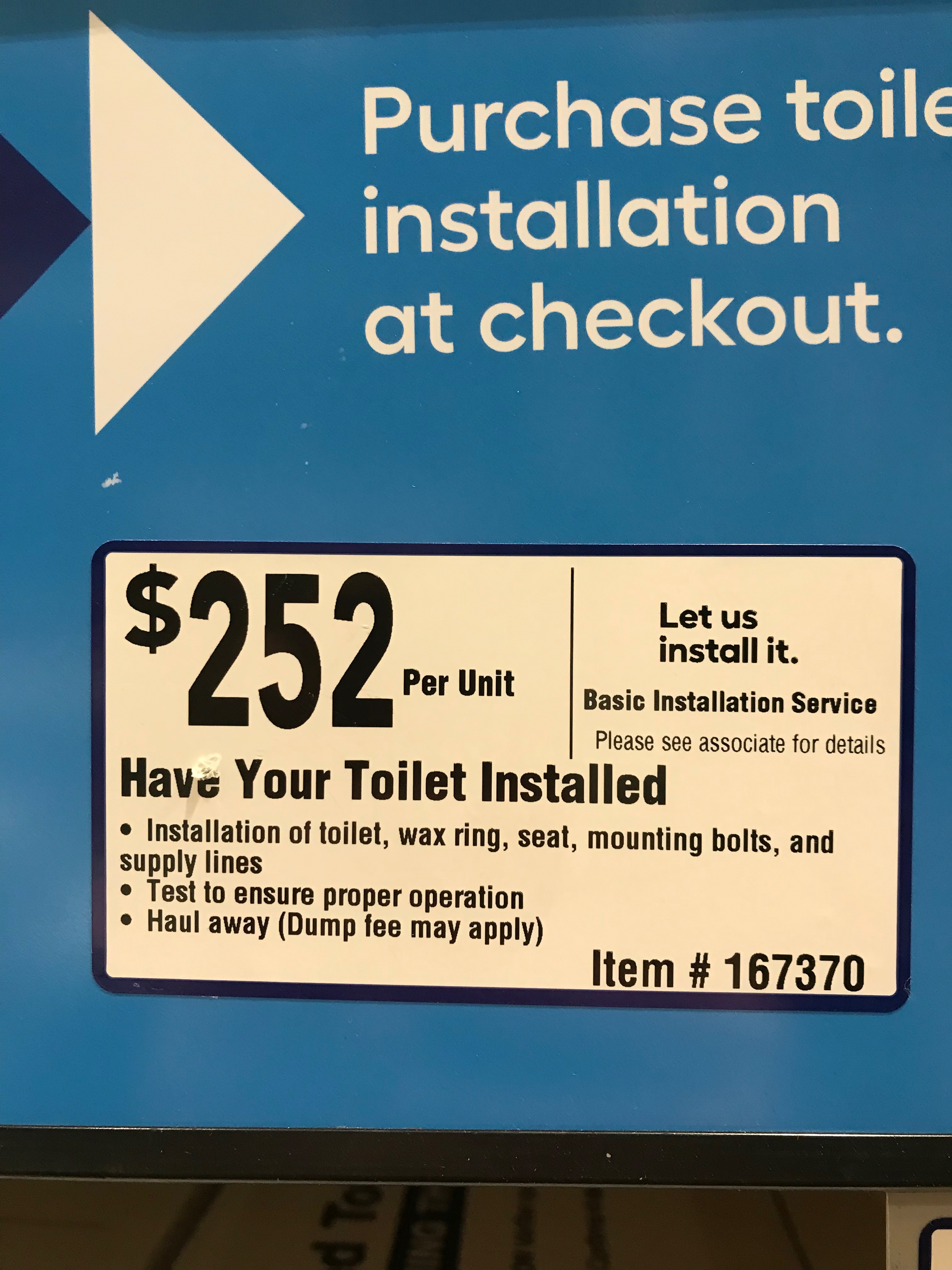
Sunday after church I rushed to Lowe’s since, logic dictates, it has to be the flush valve that was the problem.  These are the only two parts inside a toilet tank that require repair.  So I got the tank off, and after running to the hardware store to buy a specialized tool to get the nut of the valve off, I learned that “fits 99% percent of toilets” left that troubling 1 percent for a reason.  Our toilet was special.  The parts were not standard size and neither my local hardware store nor Lowes had the parts in stock.  If we wanted a working toilet that day we would need to replace the entire thing.  So we went toilet shopping.  Hauling a toilet up the stairs is something I hope never to have to do again.  By late Sunday afternoon my half-hour, thirty-dollar project had turned into a multi-day, three-hundred dollar project.  I followed the installation instructions religiously, but, of course, it leaked.

I ended up having to call the local plumber we’ve got on speed-dial.  We’re in our fourth year in our house and we had plumbers here at least six times.  I picture their office assistant grimacing each time our number comes up on their caller ID.  The plumber came and, apart from generating serious tool envy on my part, demonstrated how everything from the soil pipe up had been misinstalled by over-confident DIYers.  I try not to cut corners with plumbing or electrical.  Despite how easy it is to install, or even repair, a toilet, you have to have the correct foundation.  And even scholars of religion need to admit when they’re in over their heads.

Read the fine print.

Honest Labor

When an artisan begins a new job, s/he must acquire the tools of the trade.  During a period of unemployment I seriously considered getting certified as a plumber.  I’d done some plumbing repair and, unlike many people, I wasn’t afraid of it.  (I am, however, terrified of electrical work.)  When I was looking into it, it became clear that there would be a significant outlay of tool purchasing up front.  While all of this may seem obvious, people are often surprised to learn that writing books also involves tools acquisition, although it generally pays far less than plumbing. The tools used to be made of paper, but they can wrench pipes apart and rebuild a bathroom from scratch.  I’m referring to books, of course.  In order to write books you have to read books.

Long ago I gave up on trying to read everything in an area before writing.  There’s just too much published these days.  When I was teaching and actually had a modest book allowance I would attend AAR/SBL only to come back with armloads of books that I needed for my research.   Of course I had the backing of the seminary library as well, so I could find things.  As an independent scholar doing the same work, however, you have to do a lot more tool acquiring since no library will back you up.  Nightmares with the Bible came back from peer review with a standard-issue academic who wanted me to “show my work.”  (I.e., document everything.)  Apart from slowing the book down (it is written), this also means acquiring tools.  AAR/SBL always reminds me of just how much is being published these days and that my toolbox, although already quite hefty, isn’t nearly big enough.

As I’m going through Nightmares rewriting and adding footnotes, I’m discovering more and more material that could be included.  As an editor myself I try hard to keep to assigned word counts, and the entire allotment could easily be taken up by bibliography alone.  I am very modest in my spending at conferences now—independent contractors have to be.  Nightmares will likely be my last academic book; I can’t afford to keep going like this.  I don’t plan to give up writing, of course, just academic publishing.  Both this book and Holy Horror were written for non-specialist readerships, to showcase my non-technical way of explaining things.  Both ended up with academic presses and are slated to be among those specialist tools that the beginning artisan covets but for which s/he has to budget.  And when this house is finished it will have an impressive, if most unusual, private library.


Plumbing Depths

This past week we had a plumber here for a day.  Our house has been owned by a succession of DIY weekend warriors who had more confidence than ability when it came to things like electric and water (which, I’ve learned, you want to keep apart).  Somehow our home inspector failed to spot these costly fixes, and I try to think of them all as investments—a concept foreign to a guy with my background of living paycheck to paycheck.  In any case, all this plumbing has me thinking deep thoughts about water.  And depth.  Things are seldom what they seem—there’s more below the surface, and those who struggle with the depths often come up with sayings we call profound.  And they often express them in poetic form because, when you get deep enough, words themselves break down.

I often consider this in the context of science.  Physicists break things down into formulas.  There’s a certain uniformity, they tell us, until you reach the quantum level, then the rules change.  I sometimes see this as an analogy with the staid nature of scientific prose versus the depth of good poetry.  Or even, dare I suggest it, profound fiction.  These sometimes explain our world better than the accepted facts of mundane existence, such as water always seeking the lowest point.  There comes a profundity, however, at which down becomes up.  The behavior of water, which we want in our houses but only in controlled locations, is somehow indicative of this.  “Deep calls unto deep” as one ancient source says.  And the plumber walks away with a good chunk of your cash.

Learning about science in school, I was always taught that good science is elegant—there should be beauty in a theory that explains the world.  I’ve often wondered how this fits in with a reality that is often messy—chaotic even.  Ancient peoples from the area that produced our Bible believed water to be chaotic.  It had to be controlled by the gods.  It is vital for life, we need it and yet it wreaks havoc on dry land as those who experience hurricanes know all too well.  The world into which I was born was one of indoor plumbing.  Once water gets in, as our leaky roof attests, it introduces chaos in a place we want to stay dry.  When water won’t behave like we want it to, however, we no longer call on the gods.  We call a plumber and pay our offering with profound reverence.

Young Dr. Wiggins contemplates chaos


Out of the Depths

You’d think that a lifetime of theological study would be excellent training for repairing a toilet. If, however, you live in an old rental unit that has been ritually neglected for decades and that has a plumbing system designed by the Marquis de Sade’s evil twin, you’d soon think otherwise. All I tried to do was replace the flapper—something I learned how to do before leaving home. When the overflow tube snapped off, corroded all the way through at the bottom, I figured I’d just replace the unit. The bolts holding the toilet tank, however, were installed before Noah even built the ark and therefore wouldn’t budge. The leverage room for a wrench, is, of course, negligible. So it was, temperature about 100 degrees, no air-conditioning, no working toilet (bad combination) on a weekend, that I came to face the human condition once again.

As biological creatures, humans have constructed themselves a grand, spiritual universe that kindly overlooks the basics of daily living. Religion, in origin, seems to have had a survival value. Psychologists have suggested that the sense of hope that religions often project might have led to a stronger desire to thrive. Others have suggested religion is part of the curse of consciousness—aware of our own mortality, we attempt to overcome it like any other obstacle. Religion gives us the leg-up over pure biological existence. Unlike other creatures, many western religions assert, we survive our own deaths to face a (hopefully) better world beyond.

In the meantime, however, we are faced with a messy biological existence. Some of our compatriots in this venture stumble along the way and cannot meet the expectations like those who know how to work the system. Religions have traditionally dictated a moral imperative for those who are in positions of power to assist those who are weak. Of late, however, that has somehow shifted—at least in popular Christianity—to the overarching objective of looking out for one’s self. As a species we are all, rich and poor alike, constrained by the same biological necessities. It would speak well of our religious constructs should they reflect the same. As the temperature climbs once again, and I must face my plumbing nemesis, I realize that the metaphor may go deeper than I originally surmised.

The theologian's best friend


Plumbing the Depths of the Universe

Lasting summer I helped a friend unclog his sewer line (the mark of a true friend). That episode readily released me from a lifelong fear of plumbing, and when our kitchen sink leak got to me shortly after, I took courage and fixed it. Now, a year later, it looks like a seal has gone bad. With stagnant water dripping on my face, cantilevered under a pot-bellied sink, I discovered that plumbers have their little trade secrets. Trying to loosen in intake line nut with a standard vice-grip set of pliers, removing skin from my knuckles while at an unbecoming angle for a man my age, I felt like Bill Bixby turning into the incredible Hulk. I knew I had to make the long drive to New Brunswick to get my Rutgers campus mail after this, and I was getting nowhere with the nut. Traffic in New Jersey is relentless, and it looked like my entire day was shot when I noted there was a Scarlet Knight football game today, and I have to drive right by the stadium where the millionaire football coach prevents guys like me from being hired. So there, head under the sink, fuming with rage, I had an epiphany.

Reality, as we are taught in our rational educational systems, can be explained by reason. Certainly the fact that I’m typing this post on a highly sophisticated computer to upload to a god-like Internet, demonstrates that reason works. Bit by bit, piece by piece, scientists figure out how our world works. And yet, many scientists also ascribe to religious beliefs. Explaining religion will need to await another post, but it is fair to state that religion is generally something that effects the emotions. We tend to accept religion with our feelings rather than trying to wrench it in with reason. With my face dripping with runoff, I wondered, what if there are two separate realities?

Ockham’s razor may apply here, but I don’t shave. What if reality consists of a non-rational, emotional universe as well as a simultaneous, empirically explainable one? What if we are leading dual lives straddling two different forms of reality? That doesn’t make any one religion true, but it might explain why we haven’t been able to explain emotion. Psychologists like to trace it back to “fight or flight” functions from our reptilian brains, but the emotion we experience often seems more intense than that. Emotion may drive a highly rational human being to completely nonsensical behavior. Perhaps we are participating in a universe that requires a two-pronged approach. Perhaps rationality is only half the picture. As I prepare to stick my head back under the sink again, I realize what plumbers must have long known – some things, such as under-sink arrangements, simply can’t be explained by reason alone.