Avenge This

Recently rewatching The Avengers I noticed a subtext that had escaped me the first couple of times I saw it. When Loki explains to his victims why he is spreading his chaos, he uses a concept that many of us have been spoon-fed since 9/11—that freedom is not free. When he is asked from what he is setting humans free he replies, “Freedom.” He further explains that people really don’t want freedom, but they want to be led. This sounded so much like Bush administration rhetoric that I was put on alert for the remainder of the movie. Indeed, in the climatic scene much of Midtown is attacked, and who launches the nuclear device at Manhattan? The shadowy government figures who wish to remain anonymous. “Freedom is not free,” they seem to say, “support your government without question.” The scene of police and firefighters herding frightened citizens out of harm’s way looked an awful lot like footage from near ground zero.

Comic books, I have often reflected, are already story-boarded and some make excellent movies. Some are funny and some are serious. As a child I had only a handful of comics, but they were like movies for kids with modest means. Like an adult going back to the old Warner Brothers cartoons, you see many things that escaped you as a child. Comics may not be high literature, but comic book movies, at their best, are not far from it. The X-Men movies likewise introduce themes that rivet adult attention: prejudice, discrimination, the ambivalence of evil. The stories are didactic as well as entertaining. In the case of The Avengers, the characters, while overblown, all have their own agendas but government has only one: compliance.

Sometimes I read about the early days of the American experiment and wonder what went wrong. Yes, there are certainly times and issues that demand strong centralized government for survival, but when did those who castigate such strong control decide that they should take over? Who gains here? It certainly doesn’t seem to be the average citizen. Looking over the landscape after the last laissez-faire government, the only one who ended up hands-off were the very wealthy. Left with no social responsibility, they reign, resisting any taxation so that the burden of the increase trickles down to those who, in the words of Loki, really don’t want freedom. That’s perhaps the only thing we have in common here; no matter how long ago our ancestors arrived, they were searching for freedom. Or so they believed. Like a comic book, it has become mere fantasy for most, while Richie Rich happily continues on his gilded, but vapid way.

Mårten_Eskil_Winge_-_Tor's_Fight_with_the_Giants_-_Google_Art_Project


Sweet Heaven

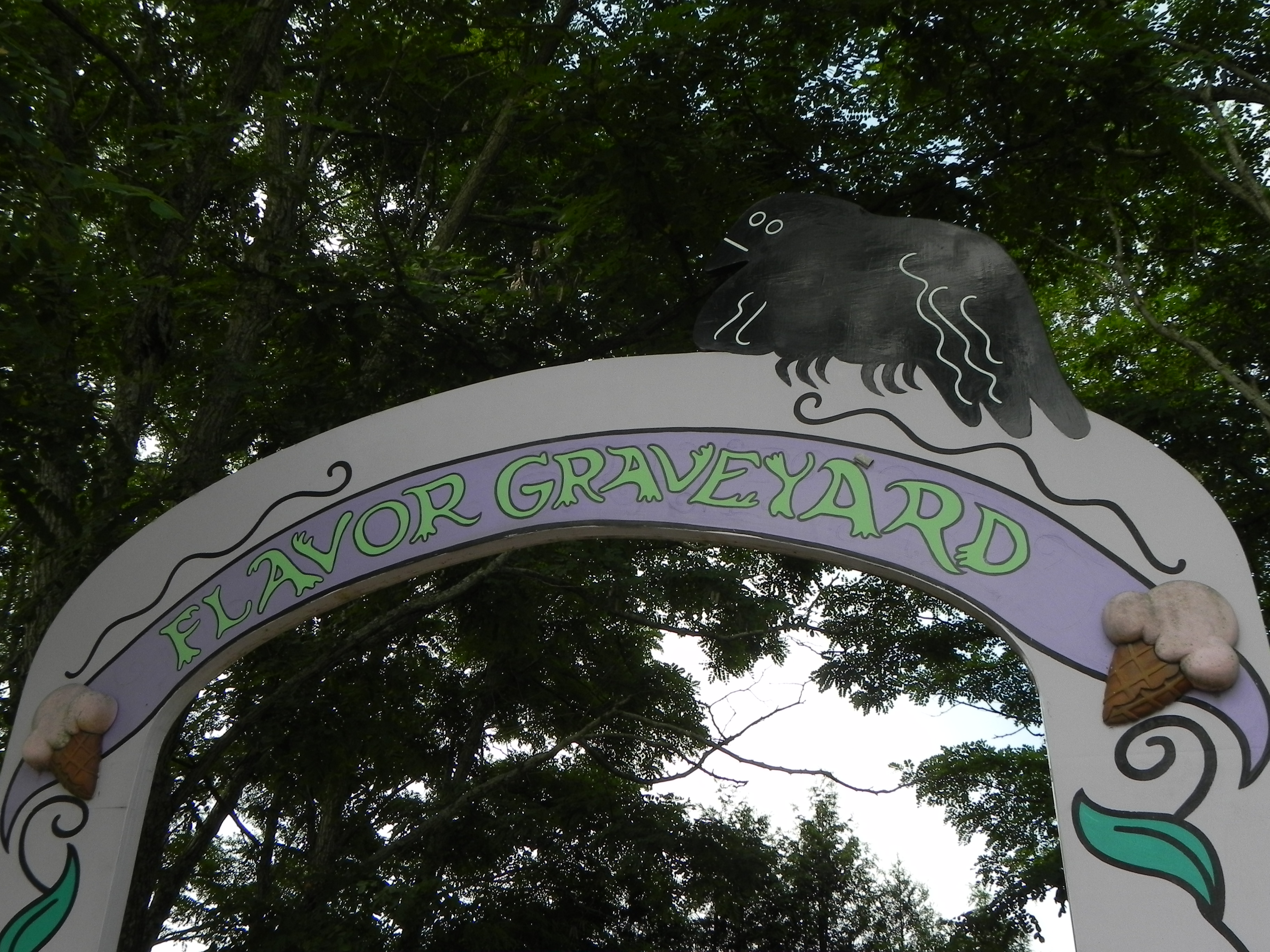
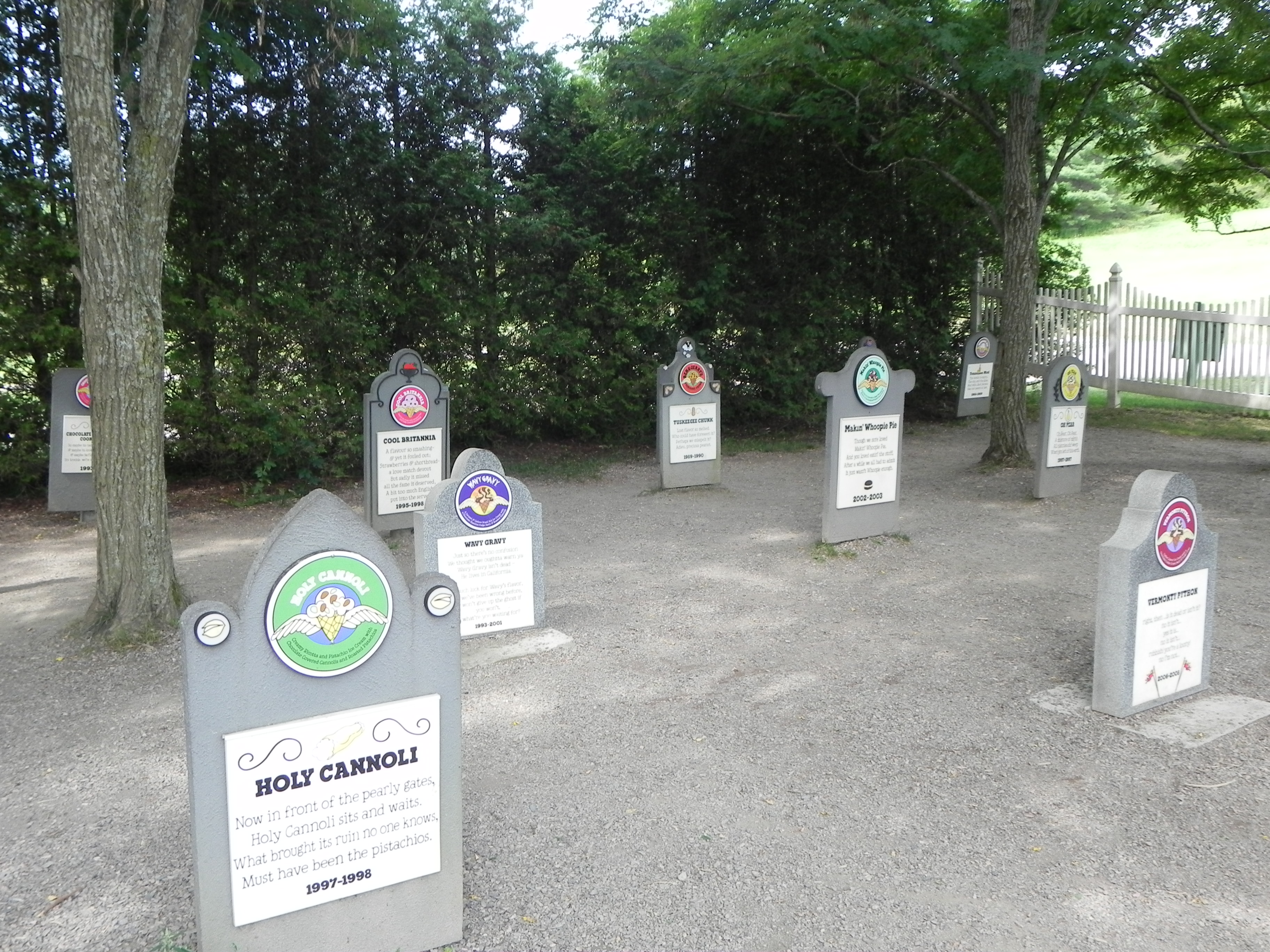
On a weekend trip to Waterbury, Vermont, I found the sweetest cemetery ever. Ben and Jerry’s ice cream factory features a Flavor Graveyard where tombstones to deceased flavors stand. The epitaphs are frequently witty and the experience is lighthearted for kids and adults alike. I wondered, as I stood there looking at the monument to Bovinity Divinity, at the persistence of the belief in an aftertaste—what I presume is a flavor’s version of an afterlife. We like to believe in something more, sometimes at the expense of the here and now. Nevertheless, Ben and Jerry stand for something more than quality ice cream. Theirs is a company with social consciousness, started by two young idealists who have managed to keep their integrity in spite of success. I couldn’t help but to feel impressed by the entire operation. Frozen dairy with a conscience.

The larger question, I suppose, is why success so frequently leads to a loss of concern for others. People possess differing levels of empathy, just as animals do, but it appears so starkly in the case of those who prefer their profit at the expense of others, sometimes even the entire remainder of the world. In a universe of one, no one is rich. And seeing a successful company that has managed to pull off relative equity in the world of business has proven that it is possible. Too many idealists let go too soon.

Perhaps it is the rarified air at higher elevation, or perhaps I’m being brushed with the wings of angels at this altitude closer to the celestial sphere, but this giddiness that I’m feeling is likely born of bonhomie. There is no necessary correlation between success and lack of concern for others. I am reminded of this as I walk to work in far away Manhattan. The sidewalks, even in posh business areas, host ambiguous stains and crushed cockroaches. Even the wealthy must step out of their limos sometimes. When they do, they will plant their feet on the same dirty sidewalks as the rest of us do. Their elevators may lift them to pristine heights, but the bottoms of their shoes are just as full of the remains of everyday lives as are mine. From now on, however, when I see Ben and Jerry wrappers among the detritus on the streets, I will be smiling, thinking about the aftertaste.


Renters, All

Ownership is an odd concept for mortal creatures. With limited time to spend on a finite planet, we devise rules that give exclusive rights to some while denying access to others. I have never owned property (tellingly called “real estate”)—the life of those who stumble into higher education doesn’t really lend lenders any confidence of one’s ability to repay debts. I spent too much income, I guess, on my education. In any case, the concept of ownership seems to be endemically human. In most societies we want that thing that we found, that we picked up and moved with us, to remain where we put it so that we can access it again. That particular stick or stone that caught our eye for utility or beauty—it is that we wish to own. Soon humans are building vacation homes in the regions of stunning natural beauty that dot an industrialized landscape, vacation homes where they can get away from it all. Humans owning nature.

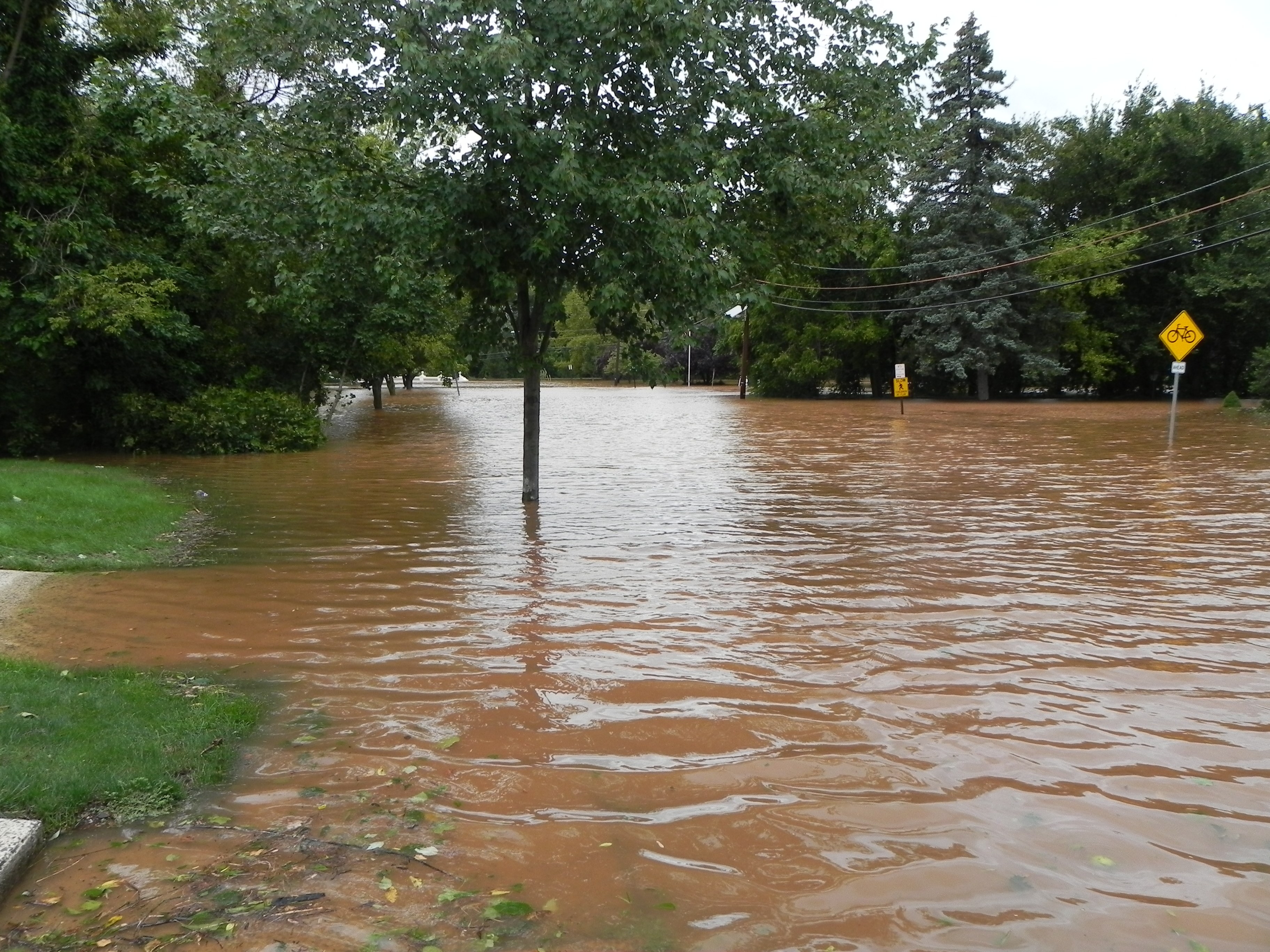
Recently I read a story in the New Jersey Star-Ledger about beachfront property “owners” in New Jersey suing over beach reclamation. Now before bursting out into peals of laughter, please be aware that those who claim New Jersey lacks natural beauty have never visited the state in the spring. Once outside the urban sprawl surrounding New York City, Jersey is, for the most part, very pleasant. Many of the beaches are pristine. Of course, pristinity invites affluence. The wealthy like to settle where the views are nice. And so when the state tried to prevent beach erosion by building dunes the rich cried foul and began to sue. It looks like the state will have to pay out. The very state that I, along with countless others who can’t afford a single house, support by our taxes. That money is now being piped into the pockets of those whose summer homes now have a slightly diminished view. My heart bleeds.

One of the facts of life on the Atlantic coast is hurricanes. Another is nor’easters. Both of these storms erode beaches at a terrifying rate. And when the beach is gone, whose house will be in the ocean? Those who wanted the dunes removed. Money is just distilled ownership. Those flimsy pieces of paper have no inherent value. It is difficult even to believe in money when you never see it. Electrons zipping through the Internet are the only sign that I’ve been paid. Yet we value it above all else. I’m not sure how this fits in with a gospel that condemns money and a Jesus who suggests the only way to heaven is to give it all away. Well, maybe it all fits, as long as you don’t block my view of the ocean. After all, owning part of a planet entitles you to some feeling of self-importance. Or so I suppose.

Who's really in charge here?


Voices from the Third Estate

Discussions over the past week in that great wasteland we call state government have included talk of actually having millionaires taxed to shoulder a little of the state’s fiscal burden. Naturally there has been a strong backlash in this nation of deeply embedded plutocracy. Those who have their millions certainly feel little social responsibility, since the prosperity Gospel (or its analogs) comforts them with whispers that wealth is a sign of blessing. One of the most evil ironies of all is that many such folk have the chutzpah to cite the Bible as their backer. God loves the beautiful people.

Such virulent misreading of religion shrugs off millions of gallons of crude oil gushing into the Gulf. Petroleum companies breed some of the wealthiest individuals around, and if we wipe out the marine life of the southern coast, well, that’s a small price to pay for individual privilege. Somewhere along the line an unholy matrimony between religion and greed produced the great plague that will lead to the fall of western civilization. This may be seen clearly among the apes.

Frans de Waal, an author whom I’ve quoted before, notes that in ape society when an individual (or individuals) takes advantage of the system, the group eventually brings an end to his (or rarely her) reign. Primate society can only tolerate abuses that damage a community for so long before a collapse is immanent. Consider Rome, “the eternal empire.” Every day politicians posture in the media about how they have the best interests of society at heart. As members of the privileged classes, they have lost sight of what it feels like to live in the constant umbra of the supercilious wealthy while millions have no jobs, no health care, no future. Millionaires owe nothing to the society that allowed them to become rich, for the Bible tells them so. Nature, however, begs to differ.