Six-Hundred and Sixty-Six

I have to confess to never having read a biography of Aleister Crowley.  I’ve known of him since I was a teenager, however, since you can’t read very much about esoteric stuff without running into his name once in a while.  Crowley was famous for starting the religion called Thelema, revitalizing interest in magick (the additional “k” was to distinguish it from stage magic), and for generally being a bad boy.  In fact, he declared himself the “wickedest man on earth” and liked to be called “the Beast” and loved the number 666.  It was the latter point that caught my attention recently.  In pop culture, 666 really only took off after The Omen.  (Movies often dictate, or at least inform, our religion.)  Crowley, who lived much earlier than the film, saw the marketability of 666 and I wondered how it caught his attention.
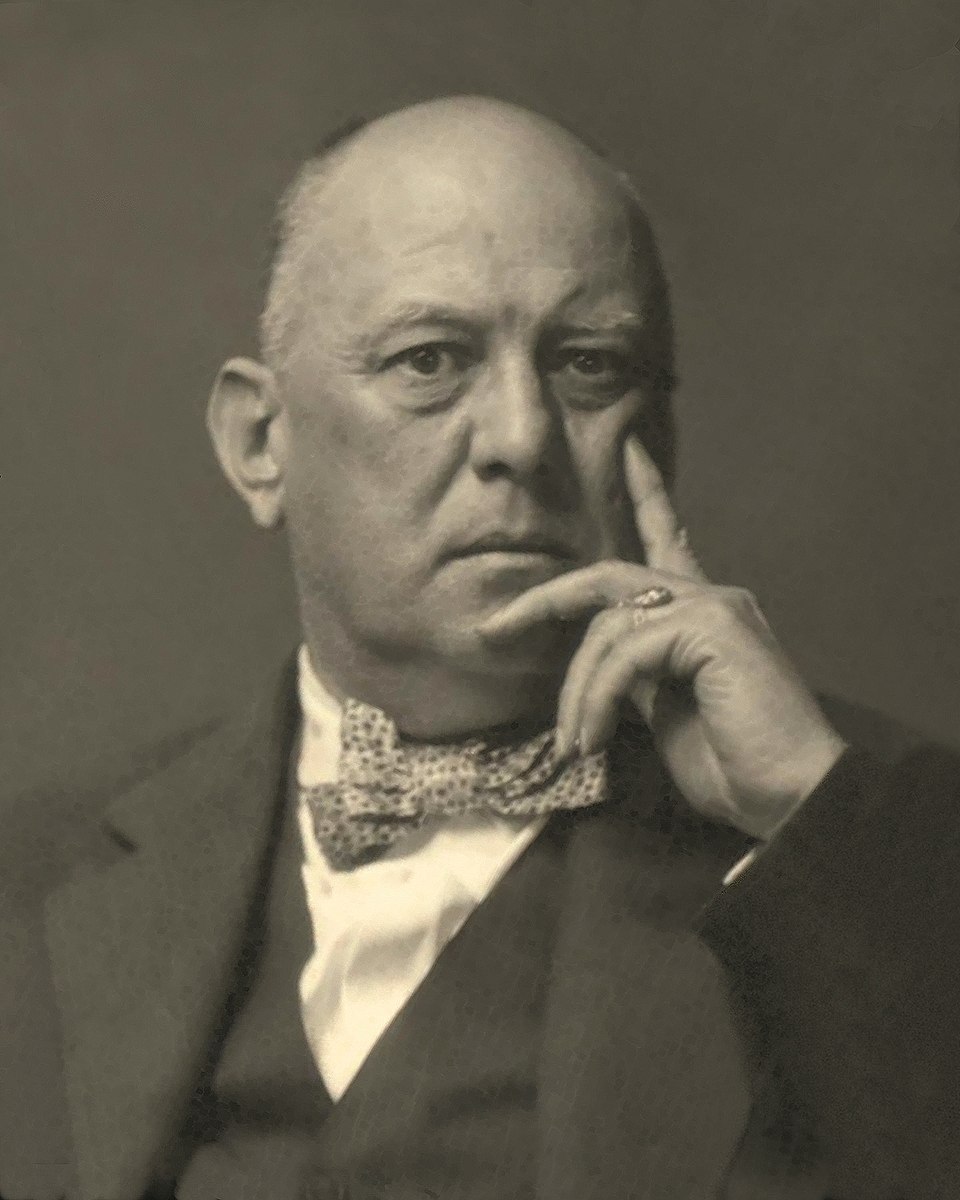
Aleister Crowley, public domain via Wikimedia Commons

As I recently posted, the end of the world as we know it is a fairly modern construct.  I happened to be reading about Crowley recently and learned that he was raised in the Plymouth Brethren tradition.  (They don’t loudly claim him as a native son, for some reason.)  He is probably the most famous of the Brethren, across all walks of life.  He even earned a place on the cover of Sgt. Pepper’s Lonely Hearts Club Band.  The Plymouth Brethren were massively influenced by John Nelson Darby, the inventor of dispensationalism.  Dispensationalism is the fairly new Christian belief that time can be divided into ages, or “dispensations,” during which God has a plan already mapped out.  He apparently waited for Darby before letting the rest of the world in on this secret.

Things about Crowley then began to make a little more sense.  His choice to name himself after Darby’s preoccupations adds up.  I haven’t read any biographies so this may be old news, well known among scholars of esoterica.  It nevertheless bears pondering because the religion we teach our kids may have unexpected consequences.  Crowley rejected the Brethren (whose moral predilections were not to his liking, especially as a hot-blooded young man) but the religion influenced him nevertheless.  I wonder if the teachings Crowley received as a child encouraged him to become, in his own mind, the opposite.  Crowley wasn’t “the Beast.”  His precepts included “love is the law” (granted, his version of love was a touch earthier than Christians with whom he’d be raised, but still), not a bad start for an ethical system.  Even the wickedest man on earth believed in the power of love, even if his religion introduced him to 666.

Direct Address

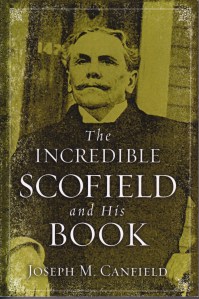
For a man as amazingly influential as he was, Cyrus I. Scofield hasn’t been the object of much curiosity. In the venerable academic tradition of ignoring those you disagree with, serious scholars dismiss Scofield as some kind of evangelical aberration, a theological leper, if you will. It’s difficult to locate book-length treatments of the man, although he may claim considerable credit for the elections of Ronald Reagan, George W. Bush, and the current incumbent. Somewhat skeptical of the obviously polemical The Incredible Scofield and His Book by Joseph M. Canfield, curiosity drove me to read it as an accessible and thoroughly researched account. Now, one evangelical going after another isn’t a pretty sight, but if you can get past the “this is what the Bible really means” oneupmanship, there is clear evidence of a sharp mind with legitimate historical accuracy as its priority in Canfield. This is especially clear where he demonstrates that scholars shown the evidence will choose to ignore it to preserve the sanctity of a man hardly a saint.

The strange religion that has developed from the Scofield Reference Bible has had an astoundingly long reach. If you know what “the Rapture” is, it’s probably because those who took their cues from Scofield’s Bible ensured that it became a standard American trope. It generally doesn’t have to be explained, even though the idea doesn’t occur in the Bible. It’s based on a set of “dispensations” developed among the Plymouth Brethren, a fairly small British and Irish sect that influenced the world through its prophet Scofield. (Scofield himself was not a member of the Brethren, but he learned his system of “history” from them.) Although the Scofield Reference Bible wasn’t technically the first study Bible, it was the first widely influential one. It is, in a sense, America’s Bible.

Scofield himself was hardly clergy material. Canfield documents this clearly and doggedly. Among the evangelicals, however, an admission of guilt—no matter how insincere—has to be taken at face value. If you’re caught “backsliding” after that, all you have to do is admit that too. They’re obligated to forgive you 490 times, if they’re truly literalists. We can see this at work in the bizarre evangelical backing of Trump, a Christian only by the loosest possible definition. If you say you’ve accepted Jesus they have to believe you. It’s the ultimate scam. Scofield himself seems to have been aware of this. Particularly wrenching was the account of how, after he was making a respectable income from his Bible, he refused to give money to one of his daughters from his first marriage when she wanted to buy a house. His will left no money to any charitable organization at all. You can take it with you, apparently. And so, we’re left with a world devised by such a man with no theological training. Since he’s so obviously low brow, however, we lack scholarly biographies that take the care of Canfield in exposing information readily available to those with open eyes.