Incitatus Redux

What more is there to say about God and politics? Far too much, I fear. In a Sunday Review in the New York Times, Frank Bruni lays out a catalogue of what, in a rational universe, would be considered violations of the United States constitution by politicians who insist their (conservative) Christianity is the faith of the nation. This is, however, one of the philosophical conundrums of religious freedom. Religious believers are free to use their faith to try to change the system from within. And the fact that the media is telling us that religion has become irrelevant doesn’t help. Who should be afraid of what’s irrelevant? Can irrelevant substances harm you? Can irrelevant bullets kill you? Why, yes, they can! And so being told repeatedly by the media that religion is something we can safely lock into a box marked “Medievalisms Outdated” we step out the door to see politicians using a religion poorly understood to gain power. A recipe for an apocalypse, it sounds like to me.

Academics too readily fall prey to the media hype. University presidents and deans suppose that religion really is dead and shouldn’t be studied. Who’s going to help us through the morass of the upcoming election if people who understand religion are made indigent and put out on the streets? Good luck to the rest of society! We must, if we are to survive, understand religion. Its death, following shortly on that of God, was proclaimed early last century. And yet it’s showing no signs of dying. In fact, it’s just waking up. Who are we going to ask? Scientists? Accountants? Economists? What will you really learn about our laws being God’s laws in the minds of the wealthy and powerful? Don’t ask me—I’ve only spent some thirty-five years studying religion. What do I know?

I sometimes wonder what it must’ve been like to live in Rome as Alaric was whetting his sword among his Visigothic horde. Insane—literally insane—emperors wielded unchallenged power and lived lives of opulence amid the slaves and poor. Religion was front and center on the agenda, of course, because emperors were gods. You don’t have to listen too deeply to hear the same message even today. Those who proclaim God as the justification for their political ambitions know that God is the ultimate malleable deity. In fact, God can even be in the Oval Office. Lead can line your aqueducts and your horse can be made a senator. Lord knows an ass can be. And all the while let’s shut down the voices of those who’ve looked at religion, beginning in the Stone Age and up to now. If we want to grab power it’s vital that we keep it from public view that self-deification is as old as kingship and in a post-religious world, we have only to pretend.
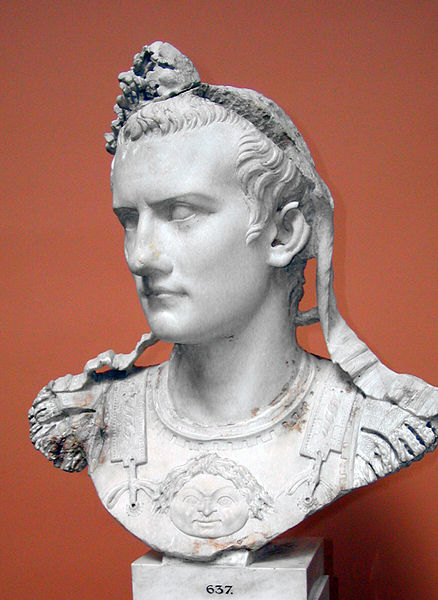
Photo credit: Louis le Grand, Wikimedia Commons

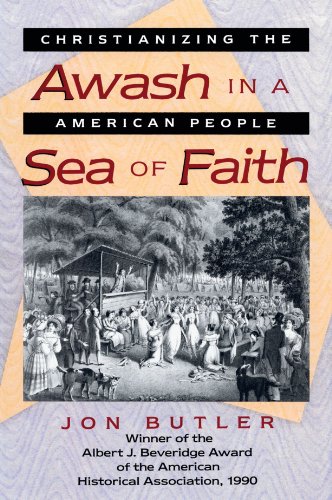
Photo credit: Louis le Grand, Wikimedia Commons

Pope for the Planet

According to The Guardian, Pope Francis is about to weigh in on the faux question of global warming. Faux because there really is no question—we know it is happening. Some high ranking Catholic politicians, no doubt, will not be amused. Apart from the fact that Francis has proven himself a true saint from the moment he got out of the gate—distancing himself from European pontiffs far more interested in church politics than what really matters—he has brought a sensibility borne of knowing how people really live and what is really important. Global warming is real, and the science behind the assertions is unquestioned. Interested parties (such as big oil) have hired their spin doctors to confuse the voting public, casting doubt on one of the few certainties we have. Politicians, whose funding comes from business interests, of course choose what to believe. How anyone can be so shortsighted, or selfish, as to saw off the very branch on which they stand I can’t comprehend. Past popes were too busy trying to keep ladies out of the exclusive gentlemen’s club to worry about those who feel the brunt of global warming.

Photo credit: Chief Yeoman Alphonso Braggs, US-Nav, Wikipedia Commons

Photo credit: Chief Yeoman Alphonso Braggs, US-Navy, Wikipedia Commons

Of course, it will catch up with all of us eventually. I’m not much of a swimmer, and I’m worried. Hurricane Sandy (a superstorm only in the sense that it hit the affluent) showed us just how near sea level Manhattan is. One gets the sense that the fastest growing cities being in Texas is no coincidence. As long as it doesn’t impact me personally, what’s the worry? Some entire island nations stand at threat, but perhaps they should’ve considered that before they moved to an island. Here’s the news flash—all land is island. We need each other, and the lowlands are as important as the highlands.

Organized religions of all kinds have been under fire for years. As science began to explain more and more, religions had to explain their own existence. Many turned internal—not in the spiritual sense, but in the aspect of clarifying the precise points of what makes them right (i.e., different from everyone else). In the United States the small town without five or six different steeples was the exception rather than the rule. Meanwhile, the emissions continued. And continue. At least we know we’re right. At last there is a pontiff who is a realist. A priest who understands that church is all about caring for people—those in the lowlands as well as those in the highlands. Of course, politicians know how to turn off the religion when it gets inconvenient. As long as I get mine, all is right with the world.


Washed Out or Burnt Over?

AwashInASeaOfFaithIs America a Christian nation? The answer to that question will no doubt raise ire in some part of the room. People, speaking mostly without data, will assert yes or no, generally based on opinion and sensibility. It is refreshing, then, to read what an historian uncovers by asking the right questions. Jon Butler’s Awash in a Sea of Faith: Christianizing the American People is a book that asks the right questions. On the surface, yes, colonial America was settled by disgruntled Christians from various religious conflicts in Europe. Actions, however, are notoriously louder than words. Butler examines church attendance patterns and affiliations among these early (and later) settlers and finds that they weren’t nearly so Christian as one might think, listening to the rhetoric. Indeed, for people struggling to survive in a new land, religion might well have been the last thing on their minds most of the time. Throughout the book surprising changes of perspective appear. When clear thinking is railroaded by political agendas the issues often become clouded.

A good example of this is Butler’s exploration of the survival of magic and occult traditions. It is not unusual to hear, anecdotally, that the Enlightenment did away with superstitious thinking. In fact, the data point elsewhere. Not only did Americans bring magic and occult practices with them from overseas, they actually continued to develop them in the New World. At times these beliefs substituted for congregational religion. At others, they subsisted alongside it. There was a “sea of faith” here, but it wasn’t always very orthodox. It wasn’t until fairly late in the history of the country that church attendance could be considered the norm. At the same time, many read back into history that “we’ve always been like this.” Not so.

The “myth of the American Christian past” was born out of wishful, and one suspects, political thinking. The country’s founding by Deists led to a fear of Deism—a fairly new phenomenon that descended from that self-same Enlightenment. Still, America could give birth to Spiritualism and a host of new religions. Perhaps it would be more accurate to think of the United States as fertile soil for religions rather than a Christian country. Certainly, by the numbers, Christians have been in the majority since statistics were kept, but, if the anachronism may be pardoned, the “nones” are not a new phenomenon. They were previously just those to be converted. Through much of history, we’ve been a people who didn’t think too much or too deeply about religion. Only when the issue really became politicized did the past become distorted. We have Dr. Butler to thank for providing a clear view into what history actually reveals.


Campus Crusade

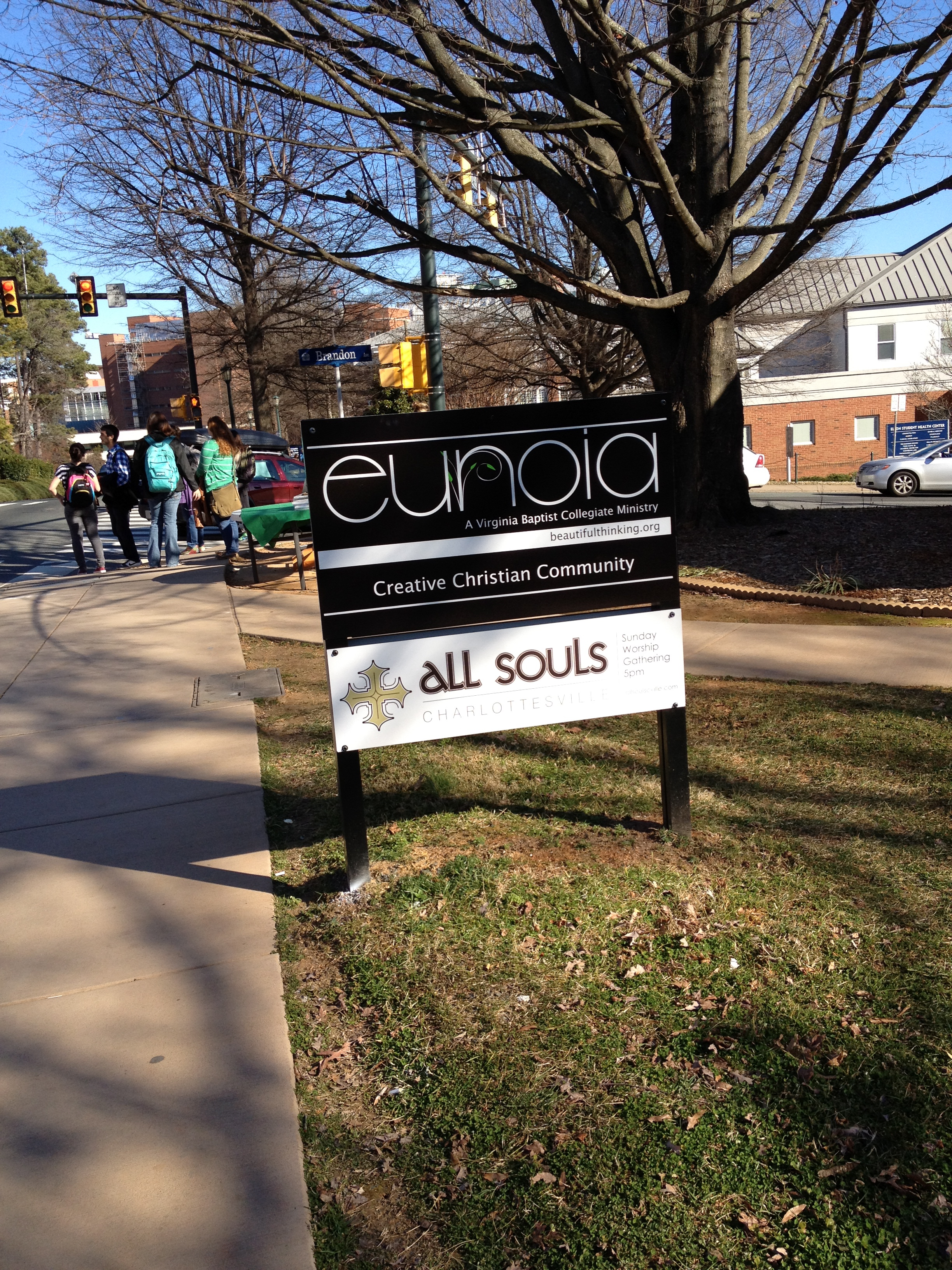
The Chronicle of Higher Education also chronicles the trials and travails of religion in academia. A recent edition of CHE reported on how California State University withdrew official recognition of InterVarsity Christian Fellowship because its leadership is, by definition and constitution, Christian. The organization contested the decision, and, in this thorny situation, I think, rightly. The disestablishment clause cuts both ways. Government can’t establish a religion, but it can’t prevent one either. InterVarsity, although not exactly to my taste, has been a fixture on campuses for decades. It offers alternatives to pong and related forms of diversion without being pushy about faith. Indeed, it does not insist that participants be Christian, and, in my experience, doesn’t try to convert them. It offers a service that is useful for undergrads and has every right to be on campus, as much as the young republicans do. Can an organization be banned for having Christian leadership? How much can we disestablish before we become oppressors?

I recently had a conversation with a college humanist chaplain. There aren’t many of these, but they are beginning to appear on campuses, offering the services traditionally given by religious organizations. Many people don’t know what to make of this. Not all rationalists, humanists, agnostics, and atheists are enemies of spirituality. We can be both spiritual and human. Some would argue that we have no choice in the matter but to be. Some express it as Christianity. Others as a non-doctrinal recognition that being human means wanting to affirm unions and weep at funerals. Maybe it is more than just chemico-electrical signals across gray matter after all. Colleges and universities should be places to explore. Like it or not, without the influence of the church, and before that the synagogue, the concept of higher education likely would never have developed at all.

How much of the baby do we throw out with the bathwater? Evangelicals cost me my first real job. I had, however, grown up among them. Although not in InterVarsity, I did participate in Christian groups in college. I don’t think it damaged my education. How can a person learn to compare when one of the options is displaced? Will Newman House be permitted to stay? Even government officials can’t agree on exactly what it means to have a religion-free government in a religious, if post-Christian, nation. Why antagonize an organization that is only trying to offer a service? Every time I pull up to a gas pump chances are pretty good that I disagree at a pretty visceral level with the ideology behind the company supplying me my fuel. And yet, here I am, running on empty. Ideologies and services, it seems to me, are very different things. Those that don’t cause harm should be the least of our concerns.

IMG_0066


Irrational Revelation System

In an article on Obamacare in last week’s paper, Kathleen O’Brien pointed out an interesting dilemma. Some religions, such as the Anabaptist traditions (Amish, Mennonites) must comply with modern regulations on healthcare or face a fine. Under pressure, the Internal Revenue Service grants exemptions to some such religions, but those religions have to have been established before 1950. Maybe I’m paranoid, but just having read about Scientology, I have to wonder about two things: what is the IRS doing defining religions, and why 1950?

Photo credit: Ad Meskens, Wikimedia Commons

Photo credit: Ad Meskens, Wikimedia Commons

1950. Like the Roman Empire, frustrated with new religions (like Christianity) popping up all over the place, governments sometimes default to a religion’s age as a sign of its validity. Rome required conformity, but Judaism, demonstrably already an ancient religion, was granted an exemption from some of the regulations. We have a tendency to think that if a religion is valid, it must have been discovered/revealed long ago. All religions, however, were new at one time. Even the first shaman offering the first propitiatory gesture to the first recognized nature spirit, was experimenting a little. Did that stop in 1950? That line in the sand must stand for the cutoff date for new religions. Why? Well, you see, it has to do with money.

The IRS, as an organization, doesn’t really care what you believe. As long as it includes paying your taxes. One of the burdens of citizenship, too quickly forgotten, is that life together in a complex society is not possible without incurring considerable costs. Religions have long claimed tax-exempt status under the rubric of disestablishment. If they pay the government, then it is like the government is receiving kickbacks from the Almighty. The biggest donor should get the biggest favors. Soon you have a state church. So it is just easier to let religions be tax exempt. But since nobody has ever adequately defined what a religion is, the doors have been wide open for entrepreneurs in the faith industry. Instead of letting religious experts decide how to define a religion, that has become a government job. I picture a simple, bearded Amish man pulling his buggy up outside the IRS headquarters in a frenetic Washington, DC to go argue his case. Don’t worry, Bruder. Divine revelation, whatever that is, apparently stopped in 1950 and you’re clearly pre-McCarthy era. Suddenly a whole lot of things seem to start making sense.