Late Night

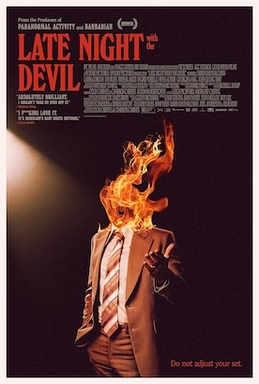
If you lived through the seventies, Late Night with the Devil will take you back a bit.  It’s one of the more creative possession movies I’ve seen, but what really makes it stand out is the insider winks plentifully on offer.  Jack Delroy is a late-night variety show host wanting to top Carson.  His ratings have been up and down, and he decides to make his 1977 Halloween episode his ticket back into the game.  His guests that night include a psychic, a James Randi-like debunker, and a parapsychologist and her demonically possessed charge, Lilly.  A character resembling Anton LaVey, Lilly’s father, had raised her to be a child sacrifice to the demon Abraxas.  The broadcast even mentions Ed and Lorraine Warren, as well as The Exorcist.  Someone knows what the paranormal scene was like in the seventies.

The psychic has authentic contact with what he believes is Delroy’s deceased wife and while the debunker, well, debunks him, the psychic nevertheless dies after a mysterious attack.  Delroy insists that the parapsychologist summon Lilly’s demon, while on stage.  The debunker claims that what the audience saw was a case of group hypnosis, but the demon finally attacks, killing everyone but Delroy and Lilly.  Toward the end the layers of claimed deception become so deep that it’s difficult to know, at first, how to interpret the ending.  Or whether you are supposed to “believe” the climatic demonic attack, of if you’re supposed to conclude that it was part of the mass hypnosis.  What is certain is that religion is front and center in this horror, but the demon ensures that in any case.

The taped pieces between segments of the show make it clear that this is all about ratings.  Indeed, Delroy sacrificed his wife’s health and life to try to break into the lead.  The real demon here is capitalism.  The desire to be on top has outweighed every other and hints are given throughout that Delroy isn’t as innocent as he pretends to be.  Still, the main thing is that the movie gets the paranormal seventies in America just about right.  The disturbing implication is that people are suggestible to the point of not being able to distinguish reality from manipulation.  That pall hangs over the entire movie plot as well as the ending.  This kind of meta critique isn’t intended to detract from what is really quite a good horror movie.  It is believable in the context of the world it devises, and that world includes demons.


Re-Unborn

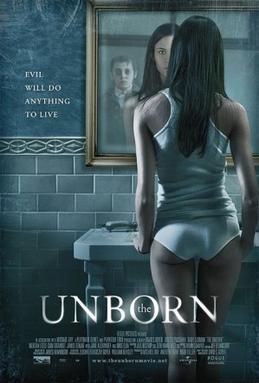
Some months ago I wrote a post about the possession movie The Unborn.  I don’t watch movies to pass the time.  I watch them to learn something.  And many horror movies are fairly smart.  In my blog post on this one I didn’t go into too much analysis because I already knew at that point that I wanted to share my thoughts on the larger venue, Horror Homeroom.  My piece, “Ecumenical Exorcism in The Unborn” has just been posted there.  The fairly small number of regular readers I have know that I post about horror movies with some frequency.  They help me to make sense of things, especially in this insane world where petty dictators keep rising to the top of the political spectrum because, apparently, we hate ourselves so much.  Horror helps prepare you for that.

In any case, The Unborn is a good example of how religion and horror work together.  They cooperate very nicely, in fact.  Religion is pervasive enough in horror that it would be an error to say “religion-based horror” is a sub-genre of the whole.  No, the two go together as naturally as chocolate (vegan, preferably) and peanut butter.  If I had a million dollars I might go back to grad school to explore just this nexus.  (I wouldn’t be looking for a teaching job either, because “fool me once, shame on you; fool me twice…”)  I’m not the only one who knows that there’s something there.  Ironically, before horror films proper were even invented, many churches actively discouraged the movies.  Perhaps they were inherently aware that these represented competition.  And there was already too much competition, what with other denominations and all.  But some films do occupy the same space as religion.  Quite often horror.

If you’re interested in how The Unborn fits into this picture, head on over to Horror Homeroom.  And yes, there is a book-length project in all of this.  It’s one I’ve been chipping away at for years.  That’s because the connection is obviously there, but I haven’t, to my own satisfaction, been able to figure out exactly what it is.  Perhaps I need to add a degree in psychology to my bucket list.  These things meet similar mental needs for a cross-section of people.  I suspect that most horror fans don’t think about it too much, which may be why my blog isn’t exactly jammed with traffic.  That doesn’t mean that the connection’s missing.  There are many things in life yet to be discovered.


Suitable Genre

As I muse over genres, it seems that “low-budget Lovecraftian horror” might be an—ahem—suitable one.  This is perhaps because Lovecraft has trouble being taken seriously as a literary writer and his stories are so easily parodied.  I watched Suitable Flesh unaware that it was a Lovecraftian (low-budget) movie.  I’ve seen quite a few of these over the years and they can be pretty fun.  This one was somewhat enjoyable.  Based on Lovecraft’s “The Thing on the Doorstep,” it’s a body-swapping, possession fest that involves two psychiatrists who have been friends forever but who both become victim of a nameless possessing entity.  It took some adjusting to believe Heather Graham in her lead role here—she doesn’t strike me as the Lovecraftian type.  She does seem to enjoy her role, nevertheless.

Lovecraft famously didn’t write many women.  He was xenophobic and a racist.  He didn’t much enjoy being married.  Modern films (and even novels) based on his works tend to redress this situation, sometimes creating a little disconnect with the white-male Lovecraftian universe.  Still, the story is fun.  Dr. Elizabeth Derby (Graham’s character) encounters a young man whom she supposes is schizophrenic.  In actuality, his body is being taken over by an entity that had possessed his father.  While possessed, the patient begins an affair with Dr. Derby and that leads to her also being a target of possession.  Although not considered a comedy it does seem that part of the story has an inherent humor about it.  Some consider it camp.  Lovecraft’s mood is difficult to translate to film.

Although cinema existed during Lovecraft’s lifespan, his writing wasn’t influenced by the possibility of film conversion.  The monsters are too enormous and the concepts too broad.  The real fear here, apart from the gross-out effects, is that of losing your identity.  The whole centers around a psychiatric ward where the supernatural events aren’t really accepted by the science that reigns.  People end up dying because the supernatural is inadmissible.  In this aspect, it shares some of the overarching concepts of some great horror.  The Exorcist, for example, derives a great deal of its energy from the fact that modern people have great difficulty in accepting that a demon could actually exist and science doesn’t seem to be working.  There are plenty of other examples of this.  Lovecraft’s stories bring us close to this realm, although Lovecraft himself was an atheist.  Maybe that’s one of the reasons his works are difficult to translate to film.  Or maybe something larger is going on.


May I?

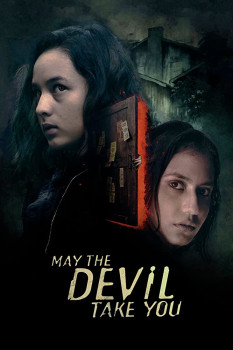
The thing about horror is that it’s an intensely personal preference.  Some people really like a movie while others find it, well, meh.  When the nights begin to lengthen you get lots of curated lists (I’ve never been asked to do any, but I’m working on one anyway) suggesting October viewing.  One such list that a friend sent me appealed to me because it was for movies on Netflix.  Since that’s one of the few streaming services to which I have access, it makes the movies seem free.  This particular list recommended May the Devil Take You, a 2018 movie from Indonesia.  The almost polite title suggests it wasn’t named in English.  In any case, I didn’t really find this one particularly scary and in part that was because of the apparent incongruity of the culture and the monster.  I knew that Indonesia was a highly Muslim majority country, and I know Islam also recognizes the Devil.  Still, Satanism feels kind of out of place here.

The story isn’t terribly deep: a man makes a deal with the Devil, through one of his dark concubines, to become rich, in exchange for the souls of his family.  His wife is the first to go, but he remarries a retired actress who has three children, two young adult.  His only biological child, from his first marriage, Alfie, feels herself estranged.  (It’s unclear to me whether the youngest daughter of the second wife was also biologically his, but it seems so.)  When the father falls into a serious, undiagnosed illness, the children, and actress, all converge on the house where the pact was made.  Of course they open the basement door—locked and with warnings posted—where the Devil’s concubine waits.  The actress becomes possessed and the two older daughters, Alfie and her stepsister, try to fight it off, only to have the stepsister become possessed.  She kills her brother and intends to kill Alfie and her own young sister as well, but the latter two manage to overcome her.

The plot is a bit convoluted but the basic story is maybe too familiar—make a deal with the Devil and all Hell will break loose.  I also wonder if some of the lack of real impact here comes from the subscript translation.  I don’t know how this is done, but I suspect it’s not dissimilar from Google translate.  That may be fine for academic purposes, but it does seem to lead to stilted dialogue among a group of twenty-somethings trying to fight the Devil in Indonesia.  My personal October list is more moody.  Seasonal.  And by no means complete.  The only way to find the movies, it seems, is trial and error via curated lists.