October’s Poetry

October is a beautiful, melancholy time of year.  Edgar Allan Poe died on October 7.  Two years ago today, my mother died.  This was brought home to me forcefully yesterday.  A colleague had invited me to address her class at Princeton Theological Seminary about Weathering the Psalms.  I had vacation days that have to be used up or lost, so I took the day off.  My wife and I drove to Princeton, a town we know well.  When we lived in Somerville, about 15 miles north of there, we’d visit Princeton not infrequently.  I wasn’t really familiar with the seminary grounds, however.  My colleague informed me that her class, on the Princeton Farminary (where a program in ecology and theology is housed) would be meeting in a barn so I should dress appropriately for the weather.  A cold front had come through, so I went for the tweed and turtleneck combo.

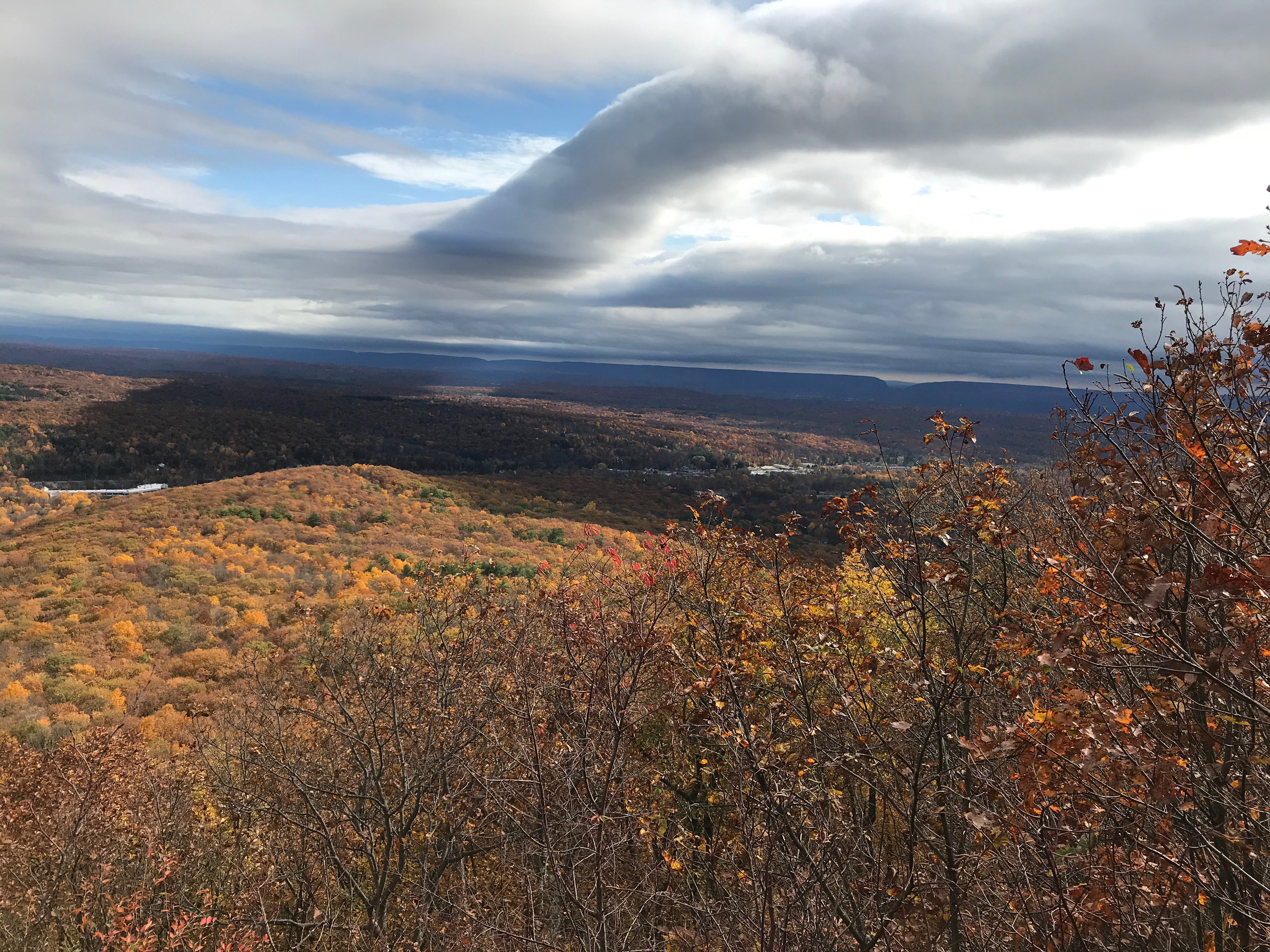
So we set off on a beautiful drive along the Delaware.  The leaves aren’t at peak yet, but there was plenty of fall color as we navigated our way toward Frenchtown, where there is a bridge across the river.  The GPS also told us this was the way to go.  On River Road, still in Pennsylvania, a flagman refused to let us on the bridge, although the signs did not say it was closed.  He impassively waved us on.  The GPS insisted we “return to the route.”  We soon found out why.  The next crossing is seven miles further down, along winding roads with a 25 mph speed limit.  The drive was beautiful, but suddenly I was going to be late for my appointment.  The new route added 45 minutes to the estimated travel time.  After uttering some choice words about unplanned bridge closures on a road where there are only a very few ways to emulate Washington’s crossing, we eventually arrived.

The weather beautiful, if a little chilly, the class decided to meet outdoors.  I hadn’t forgotten how much I love teaching.  It was brought back to me with force.  With the trees reminding us that winter is not far off, and the students eagerly asking questions, I felt at home for the first time in many years.  It was a temporary shelter, I knew, but it was a kind of personal homecoming.  Carefully avoiding the Frenchtown bridge, we drove north, crossing to River Road at Milford.  If the GPS had known that to go forward you sometimes need to go backward, it would’ve sent us to Milford that morning.  We arrived home tired but glowing from a day out of the ordinary.  As I put my tweed away that evening I found a pencil from the the funeral home where I last saw my mother in the pocket.  It had been the last time I’d worn this jacket, two years before.  October is a beautiful, melancholy time of year. 

31 Flavors

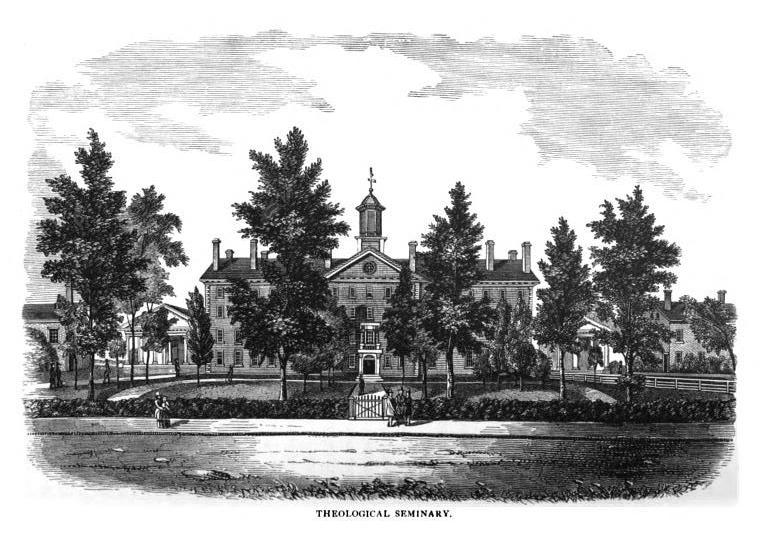
Princeton Theological Seminary, nestled next to its Ivy League sibling university, has never welcomed my advances. Although I’ve long ceased keeping the myriad rejection letters I’ve received over the years and now prefer to throw them in the recycle bin unopened, in my recollection I’ve applied to Princeton Seminary more times than any other school. Given the historic connection between the seminary and my alma mater of Edinburgh University, I often wondered why I never even merited an interview. After all, I live less than 20 miles away and they wouldn’t even have to pay for gas. So it was that I found a recent reference to “Princeton Theology” so interesting. Not every seminary gets to name its own brand of poison.

Princeton_Theological_Seminary

Princeton Theology refers to a movement that helped establish the culture that would give us the dubious gift of Fundamentalism. I have never been a Presbyterian, but I have attended their institutions, and one of the characteristics I’d often noted is that Calvin’s thought, in particular, often left me chilled to the theological bones. Assured of his own place in heaven, his theology seemed designed to keep others out. People, being what they are, naturally want to be on the winning team, especially in the eternity game. Reformed thought, therefore, was often perceived as cold and somewhat unfeeling. Predestination is, after all, determinism. Princeton Theology, beginning in the early nineteenth century, was intended to try to introduce a somewhat cozier evangelicalism to the sternness of Presbyterian theology. You may be condemned to Hell, but there’s no reason you shouldn’t feel good about it. After all, the divine plan trumps human need every time.

The approach of the twentieth century saw an increase in evangelical fervor throughout the United States. The growing number of flavors of Christianity led many to wonder what the true vanilla was. The answer, self-proclaimed, to be sure, was Fundamentalism. If you’ve never attended a gathering of theologians, you might not shudder as much as I do while typing these words, for such a conventicle has enormous power. Indeed, the Niagara Bible Conference was able to do what the Council of Nicaea was not—distill the essence of true Christianity that could be accepted by all believers. Unless, of course, one was raised in a Catholic or Orthodox tradition. Princeton Theological Seminary is not a Fundamentalist institution, but even a well-meaning attempt to make Christianity more palatable might lead to too much vanilla. In a world of 31 flavors, perhaps paradise tastes different to everyone, depending on the formula.


Down Will Come Baby

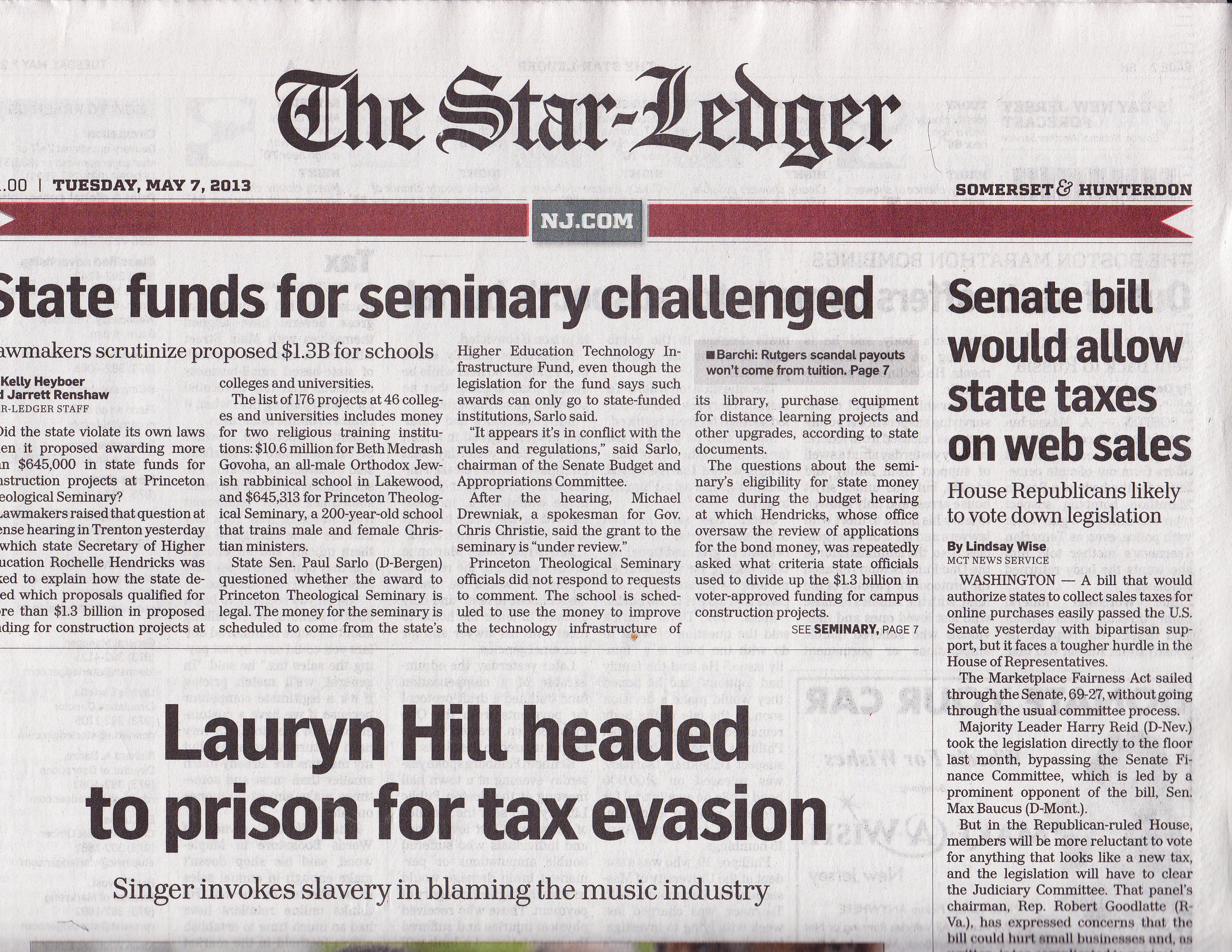
Princeton Theological Seminary is a school with a history. Unofficially allied with my alma mater, Edinburgh University, PTS is one of the powerhouses for supplying educated clergy to the Presbyterian tradition. And others as well, of course. And not a few PhDs into the ranks of the perpetually unemployed. Seminaries do offer all these services. Despite failing to be considered worthy of even an interview in what I count as five separate applications to the school, I still sympathize with its need to update its technology. I suspect that is what is behind its application for a half-million-plus-dollar New Jersey Higher Education Technology Infrastructure Fund grant. Education and technology surely go together as much as old-school loyalty and fairness, do they not? A front-page story in Tuesday’s New Jersey Star-Ledger proclaims the gnat that remains in the camel juice: state funds are being requested by a fully religious organization. The application for these state pork-bellies is also shared by Beth Medrash Govoha, a male-only Jewish seminary in Lakewood. Desperate times in higher education. What would Christie do?

PTS

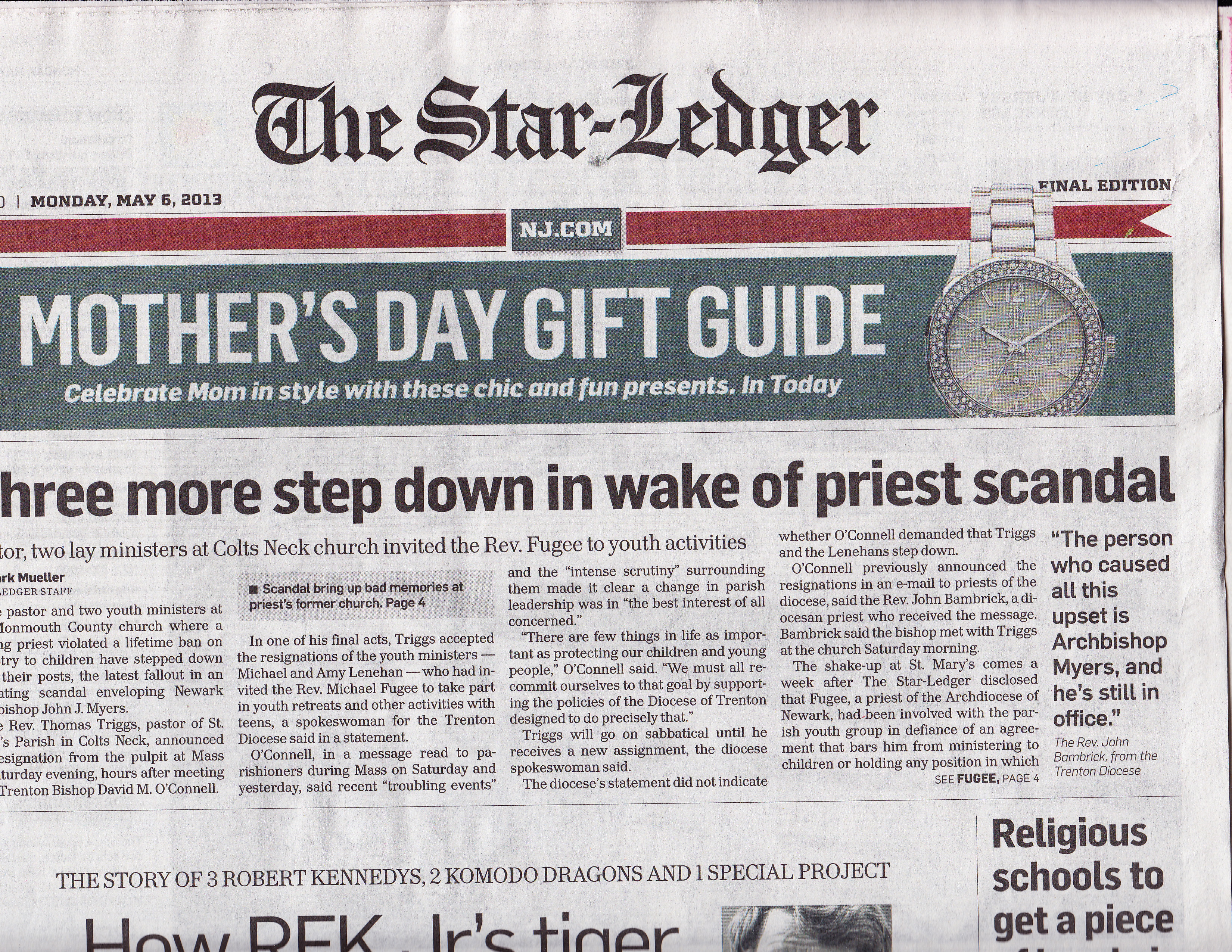
Turning the clock back twenty-four hours, another front page newspaper story places religion squarely in the public face. “Three more step down in wake of priest scandal” hit my bleary eyes on a Monday morning. This is the saga of Fr. Fugee, banned from interactions with children after a molestation case some time back. As seems to be par for this unholy course, such clergy are shifted around rather than defrocked—being seminary fodder myself I can honestly ask, what else would they do? Society has little enough use for those of us who worked our way through seminary for honest means and toward what seemed at the time noble ends. How much more so for those who mask deeply rooted neuroses under the sanctity of ordination?

Fugee_0001

Seeing religious news on the front page of the paper is nearly always cause to shudder. We will occasionally see a new Pope or maybe a genuine act of Christian (or any other religious) charity, but mostly we are served the seedy and sad and downright tawdry. Religion, although in the ascendent, is seeking hard to justify its existence. Or is it just the vaunted liberal media bias showing through? As primates we all like to watch the haughty topple. It’s even in the Bible—Isaiah got a thrill out of tall ships tipping over. Perhaps it is because religion presents itself as the unadulterated good that we like to see it stumble. I always felt a tad uncomfortable reading Goofus and Gallant while waiting for a doctor’s shot or the dentist’s chair. Yes, Goofus screwed up big time once in a while, but that confident little eagle-scout-in-waiting Gallant could do no wrong. I knew who I was supposed to emulate, but life’s just not that simple. Maybe that’s why religion makes the front page. Maybe Gallant is a myth after all.


Faker or Fakir?

An article posted on CNN on Friday, “More teens becoming ‘fake’ Christians,” suggests that many American teenagers aren’t really Christian. Whether that is a bad thing or not I’ll leave up to the reader to determine (Kenda Creasy Dean of Princeton Theological Seminary, cited in the article, has no doubt that it is bad). My concern with the premise and the presentation of Dean’s data is much larger: who has the right to determine what is “authentic” religion? In a world daily faced with the clash of religious views, particularly among passionate believers, most scholars of religion seem to agree that one’s religion is what an adherent claims it to be. There is no way to test the authenticity of a religion empirically. Whose Christianity does Dean mean? That of Jesus? Or of Paul? Or of the Pope? It seems to me that what she suggests is that “true” religion is “passionate” religion.

Religion, however, may extend well beyond belief structures. Religionists recognize many forms of religion that are primarily activity-oriented rather than belief-oriented. Does that mean the adherents of such religions are only half-hearted members of their tradition? Do only passionate believers qualify? Who is it that has the authority to decide what any religion is? If it is seminary instructors, I’d rather face the apocalypse right now. I’ve known far too many of those to trust their judgment on defining authentic religion.

Christianity is perhaps the most fragmented religion in the world, with tens of thousands of different denominations, each declaring itself correct and authentic. What person ever purposefully believes in an incorrect religion? “I know my religion’s wrong, but I think I’ll stick with it…” Who gets to determine which is the real real religion? Passion may not be an adequate measuring stick. The clashes of religious views that leave the highest body counts are between groups equally passionate about their beliefs. In such a world where people need to learn to control their religious passion, it is my hope that mere theological assent might be more than enough in most cases. And only for religions that are belief based.

The only true religion?