The Unholy Trio

Culture has a powerful prophylactic component.  People don’t want to be seen questioning authority and accepted “truths.”  This is especially the case as they grow out of their teenage years and learn to fit in as part of the herd.  Some subjects make this particularly clear because cultural biases deride them, never giving them a fair chance at consideration.  I’ve run into a number of these over the years, but an example will bring these abstractions to clarity.  Recently a commentor sent me to the video “Kaneh Bosm: The Hidden Story of Cannabis in the Old Testament.”  The idea is one I’ve addressed before—that cannabis was used in incense combinations in the biblical world.  Now, I haven’t done research on this, but what becomes clear is that many scholars over the years have dismissed the idea out of hand because, well, it invokes pot.

The reason marijuana—something I’ve never used and have no desire to try personally—has been demonized is one of considerable interest.  This is especially the case since it appears to have been widely used in antiquity.  No respectable biblical scholar, however, would be caught suggesting that it might have been incorporated in the rites of ancient Israel.  The modern stigma of cannabis, in other words, discounts the possibilities that in ancient times it was used in sacred contexts.  The “war on drugs” in the United States was largely led by religious conviction.  The heirs of Christian prohibition.  Sure, some drugs can lead to real problems.  The deeper issue, however, is that society’s structure leads people to the place where drugs seem to be the only answer.  The civilized response?  Make them illegal.
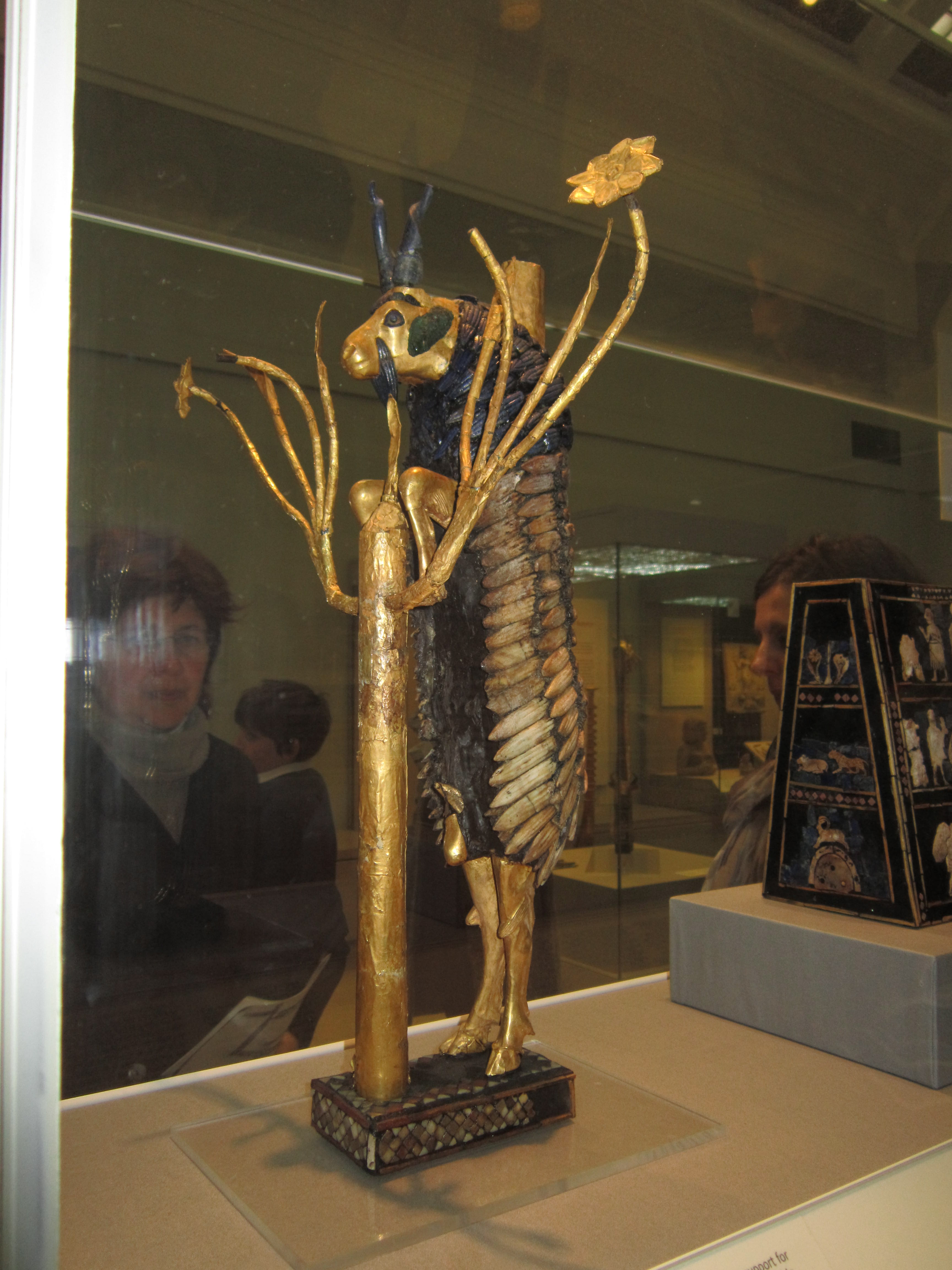
That mark against controlled substances colors our view of history.  If such things are illegal now then they must never have been used.  Chemical analysis of various utensils (what might be called “paraphernalia” today, indicates that ancients knew of and used cannabis.  Our ordered view of ancient Israel as receiving the one true and utterly sacred faith preclude the possibility that our demonized substance could’ve been used in ancient times.  I’ve noticed this with the other topic of the documentary—Asherah.  Conservative scholarship still denies that ancients might’ve thought Yahweh had a spouse.  (My own work does not deny this, but simply questions the nature of the evidence; I think it is likely people believed Yahweh had a consort.)  So we once again collide with a “no go” topic.  So, after we admit the possibility of drugs and sex, so the thinking goes, what we we find next—ancient rock-n-roll? 
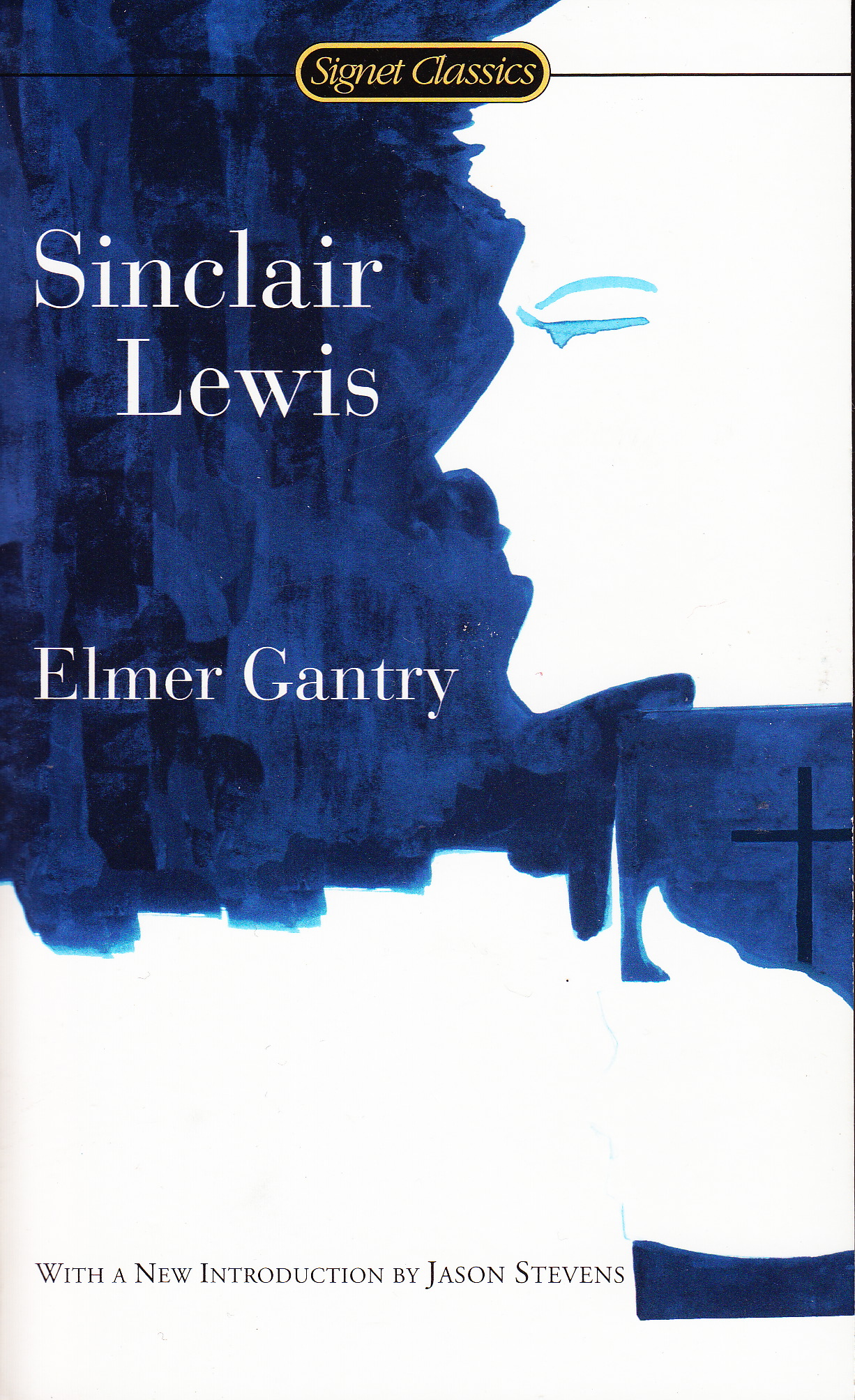

Elmer Gantry

ElmerGantryIn recent years a renewed interest has arisen concerning how powerful entities are perceived by others. Academics are asking how the United States is seen by other nations. Corporations are trying to improve their public images because, well, let’s face it, it effects the bottom line. The same thing applies, but with a difficult kind of finessing, to churches. Part of the difficulty is that churches declare that they have the truth. Backing down from this in the face of public opinion more or less scuttles any claims being made. Thus I’d been curious about Elmer Gantry for some time. Sinclair Lewis’s novel of the self-absorbed, arrogant clergyman who believes in no god other than his own desires, is considered a modern classic. Written during the height of the follies of the Scopes Monkey Trial and Prohibition, as the Fundamentalist movement was just getting started, Lewis used dark satire to try to put the self-righteous in their place. I’d known the name Elmer Gantry from many other media references, so I figured it was time to see who he was.

Going into the novel I had few preconceived notions. Gantry, I knew, would be a hypocrite from the start, but beyond that, cultural references don’t give many hints. Although Lewis’s well-known wit shines through from time to time, on a whole the novel is a distressing read. I suppose it’s the mark of a great writer that you can despise a character so, but really, Elmer is led on his path, indeed, encouraged, by those who know him and whose only zeal is conversion for conversion’s sake. A womanizing, athletic, hard-drinking student, Gantry is where many young men want to be. The campus ministries, however, keep after him until he realizes what all clergy know at some level—there is power in being able to manipulate people by religion. As portrayed by Lewis, Gantry does try, once or twice, really to believe. His cynical and selfish nature, however, are too difficult for him to overcome and he therefore employs them in all his relationships as he climbs the corporate, ecclesiastical ladder.

There is really no triumphalism here, with the society discovering and ousting the charlatan. Indeed, as the book ends, the Reverend Doctor Elmer Gantry dodges a serious threat to his career only to be appointed to one of the most influential churches in New York, poised to go on to even greater things. Trying to find the blame in the novel, however, is not a simple task. Gantry is all too easily led. He follows his base desires deftly and confidently. He knows a mark when he sees one. Throughout his ministerial life, however, he is encouraged and prodded onward to success. Most ministers, in my experience, are burdened with conscience. I’m sure a few slip through with their own agendas, but the working clergy are nothing like the protagonist to this tale. Lewis focuses on the worst offenders. Those who are in it for the power, should they read Elmer Gantry, would find a model who is, like many in the era of early psychology and sociology, too easily excused because of circumstance. More than that, however, they might learn how they look to a larger society for which the church has become a mere historical curiosity. Elmer Gantry is by no means the worst type of figure we can imagine in a secular society.


Moosechief

The moose, depending upon which standard you use, is either the largest or second largest known land animal in North America. This aspect of the moose, as well as its general docility, has often spurred me to the northwoods in search of the elusive beast. Those of us with few tracking skills, however, often must be approached by the greater party rather than finding it. My trips to Maine have seldom yielded moose, but in my periodic forays to Idaho the creature sometimes makes an appearance. This past summer I spotted two of them in the west. In their ungainly way they are beautiful animals. Large they may be, but intelligence is not a necessary corollary to size.

Moosing around.

From about the 1840s, up to its formal passing into law in 1919, prohibition ranked high in the list of evangelical Christian concerns. A distinctly Protestant issue—Catholics still recognized that any tipple good enough for Jesus was good enough for them—the outlawing of alcohol was understood to be in keeping with the Gospels. Some groups even suggested that Jesus had been quaffing Welch’s, or the first century equivalent thereof, rather than Mogen David (the shield of David, after all). Latest research seems to indicate that fermentation was known before the Sumerians ever appeared, and we all know what happens when cavemen have too much to drink. Strangely, this became a religious issue along about the time Fundamentalism began to appear. But Fundamentalists considered neither the practices of Jesus nor the moose.

A story in today’s New Jersey Star-Ledger concerns a moose in Sweden. Known for their liberal social values, the inhabitants of Sweden are often presented as champions of free lifestyles. A moose near Gothenburg apparently had trouble steering herself after eating several fermented apples that had fallen from a tree. The inebriated moose lodged herself in a tree fork. The rescue involved bringing a crane to the scene to release the trapped, and slightly disorderly, animal. Such a story makes me wonder if prohibition should not be among the laws of the jungle. After all, the observation of nature often calls the certitude of many religious doctrines into question. If God prohibits alcohol, we might rightly wonder, why are there moose in Sweden sleeping off a hangover?