Proofing Yourself

Some publishers give you advance warning.  Many do not.  As a struggling writer, after I submit one manuscript I move on to the next project, knowing proofs will eventually come.  The thing is, I’m obsessive.  When I’m in the middle of a project I can think of little else, thoughts of it leaking into other activities throughout the day.  I’m in the middle of one such project, as I have been for at least three months now.  Then the proofs came.  If you write books you know that proofs always come with deadlines.  You need to drop everything and prioritize them.  I read many academic books with tons of errors, and I think I know why.  If proofs come at an inopportune time, you read them as other required activities (I’m looking at you, 9-2-5) permit.  For me, it’s difficult to let go of my present project.  My current fascination.
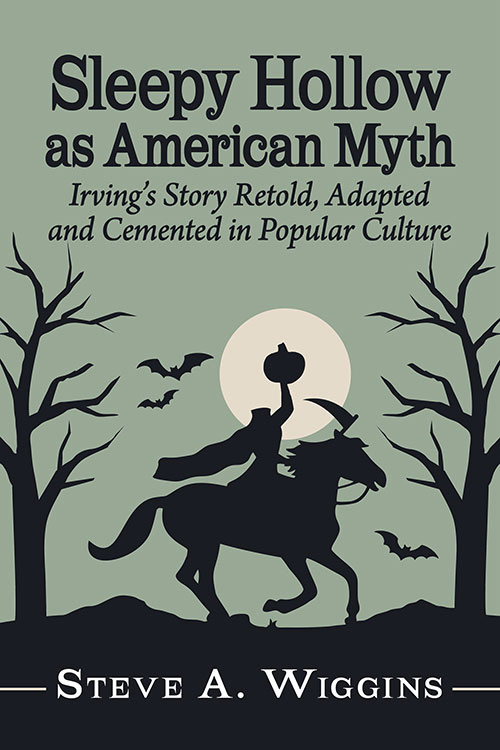
The proofs for Sleepy Hollow as American Myth arrived yesterday.  I’m excited for this book.  I have hopes of reaching out to local magazines and pitching stories about the Legend this autumn.  But I’m red hot into a new project.  My mind is of an age where there’s no guarantee that I’ll remember precisely what I was thinking if I lay aside my present project for a week to read the proofs.  Indeed, the last two weekends have been so busy with other things that I haven’t had time to watch any horror movies at all.  Just yesterday I awoke at 4 a.m. feeling hopelessly behind already, a feeling that lasted all day.  Then at 4 p.m. the proofs arrived. ( For context, 4 a.m. is late for me.  I’ve been waking up later due to that pointless ritual of annual time changes which, like everything else, the government can’t seem to get right.  In any case, proofs trump all.)

My time is extremely regimented.  I had to drop all committee work at our local faith community because the meetings were all in the evening, scheduled for after when I’d normally be asleep.  I wake early to write and read before the snowplow of the 9-2-5 throws me off the road for another day.  Everyone who talks to me feels that they don’t have time for what’s important any more.  The proofs are here and I’ll get them back by the deadline.  I’ve never been late once told when they have to be in.  My accountant tells me that anything that leads to royalties, no matter how small, counts as a second job.  I hope this one sells well enough to make it feel like that.  In the meantime, please don’t come knocking because I’ll pretend I’m not at home.

More Proof

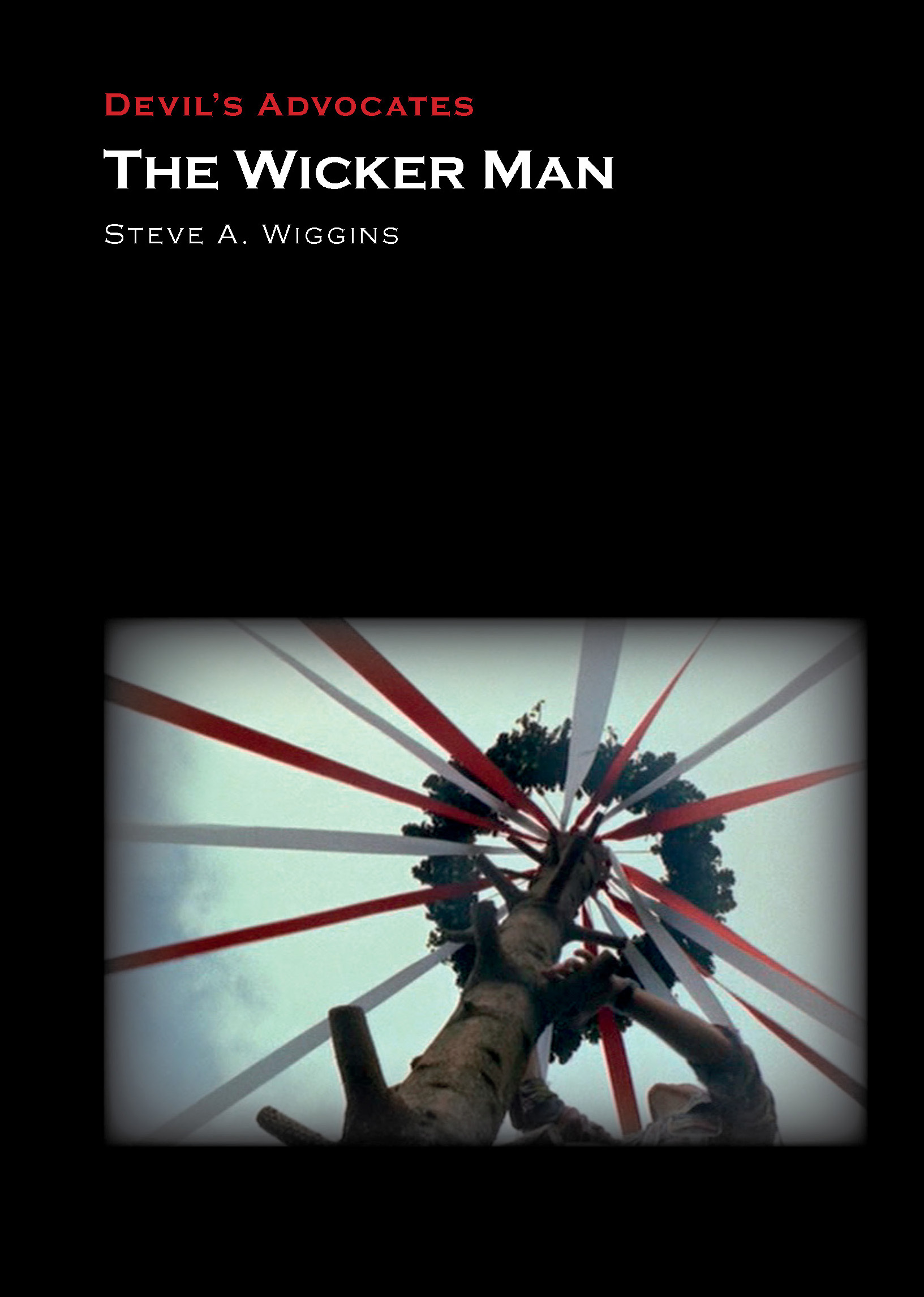
They’re here!  The second proofs for The Wicker Man have arrived.  Nothing makes you feel like a book will actually happen than seeing the stages unfold.  In the meantime I’ve begun seeking an agent for the next book.  This is always a tricky process—work a ton on a pitch, send it, and try to forget about it because most agents simply won’t respond.  If they do it won’t be for a month or two.  And even then they may not like what you’ve written.  It’s a weird system.  Meanwhile at least I’ve got proofs to read.  Proofreading is stressful enough.  I’ve read my new book proposal lots of times.  It was only after I’d sent it to a couple of agents that I found the typos.  You are your own worst editor.  Even if you’re an editor.

Still, you feel like proofs arriving should be occasion for a day off work.  Like your boss would say, “That’s quite an accomplishment!  Why don’t you take a day off to get started with it?”  I live in a fantasy world, I guess.  The proofs arrive with their shot of adrenaline and then you’ve got to read other people’s ideas for less interesting books (or so it seems).  Maybe this is why not so many editors write any more.  It’s exhausting.  Of course, I’m writing this post instead of reading the proofs.  Every diet should have some variety, even the literary kind.

I’m not a fussy author.  Some turns of phrase I will fight over, but I know copyeditors mean well.  I’ve done some copyediting myself, and I meant well.  Authors are people who are in for the long haul.  From the time you start working on a book (and if finding an agent is part of the process, you need to add several more months) to completion is generally measured in years.  It’s not unusual to get no pay at all for this work.  As Ivan Klima wrote: “A truly literary work comes into being as its creator’s cry of protest against the forgetting that looms over him, over his predecessors and his contemporaries alike, and over his time, and the language he speaks.  A literary work is something that defies death.”  If you can forgive the sexist language, there’s a great deal of truth there.  And part of that process is the effort to locate an agent who shares your vision.  And, of course, getting proofs back to the publisher on time.


Large Projects

Now, where was I?  I suspect it’s the same with you.  We’ve got so many things going that it’s difficult to keep up with them all.  When one big project comes along—say reading book proofs for a deadline—everything else gets displaced.  After a week of intense concentration you emerge from a daze and try to remember where you left off with other projects.  What was so dreadfully important before the large project began?  I’m used to deadlines at work, but there aren’t too many in my personal life.  I have goals and targets, to be sure, but due dates slip and slide with the slings and arrows.  When the big project’s done there’s relief, but also a kind of reboot that has to take place.  I’m afraid to look at the news.

The corrected proofs of Nightmares with the Bible have been submitted, along with the index, and now all I can do on that front is wait.  Which of my many other projects, neglected for an entire week, should I take up now?  Part of the difficulty is knowing whether to work on fiction or non.  Given my work-life commitments, fiction is easier.  I enjoy writing it, but I have trouble getting published.  Nonfiction, on the other hand, is simpler to get published but brings in very little remuneration.  I know as an editor that we distinguish between academics (who already have a good paying job) and, say, journalists, who write nonfiction trying to earn a living.  What about an editor who isn’t paid like an academic, but has a regular job nevertheless?  (When talking to an independent, nonfiction publisher a few years back, I heard him respond to the question of if he was non-profit with, “Well, that’s not how I intended it…”)

I have two nonfiction books well along at this point.  I also have several fiction projects, including an eighth novel and a short story collection.  I also have some essays underway for sites beyond my own blog.  A week seems like a long time to put all these things aside and then to pick them up again.  That week wasn’t vacation either.  Nor did it suggest topics for me to address on my blog because if you want to know about Nightmares with the Bible you’ll read the book.  The evening I finished the proofs I had a dream that seemed to stretch through the entire night that I had come up with a complete college curriculum all by myself.  As much as my weary mind wanted to go on to other things it was fixated at that stage.  I awoke to wonder where I’d left off on real life projects, none of which are very near the finish line.  Now, where was I? 


Fearing Errata

Well before I became an editor, I noted mistakes in books.  I go through phases of marking up books as I read them—in pencil only, please!—and not doing so, but I used to mark mistakes when I found them.  At that point I hadn’t realized the complexity of the process of book production and I had no idea of the many ways in which errors might creep in.  I’m a bit more forgiving now.  In any case, errors are a regular part of book publishing.  Older books used to carry pages with incantational-sounding titles like “errata” and “addenda et corrigenda.”  Errors, in other words, were considered inevitable because every time you have another set of eyes look over the manuscript it adds to both the costs and time for the production schedule.  Then I started writing books.

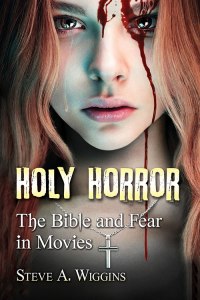
Now, before I get too far I should explain that many book editors don’t line edit submissions.  The standard “editor” is an acquisitions editor, which means you sign up books for your press, but you don’t necessarily (if ever) actually edit them.  I still have the sensibilities of a copyeditor, however.  That’s the main reason I fear to read my own books after they’re published.  I’m afraid I’ll find mistakes.  I do take the proofreading stage seriously, but often a writer has little control over when proofs arrive with a tight turnaround time.  You have to drop everything to get them returned by the deadline.  I’m always worried that errors might’ve crept in.  For example, with Holy Horror, I corrected with website copy for the book.  The errors, however, remain online.  They’re minor, but as the author you’re always considered culpable for such oversights.

Now that I’m working on a presentation to give for Holy Horror, I find myself facing my fears.  I need to go back to a book already published and look inside.  Since writing it I’ve completed another book, Nightmares with the Bible, and my mind can’t help mixing up a little in which book I said what.  To make sure I don’t tell potential readers the wrong information, I need to go back and reread parts of my own work.  What if I find errors?  Will I have to mark up my own copies like I used to do to those of others?  Will I need to compile an errata sheet?  I tend to be a careful reader, especially with proofs.  But facing possible errors is nevertheless a terrifying prospect, even if it’s a regular hazard for those who attempt to write books.


Proof in the Pudding

Writers anticipate and dread proofs.  After several months of delay, I have received the proofs for Holy Horror—it should be out in the next couple of months for both of you who’ve asked about it.  Anticipation is pretty straightforward, but why the dread?  Those of us who write books have to deal with the fact that publishing is, by nature, a slow business.  What I’m proofreading now is material that I wrote a couple of years ago; the final manuscript was submitted back in January.  The internet has accelerated the pace of everything, and now that I have a daily record of my public thoughts on this blog, I can see how my own outlook has changed in that time.  Reading proofs reminds you of whence you came, not where you are.

I suspect that has something to do with the internet and instant access to information.  I also suspect that’s why many of us trust books more than the “open web.”  The oak that has taken centuries to grow is a hardy tree.  The handcrafted piece of furniture lasts longer than the mass produced.  Books, hopefully, stand the test of time.  Writing is an exercise in building eternity.  These thoughts, the author hopes, will be around for some time to come.  As long as libraries endure.   Looking at the proofs, there’s pressure to get things right.  Was I correct in what I wrote down so long ago?  Since then I’ve read dozens of books more.  I’ve even written the draft of another book myself.  I face the proofs and shudder.

Part of my angst, I suppose, is that Holy Horror will likely sell better than my previous two books.  It may actually get read.  No, it won’t be any kind of best-seller, but perhaps a few hundred people will read it.  That’s a lot of pressure for those of us who’ve primarily written for other academics.  Perhaps this fear is the reason I’ve moved to writing about horror films.  Those of us blocked from the academy have to build our own credibility, one book at a time.  Reading the proofs, although already dated, I find myself liking this book.  It was fun to write, and it has a good message, I think.  Even prestige presses know that books about horror films are of popular interest.  As I read through where my mind was in days stretching back before the nightmare of Trump, I see that I had only just started on this path.  Before me are the proofs of that.