
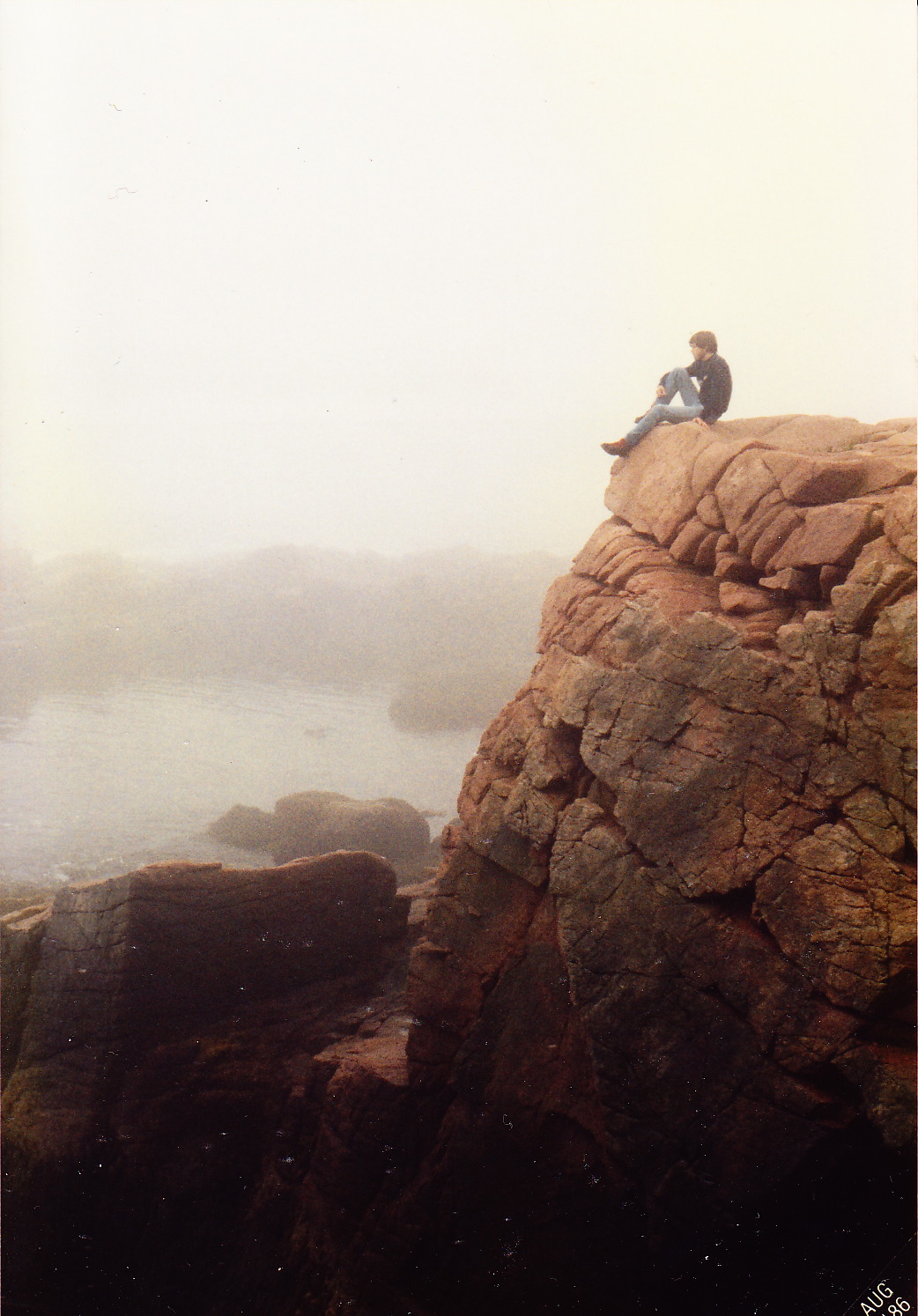
 Early in my teaching career, I used to arrive in Milwaukee on a train after midnight. A student from Nashotah House on work-study would pick me up at the train station and drive me the thirty miles to the seminary so that I could teach the next morning. Along the way, depending on the student, conversation ensued. One time I asked the driver why he was interested in what seemed to me an arcane topic (and that’s saying something!). He replied, “Who can ever say why they’re interested in something?” There was some deep wisdom there, I realized. Can any of us say why we’re interested in what we are? I, for example, don’t know why I’m interested in life on the sea. And in the sea. I fell in love with the idea of living on the coast when I was a landlocked child. The ocean came to me only in books, and I never actually saw an ocean until I went to graduate school. The experience confirmed for me that this was where my heart lies. The salt air, the gray waves, the constant call of the pounding surf. Moby Dick immediately became a kind of personal scripture when I first read it. A life near the sea felt right.
I could never really answer the question why. I don’t swim, and besides, the ocean currents I have experienced are really too strong for the placid kind of swimming a lake or pool seems to offer. I don’t own a boat, and I’m a poor pilot when asked to drive one. I’ve been out over the ocean on commercial boats only a couple of times. Still, the imagination is fired by the idea of the ocean. Especially the stormy north Atlantic. As a child Rachel Carson’s The Sea Around Us was one of my favorite books. Just staring at the cover could transport me to places I’d never seen. When landlocked in Wisconsin for several years, I turned to the Great Lakes for consolation. “Those who go down to the sea in ships” Psalm 107 declares, “Who do business on great waters; They have seen the works of the Lord.” Even so those who dream of the sea.
Ironically, for the Psalm, the Israelites were not a seafaring nation. Good harbors are rare on the coast of ancient Israel, and the maritime trade of antiquity was dominated by the neighbors to the north, the Phoenicians. Still, even the psalmist could dream of the sea. It has been said by various commentators, that the sea represents sexuality, or transcendence, or both. It is larger than we are. Indeed, the earth is by far mostly water as opposed to dry land. Life, even according to Genesis, first began in the waters. So I find myself in the midst of winter thinking about the ocean. It has been a long while since I’ve indulged in a day on the coast, even though I’m pretty much daily in a city on the sea. But I can’t experience the ocean so well with so many people around. Besides, there’s work to do. In those moments when my time is my own, however, I still dream of the ocean and the endless possibilities it represents.
 Steve A. Wiggins