Eye in the Sky

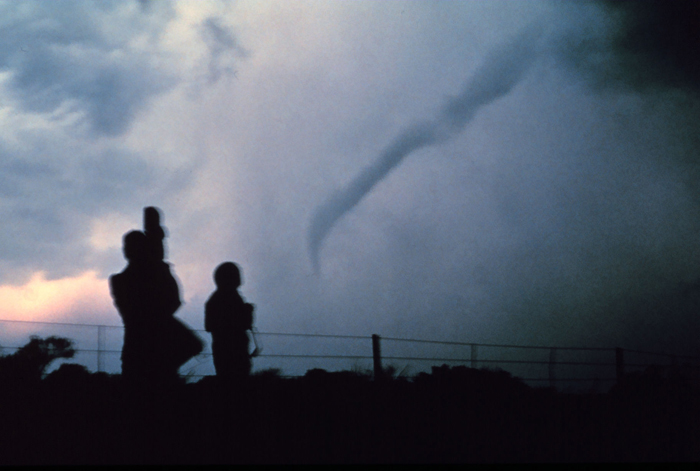
No one is safe. The calamitous tornadoes that have been devastating the south are indeed tragic. Some years ago while working on my weather in the Psalms book, I experienced a brooding fascination with tornadoes. Since I was living in Wisconsin at the time, this was natural enough, but the facet that always gleamed the darkest was the arbitrariness of it all. Tornadoes are notorious for destroying one building while leaving the one next door unharmed in a rapture-like abandon. And there are those who claim the righteous survive while others soberly state the good die young. The fact is life always ends in death, and if tornadoes don’t get you, earthquakes, comets, or microbes will. Our religions help us cope with the fact that consciousness leads to a sense of victimization—things are always after us. Religions teach us that something (God, spirits, Tao, karma) will balance it out. We so hate to see the bad guys win.

Tornadic devastation does have the divine edge, however. Apart from the randomness are the celestial origin, the sharp distinction between those reaped and those sown, and, of course, the angry brow of the frowning wall cloud. What is purely a natural event feels like punishment from our species-specific view. And who doles out the punishment if not a parent stronger than the cowering children? Does religion reassure in this case? The one who is begged for comfort is the same one who sent the storm. As humans the best we can do is help those who are within reach.

The photos emerging from Joplin, Missouri are heart-rending. The more we build the more we stand to lose. Long before European settlers laid claims to this land, cool, dry air masses tumbling over the Rocky Mountains collided violently with warm, moist air flowing in from the Gulf of Mexico. For as long as prevailing weather patterns have been established, there have been tornadoes. Believing in God’s protection and blessing we build on dangerous fault lines, in drought-stricken plains, and in the shadows of biding volcanoes. Disasters are a matter of perspective, for they are as natural as the air we breathe. Perspective transforms them to divine chastening and us into helpless children.
Coming for you?
The Triumph of Baal

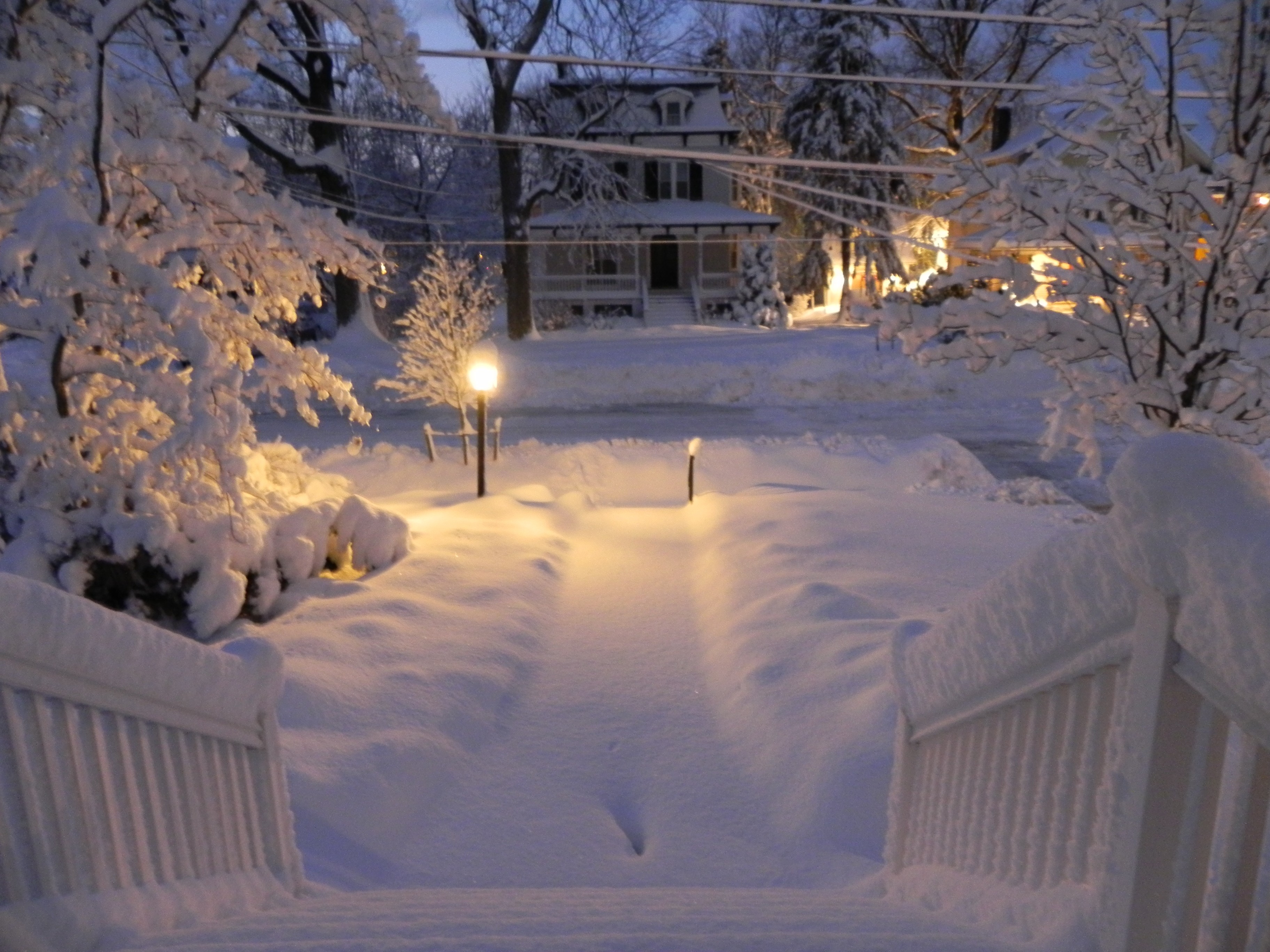
“Snow weariness” is no strange phenomenon even to those of us who were reared in the legendary snow belt of Lake Erie. Although Buffalo consistently topped our records, months of deep snow burying all the familiar features of our landscape in northwestern Pennsylvania were regular expectations of winter. Snow weariness generally settled in around March when we longed for green pastures and unstill waters. As an adult in generally snow-deprived New Jersey, the weariness sets in much quicker. Attempting to drive on highways with sneophytes is a challenge; before I had my license I had driven in plenty of snow, otherwise I’d have had to hibernate from December through April of each year. Digging out from New Jersey’s third major snow-plop of January, however, the magic seems to have vanished.

Baal was a god who controlled the weather. Some years back I finished a book (still unpublished) on weather terminology in the Psalms. Many psalms are notable for containing archaic imagery and phrasing, leading some scholars to suggest they might have been new, revised “Canaanite” versions of songs originally dedicated to Baal. Perhaps so. The Psalms frequently note the wonder of weather, even occasionally of the snow. Psalm 147 contains the lines:

16 The one giving snow like the wool,
he scatters hoarfrost like the ashes,
17 throwing his rime like crumbs,
before his cold who will stand?

Originally a paean to Baal? Who knows? It’s just that we’re all shivering down here. And Israelites didn’t have to shovel a path to their cars to turn over reluctant engines to get a modicum of warm air circulating before they actually arrived at work.

Once Israel’s monotheism set in, Yahweh took control of the weather, thank you. Even a glance at the Psalms demonstrates the superiority of Israel’s divine weather-maker. From the view down here, however, it looks like maybe Baal has a few tricks still to play. Would Yahweh ever cause a Bible class to be cancelled because of inclement weather?

Dawn in the new snow Baal


Weather the Psalms

Among the academic detritus cluttering my desktop is a book I wrote while employed at Nashotah House. Not being a native Midwesterner and finding myself where severe thunderstorms are a blasé fact of life for much of the year, I was captivated by and terrified of the weather. At the same time, daily recitation of the Psalms was a major part of our required, twice daily worship. With the thunder louder than I could ever imagine it outside, we’d calmly read the Psalms, at our stately pace, confident that he who rides upon the clouds could protect us, his humble servants. After many years of recitatio continua I noticed the plenitudinous mentions of the weather in the Psalms. After a painstaking five years of reading and rereading the entire Psalter, I had translated every verse with a weather reference and had written commentary on them.

Publishers showed no interest, this despite the enormous success of Sebastian Junger’s The Perfect Storm, and Erik Larson’s Isaac’s Storm (both of which I eagerly read) and the recent release of Twister. One publisher deigned to make comments as to the great problems of my thesis, so I sat down to revise this behemoth of a book. The very day I was called into the Dean’s office and fired was the last time I looked at the material. I had been revising the book that very morning. The one sad aspect of this entire episode is that every colleague to whom I mentioned the book was excited to read it when it came out. There was a real interest, but no publisher willing to take on the project, this side of vanity publishing.

Some days I think I may go back to that dead beast of a project and try to resurrect it. My academic publishing has slowed to a tortoisene pace without full-time institution support or interest (independent scholars are not worth investing in, I have learned), especially under the weight of teaching nearly a dozen classes a year. Nevertheless, the idea seems sound to me. I keep a weather-eye on the academic horizon and I have yet to spot a book like mine anywhere within the publication catalogues. Considering the importance of storm gods in the ancient world, perhaps we’ve simply moved beyond this interest, tucked away in our interior settings. Nevertheless, when a rare thunderstorm comes to New Jersey, I still remember the majesty of the weather and a forgotten book on the Psalms.

Even the NWS recognizes Noah


In the Morning

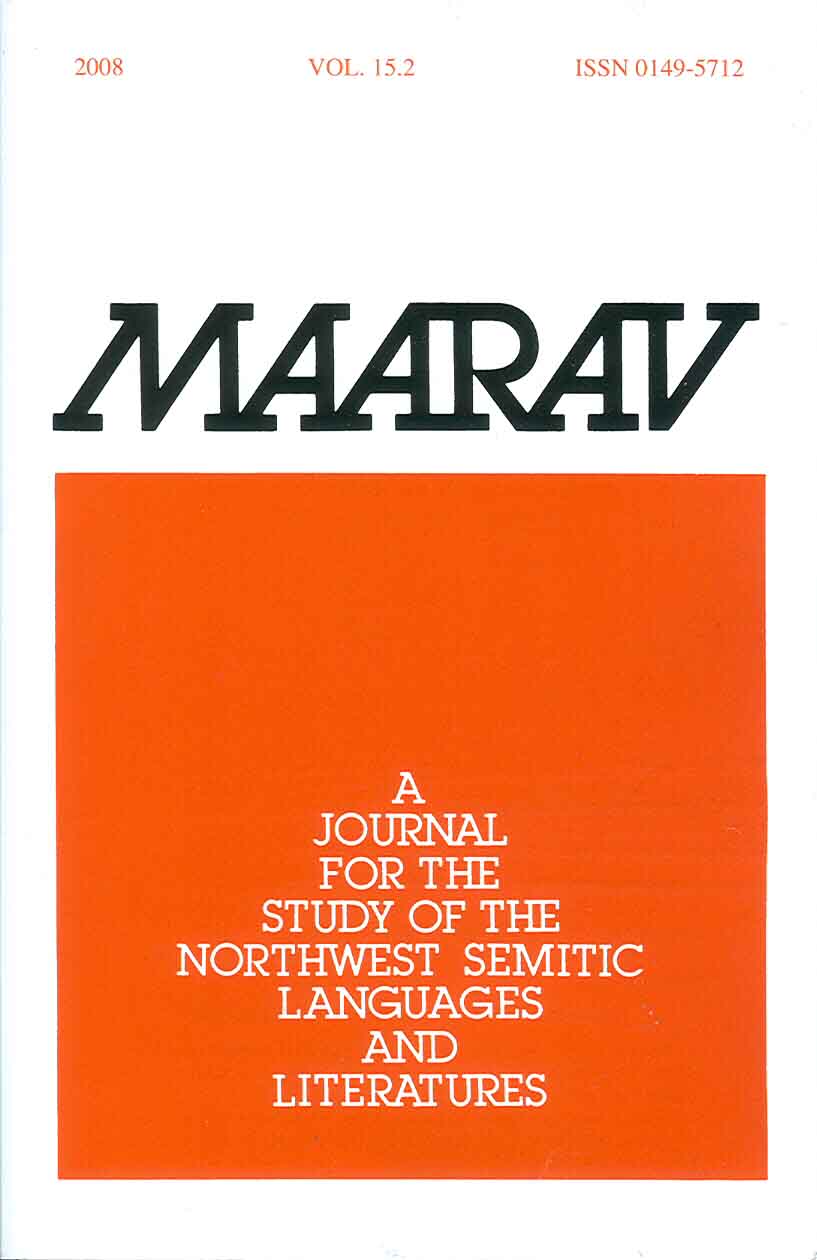
The arrival of the most recent issue of MAARAV (15.2) was a poignant blend of joy and melancholy. Joy in that my article about the odd Hebrew word galgal was finally published, and melancholy in that this will likely be my last academic article. I began publishing academic pieces back in the early 90’s and kept a steady stream going until being abruptly dismissed from Nashotah House. Research requires a regular, steady employment situation with access to obscure materials and a somewhat predictable teaching load. Since being cast into the outer darkness of the adjuncts’ world, well, it’s awfully dim out here to try to devote the scant free time to in-depth study. Such is the world of academics.

This article was a spin-off of a much larger project – a book that was completely written and rejected by a noteworthy publisher and lies dormant on a hard-drive somewhere – on the weather terminology in the Psalms. Several publishers expressed minimal interest, and this article was an effort to demonstrate how weather language has been sublimated due to faulty methodology. The unusual word galgal likely derives from a root with connotations of circularity. Nineteenth-century travelers in the Levant associated the word with tumbleweeds, and this association has stuck ever since. In my article I sort through the lexical information seeking some kind of consensus in the West Semitic language family for a more solid understanding of this troublesome lexeme. To the unbiased observer, the earlier favored translation of “whirlwind” still holds a considerable amount of evidence.

This particular paper holds an enduring place in my memory. I first read it at the Society of Biblical Literature Annual Meeting in 2001 in Denver. Well, I started to read it. The morning of my paper I’d visited the Denver Museum of Nature and Science to see the famed dinosaur and mineral exhibits. While in the museum I became violently ill and had to take a taxi back to my hotel. When I tried to read the fated paper that afternoon, nausea swept over me and I couldn’t finish it. Somehow, returning to a project that had made me physically ill held little appeal, no matter what its academic merits. The paper sat, forgotten, until I thought to submit it to MAARAV a couple years back. Now it awaits the criticism of others while I move on to other things. I do hope that this humble contribution to Hebrew lexicography might be taken seriously since like Denver’s dinosaurs, it is the last of its kind.


A Walk Around the Watchtower

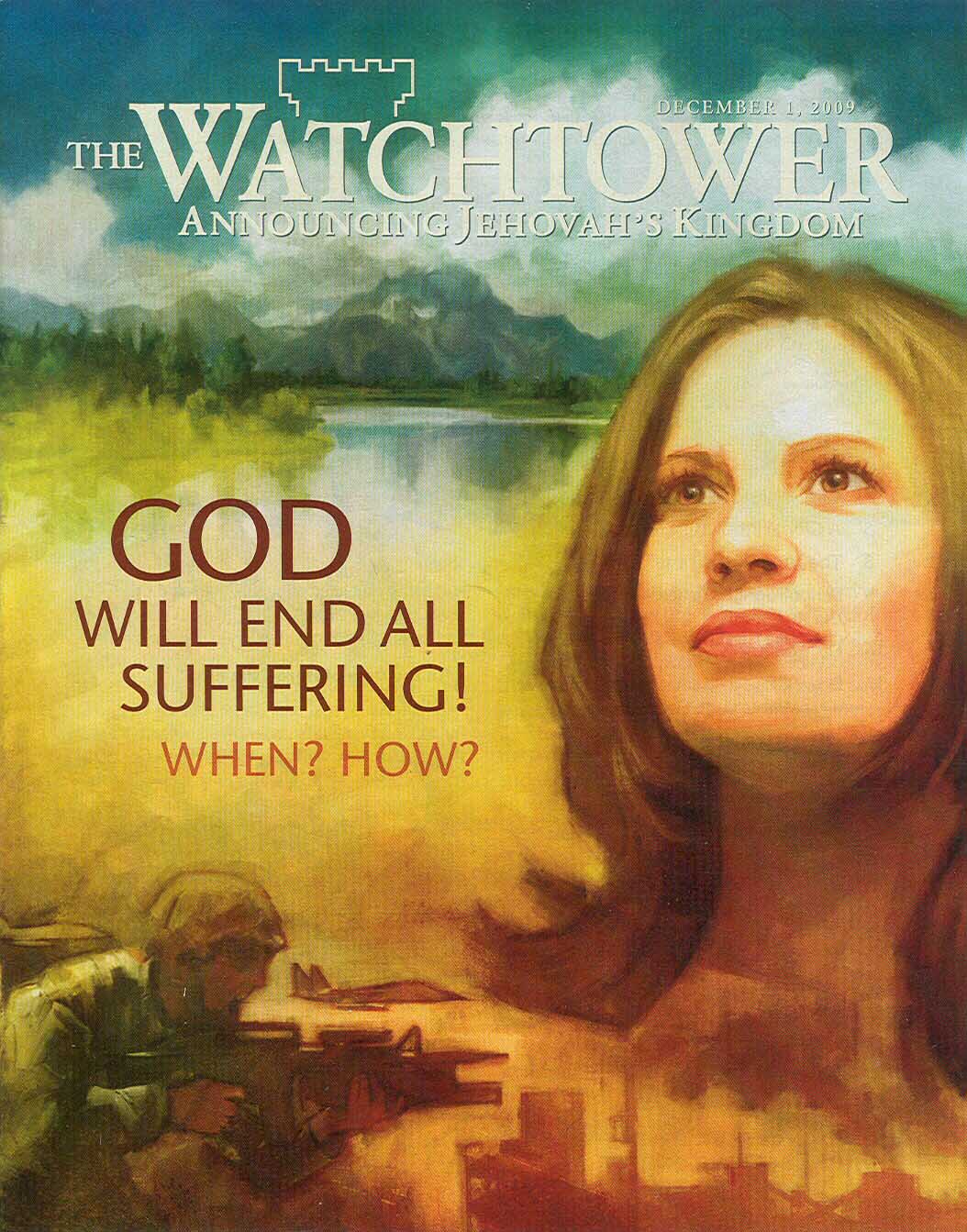
The Jehovah’s Witnesses stopped by yesterday. I never pretend not to be home, and when I’m less stressed out I like to engage them in terms of biblical exegesis — religion is all about conflict. Yesterday I was still recovering from the disappointment of not getting a job I really wanted, so I simply answered their questions and accepted their Watchtower magazine. Thumbing through it, I ran into some hermeneutical obstacles — an occupational hazard for those of us who’ve spent a little too much time with the Bible, I suppose. A story about Joshua informed me that “Jehovah wants you to succeed.” It tasted a little too much like prosperity gospel and not much like life in the present. So I flipped a few more pages.

An article on Lunar New Year (Chinese New Year, as it is traditionally called), warned against Christians celebrating it, in part because of ancestor veneration. The Watchtower declares, “the Bible show that the ‘ghosts’ and deceased ‘spirits’ are really wicked spirit creatures pretending to be the deceased. For what purpose? To mislead people and bring them under their evil control!” Now, I admit to being drawn into the Ghost Hunter fan-base, but I do recall the story of Saul summoning Samuel from the dead. The Bible doesn’t indicate that he’s evil; in fact, it is Samuel himself! If ghosts want to deceive then they need to show up a little more clearly and give more direct messages.

I then learned about King David’s remarkable musical prowess in the story about music in the Bible. It is truly amazing what can be extrapolated from a literal reading of the Psalms. The magazine informs us that King Sennacherib, emperor of Assyria, demanded male and female musicians from Hezekiah. “It seems that they were first-class performers.” This seemed a little too much like the stereotype of Jewish entertainers, and since it was extra-biblical I couldn’t accept it. The story concludes by indicating that music is not a human invention. “The Bible describes music and singing in the heavens themselves, where spirit creatures play figurative harps and sing praises around Jehovah’s throne.” As I pondered what a figurative harp would sound like, I could swear I heard the sound of one hand clapping.

Being that time of year, the issue has an Epiphany story. Well, most Christians associate the wise men with Christmas, so I’ll call it a Christmas story. Eager to be honest, the author notes that the wise men were really foreign astrologers. And although they were into witchcraft, the angel announced Jesus’ birth to them to lead them away from this abhorrent practice. Then a divine revelation came to them in a dream in order that they could avoid Herod and his wicked plan. So the astrology that led them to Jesus was bad, but the end result was good.

When the Jehovah’s Witnesses ask me if I know about the Bible, I look at my feet and kick at an invisible speck of mud on the floor as I admit that I have taught Bible for nearly twenty years. But when they ask what I believe about the Bible I tell them the same thing I tell my students — what I believe is personal and I choose not to share it. I don’t begrudge any person of their religion. I even share the Jehovah Witnesses’ hope that the future may be brighter than the present. If you want to convert a religion professor, even an adjunct one, however, it will take more than a Watchtower to do it.