Do I Know You?

How do you know someone without ever seeing them?  How do you know they are who they say they are?  I’ve been spending a lot of time on the phone, much of it trying to establish my identity with people who don’t know me.  This has happened so much that I’m beginning to wonder how many of the people I’m talking to are who they say they are.  I never was a very good dater.  Going out, you’re constantly assessing how much to reveal and how much to conceal.  And your date is doing the same.  We can never fully know another person.  I tend to be quite honest and most of the coeds in college said I was too intense.  I suppose that it’s a good thing my wife and I had only one date in our three-year relationship before deciding to get married.

Electronic life makes it very difficult to know other people for sure.  I don’t really trust the guardrails that have been put up.  Sometimes the entire web-world feels false.  But can we ever go back to the time before?  Printing out manuscripts and sending them by mail to a publisher, waiting weeks to hear that it was even received?  Planning trips with a map and dead reckoning?  Looking telephone numbers up in an unwieldy, cheaply printed book?  You could assess who it is you were talking to, not always accurately, of course, but if you saw the same person again you might well recognize them.  Anthropologists and sociologists tell us the ideal human community has about 150 members.  The problem is, when such communities come into contact with other communities, war is a likely outcome.  So we have to learn to trust those we can’t see.  That we’ll never see.  That will only be voices on a phone or words in an email or text.

I occasionally get people emailing me about my academic work.  Sometimes these turn out to be someone who’s hacked someone else’s account.  I wonder why they could possibly have any interest in emailing an obscure ex-academic unfluencer like me.  What’s their endgame?  Who are they?  There’s something to be said for the in-person gathering where you see the same faces week after week.  You get to know a bit about a person and what their motivations might be.  Ours is an uncertain cyber-world.  I have come to know genuine friends this way.  But I’ve also “met” plenty of people who’re not who they claim to be.  Knowing who they really are is merely a dream.


Evolution of Psychology

We are a fragile species.  Those of us who experienced childhood trauma carry it all our lives, even if it only seems to pop out unexpectedly from time to time.  This gets me to thinking about the evolution of psychology.  Not the discipline psychology, but of the human mental map.  Things that can upset a roomful of people these days would’ve washed over an entire village unnoticed yesteryear.  Did people then really feel as angry and breakable as we do now?  Please understand, I’m not advocating the view that people of previous ages were better, or even stronger than we currently are.  I just wonder if their circumstances made it so that what we think of as therapy wasn’t really necessary.  For one thing, much of human history has been dominated by short lifespans.  Historically, many women died in childbirth in their twenties.  The majority of men, until modernity, didn’t make it to fifty.  Sitting here musing, I’ve got ten-plus years on that and yet I wonder.

Those facts of life would’ve had to have affected people’s outlooks.  Our extreme squeamishness around reproduction also didn’t exist in antiquity.  Privacy, as we know it, wasn’t part of their world.  How many people see a therapist these days because of sexuality issues?  When did this turning point take place?  If we go back to early Cro-magnon, perhaps living in caves, did they come back traumatized from the hunt?  Surely they must’ve seen death on a nearly daily basis.  Today it’s difficult to get anyone to consider the mortuary sciences for a career.  We don’t like to think about death.  We pick up the phone and dial our therapists. 

When I was still teaching I thought often about how differently people framed their lives in the past.  It’s only now, however, that I’ve come to wonder about the psychological support we require.  I suspect life was, for most people, a literal daily struggle to survive.  Agriculture tamed the environment somewhat, and if current evidence is taken into account, religious gathering looks to have developed even in advance of that.  Perhaps the larger issues, what we still recognize as religion, helped to cope with the constant uncertainties of life.  Unfortunately, there’s no way for us to really get their mental maps.  We can read ancient writings, many of them pro forma or religious in nature.  We start to get some insight in pieces such as the Gilgamesh Epic, but that is so very brief.  I wonder when we started to require help going out the door in the morning or facing another day of the same old, well, you know.  Psychology had to evolve but it left so very few traces.  I, however, have an advantage in years great enough that I ponder our mental states.


Seeking Meaning

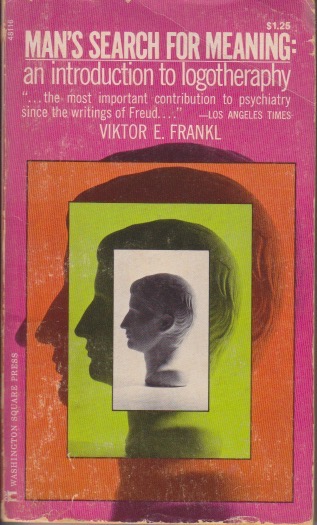
Many people over the years have encouraged me to read Viktor E. Frankl’s Man’s Search for Meaning.  I admit to being put off by the unintentionally sexist title (I do remember the days when “man” was generic regarding gender, following the German usage from which it derives).  I finally got around to it and I’m glad I did.  I know that there has been some controversy around it but I found many of Frankl’s observations freeing.  The first part of the edition I read narrates his experience living in concentration camps during Germany’s mad phase.  Such things aren’t easy to read, but they are important, showing what happens when people are devalued by those in power.  It also proves a place for finding meaning in suffering.  The second part of the book introduces logotherapy, the school that Frankl devised.  It’s based on the idea that one’s search for meaning is essential for psychological well being.

Some of us grapple with the question of meaning constantly.  Why are we here?  What should we be doing?  Is there a purpose behind it?  Religions often attempt to answer these kinds of questions, as do various philosophical schools.  Nobody has the definitive, overarching answer, and Frankl doesn’t try to offer one.  There is a bit of existentialism in logotherapy, but the basic idea seems sound to me.  Seeking meaning helps you to carry on.  Frankl also considered finding meaning in suffering, which seems to be a noble goal, if quite difficult to achieve.  Most human lives involve suffering and it is often the biggest problem with which theodicy has to deal.  Finding meaning in it, if that’s what life hands you, seems to be reasonable.  His discussion of paradoxical intention was quite interesting.

My edition of the book has an introduction by Gordon Allport.  That name took me back to my college days when the Harvard professor’s equally problematic title, The Individual and His Religion was required reading.  Despite the pronoun, that was an influential book for me (unfortunately ruined in the flood after we first moved to this house).  I noticed that Frankl cited Allport’s book in his own.  I sometimes think I ought to replace Allport’s book, but I’m not sure that I’d be reading it again any time soon.  Besides, my lost edition had my own annotations in it.  A small measure of personal suffering and loss.  I am glad to have finally read Frankl’s work.  I certainly learned a lot from doing so.  Discovering that there is a psychological school based on finding meaning exists was news to me.  And it just makes sense.


Hitchcock’s Freud

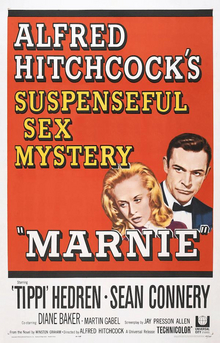
When you can’t have horror, Hitchcock will sometimes do.  Having seen most of the big classics, Marnie came to the top of our list, and I found it had some triggers.  I suspect that’s true for those who have experienced childhood trauma and who sometimes do things as an adult without knowing why.  At least that’s what I took away from it.  To discuss this will require spoilers, so if you’re behind on your Hitchcock you might want to catch up first.  Here goes.  Marnie’s mother was a prostitute who turned to religion.  The reason is that one night during a storm young Marnie was frightened and one of her mother’s clients tried to comfort her.  Supposing he was molesting her daughter, she attacked him and when he hurt her, young Marie killed him.  All of this was repressed in her memory and now, as an adult, Marnie is a kleptomaniac who has the many phobias that that night impressed upon her.

Then along comes Mark.  Although he knows Marnie is a thief, he falls in love with her.  From a wealthy family, he’s influential enough to get charges against her dismissed, which he does once they marry.  He tries to unravel why Marnie won’t sleep with him, why she can’t stand red, why thunderstorms terrify her.  In a very Freudian move, he recognizes that her relationship with her mother is the key.  Hiring a private investigator, he discovers what happened to Marnie as a child and then takes her to confront her mother.  Marnie has never felt her mother’s love, but she didn’t remember the incident and didn’t know that her mother took the murder rap for her and subsequently distanced herself from her daughter.

I have to admit that I found this more disturbing than most Hitchcock films I’ve seen.  The ending, which I revealed in the first paragraph, brought quite a few of my own childhood issues to the surface.  Parents try to do the best they can, at least most of the time, but we damage our children psychologically, generally unintentionally.  And trauma in your youngest years never leaves you.  I can mask and pretend—that’s the way you survive in this world—but a number of my experiences as a pre-teen affect me every day, whether I realize it or not.  Where I choose to sit in a room.  How I respond to unexpected events or sudden changes.  Why I immediately have to know what that noise is and where it came from.  These are all part of the legacy my childhood left me.  I think Marnie would understand.


Dream Machine

I’ve reached the age where, instead of how well you slept, it’s the nature of my dreams that is more reliable projector of productivity.  You see, after a night of bad dreams I often wake up drained, lacking energy.  Entire days can be cast into this state of lassitude.  The only thing for it is to sleep again and reset.  The next day I can wake up after positive dreams, bursting with ideas and creativity.  New ideas come so fast that I can’t get them down in time.  Dreams. 

My entire life I’ve been subject to nightmares (no, it’s not the movies).  I still wake up scared at least once or twice a week.  More positive dreams have been struggling with these nighttime frights, and when they win, I have a better day.  I know, I know.  I should be in regular therapy.  The problem is time.  I see notes in papers and elsewhere of people younger than me dying.  On a daily basis.  The problem is I’ve got so much that I want to accomplish that I don’t have time to locate, pay for, and drive to see a therapist every week.  (The bad dreams come that frequently, so it stands to reason that weekly appointments should be on the script, right?)

The thing is, there’s no predicting these dreams or their timing.  My wife and I live a life of routine.  I awake early (anywhere from 1 a.m. To 4 a.m. these days) and begin writing and reading.  I jog as soon as it’s light and start work when I get back.  The 9-2-5 insists that you answer emails until 5 p.m., which can make for some very long days, depending.  After that we have dinner while watching some show we missed when it first aired, and then I go to bed.  That’s been the pattern ever since we bought this house nearly seven years ago.  Before that, we didn’t always watch things in the evening, but that doesn’t seem to make a difference in the dreams.

So I get up early and write down my thoughts for this blog, work on the books I happen to be scrawling at the moment (both fiction and non) and anxiously watch for sunrise, that ever shifting foundation.  And then work.  Always work.  But how well I work will depend largely on what was in my subconscious mind before I wake.  I have no idea if this is normal.  Knowing myself, it probably isn’t.  But I’ve reached the age where it at least starts to make sense.


Discovering Ordinary

I wasn’t quite sure what sense of ordinariness to expect from Robert J. Wicks’ The Tao of Ordinariness.  I would say as a whole it is about becoming ordinary you.  I found the whole interesting, but it was chapter four that really caught my attention.  It’s here that Wicks starts to address those whose damaged childhoods have created a false (and frequently re-affirmed) sense of our ordinary selves.  I’ve always known I have issues—it’s pretty obvious that I’m not quite like other people I know.  I often lack confidence and, thanks to my career and publishing history, have had that sense pounded in even as an adult.  (Poundedness is not a protected category, however, and it won’t get you any special consideration.)  Up until that chapter I was thinking, “This is nice, but it just doesn’t match my experience of things.”  Then I learned why.

It is possible to change your outlook, of course.  It’s not an easy thing to do.  Our culture isn’t set up to allow for it, what with 9-2-5s and all that.  You see, my personality really fit the teaching mode and lifestyle.  I loved the work, although it was hard.  And I loved the fact that if you had free time during the day you could, if you needed to, run an errand or two.  I guess I’ve never been one to invest in that capitalistic idea that your employer is buying your time.  For some jobs, yes.  In fact, my first employment experiences were of that sort.  I started at nine, did physical work until five, with a lunch break in the middle.  Now work begins early and doesn’t really end.  Days off are few and they fly by quickly.  Changing your outlook requires time to think.  That, it seems, is what’s missing.  It makes it difficult to find out what my ordinary is.

Wicks’ book is a hopeful one.  His optimism comes through page after page.  He gives practical advice.  The subtitle reveals why the book is important: Humility and Simplicity in a Narcissistic Age.  (That last adjective is so common now that spell-check completes it automatically.)  Politicians have frequently been narcissists, but Trump has made it into a high art—care only for yourself and tell people the lies they want to hear.  You can see the calculating cynicism in every glance and gesture.  And yet, here we are.  Books like this are important.  We need to be told that there’s another way.  If only it were also possible to get your horse to drink.


Using Brains

I’m old enough to know better.  Here’s a thought.  I recently saw a headline that suggested human brains filter out things like ESP because brains evolved to help us survive.  No matter what you believe about ESP, the idea got me to thinking.  We often act as if our brains are able to determine the Truth (that capital is intentional).  At the same time we don’t understand what consciousness is.  We know that other animals have brains and that the evolution of said organ is to help individuals survive to reproduce.  Some animal species end their existence at that point, but others linger on to wonder.  And I’m wondering if our brains are filters.  Stick with me here: we know that there are stimuli that we can’t perceive that other brains can.  For example, it seems that migrating birds can perceive magnetic fields.  Even if they can’t there are magnetic fields that we perceive only through their effects on objects.  Our brains have no direct access.

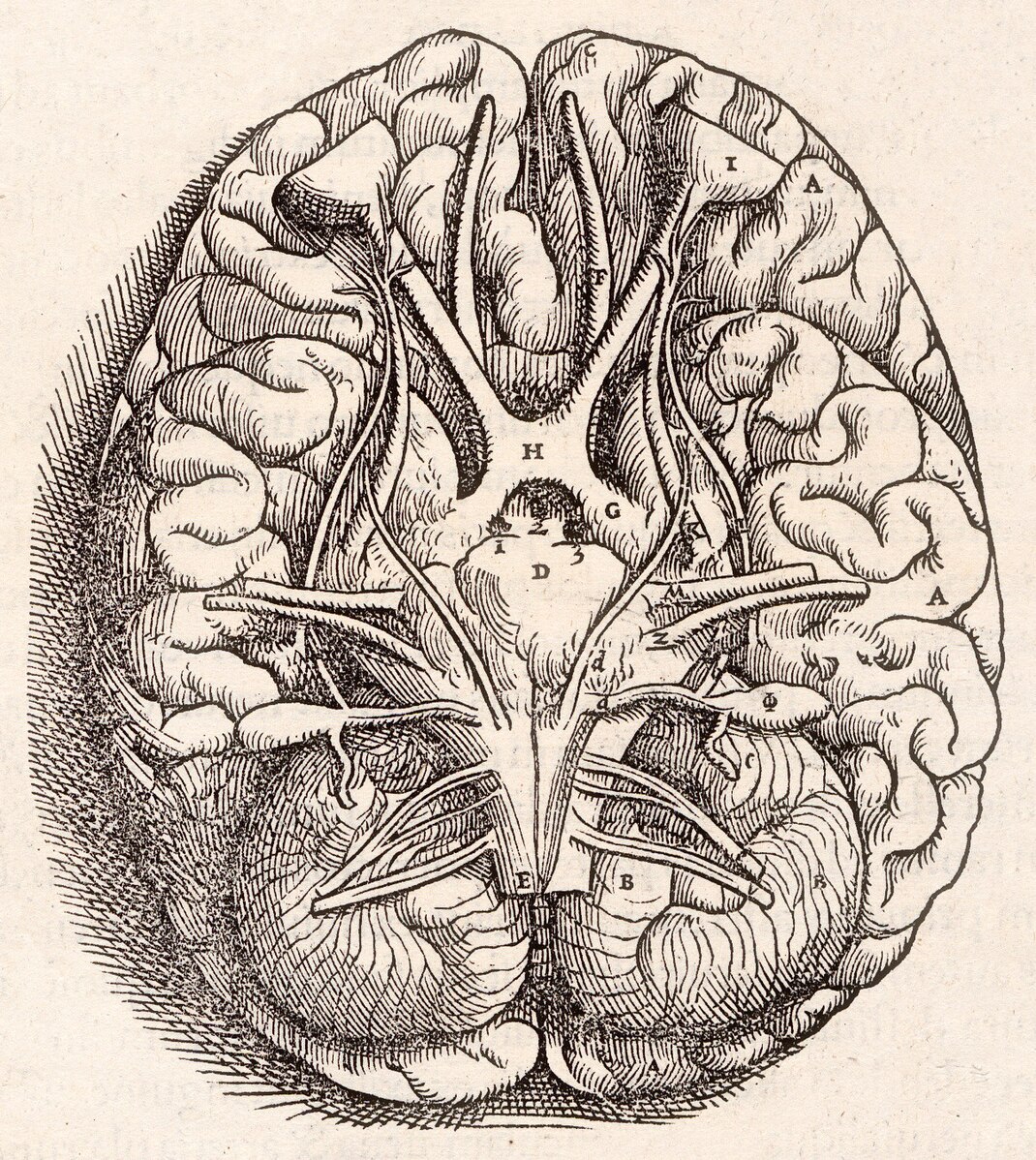
Image credit: Andreas Vesalius‘ Fabrica, showing the Base Of The Brain, by user Ancheta Wis

Here’s where it gets spooky.  If our brains filter out things that may hamper us in survival, what if they overzealously teach us not to perceive things that actually exist?  We’re somewhat limited by our “five” senses, no doubt.  We get along okay.  But what of those people who see things that others don’t?  We tend to medicate them or lock them away, but what if their brains have learned how to shut off part of the filter?  Having written a book about demons, naturally they come to mind as a test case.  Or, if you prefer, ghosts.  We tell our children these things aren’t real.  Trust the filter.  Get on with life in “the real world,” right, Cypher?

I didn’t have time to read the article, but I’d experienced a perspective shift.  If our brains are all about gathering information (and in part they clearly are), that’s one thing.  If they are actively filtering things out, well, that’s quite another.  We laud the imagination of children until they become “old enough to know better.”  Do we teach them to shut out what they can actually see, or sense, in order to accept the inevitable, material, adult world?  This idea has startling implications.  As we plunge ahead inventing AI to do our thinking for us, perhaps we’ve left something even more fundamental behind.  Have we lost interest in the Truth?  We may not be able to access it directly, but I wonder if we’re taught to give up without even trying.


Beyond Reason

Emotions are tricky.  They’re an essential part of being human, but they don’t function rationally.  At least they don’t do so reliably.  And nobody is emotionally pristine.  People have anger issues (quite a lot of that, I know), insecurities, esteem problems (either too much or too little), abandonment concerns, and the list could go on and on.  The thing about emotions is that they’re difficult to fit with logic.  Sometimes it’s hard to believe that logic is an artificial construct and that emotions are just as important to survival as reason is.  Evolution gave us emotions.  Fight, flight, or freeze still operates in most human beings—I’ve seen all three responses when a threat arises.  Feeling sad when unfortunate events take place is normal and natural.  Dogs and other higher mammals feel it too, as has been amply demonstrated.

It’s easy to let our emotions speak for us, even when doing so causes damage we would never rationally seek to impose.  You push me and I push you back.  Something I realized long ago, and this is just to do with my own situation, is that I can’t easily let go of negative emotions.  I recently learned that a relative I never knew very well had a similar trait.  Such people have invisible scars that they bear their entire lives.  The logical mind says, “Let’s use chemicals to erase them.”  The artistic mind says, “Erase my emotions and you erase me.”  It’s important—vital even—that we don’t question a sincere person’s reasons for their emotional responses.  Most people are just trying to do the best that they can.

Religion is generally based on emotional need.  That’s not to say it’s bad or for “the weak.”  It seems that evolution has deemed it a valuable asset for human beings.  As someone who’s studied religion for many, many years, this aspect has become quite clear to me.  Religion is a coping technique and, in the best of circumstances, it contains some of the truth.  As I used to tell my students, nobody intentionally believes a false religion.  The stakes are far too high.  And we have no rational standards by which to measure which religion is right.  It’s a matter of belief.  Religions have to meet us emotionally where we stand.  During the nineteenth and twentieth centuries a shift took place where religions were supposed to be logically, literally true.  This was believed with intense emotion and it led to a situation we still face.  Emotion and rationality must work together, but some ways seem much more productive than others.


Drifting

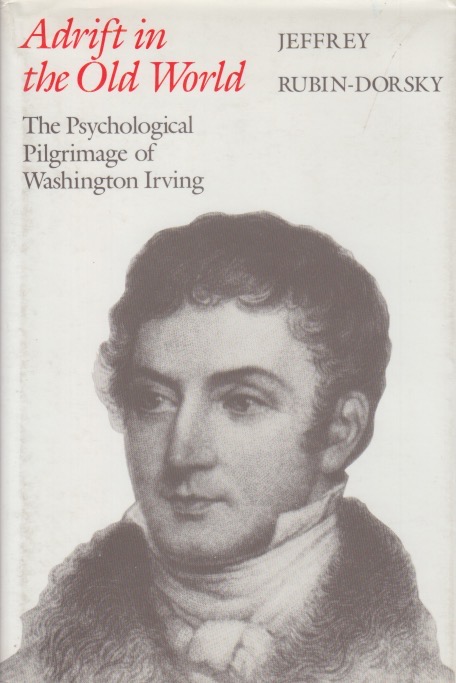
What really goes on in somebody else’s mind?  At best we can guess, and when that person’s been dead for a long time that guessing involves some reasoned speculation.  I enjoyed Jeffrey Rubin-Dorsky’s reasoned speculation in Adrift in the Old World: The Psychological Pilgrimage of Washington Irving.  The book itself is a few decades old now, but it does raise many relevant issues.  For me personally, it was, in parts, like reading my own psychological profile.  Irving is an interesting study.  (Unlike me) he had early success as a writer but he was a continual self-doubter.  He was also a poor investor, making money on his writing only to lose large sums investing in ventures that failed.  He also had a sense of not belonging which would seem strange for a New Yorker today.  Although he finally felt he fit in when he settled, as a famous writer, in Tarrytown, this book really only covers his European years.

While traveling for seventeen years in mainly Britain, France, Germany, and Spain, Irving wrote four very different “Sketch Books.”  These weren’t really short stories as we’ve come to understand them, at least not always, but they affirmed his place in the literary firmament.  Adrift in the Old World covers these four books while bringing incidental mention of several others into the picture.  Irving must be a difficult writer to cover.  He was not only prolific, but he wrote about diverse topics and sometimes at great length.  Of course, he was trying to make a living as a writer and people in those days had more time to read.  Breaking out a set of only four of his books makes this more digestible.

Even though I learned a lot from this book, it wasn’t always easy reading.  It gets a bit academic in parts and the paragraphs are far too long.  Still, there’s good information here.  I’ve been trying to wrap my head around Irving for some time now, as a glance at the books I’ve covered recently ought to suggest.  Although he’s not ignored by literary scholars, there aren’t many general interest books written on him.  There are other writers that more capture the modern imagination.  Still, literary history of the early United States is a fascinating venture in its own right.  For those who like to try to figure out what other people are thinking (and I have to admit to that avocation) this is a good entryway into what may have been the mental world of Washington Irving.


Iron Man?

As a vegan, I sometimes end up thinking more about nutrition than I used to.  Back when I first became a vegetarian colleagues wondered how I got my iron.  I’m one of those apparently rare individuals who really likes broccoli.  I could eat it nearly every day of the week without tiring of it.  In any case, iron is important for health.  I’ve known people with iron deficiencies and it can be a real problem.  Doctors recommend ferrous gluconate as a dietary supplement since the body absorbs iron better from it.  (It’s best on an empty stomach, I’m told, followed by orange juice.)  But I’m no physician.  In fact, I’m quite squeamish, which may seem strange for someone who watches horror.  Still, thinking about iron took me back to my childhood.

I was a sickly child.  Couple this with a tendency to think too much and I must’ve been a handful for my mother.  I remember trying to explain to her once that I didn’t believe reality was real.  I was maybe twelve at the time.  She prescribed ironized yeast.  Now, Mom’s no doctor.  She didn’t even finish high school.  So thinking about broccoli made me wonder about ironized yeast.  First a web search revealed it’s not sold any more.  Further, it was a health food fad beginning in the 1930s.  Although I remember the taste and scent distinctly, I couldn’t find a website saying what it was or how it was made.  More to the point, why did my poor, frustrated mother think that it would help me couple reality with what was happening around me again?  (And was that even such a good idea?)

Questioning perceptions seems to run in my family.  I’ve long known that my thought process is very different from that of other people.  My saintly wife still says the reason she was attracted to me is that she’d never met anyone who thinks the way I do.  My thought process has had plenty of opportunities to drive her crazy since those early days, I suspect.  My brother and I sometimes talk about what it’s like being, I suspect, were we diagnosed, neurodiverse.  It’s easy to fall into the perception that others think like we do.  I suspect all people do that.  Few, at least among those I’ve met, question the reality that their senses tell them really exists.  Physics tells us it’s mostly empty space.  And yet although I still don’t know what it is, maybe I’d better find someone with an old stockpile of ironized yeast to get back to business. It is, after all, a work day.

Who knows what goes on in the mind of others?

ABC 2 QWERTY

I thought this was over after school.  Sitting in a class with a long list of names, always coming in last—or very nearly so—because my name began with W.  Even now, however, it still happens at work.  If there are a limited number of places at an event, just try to register with a W (or X, Y, or Z) name.  Even if you get your name in first, you automatically drop to the bottom of the stack for many electronic lists (AI knows the alphabet, right Hal?).  This got me to thinking about the alphabet.  Alphabetical order is, of course, neither fair nor random.  It follows strict rules and it must in order to work properly.  The assignment of alphabetical order, however, is arbitrary.  More than that, it is a teaching tool cum organizing principle.

Consider your basic keyboard.  It’s used far more often than the alphabet and if we went in QWERTY order, Ws would always be near the front of the list.  Problem is, although our fingers know the keyboard well, who can recite it?  Maybe we need a mnemonic device like “Quite well, early riser, thank you…”   Someone at some stage laid out alphabetic order.  The earliest known abecedaries seem to come from Ugarit.  That doesn’t mean they were invented there, but it also doesn’t mean they couldn’t have been.  We don’t know what the criteria were, but interestingly enough, what we transliterate as w came about sixth place.  The order is largely recognizable to modern schoolchildren, although they had fewer letters and some of them we don’t have.  W was in the middle but closer to the head of the class.

An Ugaritic abecedary

There have likely been psychological studies done on the mental state inflicted by always being last, or near the end.  Granted, a good part of it is because of the gospels, but I wonder if my tendency to think others should go in front of me is a life-long socialization of being a W.  Growing up in a town with few “exotic” names, I don’t recall ever not being last.  There were teachers who would divide by height, but that’s even worse because I’m not tall.  Could it be that something as random as scratch marks made on clay by some priest or scribe in illo tempore, thousands of years ago, led to such a blog post as this in the early twenty-first century?  All I know is that my projects at work still get bumped because kindergarten politics still hold.


Remember the Doorway

I’m glad it has a name.  And I’m also, relievedly, glad it’s normal.  The Doorway Effect.  I’m sure it’s happened to you.  You walk into a room and immediately forget what you came in for.  I’ve been afraid of some early onset of something because I’ve noticed it more and more, but it turns out that this is a normal brain function.  A recent article by Jessica Estrada explains that our brains are constantly framing.  A large part of that framing has to do with our physical location.  When you step through a doorway that framing changes and some of the residue (what I came in here for) might easily get left in your previous location.  In other words, it seems to be an effect of humans making different rooms for different purposes.  Our thought lingers in the place it was first born.

Photo by Filip Kominik on Unsplash

Our brains are fascinating organs.  Every time I read about how children’s brains form, I wish I’d studied psychology instead of religion.  How we could help our children if we understood what their brains just aren’t capable of doing just yet!  How many spankings could have been avoided if parents understood brain development?  Beating someone doesn’t teach anything.  Instead, we might try to learn how minds use brains.  Young boys can be quite reckless.  One of the reasons?  Their brains haven’t developed enough yet to think through the consequences of their actions.  Yes, they can push limits for other reasons, but their thinking simply doesn’t yet involve adult caution that (hopefully) comes with a developing brain.  One of the real consequences of this, for which I’ll volunteer as a poster child, is religion.

Children’s brains are not developed enough to accept and comprehend religious thinking until they’re about 12.  We’ve known this for many decades now.  And yet, the theology of parents means they try to convince their children of religious truths before their brains are developed enough to sort it out.  Look at Congress and the Supreme Court to see the results of this.  Most people never seriously question their religion.  For many it was instilled in them as children, before their brains could properly process it.  The rest of the country pays for it with laws then enact.  We’ve known about this for decades and have decided that studying religion is a waste of time.  But I digress.  Now I forget what I started to say when I began this post.


Higher Learning?

I was reading, as one does, about a mental institution.  In the last century they were often called, rather insensitively, “lunatic asylums.”  The neurodiverse were often shunted away so that the rest of society could get on with business as usual (as if that’s sane).  There were any number of reasons sought for such individuals thinking differently.  The source I was reading had a short list and I was surprised to see on it, “over study of religion.”  It really said nothing more about it but it left me wondering.   First of all, it brought Acts 26.24 to mind: “Paul, thou art beside thyself; much learning doth make thee mad!”  Religion, from the very start, it seems, had the reputation of driving people insane.

Image credit: Published by W. H. Parrish Publishing Company (Chicago), public domain, via Wikimedia Commons

As someone who’s spent well over half a century thinking about religion, reading about religion, and analyzing religion, I can see Festus might’ve had a point.  This way much madness lies.  I don’t think religion evolved to be thought about.  It was largely a fear reaction to being, in reality, rather helpless in a world full of predators and other natural dangers.  Although we’ve managed to wipe out most of our large predators, we’re still under the weather, as it were.  We can’t control it, and what messing around we’ve done through global warming has made it less hospitable to our species and several others.  And also the small predators, those that evolve quickly, such as Covid-19, are now the real challenge.  Facing fear was the real evolutionary advantage of religion.

Being story-telling creatures, we made narratives about our belief systems.  Then we started taking those stories literally.  Believing too seriously, we used those stories as a basis for hating and killing those with different stories.  We still do.  Can anyone deny Festus’ accusation?  I’m sure religious mania has, historically, led to some institutionalizations.  It was kind of a trope in the seventies, for example, that too much Bible-reading could lead to criminal behavior.  It’s not difficult to see why those trying to classify what might make an individual off balance might look to religion as an explanation.  Nationally, and very publicly, we can see strident examples of this promotion of irrational ideas on a daily basis.  Many of the large mental institutions have been closed down and many of the neurodiverse have been turned out to the streets.  Ironically, it is often the religious who try to care for them.  Understanding religion, it seems to me, might be a great public good.


Psychology of Religion

It’s so human.  Mistaking form for substance, I mean.  A recent piece in Wired that my wife pointed out to me is titled “Psychologists Are Learning What Religion Has Known for Years,” by David DeSteno.  As the title intimates, religion benefits individuals in many ways.  Church attendance, however, has been declining for a long time.  While not the point of the article, I do wonder how much of it is because mainstream churches are stuck in a form that no longer works and people aren’t finding the substance there.  The basic church service is premised on a specific religious outlook that no longer seems to fit how the world works.  Potential ministers go to seminary where age-old ideas are tiredly replicated, based on an incipient literalism that simply doesn’t match what people see in the world.

Wired?

I’ve experienced this myself.  Depending on who the minister is, a church can go from dynamic to dull several times in the course of a member’s life.  People still crave the substance, even if the form stops working.  The form, however, is seminary approved and seminaries are accredited by the Association of Theological Schools.  The folks are academics and academics are well aware of the developments that suggest the form doesn’t work.  Speaking as a former seminary professor, sermons just don’t do the trick when you’ve done your own homework.  As DeSteno points out, once you remove the theology science and religion tend to find themselves in agreement with one another.  For years I’ve been suggesting that secular seminaries are needed.  Churches that aren’t bound by form or doctrine.  Instead we swim in a sea of retrenched evangelicalism.

Religion is an effective survival technique.  It evolved, even while denying it did so.  Some time after the Reformation a resurgent literalism led Catholicism to modernize, removing the mystery that was perhaps the last tenuous grasp that form had to provide substance.  Religion, beleaguered as it is, still has substance to offer.  DeSteno’s article is adapted from his new book How God Works.  I haven’t read it yet, but from the summary I can see that I should.  There are religious groups that attempt what this article suggests.  From my experience, however, I see they easily get sucked into mistaking the form they settle on for the substance of what they do.  I had recently been toying with the idea of attending seminary again.  I found, however, form after form.  What I need is substance.


Social Madness

I’m reading a book written in the mid-1980s.  (All will become clear eventually.)  The author notes the connection between social madness and personal mental illness.  He cites the alarming rise of teen suicides.  This was over three decades ago.  Suicide rates have continued to climb, and this particular author got me to thinking about something that troubled me even as an undergrad.  Although I went to college intending to be a minister, I ranged widely in the subjects I studied.  (Being a religion major in those days allowed for quite a bit of flexibility.)  I took enough courses in psychology to have minored in it, if I had declared it.  Since my mind was set on church work I saw no reason to make said declaration.  The thing that troubled me was I had also taken sociology classes.

Like most people who grew up in uneducated households, I suspect, sociology was something I’d never heard about.  Asking what it was, in college, someone answered along the lines of “psychology of groups.”  My own experience of it was that it involved math and graphs—it was a soft science, after all—and now I read sociologists who say that such numbers can be made to declare what the sociologist wishes.  In other words, psychology.  The point of all of this is that the book I’m reading suggests societies exhibiting illness cause individuals to be sick.  Sociology leads to psychology.  In times of national turmoil, individual mental illnesses rise.  I had to pause and put the book down.  The eighties weren’t a picnic, but the national madness of the Trump era bears no comparison.  We are a nation gone mad, and when society can’t project health, the many who stand on the brink of individual mental illness simply get pushed over.  That sure makes sense of what I’m seeing.

Looking back, I often think I should’ve probably declared that minor.  Raised in a strong biblical environment, however, I wanted to learn as much about the Good Book as possible.  I was teaching Greek by my last year in college and in seminary I specialized in the Hebrew Bible.  It would’ve been a natural place to continue studying psychology.  By that point I’d decided to go on to a doctorate, and psychology required medical training.  For a guy as squeamish as me that wasn’t possible.  Ancient languages, though, they were something I could handle.  It’s rather frightening that those writing at that time already saw America (in the Reagan years, I might add) teetering towards national insanity.  We’ve gone far beyond that now.  And a society that doesn’t know it’s ill will sacrifice many individuals who realize that it is.