
Smile 2 is getting some good critical notice and I hadn’t seen Smile (1) yet. Psychological horror often bothers me, but I figured I’d grin and bear it. I’m glad I did. The ideas in the film, which participates in “the stigma trope,” are disturbing because it’s unclear if Rose (the protagonist) is mentally ill or not. The stigma trope posits that something has infected someone either by having seen something they shouldn’t (as in Ringu) or by physical contagion (It Follows) and the victim can’t shake it. Smile may trigger viewers with suicidal phobias since the premise is that an entity feeding on trauma passes from person to person by having the new victim witness the previous victim’s suicide. Rose is a therapist who hasn’t gotten over the trauma of her mother’s death. Rose witnesses a patient die by suicide, and who smiles just before she does it.
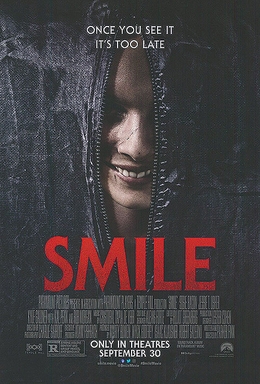
The patient told Rose that she’d watched one of her professors die by suicide. Rose subsequently learns that the professor also witnessed a suicide and so on and so on. Each prior victim had watched someone else die. Now Rose has to figure out how to break the cycle, otherwise she’ll perpetuate it. The idea of inadvertently obtaining a “sticky” entity is pretty scary, and a very human concern. One of the more frightening aspects of possession movies is the belief that now that demons know that you know, they will target you. Interestingly, what makes this film provocative is that the victim has to have suffered trauma before. As such, it is a study of trauma and its lasting effects. I suspect most people don’t intentionally traumatize others (world leaders excepted). Trauma can be dealt with (or not) in very different ways.
Smile did quite well at the box office. I suspect there are a lot of us traumatized people around. Capitalism encourages traumatizing others through slow violence, if not the more obvious quick way. People don’t easily walk away from events that scarred them, particularly if they happened at an early age. Such people, if experience is anything to go by, find themselves in vulnerable positions in life and rather thoughtless people, often for religious reasons, end up traumatizing them even further. I have to admit that there were triggers for me in Smile. I still struggle with a few of my own traumas that were never resolved. Like Rose, I sometimes don’t know who can really be trusted with such things. This is a perceptive movie. I guess now I can put on a happy face and see Smile 2. But first I’d better talk to my therapist.

 Steve A. Wiggins