
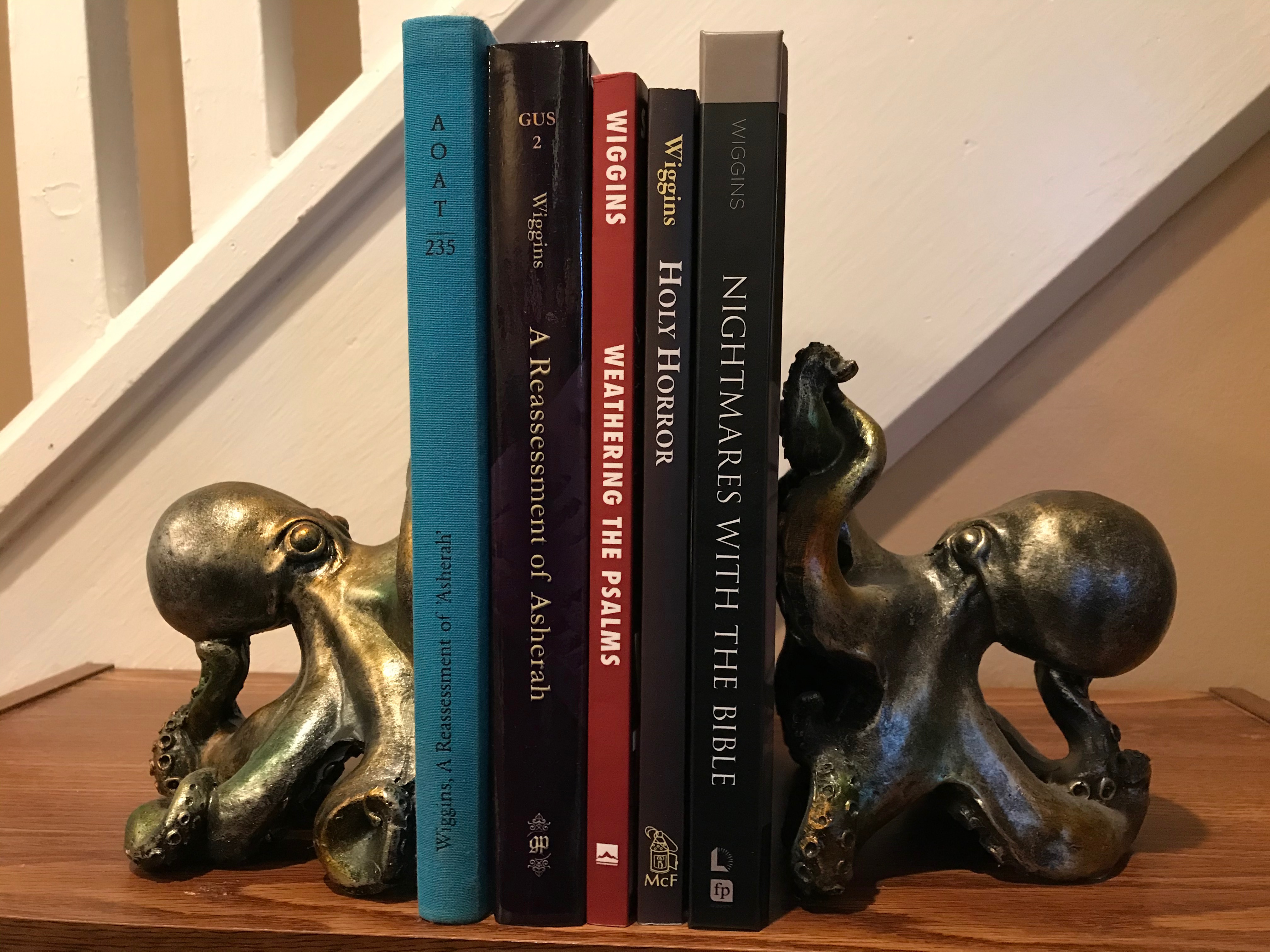
Do you ever get that feeling that you’ve been sold? One thing I learned early on in academic publishing is that buyouts aren’t that unusual. I recently wrote about Transaction being acquired by Taylor and Francis, for example. Just a couple days ago I noticed in Publishers Weekly that Bloomsbury had bought out Rowman & Littlefield’s academic wing. Then, at a company meeting the buyout was mentioned again. Finally, I had an email from R & L letting me know. You see, Nightmares with the Bible was published by Lexington Books/Fortress Academic. This is an imprint of Rowman & Littlefield. This means the rights to Nightmares have just been sold to Bloomsbury. I do hope Bloomsbury has a more progressive idea about paperbacks! In one of those strange synchronicities (all of this happened on the same day), I’d emailed one of the series editors of Horror and Scripture, asking if the series was still going.

I have no real concerns about being owned by Bloomsbury. If you haven’t heard of them, it’s probably because they were a small operation until they took a chance on an unknown author by the name of J. K. Rowling. Suddenly flush with cash, they started buying out smaller presses. Big fish got to eat too! Rowman & Littlefield had been buying out other publishers for years. If you’re an academic you probably remember University Press of America. Ever wonder where it went? They bought Rowman & Littlefield in the late eighties and took over their name. They bought other “assets”: Prometheus, Scarecrow Press, Hal Leonard. They grew an enormous list of academic titles, now owned by Bloomsbury.
As someone who has knocked around academic publishing for some years now, it seems like this small world is getting even smaller. Companies buy other companies and sometimes it works out for the benefit of authors. Sometimes not. Bloomsbury is only 37 years old. Rowman & Littlefield was 75. University Press of America (which first bought R & L, would’ve been 49.) The younger buying out their elders. Perhaps it’s because of my career malfunction, but I’ve discovered academic publishing to be a fascinating world in its own right. Many academics pay little attention to the publisher, especially outside the big-name university presses. But there are stories here. I know that before I began working in the industry I’d never heard of Bloomsbury. Then they bought out Continuum, which had bought out T & T Clark, from my beloved Edinburgh. Now one of my books is under their umbrella. And I have to wonder who will be sold next.
 Steve A. Wiggins